






A conversation between: Jim Biddulph & Claudy Jongstra
In times of turmoil such as these it’s sometimes hard to see the wood for the trees. As a tonic for the constant bombardment of unpredictable, unsettling and upsetting news, join me in a refreshing conversation with artist-activist Claudy Jongstra. Combining ecological stewardship, autonomy of material supply and quality, handcrafted pieces, she offers demonstrable examples of many of the things we need more of in our lives – along with a slice of hope.
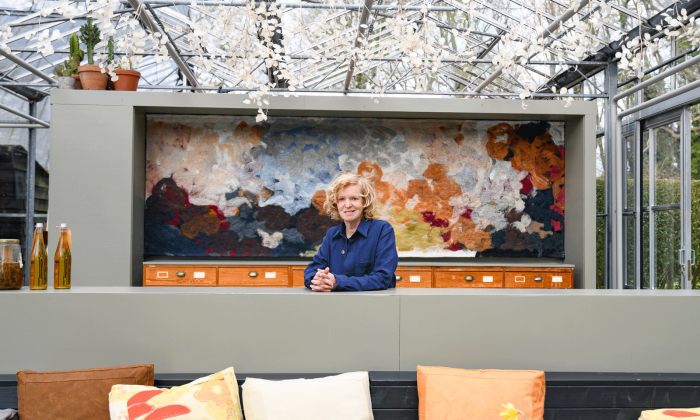
De Tuinkamer – LOADS – Claudy Jongstra – beeld heleen haijtema
After completing her studies at HKU University of Arts Utrecht in 1992, Claudy set about pursuing the usual aspirations of a fashion design graduate. Initially taking a job with a commercial fashion brand she soon set up her own atelier nót tom dick & harry. High profile projects followed, including creating woolen Jedi costumes for Star Wars: Episode 1 The Phantom Menace. Wool has always been a prominent feature of her work and the natural material provided the catalyst in shifting her work toward textile artistry and architectural installations. It also allowed her vision of a studio built around a collective and regenerative approach to material cultivation to flourish.
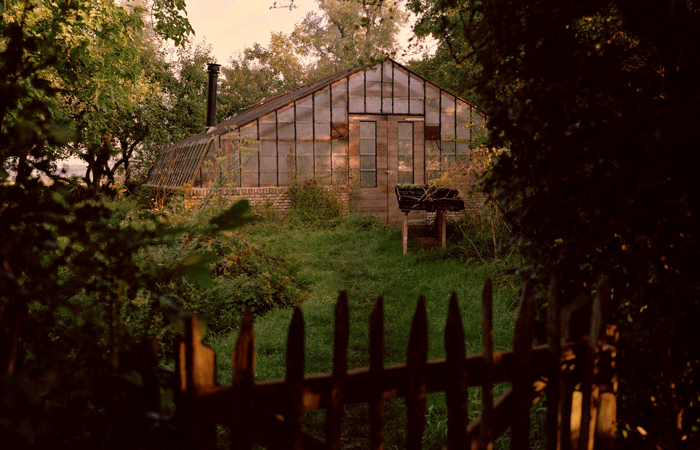
©Claudy Jongstra Biodynamic Garden De Kreake Húns. Photo Iris Haverkamp Begemann 1914 kopie
Over a decade ago she took the bold move of moving the studio to a farm in rural Friesland in the north of the Netherlands with her partner Claudia Busson and it’s here that their team of some 25 multiskilled professionals produce Drenthe Heath sheep’s wool and heirloom dye plants. It’s from these raw materials that she creates vast wall hangings of swirling colour and texture that now reside in international museums and private and corporate collections such as MoMA, Victoria & Albert Museum, Stedelijk Museum, Amsterdam and London’s Bankside Hotel, to name a few, as well as ongoing haute couture collaborations with the likes of Viktor&Wolf, Martin Margiela and Hermès.
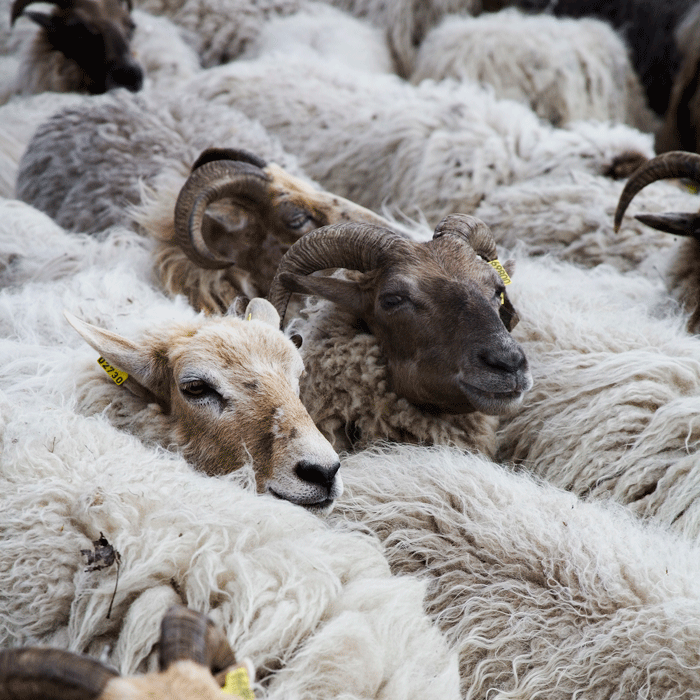
©Claudy Jongstra Drenthe Heath Sheep Bakkeveen. Photo Jeroen Musch
JB: There are literally and metaphorically many layers to your work, with the countless strands of wool that make up each vast piece representing numerous connections, processes, and time. I know your material palette is very important to you, and you have a lot of autonomy over it, but can you explain the significance of wool to your practice?
CJ: After seeing an exhibition on wool more than 30 years ago in the TextielMuseum Tilburg, my fascination began to explore wool and all its variety and geniality. The fact that people have lived in woolen tent-houses (yurts) for centuries under many conditions, awakened my curiosity. I wanted to work with a local wool; Drenthe Heath sheep are connected to the area where we work and live. It is the oldest breed in Northern Europe. These sheep are natural land conservationists and stewards, and balance the ecosystem in a natural way.
Claudy Jongstra – beeld. Photo Heleen Haijtema
JB: I was fascinated to see that you take a very similar approach to cultivating your colour palette as you do with wool – working closely with Claudia Busson at your biodynamic farm De Kreake to harvest plants for dyes along with the wool. Humans working collaboratively with one another and nature strike me as something we need much more of, and I wonder if you can give some insight into how and why you have created and maintained these relationships?
CJ: Working with wool requires finding a local variety and making contact with it, as does starting a dyer’s garden to study and observe plants. This is best done by starting a farm. All the necessary conditions have been created by Claudia Busson and myself. One of the last ideas we are currently developing is to start a “community learning” place – essentially a school or college. A place where people can experience the full circle of our process: from seed to plant to colour to art and design.
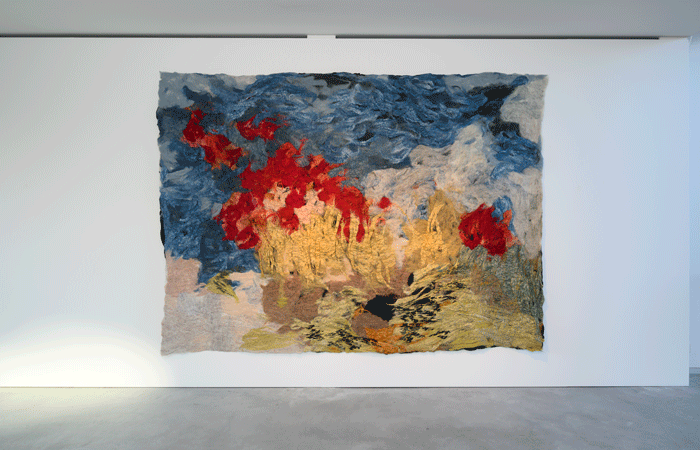
Courtesy EENWERK. Photo Peter Cox
JB: How do you select which plants to grow, and what is the process from seed to dye?
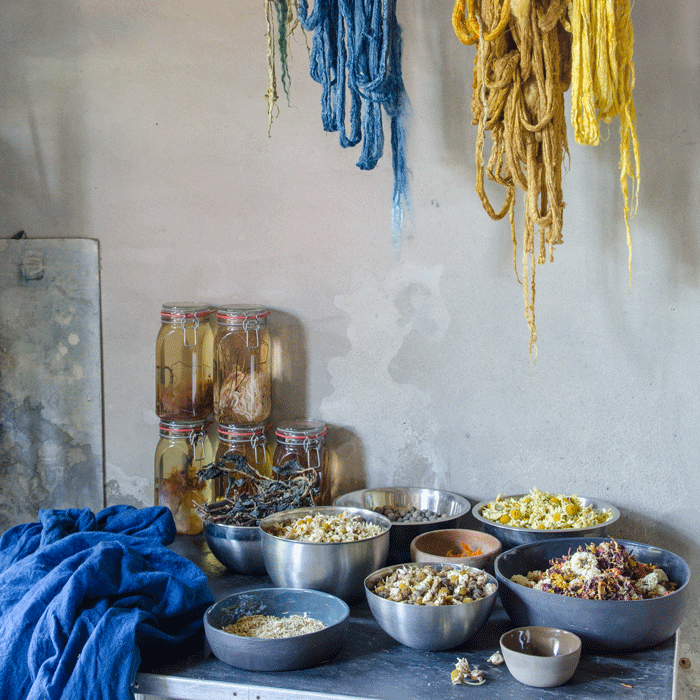
CJ: Our colour palette is a selection of historical dyer’s plants like woad, weld and madder root. We also experiment with new crops such as Tagetes, or Marigold, as well as Chamomile and plenty more. We grow crops at our own biodynamic farm, but also in the south of the Netherlands, Belgium, Spain and this year for the first time in the UK at Waltham Place Farm, where we are organising a 3-day Masterclass between 29-31 May.
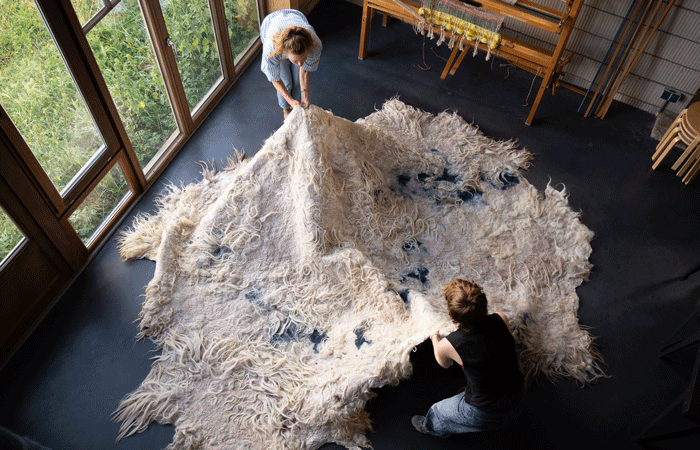
©Claudy Jongstra, LOADS Atelier. Photo Heleen Haijtema
JB: We should also talk about the tangible creative outcomes of all of this too – your art. Colour obviously plays a huge role in their creation, but I sense that the context in which it is viewed, which is often architectural, plays a part too.
CJ: Every piece is a unique artwork, always customized and connected to the location, space and the people. When the geographic location plays an essential role, for example for a residence, the immediate environment (the botanical palette) can be a source of inspiration. For restaurants we always use edible dyes, for hospitals we use medicinal plants. Due to the quality of the natural sources and colours, the artworks always blend with the interior or environment in a very subtle way.
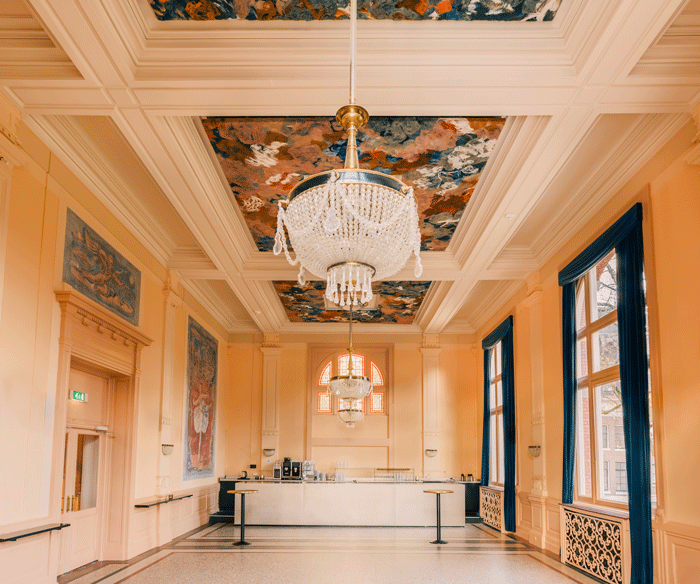
@Claudy Jongstra, Botanical Fresco ITA. Photo Fabian Calis
JB: One of the most striking and immediate elements of your pieces is their scale – often spanning entire walls. Before getting into the effects of this, I’m very intrigued to know the process behind making them – it must take a lot of wool and be quite a physical process?
CJ: The process of making starts with sheering,washing and dyeing the wool. Different craftspeople work in our ateliers and have their own specialty. Since we are all in-house, I can see all the steps and phases and therefore we are very flexible in the process and interact immediately if needed. After the fibers are carded, my process begins in composing the fibres into a “textile drawing” and then felting all the fibers together.”
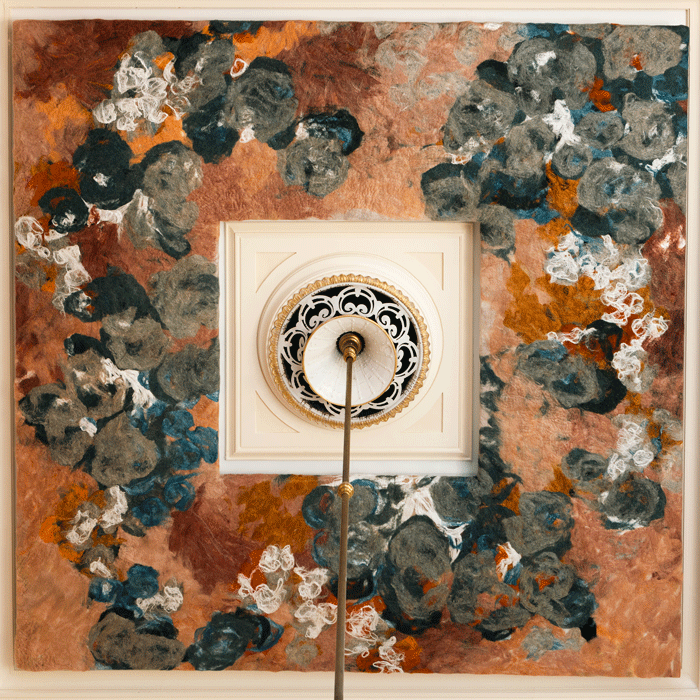
@Claudy Jongstra, Botanical Fresco ITA. Photo Fabian Calis
JB: They almost takeover the space with their visual and textural presence, and I imagine have a positive impact on the sound quality too?
CJ: All senses are stimulated when the tapestry is installed. The tactility enhances a space’s welcome, and acoustical improvements (80% of our jobs require acoustical improvements) provide sound absorption. Especially large-scale projects in public spaces have a huge impact on how people feel, providing security, comfort, softness and enhancing well-being.
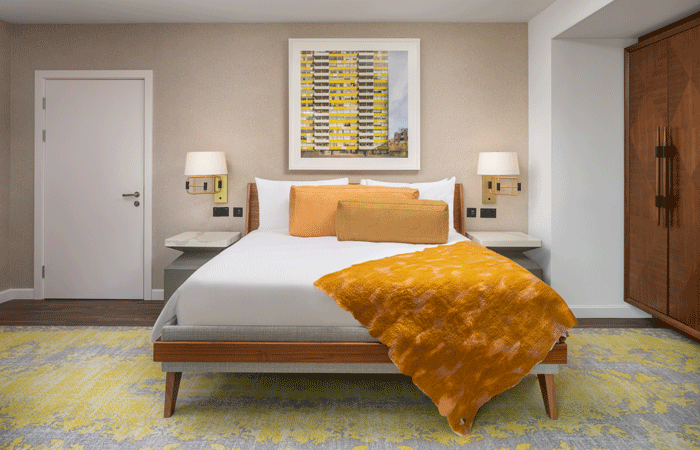
Suites Bankside Hotel Londen. Photo Viktor Kerry
JB: I love the work you’re doing with your son Jesk with the Loads project. Can you give a brief overview and explain how these textiles “form a net-positive textile system that incentivizes and supports craft preservation and ecosystem conservation.”
CJ: When my son Jesk expressed the ambition to scale up to have more impact on today’s highly polluting textile industry, we started LOADS Collection. It is literally a collective of farmers, shepherds, designers, architects and social enterprises working together with LOADS Collection to design for healthier interiors. All our partners work in a traceable and regenerative way and have a mission to transform and have a positive impact on eco- and social systems. We are very happy to have completed wonderful projects such as for the suites at the Bankside Hotel in London and recently for the restaurant at the Tuinkamer in Priona Gardens and to be able to showcase our designs at the Salone del Mobile in Milan. We need “ambassadors” and “believers” to bring LOADS to new places where people can experience the beauty of nature. We are also very proud that we recently experienced the world premiere with the first DEMETER certification for the LOADS Collection fabrics.
Image credits
Seasonal Gems, Priona Tuinkamer: @Heleen Haijtema
Process: @Heleen Haijtema
Greenhouse: @Iris Haverkamp Begemann
Portraits: @Christian Jaeggi /Heleen Haijtema
Suites Bankside Hotel Londen: @Viktor Kerry
Botanical Fresco ITA: @Fabian Calis
Et Gallery: Eugenio Iglesias
LOADS Collection: @Marcel van der Vlugt