




A Conversation Between: Jim Biddulph & Micaella Pedros
Designer Micaella Pedros has built her practice through playful yet purposeful inventions of material wastestreams. Working between material research and socially driven design, her projects often begin with overlooked resources and end with new possibilities for making.
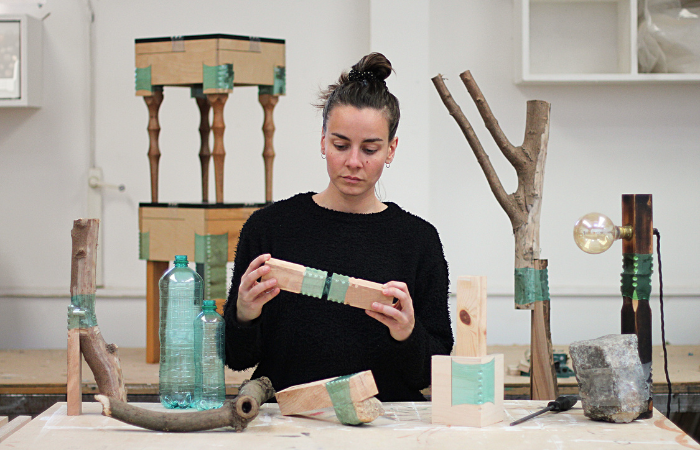
Whether she is transforming discarded plastic bottles into structural joints or collaborating with communities to develop low-tech building methods, Micaella approaches design as both a craft and a form of advocacy. Her work has been exhibited internationally and continues to influence a growing conversation around resourcefulness, repair cultures and the social value of material experimentation. This month a new piece, Altar of Possibilites, is on show at Twilight Contemporary as part of their exhibition Chair I and merges chair, tree and altar features using her signature Joining Bottles technique. I took the opportunity to talk to her about her ever-evolving practice, which includes a series of new material approaches.
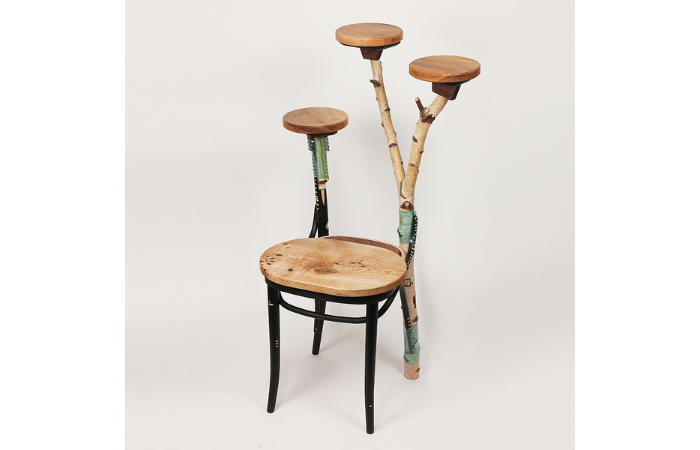
Altar of Possibilities
JB: I think we have to start with the project that bought you so much media attention and got people thinking differently about waste, and how we might make furniture; Joining Bottles. The project feels as fresh and original, yet useful, as it did when you launched it in 2016, but I’m intrigued to hear about how it has grown and evolved in that time.
MP: Wow a lot to unwrap here. Since its launch, the project has received tremendous interest from around the world, not only from design and art institutions, but also from people themselves. I particularly remember messages from people living in Bali and the Philippines interested in this new way to deal with their waste, but also people sending me pictures of what they tried and did with the technique. I’ve delivered a lot of workshops in London, in different maker spaces, like the Institute of Making, but also in Guatemala, New York at the MAD Museum, Belgium, Italy, the Netherlands and in Scotland with the British Council.
I was also very lucky to see the project exhibited in London at the Aram Gallery, Mint Gallery and during the London Design Festival, and internationally at the Center for Craft in Asheville, as well as the Design Museum of Barcelona, and the CODA Museum in Apeldoorn. It is also part of the worldwide touring 10-year exhibition, IFA Pure Gold, and featured in books about waste and material possibilities such as Radical Matter and Wasted.
Today, Joining Bottles is not just a joining technique, it is also a collection of work, furniture and lamps growing along the years. Part of the collection is now available at the Home of Sustainable Things in London, allowing me to reach members of the public alongside being acquired by collectors and museums.
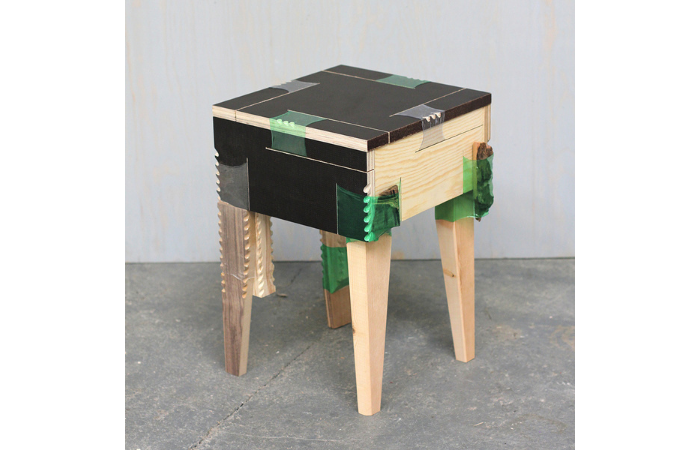
Joining Bottle, Stool
JB: Furniture pieces like your Box Stools combine discarded plastic bottles and timber-based waste in an imaginative joining process that creates functionality, while allowing the history of the materials to very honestly shine through, and I wonder how important the narrative of reuse is within all of your work?
MP: The narrative of reuse is central within my work. It is actually in some ways the trigger that makes it happen. Reusing an object or a material means that the starting point already embodies a form, a character, maybe even a story. This set of information inspires me and guides me into new ideas, new harmonies, new combinations and also new processes. I am interested in hidden possibilities and I find it way easier to find them from something that already has a form rather than as a powder, a standard sheet or shredded.
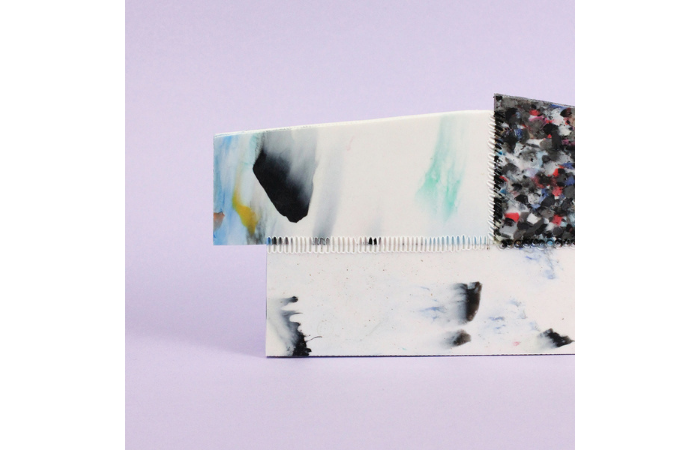
PW Sample, Straight Knife Stitch
JB: A more recent project, Plastic Stitch Welding, is also driven by giving new life to waste through a process-led approach, but as the title suggests, there is a new joining method applied here. Can you tell me a bit more about this project?
MP: Since I launched the project Joining Bottles, I’ve always wanted to work with recycled plastic sheets. As a contemporary designer, learning how to integrate waste into new objects is so important to me. Recycled plastic sheet is a fairly recent material with such a strong visual identity. I wanted to learn how to play with it so I started to experiment with some 5mm thick offcuts I found. The thickness was important because I was limited in terms of joinery I could do and so it triggered questions. Then it hit me: “surely it can join to itself” and so I grabbed the only tool I could test it with at hand, a soldering iron and it worked!
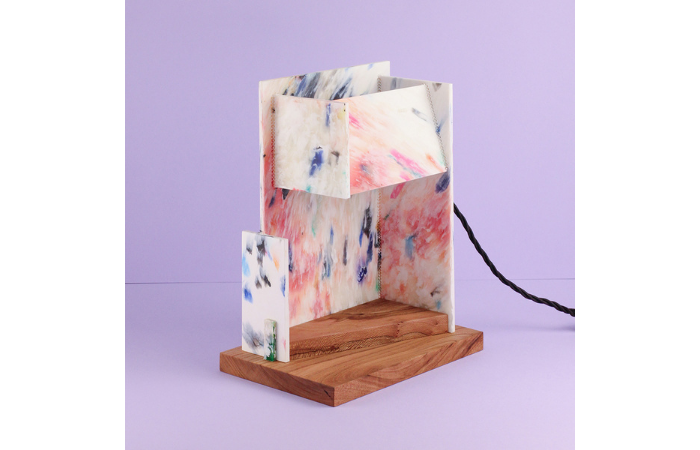
PW Lamp
I found that plastic welding traces back to the 1930s when there was a shortage of non-ferrous metal and that there is a specialized welding heat-gun that allows to create seamless bonds. With my first experimentations, I was really interested in finding my own way and pushing further the visual language it creates. The process produces a distinctive stitch aesthetic. By experimenting with different stitch effects and volumes, the project investigates strength possibilities and joinery expression. It also allows me to join small offcuts together and use their form to compose a larger piece. As in my previous work, I love keeping the joinery visible, transparent and making it the central element of the work, the primary motive.
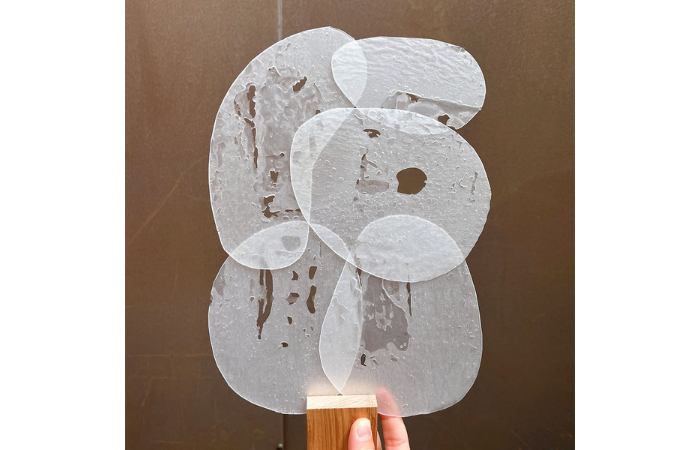
Honesty Sample
JB: Another relatively new project, Honesty, transforms the humble transparent food container from a throwaway vessel into a material with value. The pieces you have created from it so far have a sculptural feel, with the material also being used in lighting products. Can you tell more about how the origins of the project and how you hope to see it evolve?
MP: This project took birth in a situation of scarcity. I was running out of my recycled plastic offcuts and I was struggling at the time to find someone to produce a recycled PP plastic sheet for me in the UK. Everything was on hold and so I decided to try to make one myself. I gathered all the PP plastic waste from my home and what I had in abundance after COVID was take-away plastic food containers. My studio didn’t have the capacity to have a shredder and I was actually more interested in working with the original form as much as possible and so I started to heat-press everything directly from their original state and learn about temperatures and timing through trying things out.
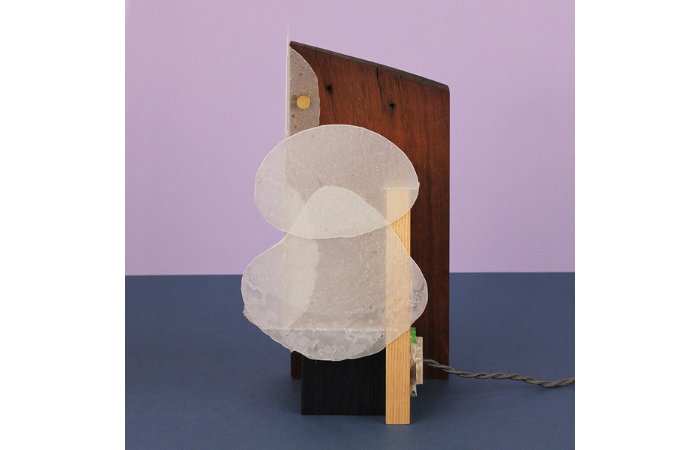
Honesty Lamp
The magic happened when I heat-pressed my first plastic container. Due to its translucency and frosted effect, the resulting plate was interacting with light in such a beautiful way that I was inspired to explore the process further and transmute it into objects. I love the delicacy of this project and its sculptural needs. I love how such a highly engineered material can become so organic and playful. I play with the textures and bubbles that randomly form during the process. The plastic stitch welding technique allows me to put them together.
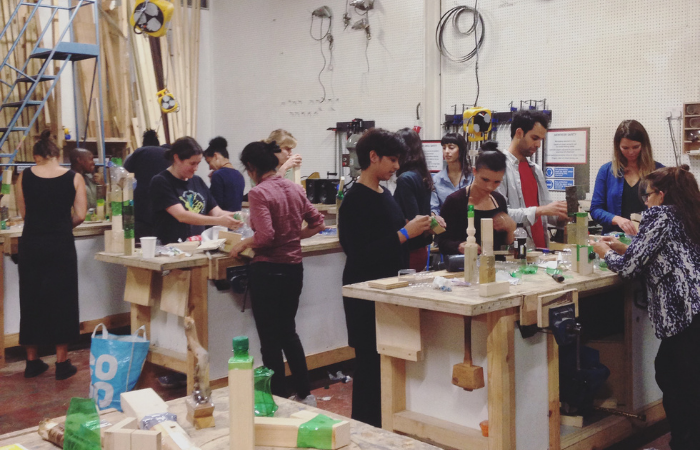
JB: There is an inherent playfulness to your practice that infuses the work with a subtle joyfulness, and I know you have shared the process with other creative folk during workshop events. Are they still running?
MP: Workshops are an essential part of my practice. The ultimate goal of my work is to inspire. I also felt as a design student that there was a gap between designers and their audience and workshops are a great way to share techniques and open up the work to the world by still creating a connection with people. One other thing I am excited to share in the workshop is the excitement I feel when a plastic bottle shrinks or when a simple process transforms a material. I love working with techniques that allow for human self-expression and the workshops offer a great range of creativity.
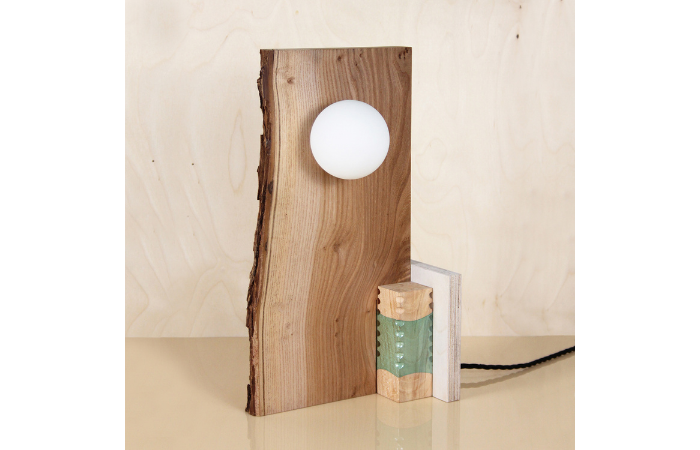
Slice Lamp, Elm
The workshops currently happen upon request, may it be by a museum, a maker space or any other creative space. However, since I expanded my practice to more waste materials, I am currently working on a new format involving different waste as a starting point, where I share more about how to find new possibilities and opportunities through experimenting, giving even more space for participants’ creativity.