



A Season of Change
As the signs of seasonal change begin to come into focus, it’s perhaps a good time of year to take note of some projects that harness transformation as a positive act of creation.
Autumn is a period of abundance, notably in the natural world, where the energy and vitality of the spring and summer reach a conclusive peak before the cyclical inevitability of winter takes over. Of course, the reliable predictability of the seasons is under threat as a result of the effects of climate change, as we have seen across the globe with shifts in weather patterns and soaring temperatures.
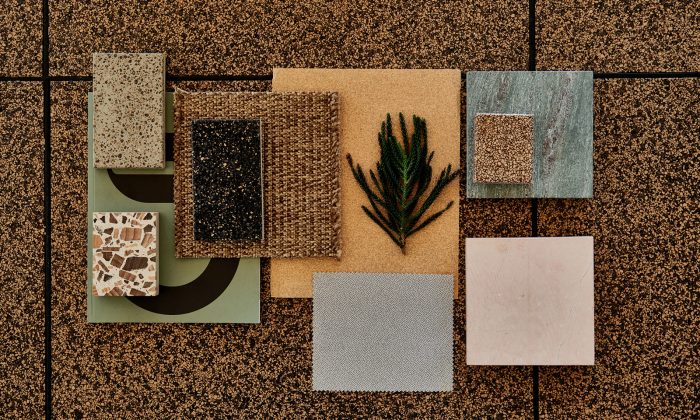
As we have reported on numerous occasions, changing the systems with which we manufacture our products and construct the built environment is paramount if we’re to turn the tide. While it’s by no means a new concept, there continues to be a steady stream of designers who seek to readdress the creation and usage of some of our most abundant materials ordinarily deemed as waste.
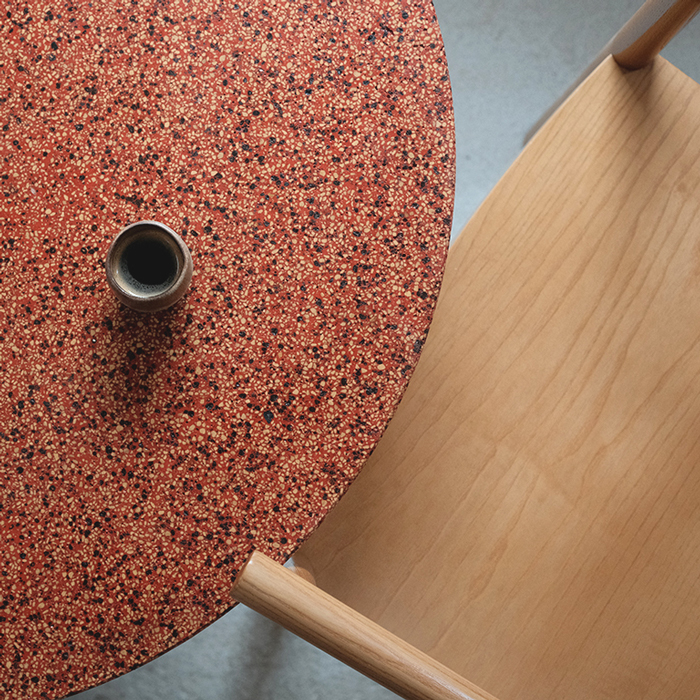
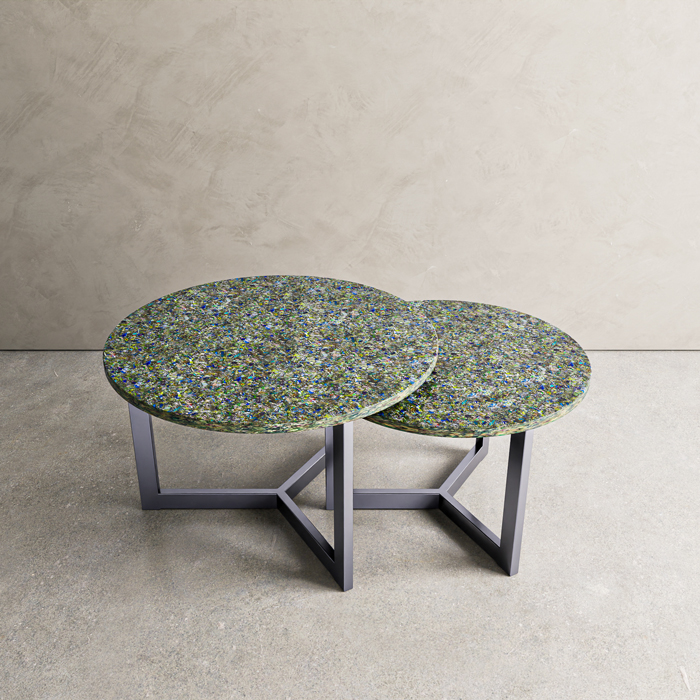
Turning their attention to a plentiful by-product of the food industry from their native Greece, Koukos de Lab have created an eco-material made from olive stones. A prime example of utilsiing nature’s bounty, ‘Koukoutsi’, which literally translates to pip or fruit core, is a striking water-resistant solid surface material that can be used both internally and externally. The idea for the material grew out of the lockdown, with the first iteration of the Levos Bench—a modern take on traditional Greek furniture —making its debut at the London Design Biennale 2020. As founder Christos explains, its genealogy is intrinsically Greek:
“In all Mediterranean regions, olives are fundamental to production, economic activity, nutrition, and natural wealth. Our island, Lesvos in Greece, with approximately 11 million olive trees, is essentially an olive grove itself. Thus, the birth of koukoutsi eco-material.”
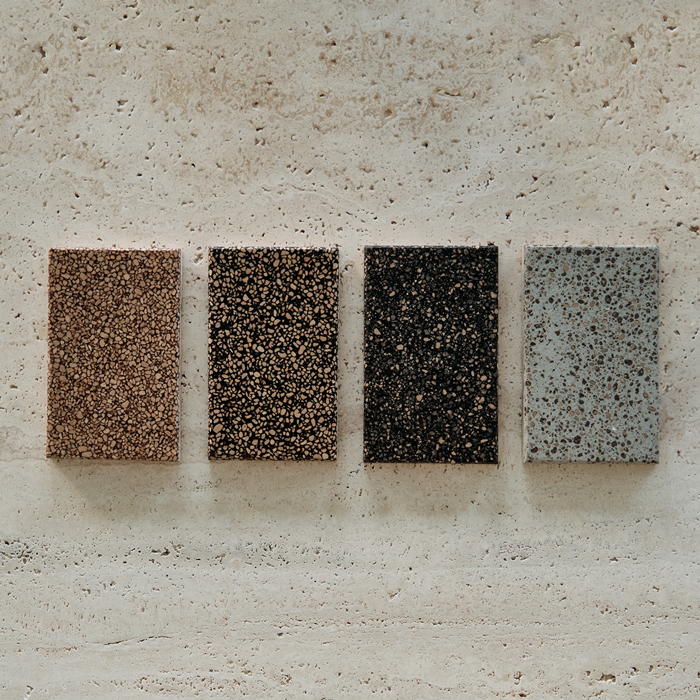
The product range has continued to evolve, with curved coffee tables, lamps, stools, coasters and coverings making up a portfolio that oozes with a minimal elegance. The material’s natural speckle is emphasised with dark base colours, and the range includes livable shades of rich chocolate, sumptuous creams, and sophisticated claret, among others.
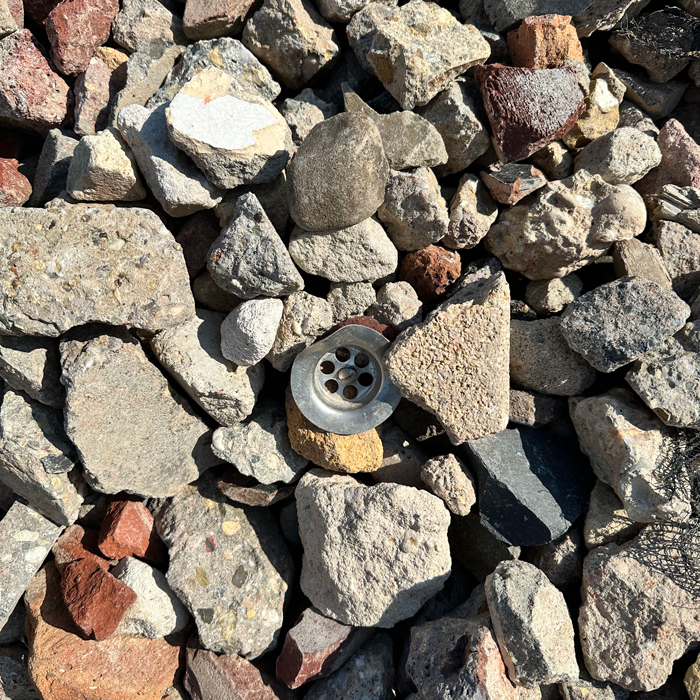
Continuing the speckled and recycled themes, Blended Objects is a collaboratively produced ceramics collection created from post-industrial waste by Studio KENNSK x Blended Materials. As interior designers, the Dutch team behind Studio KENNSK know only too well how much waste is created from refitting and demolishing existing buildings. With approximately 23 million kilograms of construction waste generated annually in the Netherlands, the team is keen to do what it can to find a use for such materials and save them from landfill. In Blended Materials, they have a kindred spirit. The studio is run by Tom van Soest, who has extensive experience in utilising post-industrial waste, as well as a direct link to waste processing facilities.
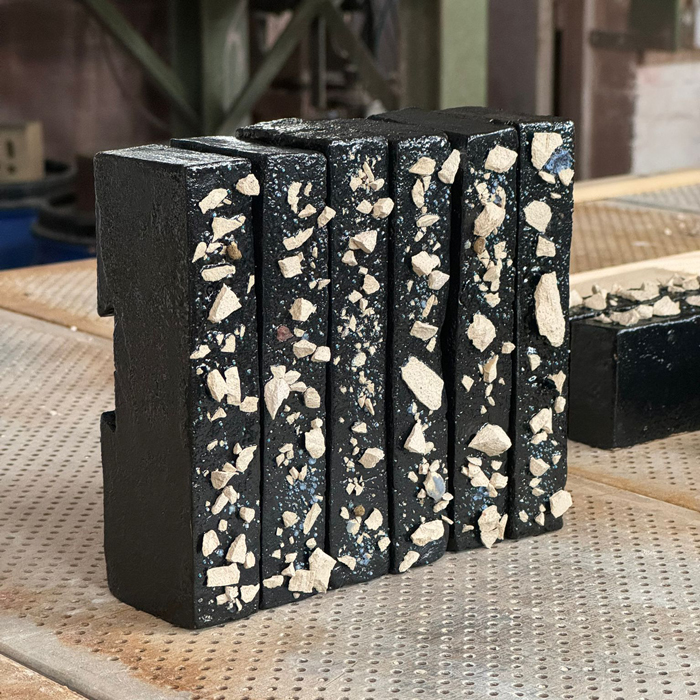
The team’s inquisitive experimentation with various forms and glazes is helping to create a slowly expanding product range, which currently includes speckled tiles that tell the story of their origins upon their very surface. As they continue to test the materials’ capabilities and source new waste streams, the team is set to produce new, larger-sized formats, while aiming to create material solutions for the newly renovated spaces from which they collect the waste. The ultimate closing of the loop!
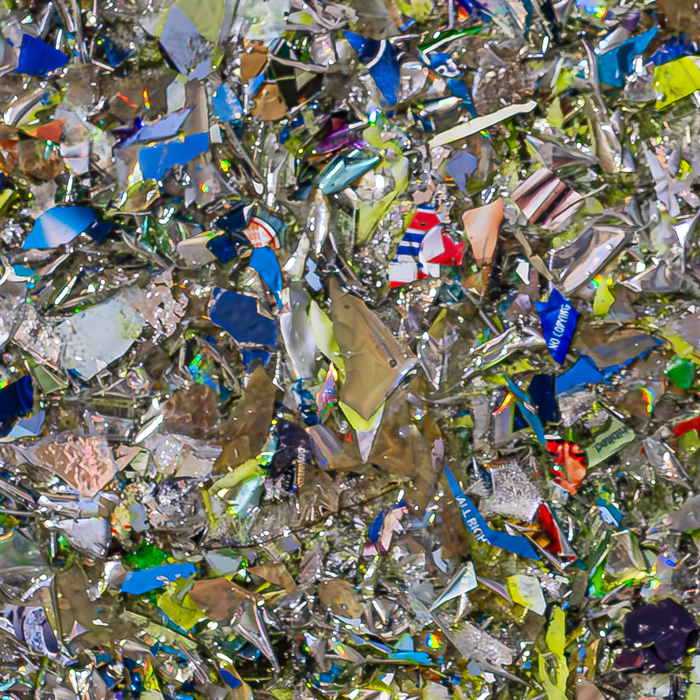
Relatively new studio Revive Innovations uses a not-so-new piece of post-consumer waste (and oncea leading piece of personal technology) to produce closed-loop surfaces of their own. Once again, their distinctive products, which include benches, stools, shelves, and sheet materials, tell the story of their material journey, with each made from over 100 shredded CDs.
The silvery flecks of mirrored plastic and old label of the the RE-CD range are immediately distinguishable, and remind us of a time of great technological growth. But as well as saving a widely unused, yet relatively uniform object from going to waste, the studio is also determined to be transparent in how they communicate about their creations. Whether it’s a piece of furniture or sheet of RE-CD, every item comes with its own environmental data, which includes the emissions of each life cycle process, including elements such as the gathering and processing of materials, along with transportation. So while helping to close the loop on a waste stream, the product range also allows the client to make informed decisions about the products they may commission or buy.
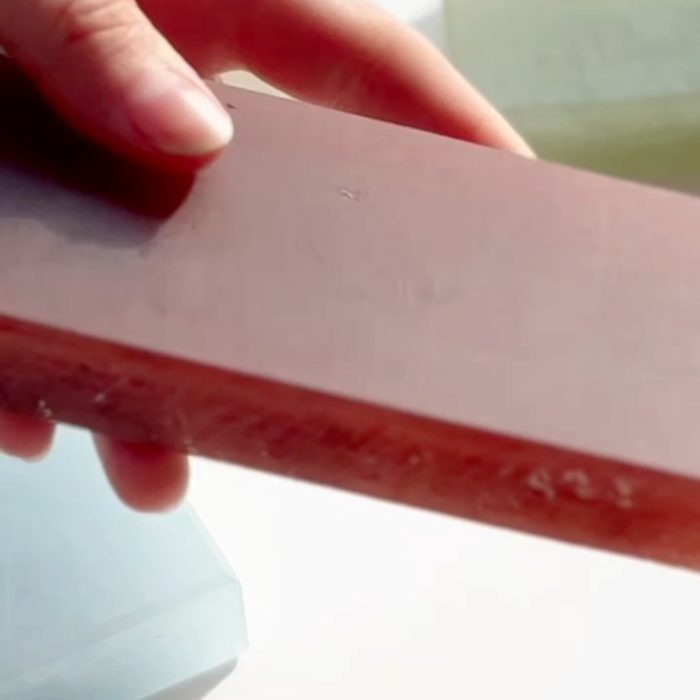
Dutch brand Plasticiet also knows a thing or two about plastic recycling. From the get-go, the studio made it its mission to transform the way people perceive plastic waste by quite literally transforming it into beautiful, functional materials. As opposed to an ever-growing issue, the team aims to show the precious value of waste. Taking singular plastic types, such as polystyrene or polycarbonate, they form robust, solid surfaces that evoke the fluidity of marble and the speckled look of quartz. A more recent product development, Karlite, focuses on a very specific waste stream, which, as the name suggests, comes from the automotive industry.
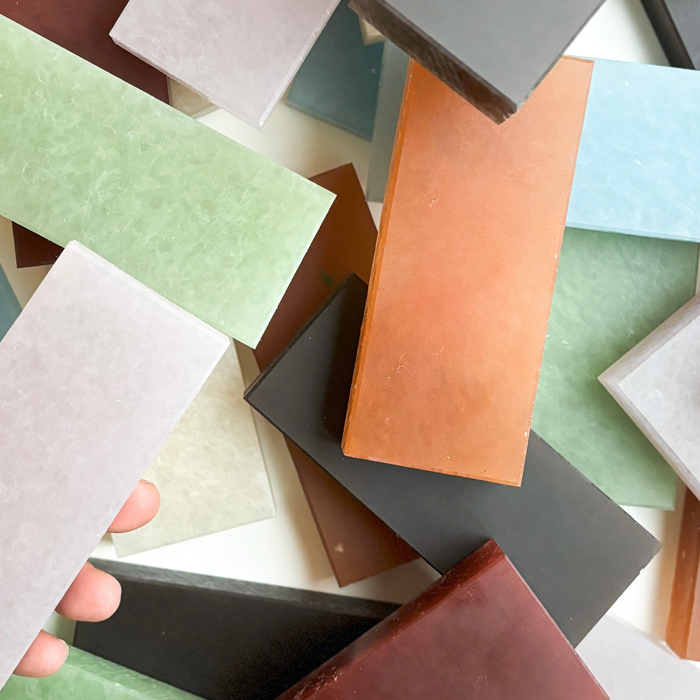
Car headlights are historically crushed along with the discarded car they are attached to, but are themselves made from a decent-sized chunk of polycarbonate. Recognising their value, Plasticiet diverts the lamps from landfill and turns them into a new solid surface, which is tinted with mineral pigments to create a silky translucent surface. Currently available in 1000x1000mm panels, the material can be joined and thermoformed, making it a hardwearing and unique option for wall panels, furniture, signage, and, rather appropriately, backlit panels.