



Beyond the Shop Floor: Brinkworth MD, Sam Derrick, on Retail’s Influence Across Commercial Interiors
Brinkworth has long occupied a distinctive position within the global retail landscape, recognised for its deep-rooted culture of making, material experimentation, and close engagement with the communities and brands it works alongside. Founded in East London in 1990, the studio’s early design-and-build ethos continues to inform a practice that today operates across retail, hospitality, workspace, residential, events, and brand strategy.
In this interview, Design Insider speaks with Sam Derrick, Managing Director of Brinkworth, about how retail has become a testing ground for ideas that now resonate far beyond the shop floor. While the conversation is anchored in retail design, it is framed firmly within the broader commercial interiors sector, an area where lessons around adaptability, experience, and cultural relevance are increasingly transferable across settings.
From activation-led formats and performance-driven brands to global rollouts and community-focused environments, Sam reflects on Brinkworth’s approach to participation over transaction, long-life material thinking, and designing systems that balance scalability with local expression.
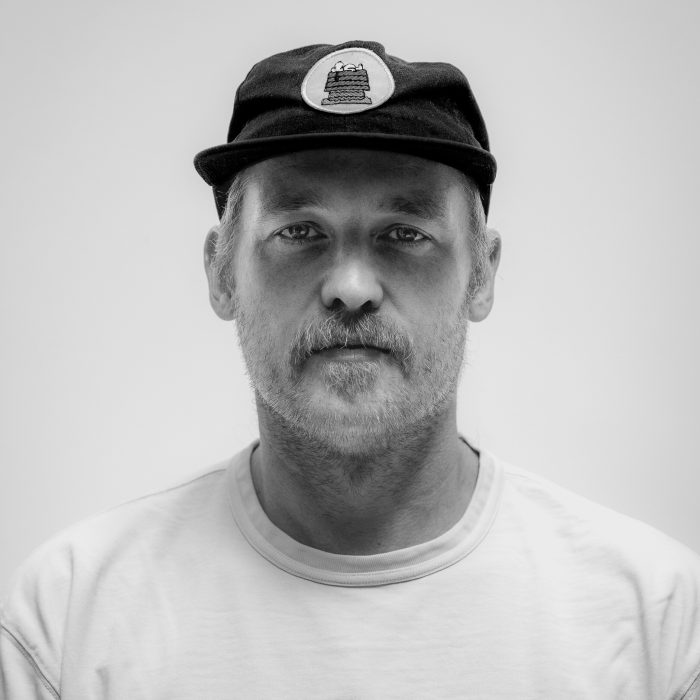
Sam Derrick, Managing Director, Brinkworth
To begin, could you introduce Brinkworth as a practice today and reflect on your role as Managing Director, including how the studio’s heritage of making, experimentation, and cultural engagement informs your approach to contemporary retail design?
Brinkworth is a global design company, with a long, and storied connection to retail design. But we also work across a variety of sectors, hospitality, workspace, residential, events, as well as brand identity and strategy. Adam Brinkworth founded the studio in East London in 1990, as a design and build workshop, and while these days we focus on design and use the workshop for education, experimentation, and testing; our foundations in building, making, fabrication, materiality, details and junctions, are still incredibly important to our process and output. My role involves building on these foundations, to ensure we continue to create exceptional, culturally relevant spaces that champion authentic experiences. While Adam has handed over lots of the day-to-day management, he is still very much involved in projects, and the culture of the studio, so ensuring it’s fun while we’re at it is an important part of the job too.
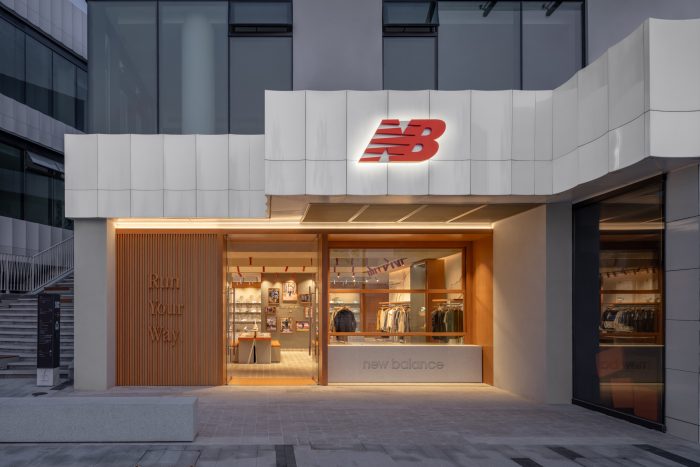
New Balance Run Hub
Brinkworth has built a strong reputation within sports and performance-led retail, particularly through projects such as New Balance’s Run Hub concept in China; what is it about sports apparel, youth culture, and community-driven brands that continues to provide such rich territory for spatial innovation?
That is certainly true now, we have a very strong client list in the sports and streetwear sphere, but it hasn’t always been the case. Brinkworth did a lot of our formative work in high street womenswear, and I think an argument can be made for that being a more creatively interesting space to work in the 90’s. But things change, we like doing creative, interesting work with creative, interesting people. And over the last 15 years or so we’ve found more opportunity to push things forward with youth culture brands, and companies built around an activity or community, be that skateboarding, running, cycling, or training. R.A.D is a great example of interesting people, doing interesting things. Pushing boundaries, experimenting with traditional retail modes, and creating innovative spatial experiences.
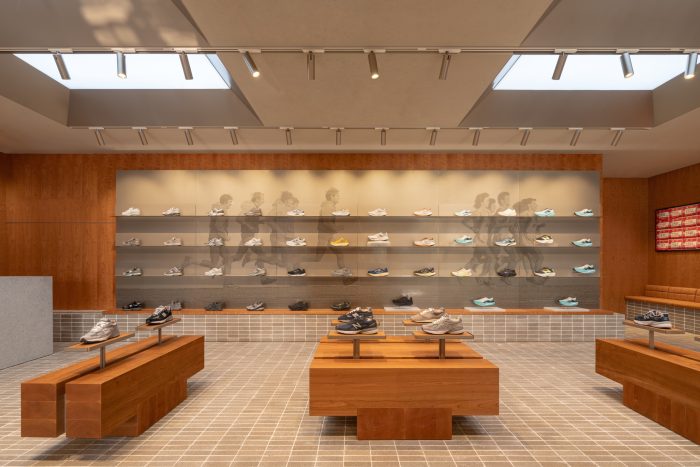
New Balance Run Hub
R.A.D® reflects the shift towards activation-led retail rather than permanent stores; how did Brinkworth translate the brand’s ‘Rally Against Destruction’ ethos into the ‘Satellite’ booth, and how did modular construction and long-life material choices help challenge the throwaway nature of pop-ups?
In my mind, the booth couldn’t have turned out any other way.
Ben Massey, R.A.D®’s founder, invested time and energy creating his brand with creative agency FLUORO®, long before they created their first shoe. Similarly, they invested time and energy with Brinkworth to create the physical manifestation of this brand long before a brief to build anything.
We’d already worked out the material and spatial language for R.A.D as well as developed a bespoke fixture system by the time of the opportunity to show up at ‘The Running Event’. This included lots of modular, and off-the-shelf components combined in creative ways with impactful, utilitarian materials. The modular acrow prop structure, passivated perf cladding, and ticker tape header for the booth all came from this palette. It would have been contrary to their ‘Rally Against Destruction’ ethos, and everything we’d developed since, to create a throw away stand for this one event. So it was designed to demount into a container, fully reconfigurable for future events and activations. It’s a great example of the value of investing in design, and the process of design, and the simple outcome to a great body of previous work, by R.A.D®, FLUORO® and Brinkworth.
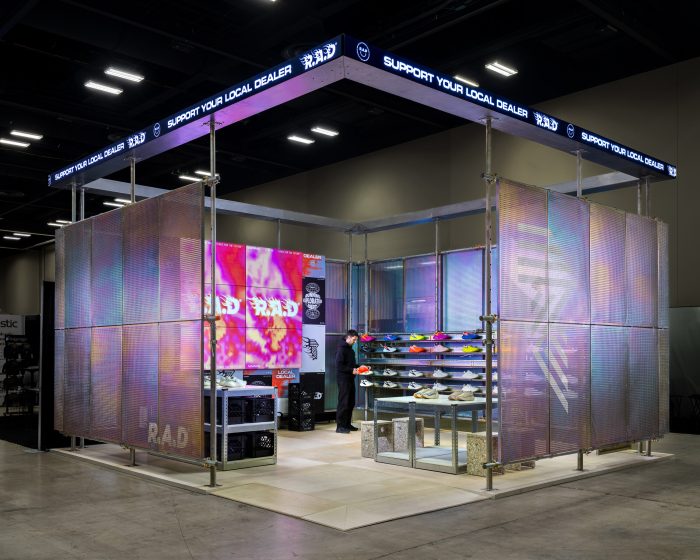
R.A.D® ‘Rally Against Destruction’ satellite booth
Across projects such as the R.A.D® Satellite and Supreme’s globally distinctive stores, Brinkworth consistently designs spaces that privilege participation over transaction; how does this philosophy influence decisions around layout, detailing, and customer flow in contemporary retail environments?
I think this is a question about product density, rather than specific details, or layout strategies. Financial transaction is important, it’s retail’s raison d’être, but for physical spaces, cultural transaction is as important. Almost every retailer has their full range available online now so showing everything in a store environment is not necessarily the best way to maximise returns across the whole retail ecosystem. Creating space for skate bowls (in Supreme’s case), or cafes (Rapha), or championing fitness events (R.A.D®), or music (Converse), all encourage brand participation, and offer a better route to commercial returns than a few extra racks of product. Providing of course it’s well thought out, appropriate, authentic experiences we’re talking about.
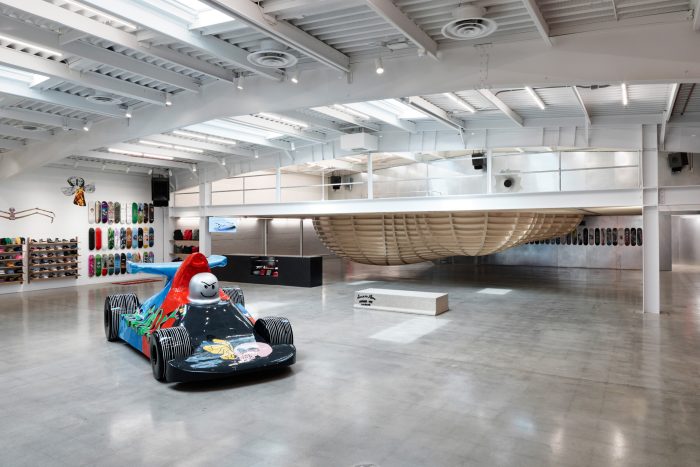
Supreme
In projects like The Ordinary’s Covent Garden store, there is a clear emphasis on restraint, honesty, and hard-working design; how do you approach retail detail when the goal is to elevate a space without over-designing or compromising operational clarity?
I like Rams’ tenth principle of good design, ‘as little design as possible’ (I like all ten actually).
But unlike Rams, we work with messy spaces, not controllable products, and we work for a wide range of clients, and must provide distinctive, ownable, and appropriate solutions for the brand we’re working with, over a rigid aesthetic, style, or even principle. For us, as little design as possible doesn’t mean we’re averse to some maximalist ideas when appropriate, but we certainly don’t design superfluous, unnecessary shit.
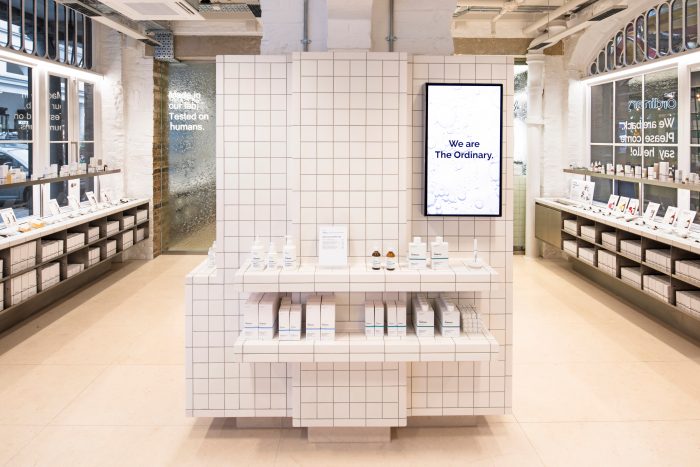
The Ordinary, Covent Garden
Global rollout is a recurring challenge in Brinkworth’s retail portfolio, from Supreme’s highly localised stores to New Balance’s scalable Run Hub concept; how do you design systems and spatial languages that are robust enough to travel internationally while still allowing for cultural specificity and local expression?
Supreme have a remarkably consistent language of a few simple, utilitarian materials, elevated by incredible attention to detail. The localisation comes from seamlessly integrating everything into the interesting buildings and architecture we inherit, as well as art, and importantly, the people who inhabit the spaces. We’re often designing spaces with an inherent quality that works globally, and flexing to local context, be those cultural, material, activation, community, or operational changes.
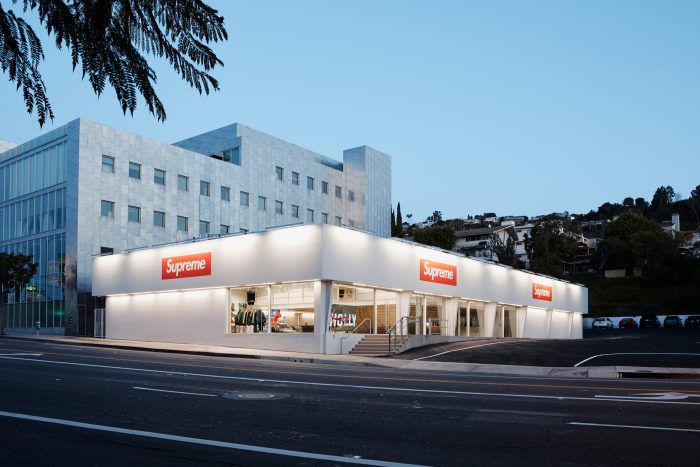
Supreme
Brinkworth’s in-house workshop and proximity to making remain central to the studio’s process; how does hands-on prototyping influence collaboration with suppliers and fabricators, particularly when developing bespoke retail fixtures, display systems, and adaptable architectural elements?
More often than not, we work across the whole project journey with our clients, and the detail and fabrication of the spaces, systems and furniture we design is as important to us as the big idea. If the idea can’t translate to the built environment, or is a struggle to fabricate, what is the point? I know our drawing packs are good, as I hear feedback to that effect from contractors often. I like to think our understanding of how things are built helps, but you’d have to ask them – maybe we annoy them with details!
We’ve lacked a workshop for the last year or so, but Graham Russell, who ran our workshop for many years, has started up again a in a location a little further afield, so we’re excited to get the team on the tools again.
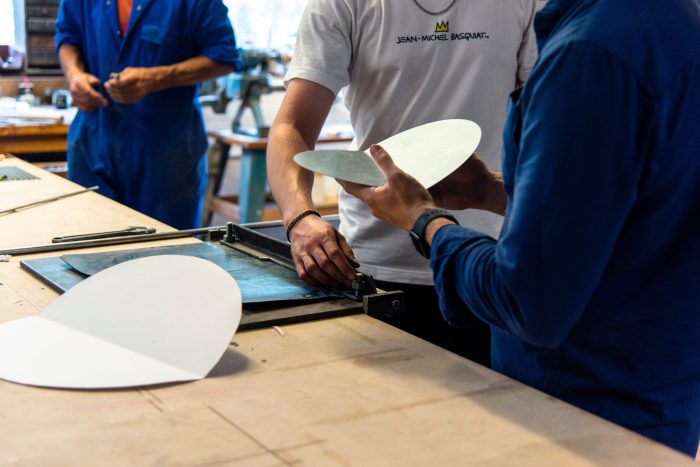
Brinkworth’s in-house workshop
The studio’s belief that personal passions and external interests enrich professional output feels particularly relevant when working with culturally embedded brands; how does Brinkworth’s multidisciplinary and culturally attuned team dynamic shape the authenticity of the environments you create?
We have a wide mix of interests in the studio, as I suppose you’d find in most groups of creative people, and encourage involvement and expression of these across the board. We have a bi-monthly external talks programme, internal personal interest presentations, a film club, a multitude of education outreach programmes. We run several extra-curricular creative and workshop projects a year. The last one was a collaboration with our local nature reserve to design bird boxes for a flock of sparrows, and a local peregrine falcon, on top of a tower block. November is our Brinkworth trip, when we take everyone away for a weekend to visit local cultural institutions (and some bars). A few years ago we started closing the studio on the last Friday of the month and encourage the time is used for creative pursuits, but even if it’s used for a better work life balance, R&R, or just sorting shit out, it’s been a good thing to do. Interesting people, with interesting interests clearly do more interesting work. Interesting!
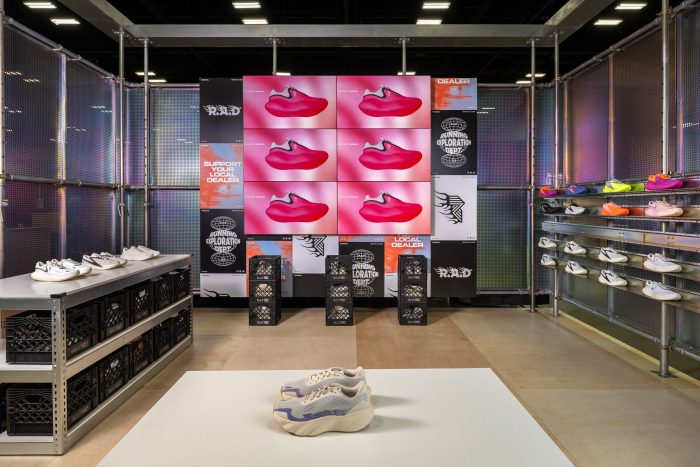
R.A.D® ‘Rally Against Destruction’ satellite booth
Looking beyond retail, hospitality projects such as OKA Onigiri demonstrate Brinkworth’s sensitivity to place, craft, and cultural translation; how do insights from hospitality inform your retail work, particularly around atmosphere, dwell time, and emotional connection?
Retail has become much more hybridised, which often seems to trace back to the work we did with Rapha, thinking about the store as a clubhouse, which formed the basis for many briefs we’ve received over the years. The idea stemmed from a deep understanding of the culture and idiosyncrasies of the road cycling community, but was informed by our work across multiple sectors, including, of course, hospitality.
Creating interesting, inviting architectural, and cultural spaces, that encourage genuine connection between people, and the brands we work with is really what it’s all about.
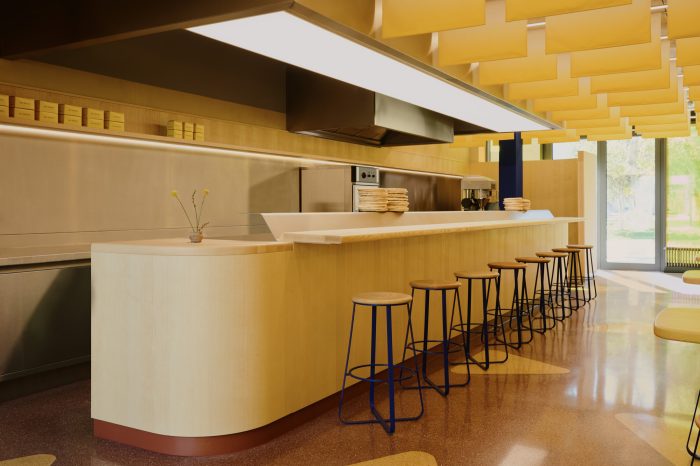
OKA Onigiri
Finally, as brands increasingly move towards agile, experience-led formats rather than fixed retail models, what is the future of retail design, and what responsibility do studios like Brinkworth have in shaping more conscious, resilient, and culturally relevant commercial spaces?
The recent shift towards agility is obviously economic but has accelerated a longer-running consumer trend. Not to get into big, complicated national, or global issues, but It’s no secret it’s been rough. Life is much more expensive than even the very recent past, leaving much less dough in people’s pockets, and that is having an effect on all the sectors we work with.
I think we have a big responsibility, to our own people, clients, and the public, to continue producing great work and enjoy the process of producing it. To create engaging experiences that remain culturally relevant, even in times of change. The key to resilient commercial spaces is flexibility, and creating physical, and cultural spaces that people really want to be in. The good news is, as proved time and again, people like being with people, IRL.
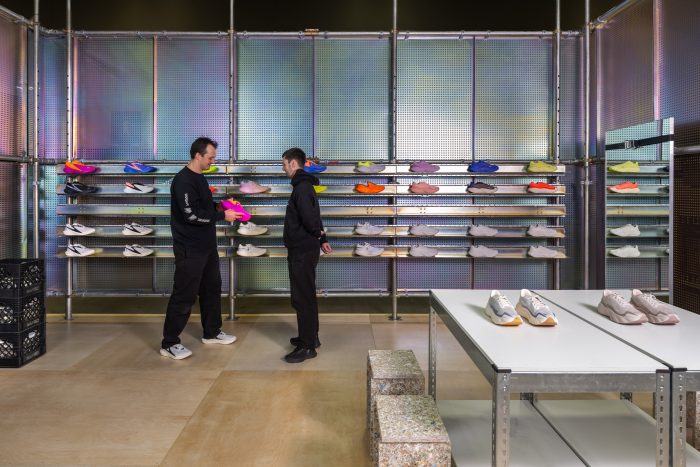
R.A.D® ‘Rally Against Destruction’ satellite booth