


Circular Surfaces
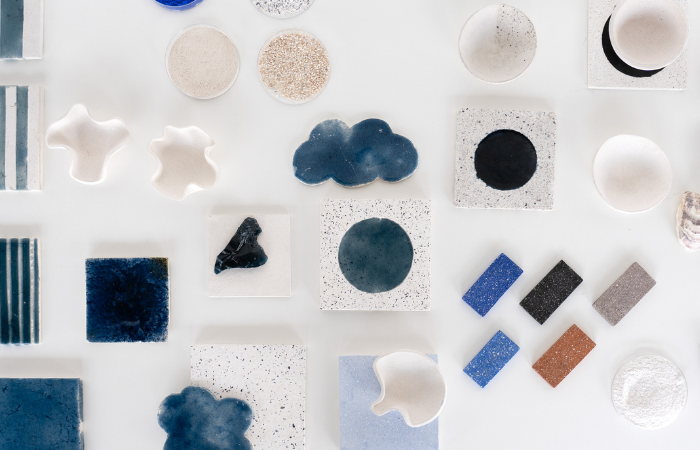
Walking the aisles of this year’s Surface Design Show, what was most striking was not just the sheer diversity of finishes, textures and techniques on display, but the volume of materials now rooted in circular thinking. From surfaces formed from post-consumer waste and industrial by-products to systems designed explicitly for disassembly, reuse and material recovery, the shift is unmistakable.
As we’ve been reporting, circularity is no longer a fringe narrative or marketing overlay; it is becoming a defining characteristic of material innovation. As conscientious specifiers know, the surfaces we choose carry environmental consequences long after installation, and the ability to specify materials that actively reduce extraction, minimise waste and extend material life cycles is now central to responsible design practice. This year’s show offered compelling evidence that circular production is not limiting creative ambition, but expanding it — delivering regenerative materials that are not only more sustainable, but richer in story, performance and aesthetic potential.
Here are some of our circularity highlights spotted at the Islington Business Design Centre.
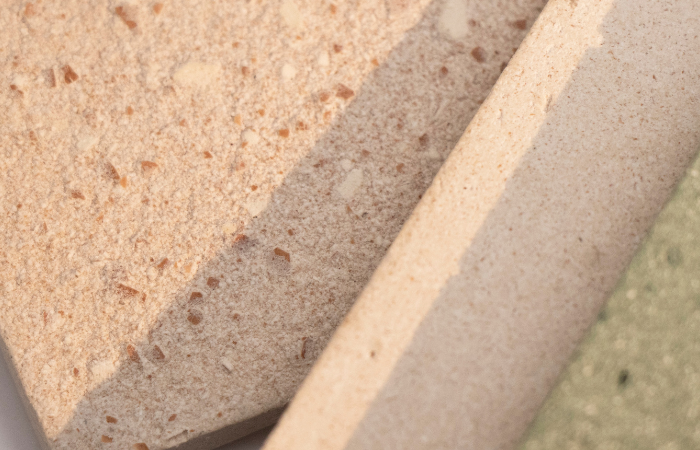
As we recently shared, Mobina Rajabimoghadam has been exploring the potential of eggshells. Composed of naturally occurring calcium carbonate crystals, shells are inherently a waste by-product, although the food industry hugely amplifies this, not least in the form of chicken eggshells. Much like Mobina, designer Helena Feng has been experimenting with chicken eggshells to see how the mineral content can be extracted and combined with bio-based binding agents to create composite materials that can be laminated to other substrates or moulded into solid surfaces.
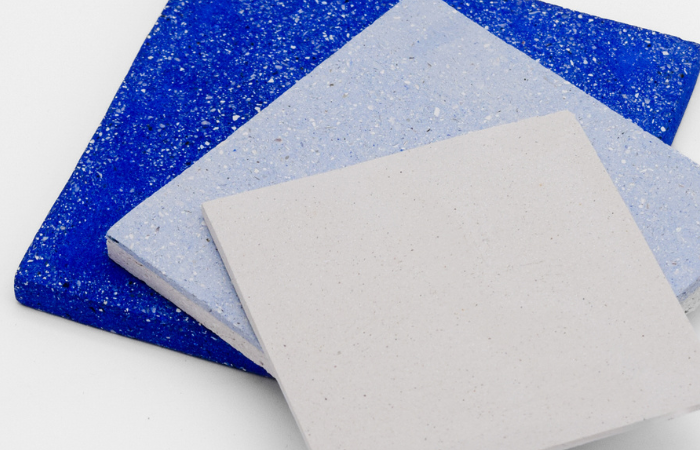
Of course, shells are also the mainstay of many sea creatures, including molluscs such as Oysters. Lisbon-based collective Fahrenheit 180 recognised that the bountiful by-product can also be transformed into a hard surface similar to ceramics, only without the intensive processing required during their manufacture. Their inherent pearlescent finish is homage to their origins, while also offering a unique finish, which can be coloured in an array of shades.
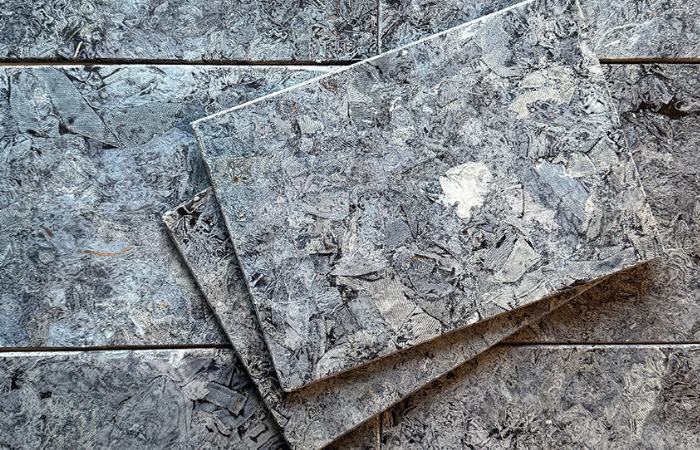
Reconstituting waste to form solid surfaces doesn’t necessarily require hard materials to do so, as proven by Josh Myers and Smile Materials during the show. The latter used the event an opportunity to launch the Fibres range, which metamorphoses textile waste, including post-consumer denim, into rigid boards.
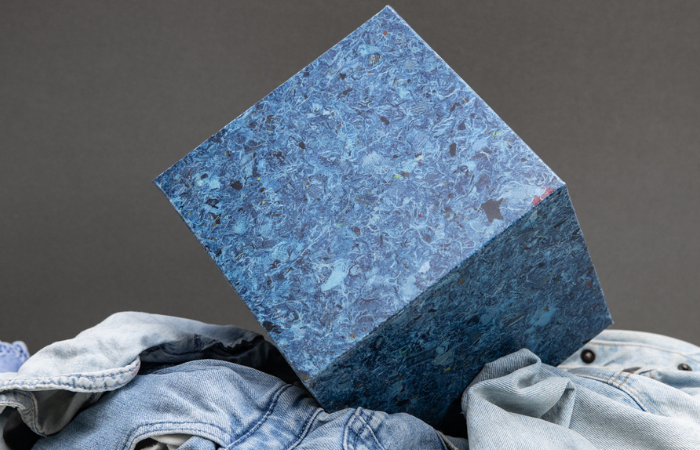
Proving that such material thinking is part of the current zeitgeist, young Designer Josh Myers has also been capitalising on the byproduct of one of our most beloved garments with the development of Denimolite. The composite board can be machined and joined like conventional panels, can is also available in blocks and brick formats.
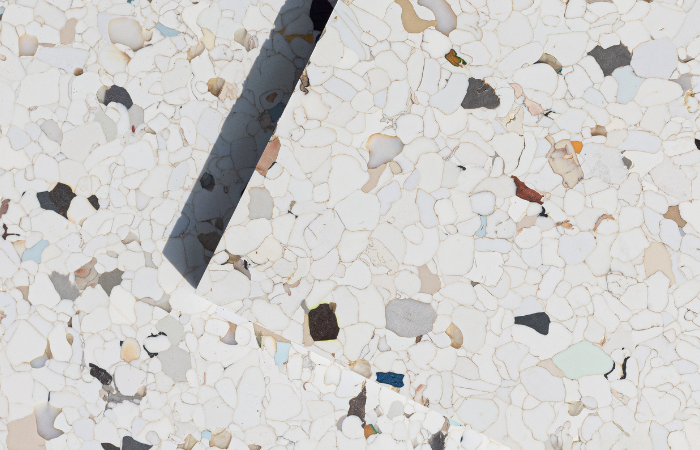
As ever, Surface Matter’s stand was a highlight of the show, with a rich mix of materials on display seeing architects and designers flock to the space like kids to a sweet shop. On display was a newly launched product that began as a student project a decade ago. Le Pavé tackles the problem of plastic waste, most of which is still buried or burned, by transforming it into high-performance surfaces. The material has already enjoyed a large public outing while forming new seating at the Paris Olympic Stadium.
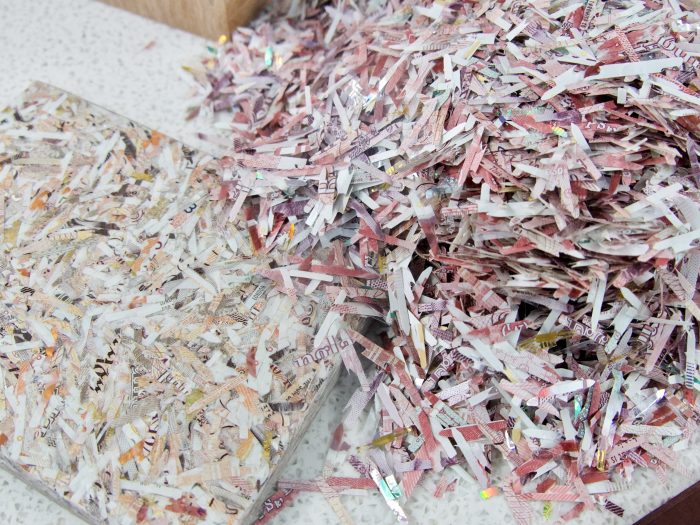
Another notable offering from Surface Matter included their still-in-development translucent surface, which is being made in collaboration with the Bank of England. Each year, countless tonnes of unusable plastic notes have to be shredded and disposed of. The team’s new composite material will divert such waste from the incinerator by creating novel surface materials.
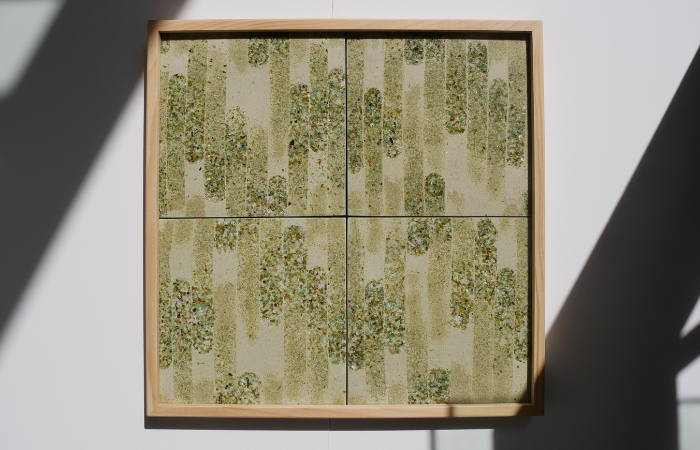
While glass is generally considered an infinitely recyclable substance, there are still occurrences when it reaches its maximum, and notably, there was very little glass on display across the event. Designer Wilfred Becret is valorising glass dust, the recycling residue from glass products that ordinarily gets buried as it is deemed unusable. For Becret it represents an opportunity, and in combining ceramic and glass making know-how, he has created a durable architectural cladding that is rich in texture and varying in shades.
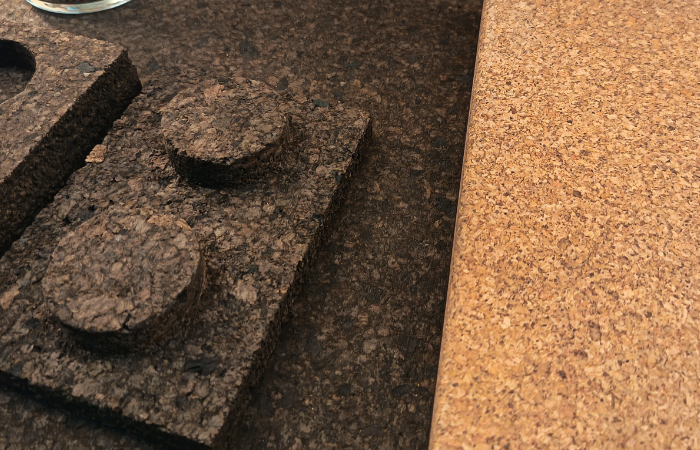
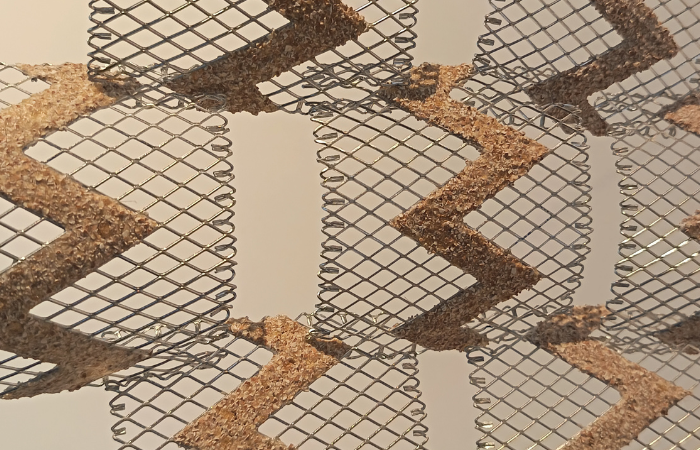
Much like glass, cork can be reconstituted or reused, even after it is granulated from its original virgin form. As a pure expansion of scale of the age-old process of creating moulded cork stoppers, Suberra is producing large-format cork panels at volume. Coming in a light and dark format, the product can be made in varying thicknesses, and its natural water repellency even makes it a viable surface for worktop applications.
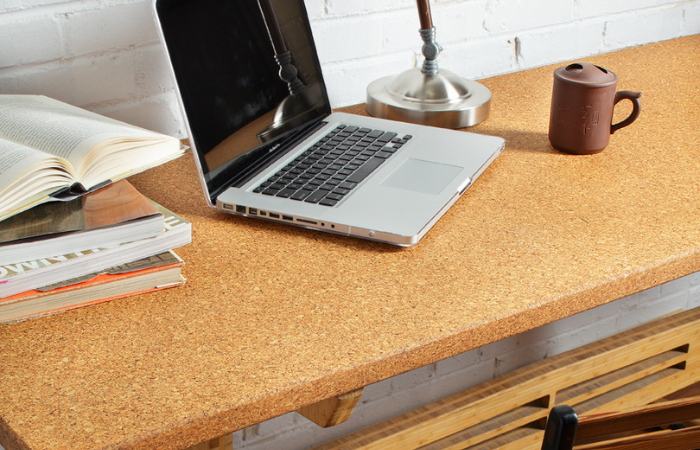
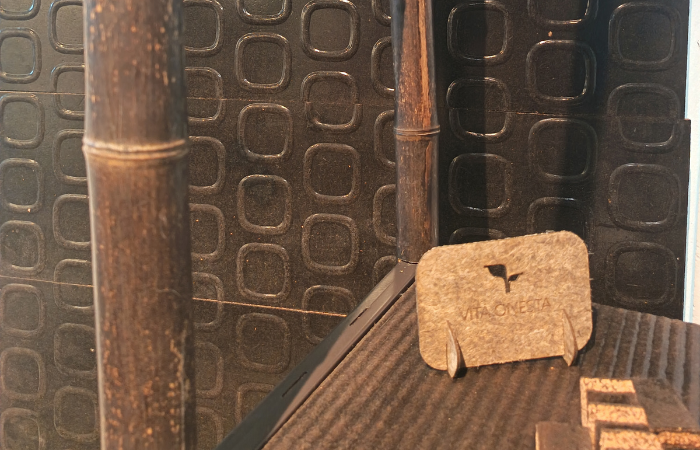
For designer Anna Eerdmans, cork has offered the perfect substrate for her experimentation with coffee grounds and hemp. A member of Barbara Chandler’s Green Grads, she launched Vita Onesta at the show, which is the culmination of a sustained period of development with these regenerative materials.
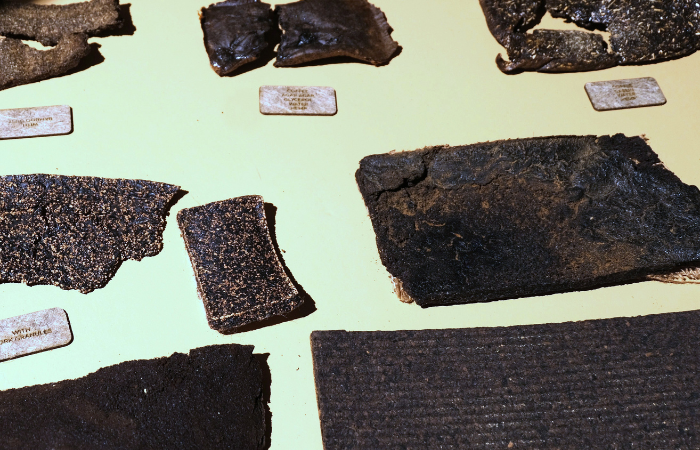
The products on display include a Dieter Rams inspired shelving unit, only here the structure is made from fast-growing bamboo, with shelves created from a combination of pressed hemp and used coffee that are made stable by a lightweight cork inner layer.