





Cityhub’s Hospitality Blueprint for Adaptive Reuse
Across European cities, large amounts of commercial space sit vacant, often overlooked or else dismissed as too constrained or awkward to reuse. At the same time, architects and developers are under growing pressure to densify urban centres while cutting embodied carbon, and all without erasing the character that made those places work in the first place.
Hospitality, with its appetite for central locations and flexible layouts, sits right in the middle of that tension.
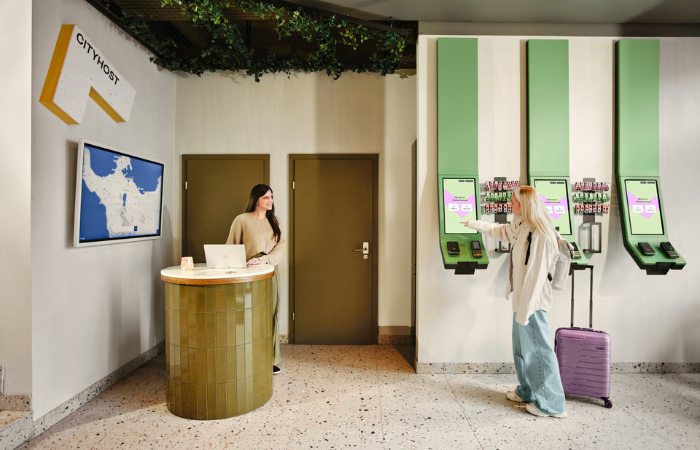
CityHub’s luxury pod-style hotels offer a persuasive and effective approach to the conundrum. From the outset, the concept has been built around adaptive reuse, working exclusively within existing buildings and treating their limitations as a starting point rather than a problem to be solved away.
Instead of forcing a standard hotel plan into every site, CityHub inserts compact, modular “Hub” rooms into old shells, freeing up space for generous shared bathrooms, hangout areas and social spaces that become the heart of each project. Density is achieved through spatial intelligence, not demolition.
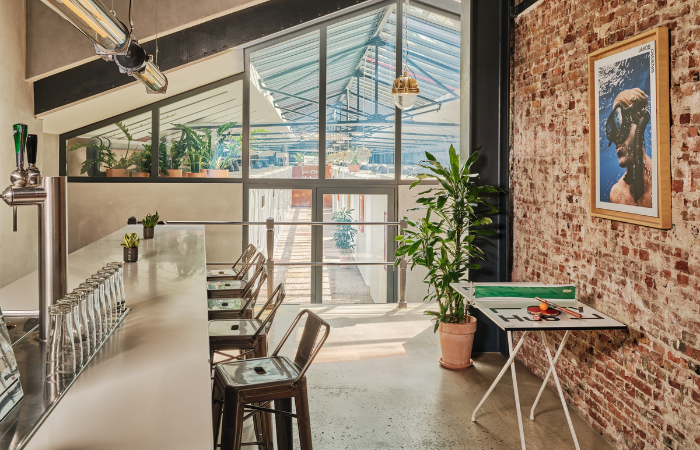
The first CityHub opened in Amsterdam, repurposing a former warehouse and setting the template for what would follow. The deep floor plates and industrial structure lent themselves to a pod-based approach, allowing a high number of rooms without compromising comfort or atmosphere. Rotterdam followed, this time within an office block. Again, the project worked with what was already there, adapting to structural grids and existing cores rather than stripping everything back.
In Copenhagen, CityHub took over a former food market, layering contemporary interventions into a space already associated with social life and shared experience. The emphasis on communal hangout areas felt particularly at home here, blurring the line between hotel and urban living room while preserving the memory of the building’s previous use.
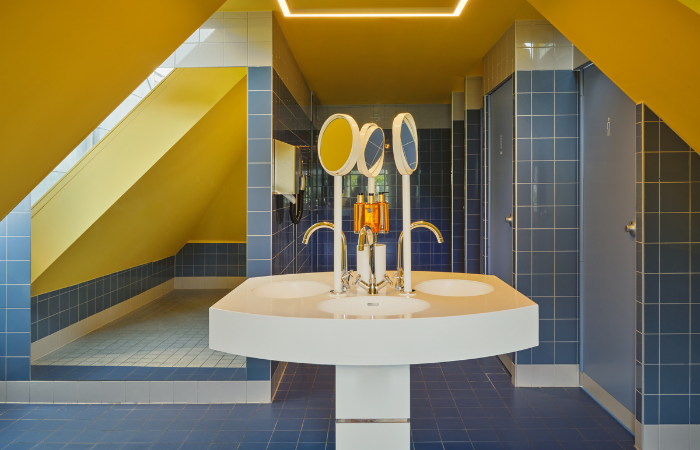
With all of these projects, what might once have been written off as commercially marginal was transformed into a viable hospitality destination that retained the raw character of the original building. The CityHub model has proved to be flexible enough to sit comfortably within a variety of different types of buildings, reinforcing the idea that reuse-led hospitality can be scalable without becoming generic.
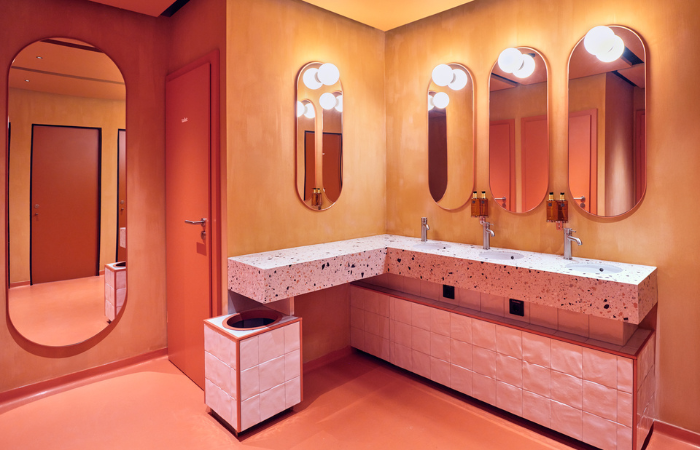
That same approach underpins the more recent Reykjavik project, developed in collaboration with HAF Studio. Here, a long-vacant building has been reactivated through the insertion of prefabricated Hubs and spa-style shared bathrooms, with communal spaces inspired by Icelandic bathing culture.
A geothermally heated rooftop hot tub connects the project directly to its local context, while the compact room strategy allows roughly double the room density of a conventional hotel within the same footprint. Lifecycle thinking is embedded throughout: by retaining the existing structure and avoiding demolition, the project is set to cut lifecycle carbon per guest by up to 89%, without compromising comfort or convenience.
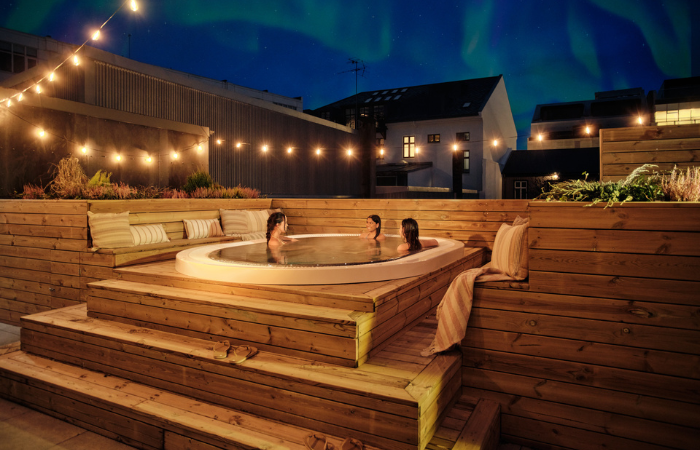
CityHub Reykjavik opened this summer in Hverfisgata, with 89 Hubs and four accessible rooms. Working alongside developers Thingvangur and local designers HAF Studio, the interiors draw on Iceland’s colourful landscapes, with a charismatic hangout area designed to encourage guests to linger, plan and connect. The timing is apt, with year-on-year increases in overnight stays suggesting more and more people are looking to visit the city.
Sem Schuurkes, Founder of CityHub, comments:
“Iceland is breathtaking and on so many travel bucket lists, but it does have a reputation for sometimes being an expensive place to visit.”
The space is a tonic for travellers looking for comfortable but affordable accommodation, as Sem underlines it;
“offers an unconventional alternative to your classic accommodation in the area for people who previously considered Iceland to be beyond budgets and reach.”
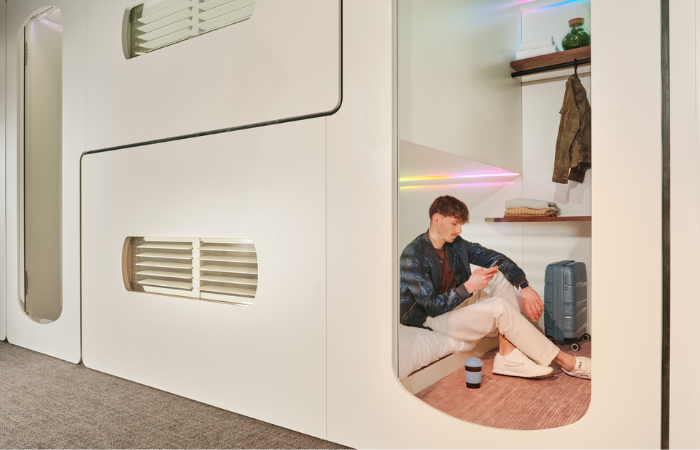
The next chapter takes CityHub into Germany for the first time, with the adaptive reuse of the historic Hotel Pacific in Hamburg. Unlike earlier projects that converted non-hotel buildings, this marks CityHub’s first hotel-to-hotel transformation. In partnership with lead investor and local developer Köhler & von Bargen, the existing 52-key building will be reworked into a 110-room CityHub by deploying the same modular Hub strategy that has proven itself elsewhere.
Remco Gerritsen, CEO of CityHub, explains their choice of city for the new venture:
“Hamburg is one of Germany’s most dynamic and fastest-growing destinations, making it a natural fit for the next phase of our European expansion. Our ambition is to build a connected network of CityHub Hotels in key urban centres across Europe, providing modern travellers with a consistent, design-led experience that blends privacy, technology and affordability.”

The CityHub prefab plug-and-play approach is financially efficient and therefore a compelling prospect for investors, and the spaces benefit from a certain amount of Wes Anderson styling. But central to it all is a reduction in embodied carbon. By reducing the need for new construction, the team are helping to show how cities can evolve in the future while being more circular and sustainable.
Taken together, CityHub’s growing portfolio suggests a different way forward for hospitality architecture. Rather than seeing existing buildings as obstacles to be overcome, these projects treat them as assets, unlocking overlooked spaces and extending the life of the urban fabric that might otherwise be lost. In doing so, CityHub reframes adaptive reuse not as a compromise, but as a catalyst for more resilient, lower-carbon cities.