




Column: What happens to workplace design when screens disappear?
Monthly Column By Anthony Brown
Monitors have been a firm staple of the office environment for decades, colonising desks and the ways our offices are designed around them. Now, advances in technology hint that this era of screen-dominated workspaces could be nearing its end.
OpenAI and Jony Ive are reportedly developing a palm-sized, screenless device (now delayed beyond 2026) that relies on audio and visual sensors to respond to users in their environment. If this idea works, it could mark a turning point for how we use tech, and pave the way for a screenless future. Furthermore, if screens become optional rather than essential, what should workplace design be planning for now?
Medium-Term: Hybrid Screen-Voice Environments
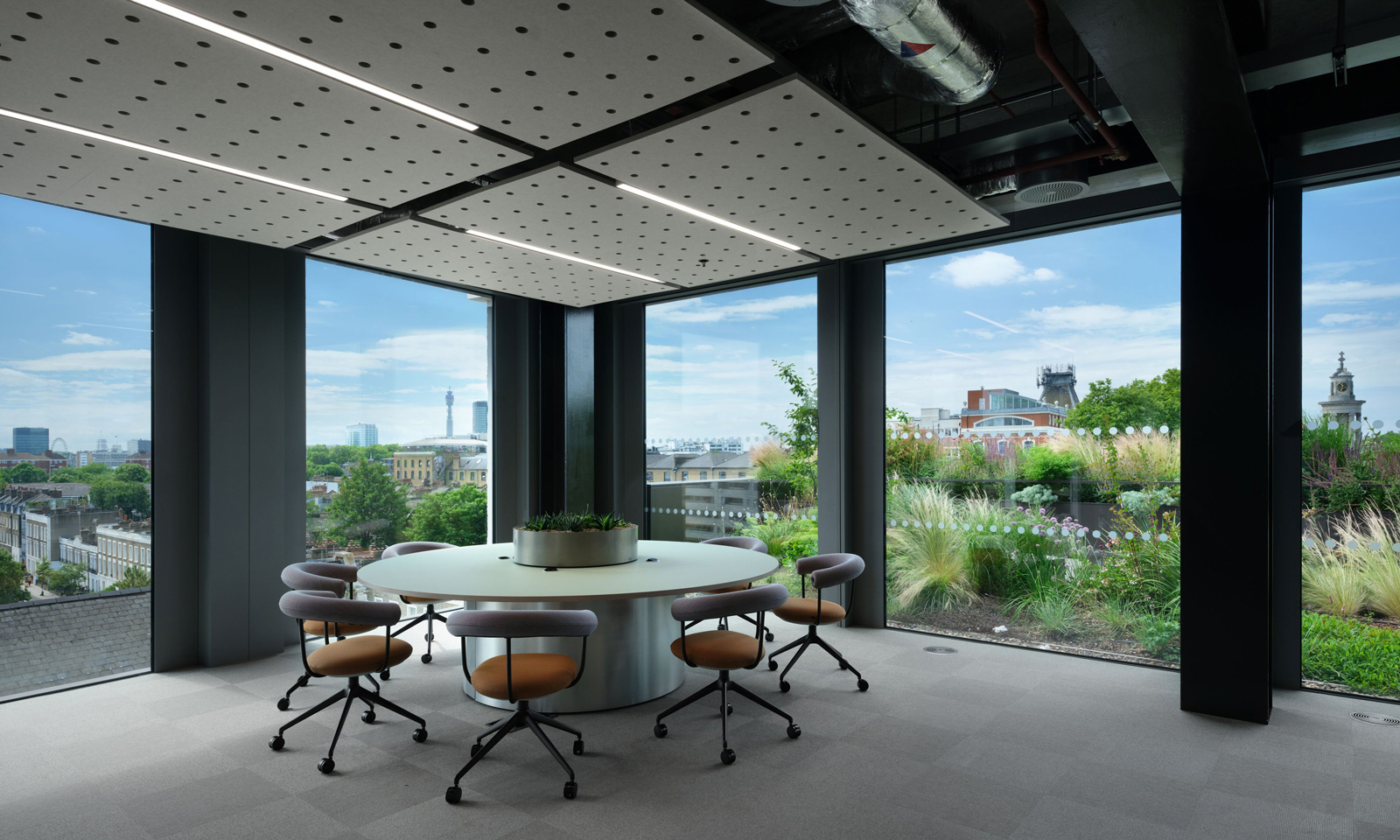
In the next five to ten years, offices could move toward mixed modes of work. Screens will remain for visual complexity, but voice-first tools could handle meeting notes, scheduling, quick data retrieval, and real-time context during conversations. For workplace design, this will mean that desks no longer need to be centered around fixed monitors and meetings may become less focused on shared slides and more on structured conversation. In these office spaces acoustic privacy will take precedence over visual barriers and collaboration will rely more on presence, gesture, and dialogue than on shared displays.
Longer-Term: Space as Interface
In a decade, workplaces might evolve into responsive instruments. Walls and office furniture embedded with sensors could act as interfaces and be adjusted intuitively rather than anchoring to a screen. The question then becomes what does flexible space mean when the technology itself is embedded rather than portable?
Cultural shifts
The shift is unlikely to be fast or absolute, in fact some users will still prefer or require visual interfaces over voice-based systems. The goal isn’t to replace the screen but to start seeing where screens offer the most value in workplace design and function, rather than treating them as the default.
We’re approaching a point where the principles that guided office design for decades will need reconsidering. No longer shaped by desks and screens, there is now an exciting opportunity to turn the office on its head. It’s time to get creative with our workspace design and fit out.
Written by Anthony Brown, CMO at BW: Workplace Experts