









Designing for the Next Generation: Inside Grimsby’s Horizon Youth Zone
Horizon Youth Zone, Grimsby
In towns like Grimsby, the case for investing in youth spaces is both urgent and underfunded. As local authorities grapple with stretched budgets and shrinking public provision, the challenge is not simply to build new facilities, but to reimagine what civic architecture can offer the next generation.
Horizon Youth Zone, newly completed on the banks of the River Freshney, is a compelling response. Designed by London-based John Puttick Associates, the project fuses heritage-led regeneration with social ambition, transforming a cluster of disused Victorian warehouses into a vibrant campus for young people at the heart of the town.
Horizon sits at the centre of Grimsby’s wider regeneration strategy, acting as both catalyst and anchor for the revival of an area long associated with industrial decline. The L-shaped complex occupies a prominent riverside site, bringing new civic presence to buildings that once served the town’s fishing and manufacturing economy.
For John Puttick Associates, whose portfolio spans education, cultural and community projects, the commission builds on a decade-long collaboration with youth charity OnSide. Since first partnering in 2015, the practice has developed a reputation for designing Youth Zones that are robust, inclusive and architecturally distinctive, balancing operational demands with a strong civic identity.
The Grimsby project, secured through this partnership, began in 2018 with a brief that extended beyond simple refurbishment. The ambition was to create a new kind of civic campus, one that could accommodate sport, performance, enterprise, wellbeing and informal social activity under a single roof, while respecting the powerful architectural character of the existing buildings.
The site’s historic layers are rich and complex. Dating back to 1821, the original riverside warehouses were constructed as granaries before later conversion into maltings, producing the regionally renowned ‘Sandars’ malt by the mid-20th century. Subsequent adaptations saw the buildings repurposed as a billiards hall, sawmill, box factory and cake and seed warehouse, before falling vacant in the 1990s.
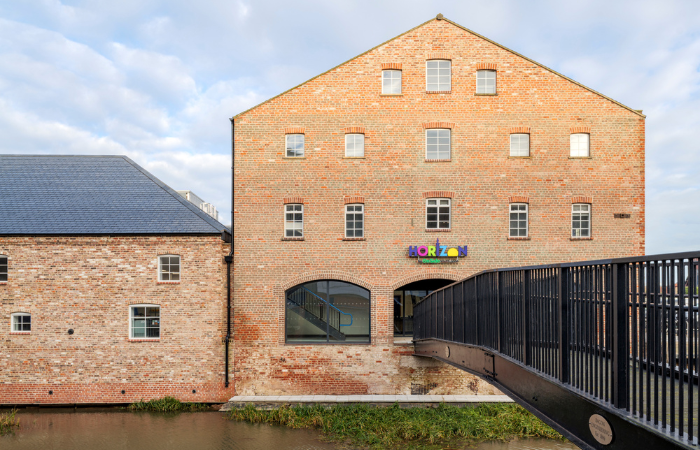
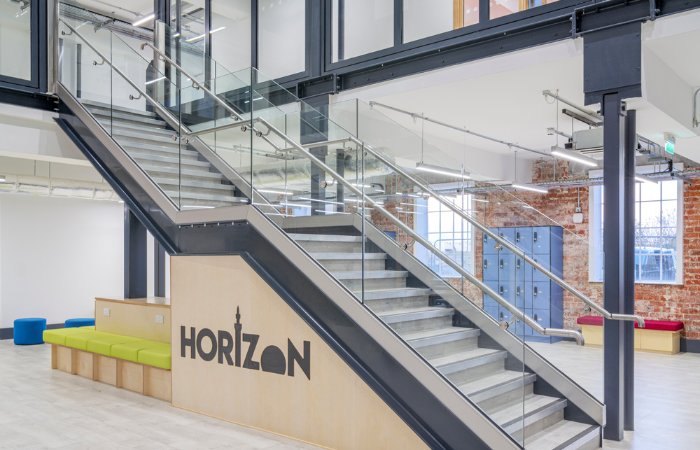
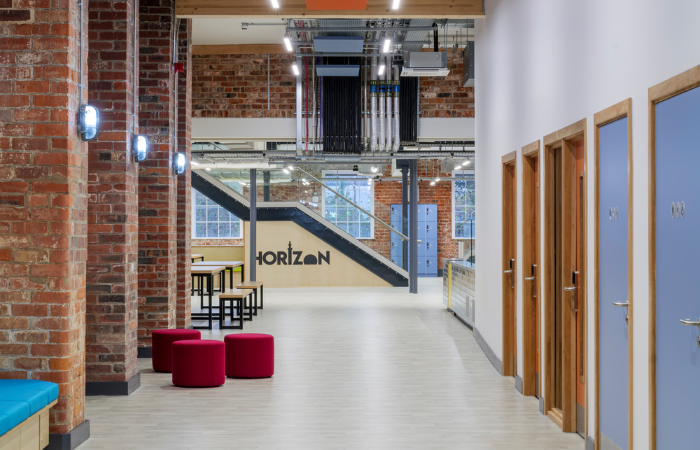
Approaching the building via a pedestrian bridge across the River Freshney, visitors enter a triple-height central space that immediately establishes Horizon’s civic character. This generous volume forms the social heart of the building, opening into a café and recreation areas before branching into a network of activity rooms.
The spatial sequence is carefully choreographed, guiding users intuitively through the complex plan of the historic structures. Circulation routes thread through interconnected warehouse volumes, overcoming structural constraints while ensuring clarity of movement for young people navigating the building independently.
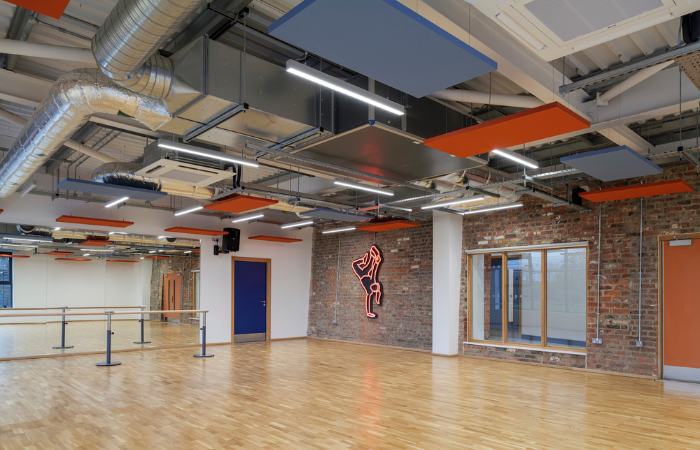
Programme distribution is equally considered. Creative spaces for arts, crafts, enterprise and wellbeing occupy the refurbished buildings, while specialist facilities, including an inclusion room for users with complex sensory needs and a fully equipped hygiene suite, are integrated discreetly into the plan. The aim here was to avoid segregating provision, instead embedding inclusivity into the everyday experience of the building.
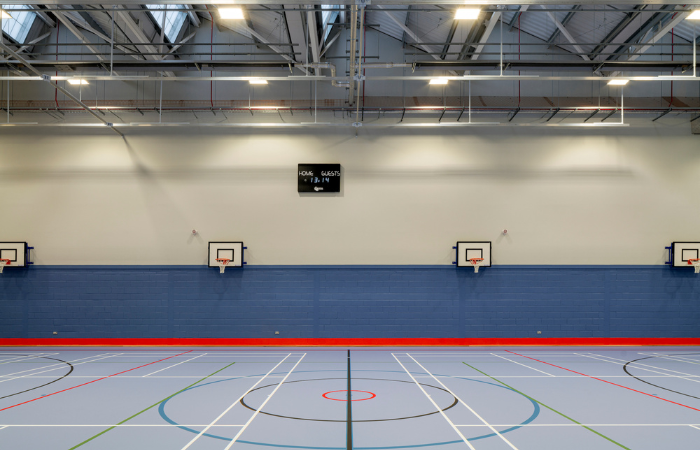
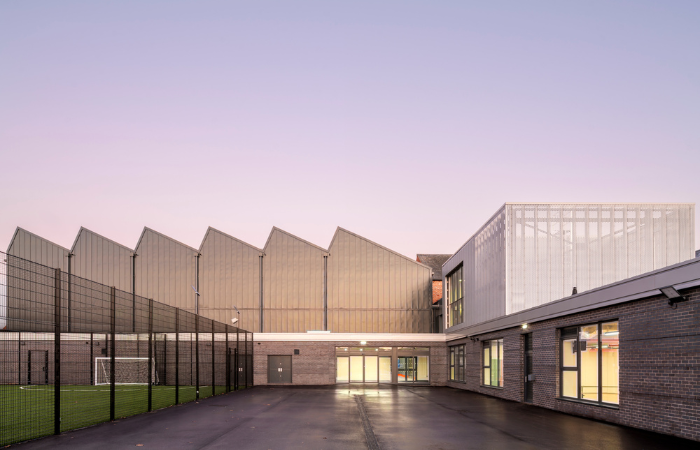
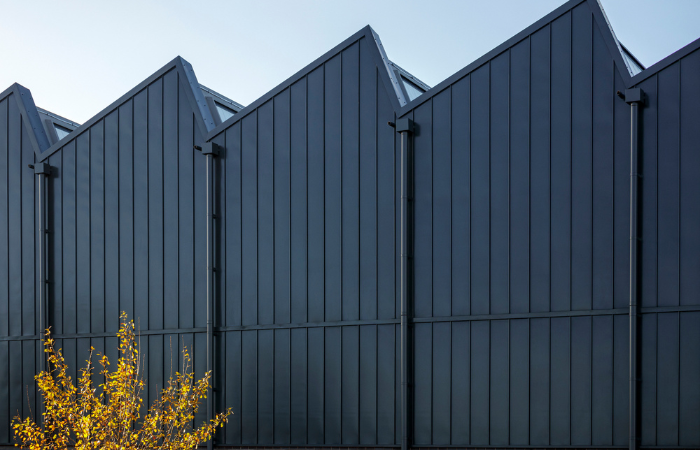
The new-build wing accommodates the more physically demanding elements of the brief: a full-size sports hall, climbing wall, performance space and teaching kitchen, totalling 1,115 square metres. Its zinc-clad sawtooth roof references the site’s industrial heritage while delivering high-quality north light to the sports hall below.
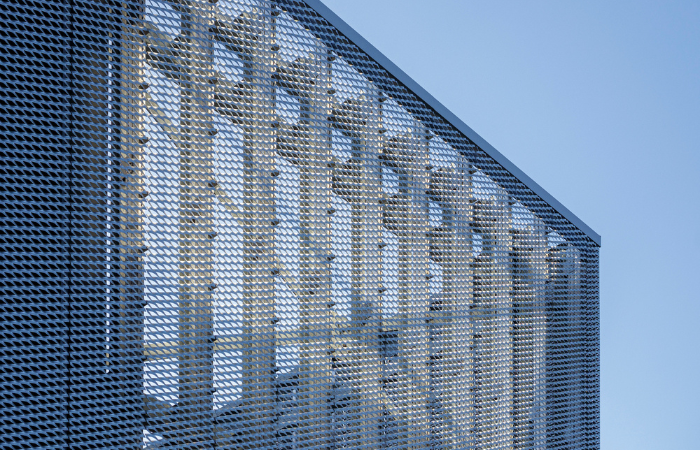
South-facing roof slopes incorporate photovoltaic panels and wind catchers, combining energy generation with natural ventilation. A tall, expanded metal mesh enclosure wraps the climbing wall, creating a striking lantern-like form that animates the riverside elevation, particularly after dark.
Material strategy plays a critical role in unifying old and new. Dark grey brickwork and aluminium mesh cladding provide a contemporary counterpoint to the restored Victorian masonry, while slate rooflines and arched window openings reinforce continuity with the historic fabric.
Externally, the revitalised riverside façade and refurbished footbridge re-establish the buildings as a key part of the townscape. To the north, the L-shaped plan shelters a new outdoor zone incorporating a football pitch, skate area and raised planters, offering flexible space for informal play and socialising.
The retrofit of the historic warehouses demanded a high degree of technical and conservation expertise. Large arched openings and distinctive window patterns were carefully restored or reconstructed, reinstating the original rhythm of the elevations.
Bricks salvaged from dilapidated sections of the complex were reused to rebuild the ageing river wall, while exposed internal brickwork and timber trusses were retained wherever possible, allowing the building’s industrial past to remain legible. These decisions not only preserve character but also contribute to a tactile, robust interior environment well suited to intensive use.
What’s more, environmental performance was embedded into the design from the outset. Retaining and upgrading the existing structures significantly reduced embodied carbon, while improved insulation, natural ventilation strategies, and on-site energy generation deliver a 54 per cent improvement in operational energy efficiency over a benchmark building of its type.
For John Puttick Associates, sustainability is inseparable from longevity: creating buildings that are both environmentally responsible and durable enough to withstand decades of intensive occupation.
What’s refreshing to hear here is that collaboration was central to the project’s success. Alongside OnSide and Horizon Youth Zone, the design team worked closely with North East Lincolnshire Council, Historic England and, crucially, local young people. Workshops and consultations informed both spatial layout and material choices, ensuring the building reflects its users’ aspirations.
As John Puttick, Director at John Puttick Associates, notes:
“It has been a long and fascinating journey through design and construction, and transforming these historic warehouses into a youth hub has been incredibly rewarding. It’s very exciting to see the revival of a key part of Grimsby’s townscape contributing towards renewal of the town centre and the life of the community for the future.”
That sense of civic renewal is tangible throughout the scheme. The architecture avoids overt monumentality, instead favouring openness, daylight and material warmth. Charlotte Ireson, Associate at the practice, explains:
“Horizon Youth Zone allowed us to balance heritage conservation with modern facilities. From the triple-height social space to the outdoor kick pitch, it’s wonderful to see young people interacting with the building and enjoying it fully. By blending historic architecture with bold contemporary design, we aim to create a vibrant destination where young people feel a genuine sense of ownership and connection.”
For the client team, the transformation of a long-derelict site carries profound symbolic weight. Lucy Ottewell-Key, Chief Executive Officer of Horizon Youth Zone, reflects:
“Seeing the way the landscape has changed throughout this project has been so exciting. For many people in Grimsby, we were used to seeing a derelict site in the heart of our town centre. Now, thanks to the incredible construction work, this historic building gets to have a new lease of life and live on for future generations. This project has been a perfect blend of old and new, bringing our heritage to the forefront and providing a safe and inclusive space for the children and young people of North East Lincolnshire.”
Beyond its immediate social impact, Horizon offers a compelling model for how heritage assets can be reactivated to support contemporary civic life. In an era when many historic industrial buildings face uncertain futures, the project demonstrates the potential of thoughtful adaptation, underpinned by strong partnerships and a clear social mission. For John Puttick Associates, it reinforces a practice ethos rooted in contextual intelligence, material sensitivity and user-focused design.