




Designing Identity Through Restraint: Thirdway’s Junal Barboza on Airwallex’s London Headquarters
Design Insider sat down with Junal Barboza, Architect and Designer at Thirdway, to explore the thinking behind Airwallex’s London headquarters and what it means to translate a global fintech brand into a workplace that communicates identity through design rather than decoration.
Located within the Wells and More building, the 16,000 sq ft workplace represents a careful balance between global brand expression and spatial maturity. Rather than relying on overt graphics or brand colours, the project demonstrates how architecture, materiality and spatial planning can communicate identity in a more subtle and enduring way.
For Junal, who worked on the project from early test-fitting through to delivery, the design process combined conceptual thinking with the practical realities of construction.
“I worked on the Airwallex project from conception through to delivery,” he explains. “I was engaged with the design through the early test-fitting and visualisation stages and then carried that design through to completion, spending time on site to ensure any challenges were resolved collaboratively.”
That continuity between design and delivery reflects Thirdway’s broader approach as a design-and-build studio. With architecture, furniture and technical expertise integrated within the practice, projects can be developed holistically rather than passing between separate teams.
Translating a Global Bran
d Without Graphic Noise
Designing a headquarters for a global fintech company inevitably raises questions about brand identity. Many organisations approach workplace design by embedding logos, colours and graphic motifs throughout the interior. Airwallex, however, required a more considered approach.
The London office needed to communicate the company’s scale and ambition while avoiding the visual language of the stereotypical “tech office”. Instead of relying on graphic branding, the design team focused on atmosphere and spatial clarity to create a workplace that feels recognisably Airwallex without constantly announcing it.
“We focused on quality rather than heavy branding,” Junal says. “The idea was to express the brand through subtle details rather than something loud or overly graphic.”
This strategy reflects a wider shift within workplace design, particularly among more established technology and fintech companies. As businesses mature, their workplaces often move away from highly expressive interiors towards environments that communicate confidence through restraint.
At Airwallex, that restraint is evident in the tone of the interior. The workplace feels calm and grounded, reflecting both its London setting and the company’s global outlook.
Workplace as Cultural Infrastructure
Beyond brand expression, the office needed to support the culture of the organisation itself.
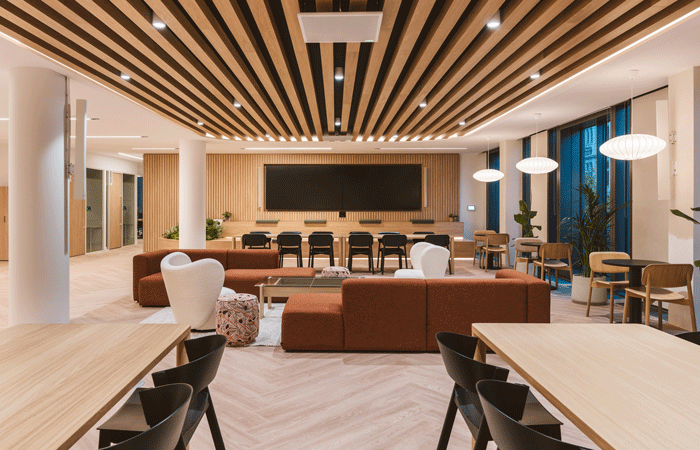
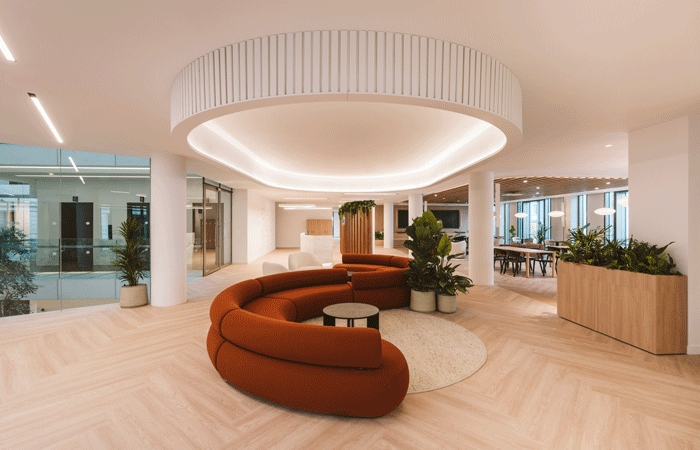
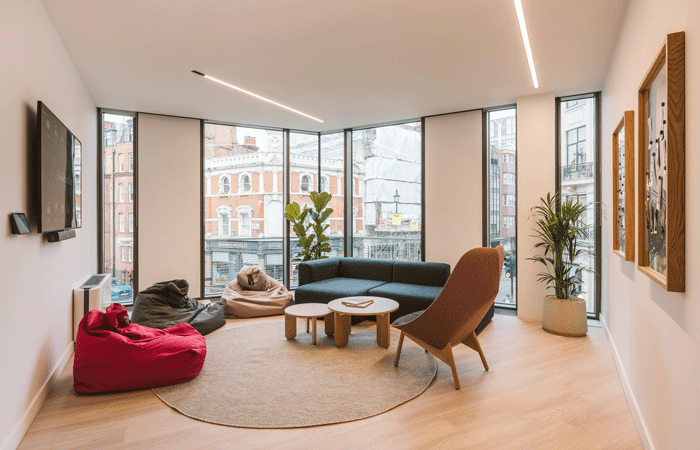
The design responds to the need for spaces which nurture interaction, collaboration and shared experience by organising the workplace around a central social hub. This area acts as both a circulation anchor and a communal platform where employees can gather informally or attend company-wide events.
“We wanted to create areas people actually want to spend time in,” Junal explains. “Places where they can step away from their desks and interact.”
Alongside this central space, a series of more intimate environments provide alternative settings for conversation and collaboration. A sunken conversation pit introduces a softer, more informal atmosphere, encouraging employees to move fluidly between different modes of work.
This layered approach reflects an understanding of the office as a social ecosystem rather than a static workplace layout. Instead of designing for a single type of work, the scheme supports multiple behaviours throughout the day.
Material Warmth and Spatial Legibility
Materiality plays a significant role in shaping the identity of the workplace. Rather than relying on corporate finishes or overt brand colours, the palette centres on warm timber tones and textured surfaces that create a sense of depth and permanence.
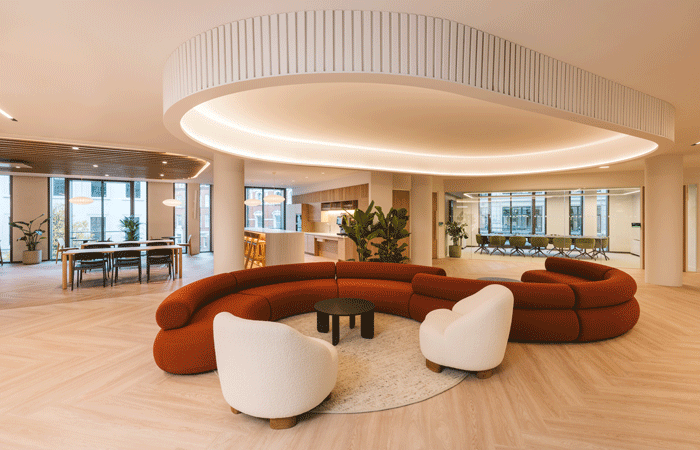
“We used a lot of rich timber tones throughout the space,” Junal says. “They create warmth and help make the environment feel welcoming rather than corporate.”
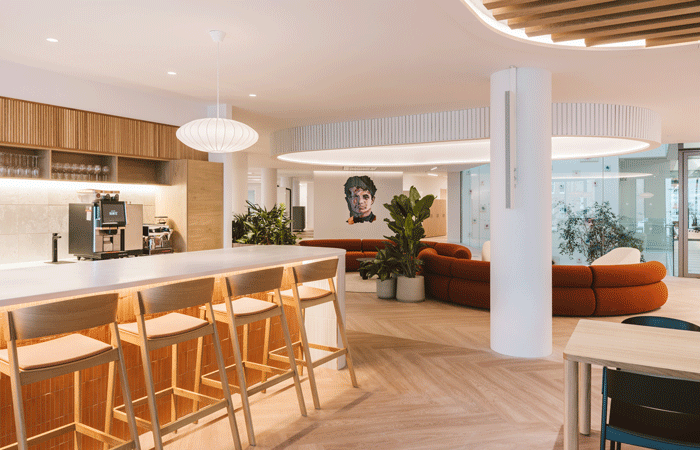
Timber slat walls and curved feature elements soften the architectural language of the interior, while lighter ceilings maintain a sense of openness and volume. These elements work together to create a workplace that feels refined without becoming overly formal.
Material transitions also serve a functional purpose. Changes in flooring and texture subtly guide movement through the office, helping employees intuitively understand how different areas are intended to be used.
“That natural wayfinding became really important to us,” Junal explains. “The materials help create a natural journey through the space.”
Responding to the Host Building
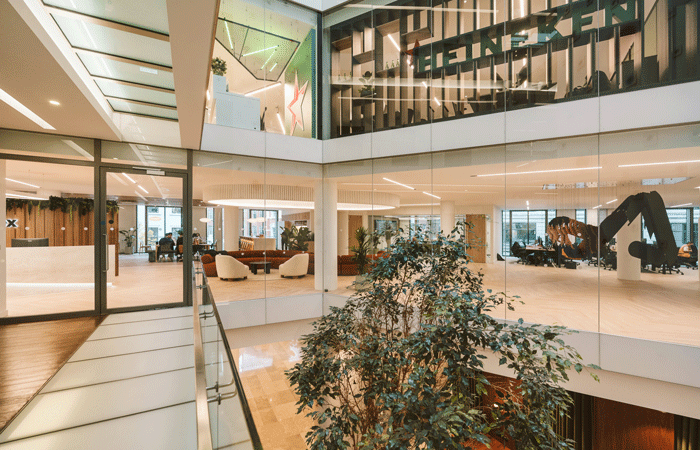
The Wells and More building provided a strong architectural foundation for the project. Rather than imposing a new design language, the interior was developed in response to the building’s existing rhythm and character.
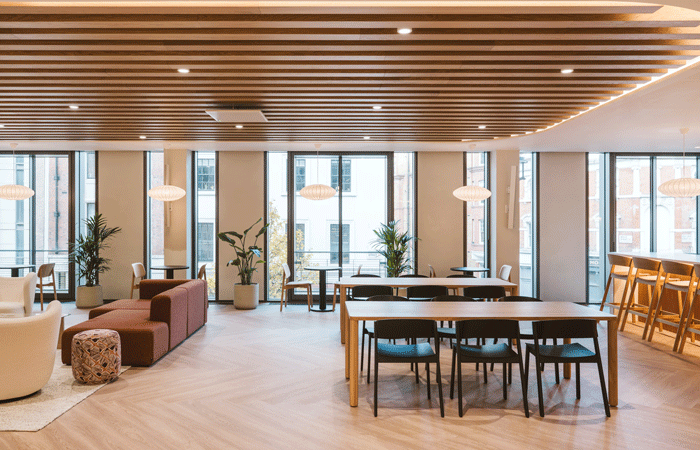
“It’s a beautiful building with a strong architectural presence,” Junal notes.
The building’s generous glazing and central atrium bring natural light deep into the floorplate, while its mechanical systems and environmental performance provided a robust base for the workplace design. Instead of competing with these qualities, the interior design reinforces them.
“We worked with the proportions and the spatial flow of the building,” he says. “The materials were chosen to complement the architecture rather than compete with it.”
This approach reflects a key principle of architectural design: the most successful interiors rarely dominate their host buildings but instead amplify their existing strengths.
Designing Flexibility That Feels Intuitive
Flexibility is often cited as a defining requirement of contemporary workplaces, yet many offices struggle to translate this concept into environments that feel genuinely adaptable.
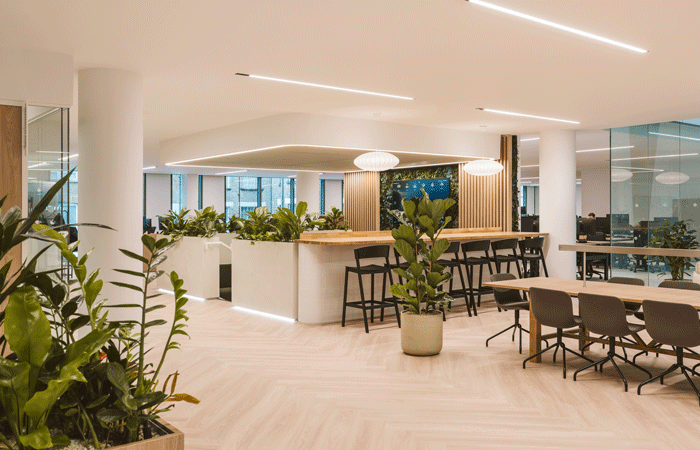
At Airwallex, flexibility is achieved primarily through spatial planning and furniture rather than structural interventions. The central social hub, conceived as the “beating heart” of the office, is designed to support a variety of activities throughout the day.
Movable furniture allows the space to shift between everyday use and larger gatherings such as town hall meetings or company events. Stepped seating elements provide a focal point for presentations while still functioning as casual seating during the working day.
Elsewhere, a variety of settings – from collaborative tables to soft seating – creates a layered workplace landscape.
“We relied more on strategic furniture placement than fixed partitions,” Junal says. “That allows the space to evolve as the business grows.”
Importantly, the flexibility of the workplace is designed to feel natural rather than imposed. Lightweight furniture and open spatial planning allow employees to adapt the space without feeling constrained by rigid layouts.
A Sculptural Expression of Brand
One of the most distinctive features of the office is a bespoke artwork by internationally recognised artist Michael Murphy. Integrated into the architecture, the piece uses optical illusion to shift between two images depending on the viewer’s perspective.
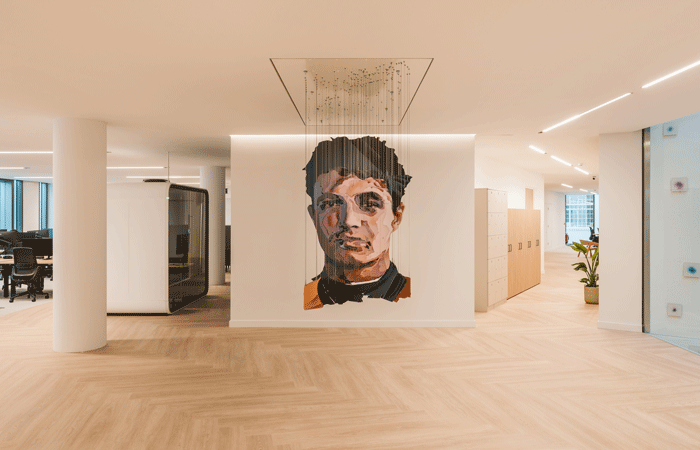
From one angle the Airwallex logo appears; from another, the image of Formula One driver Lando Norris emerges, referencing the company’s partnership with the sport.
“It was an amazing opportunity to work with someone like Michael Murphy,” Junal says. “His work is about movement and perception, which aligned well with the brand.”
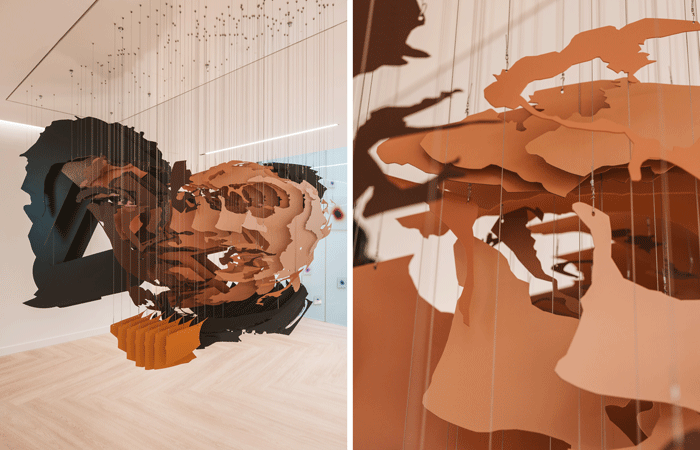
Unlike many workplace artworks, the piece was conceived early in the design process. The surrounding architecture was planned to frame the installation, ensuring that it becomes a central moment within the spatial journey of the office.
As employees and visitors move through the space, the artwork gradually reveals its dual identity, transforming a brand reference into a spatial experience.
Designing Offices People Choose to Use
For Junal, the Airwallex project reflects a broader shift in how workplaces are designed and evaluated.
Rather than focusing solely on aesthetics or brand visibility, successful workplaces must support the behaviours and needs of the people who occupy them.
“Global brands don’t necessarily need loud offices,” he says. “They need spaces that reflect who they are and support the people using them every day.”
Inclusivity forms part of that approach. Accessible tea points, clear circulation and thoughtfully designed communal spaces ensure the workplace can support a wide range of users.
Ultimately, the goal is to create an environment where employees feel comfortable and engaged.
“One of the things we often talk about at Thirdway is creating offices that people want to go to rather than have to go to,” Junal explains.
Looking Ahead
Looking ahead, Thirdway is in the process of creating their own new headquarters — an ambitious 21,000 sqft project for which their team are delivering the Architecture, Design & Build, Furniture, and Technology solutions to completely transform the building.
The new office will function as both workplace and a living showroom, sparking creative ideas whilst helping visitors navigate the practical demands of delivering a space.
If the Airwallex project demonstrates anything, it is that the most effective workplaces are not necessarily the most visually expressive. Instead, they are environments where architecture, culture and identity are carefully aligned – spaces where design quietly supports the people who use them every day.
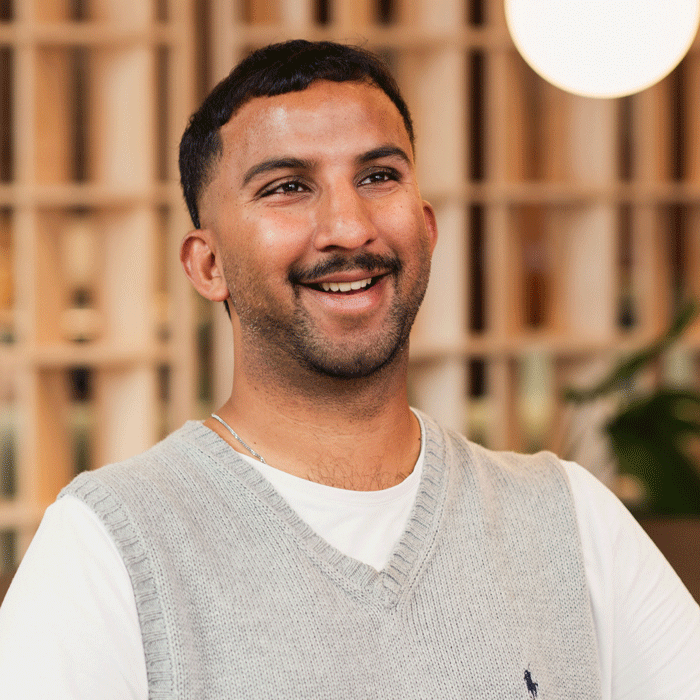
Junal has worked on projects of varying scale and complexity across London, collaborating closely with landlords and tenants to create considered, high-performing spaces. His experience spans workplace environments and commercial fit-outs, where coordination, adaptability and clear communication are essential.
Calm and detail-driven in his approach, Junal balances strong design thinking with technical rigour and commercial awareness. He is committed to delivering thoughtful, buildable solutions that bring teams together and turn shared ambitions into well-crafted, successful spaces.