









Female Leadership Q&A: OBMI London with Wiktoria Kopycka, Associate Design Director
As OBMI expands its presence across Europe, its new London studio marks a major moment for the global hospitality and resort design practice. The studio has launched under an all-female leadership team, setting the tone for a new chapter defined by confident creative direction and a deeply collaborative way of working.

In this exclusive interview, Design Insider speaks with Wiktoria Kopycka, Associate Design Director at OBMI London, about what it takes to establish a new studio in one of the world’s most influential design cities.
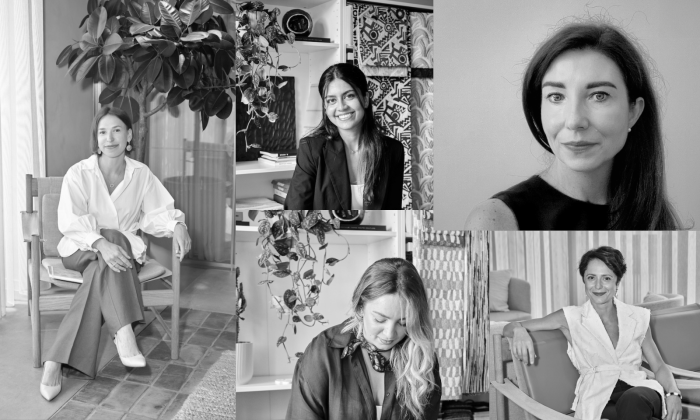
The team at OBMI London
1. To begin, could you introduce OBMI’s London studio – how and why it was established, and what this new chapter represents as the firm strengthens its presence in Europe?
Wiktoria Kopycka: OBMI London started as a bit of an adventure. We wanted to bring OBMI’s global legacy – all that history of design and storytelling – into a London context. It’s the perfect creative melting pot where old meets new, tradition meets innovation, and somehow it all works.
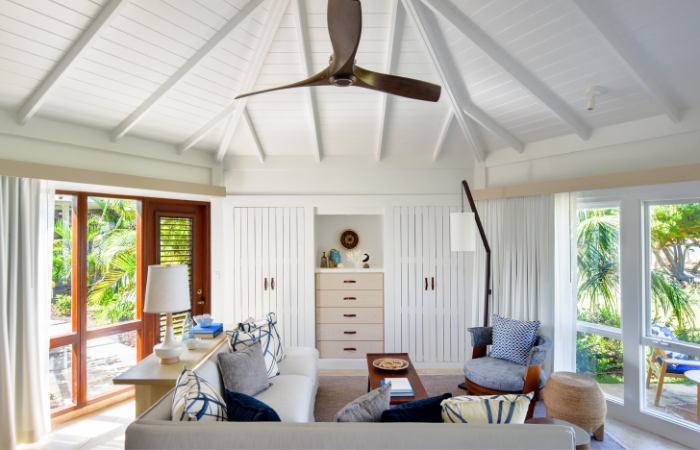
Rosewood Little Dix Bay, BVI.
From the beginning, we built it as a truly integrated studio: under one roof we have interior design, architecture, master planning, marketing, business development and HR. That mix lets us move fast, think holistically, and grow with purpose.
For OBMI, London isn’t just another office; it’s a bridge. A place where our Caribbean roots meet European sensibility, and where strategy and creativity sit at the same table. And honestly, it’s given us a new kind of energy. Plus, we were overdue an office with great coffee and four seasons in one day!
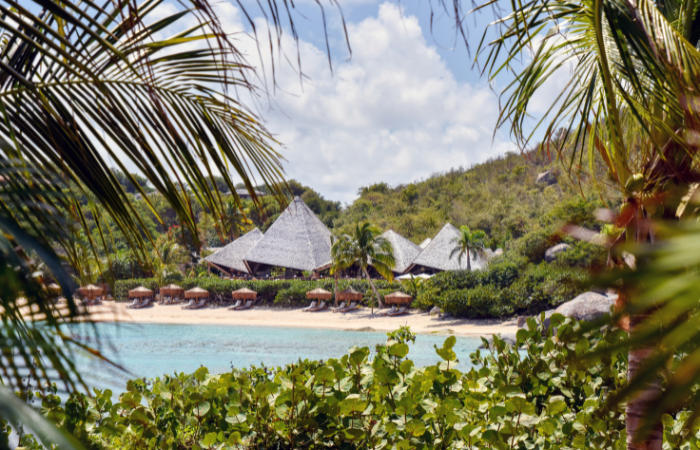
Rosewood Little Dix Bay, BVI.
2. The London team comprises a majority female staff, with diverse expertise across architecture, master planning, and interior design. Was this an intentional formation, or a natural evolution of the talent OBMI attracted when launching the studio?
WK: From day one, the London studio was female-only, not by plan, just by chemistry. For a year and a half, it stayed that way, and we genuinely loved the dynamic. It felt like a design sisterhood: focused, generous, and razor-sharp. We built a culture where ideas moved quickly, feedback was honest, and everyone had permission to be both bold and kind.
We’re proudly international, bringing together a mix of backgrounds and disciplines, and this diversity set our rhythm from the start. Different languages, different references, yet the same obsession with craft. It has given the studio a global voice and an ease with complexity: we can debate a façade strategy and a fabric weave in the same breath.
We’ve just welcomed our first male team members, and they’ve settled in beautifully. The goal was never to build a “female studio”; it was to build a brilliant one. Our constant is the standard: talent first, collaboration always, and design that respects place and people. The rest is good chemistry and a lot of laughter.
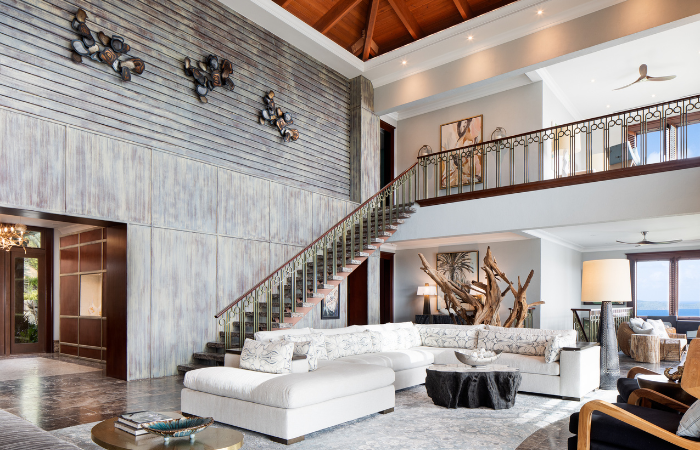
Peter Island Resort, BVI.
3. Each of you brings an impressive international background – from Zaha Hadid Architects and AKT II to HBA and PLP Architecture. How have your individual experiences shaped the collective identity of OBMI London?
WK: We’re a studio of many passports and one rhythm. I work with people who’ve lived and designed across Europe, the Caribbean, the Middle East, Asia, and Africa, so cultural fluency is second nature to us. Those experiences become design instincts: we read a place before we draw it, and we ask the questions that unlock its story.
What truly defines us, though, is our way of working. There’s no hierarchy of ideas, just open exchange. We’ve built a team that’s low on ego and high on collaboration. Design here isn’t about individual authorship; it’s about collective intelligence. Everyone contributes, challenges, refines, and that’s where the real magic happens.
Interiors, architecture, and master planning sit side by side with marketing and BD, allowing ideas to meet early and evolve fast. A brand narrative can sharpen a planning move; a daylight study can redirect a materials palette; an operational insight can reshape the guest journey. It’s lively, rigorous, and wonderfully un-siloed. Our identity comes from that chemistry: strategic in approach, soulful in outcome.
Different journeys, shared standards. That’s OBMI London.
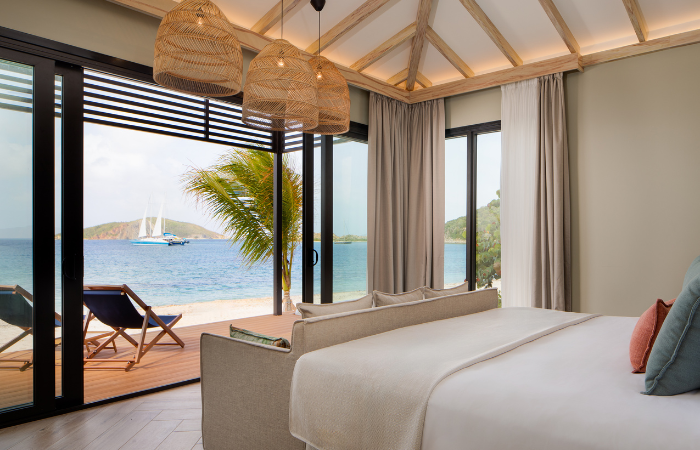
Peter Island Resort, BVI.
4. The architectural profession has long been underrepresented by women in senior positions. How do you see your leadership contributing to greater visibility and progression for women in architecture and design today?
WK: Leadership isn’t about title – it’s about visibility, empathy, and creating space for others to rise. I think women naturally bring a collaborative strength to design; we tend to lead with curiosity, emotional intelligence, and a sense of shared purpose.
At OBMI London, that’s built into our culture. We’re vocal about supporting one another, for example by mentoring, giving credit, and building confidence through opportunity. I also think it’s important that younger designers see women leading large-scale, complex projects, not as exceptions, but as the norm.
The conversation is no longer about proving we belong; it’s about shaping how leadership looks and feels in this industry. If our studio can inspire even a few women to take the lead unapologetically, then we’re moving in the right direction.
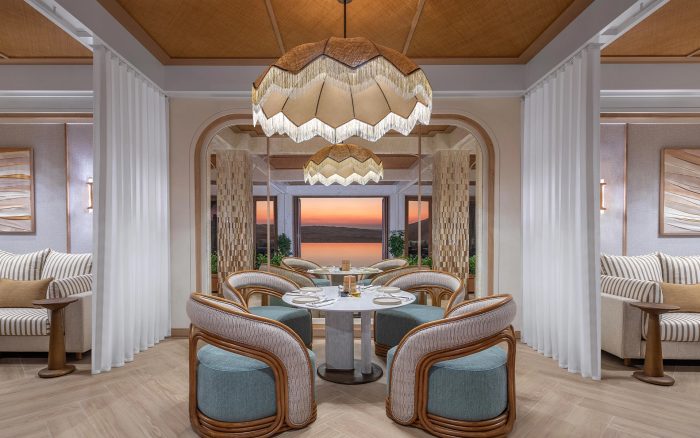
Amanie restaurant by OBMI, set within the Qasr Al Sarab Desert Resort by Anantara
5. Diversity goes beyond gender. How is the London studio approaching diversity and inclusion more broadly — both within your team and in the way you design for a global audience?
WK: For us, diversity isn’t a category, it’s a creative advantage. It shapes how we think, how we collaborate, and how we design. Our team brings together people from different cultures, disciplines and life experiences, and that mix keeps us curious and grounded. We don’t design in an echo chamber; we design through dialogue.
Inside the studio, inclusion means every voice counts, whether it’s a concept sketch or a strategic decision. We share leadership, mentor across disciplines, and give space for individuality to thrive. It’s not a policy; it’s instinctive.
And when we design globally, we start by listening to culture, to people, to place. We don’t impose style; we interpret identity. That’s how we create work that feels genuinely connected, wherever it is in the world.
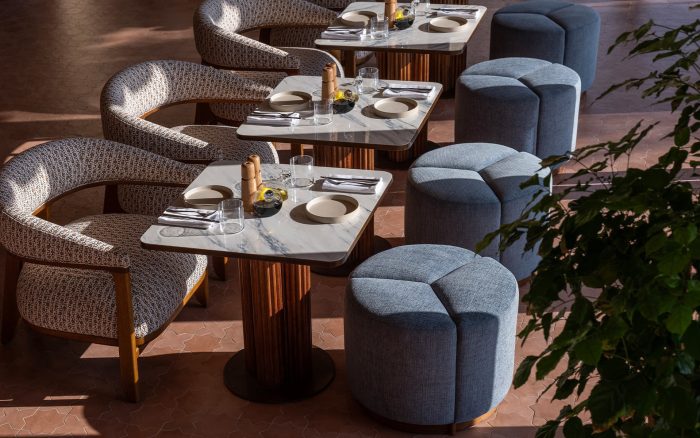
Amanie restaurant by OBMI, set within the Qasr Al Sarab Desert Resort by Anantara
6. OBMI London sits at the heart of a global company with eight offices worldwide. How does the London studio fit within OBMI’s international network, and what unique role does it play in connecting the firm to clients and collaborators across Europe?
WK: London is our connector geographically and creatively. We sit between OBMI’s legacy studios in the Caribbean and our growing footprint across Europe and the Middle East. It allows us to collaborate in real time with teams and clients across time zones.
What makes London distinct in the network is our mix under one roof: interior design, architecture, master planning, marketing, and business development working side by side. That keeps us agile and brings a holistic lens to every project.
We’re also a creative test lab. From London we tap into new materials, ideas, and collaborators, and we feed those insights back into the wider OBMI network to help strengthen projects everywhere.
Europe is stirring; we’re in early conversations across a few key markets, the kind that quietly become the right projects.
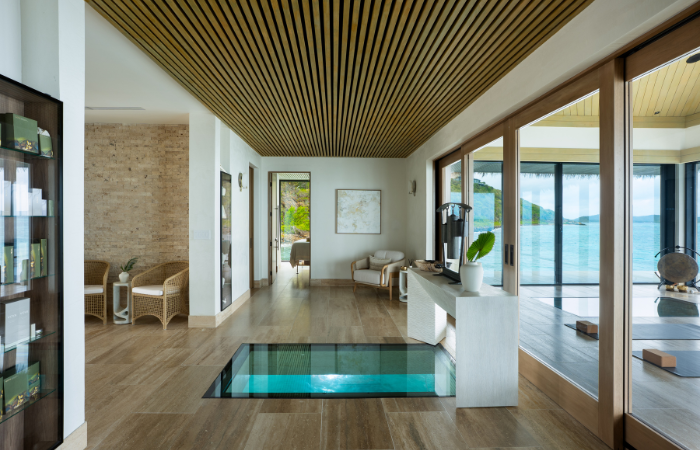
Sundara Spa, BVI.
7. From a project perspective, where are your current commissions located, and how does the London studio contribute to OBMI’s portfolio of work across regions such as the Caribbean, the Middle East, and Europe?
WK: Our portfolio spans the Caribbean, the US, the Middle East, and the Indian Ocean, with Europe steadily coming into focus. Right now, the Middle East is where we’re most active, simply because the pace of innovation there is extraordinary. However, we’re equally invested in cultivating long-term collaborations in Europe, choosing quality over quantity.
From London, we’re often involved at the earliest stages, defining the concept vision, aligning interiors, architecture, and master planning, and shaping how a story unfolds spatially.
Across regions, our common thread is a move beyond “sustainable” toward restorative design. This type of work gives back to its environment, community, and the people who experience it.
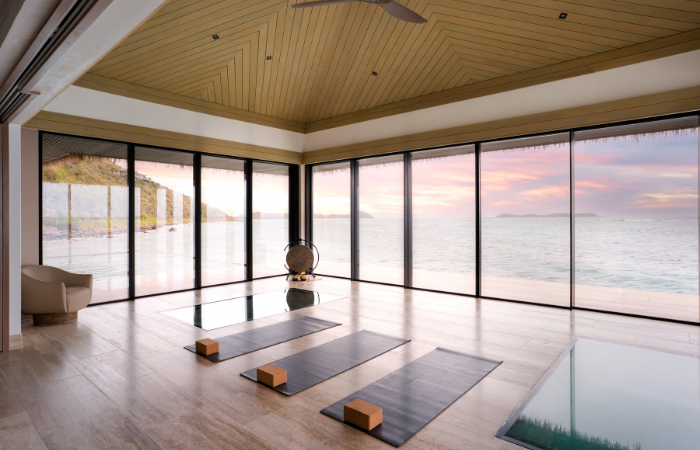
Sundara Spa, BVI.
8. What does having a London base enable OBMI to achieve – creatively, strategically, and operationally – that wasn’t possible before?
WK: London changes how we think and how we deliver.
Creatively, it places our Interior Design studio at the centre of material innovation and craftsmanship. You’ll find our team out in the city daily – visiting makers, exploring finishes, testing bio-based materials, discovering new furniture, lighting, and textiles straight from the workshop floor. It keeps our design process tactile and alive.
Strategically, being here means we’re closer to global brands, investors, and collaborators shaping the future of hospitality. We can align narrative and feasibility early, ensuring projects are both visionary and viable.
Operationally, having interiors, architecture, master planning, marketing, and BD under one roof, and connected to our global offices, means seamless coordination and faster, smarter decisions.
London is also our lab for restorative design, where we prototype reuse-before-rebuild strategies, low-carbon materials, and human-centred experiences before scaling them worldwide.
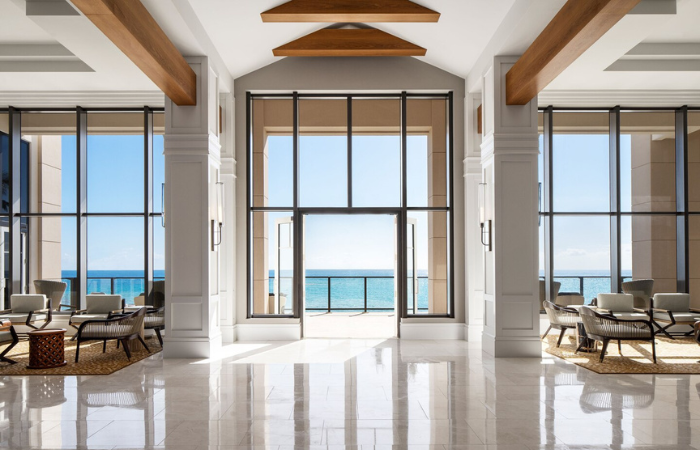
St Regis, Bermuda
9. From your vantage point in London, how do you see the current landscape for global hospitality and resort design? What are the main opportunities and challenges shaping the sector today?
WK: Hospitality is shifting from escape to restoration. Guests want spaces that slow their pace, calm their nervous systems, and give them time back. The new luxury isn’t more amenities – it’s rhythm: light, silence, proportion and flow that help people feel human again.
Wellness is moving from bolt-on to built-in. Instead of spa menus and add-ons, we’re designing architecture and interiors that breathe through materials, light, and flexibility. Stays are getting longer, travel is slowing down, and guests are seeking emotional resonance over spectacle.
From London, we translate these shifts into projects around the world – Caribbean retreats, Gulf destinations, and urban sanctuaries, each grounded in local craft but guided by global awareness.
The opportunity ahead is simple: design hospitality that restores people, place, and time itself.
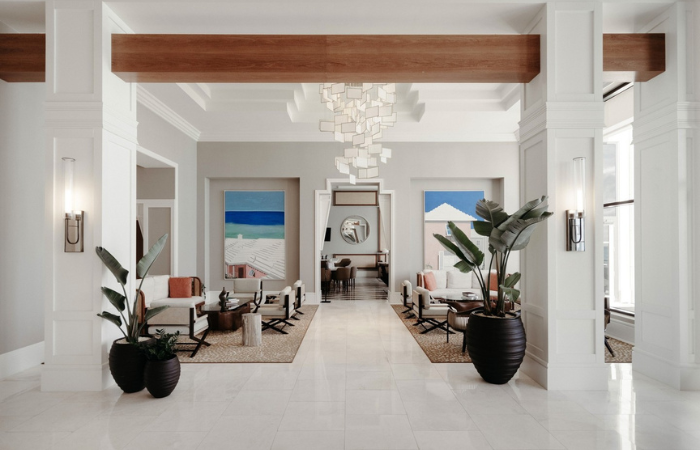
St Regis, Bermuda
10. How do sustainability, wellness, and cultural authenticity influence your design thinking when responding to hospitality briefs from a UK or European context?
WK: In Europe, the conversation has evolved. Sustainability isn’t a feature, it’s a foundation. What’s exciting is how that’s intersecting with wellness and cultural storytelling.
When we respond to hospitality briefs here, we think about the guest’s sensory and emotional journey – light, tactility, acoustics, rhythm – as much as the architecture. The focus is on spaces that regenerate: through adaptive reuse, local sourcing, and low-impact materials, but also through how they make people feel.
Cultural authenticity is at the core of it all. Whether it’s a country estate or a coastal retreat, we work to interpret the narrative of place, not overwrite it. That balance between local soul and global standard is where true hospitality lives.
OBMI’s perspective reflects a wider evolution in hospitality design, where success is measured less by spectacle and more by how a place supports the nervous system, honours its setting, and contributes positively to the world around it. From restorative design thinking to the growing importance of cultural listening, this interview captures a practice that is clearly tuned into what global travellers are seeking next.
For Wiktoria Kopycka, the future of hospitality is not about designing “more”, but designing better: environments that feel grounded, emotionally resonant, and built to last.
With thanks to Wiktoria Kopycka for sharing her time and insight with Design Insider.