



Hannah Drakeford on bold colour, playful interiors, and building a studio with personality
Design Insider caught up with Hannah Drakeford to talk about bold colour, joyful design, and the journey from fashion retail to founding her own studio. In this lively and honest conversation, Hannah reflects on the career pivot that led her to launch Hannah Drakeford Design, the creative influences behind her playful, personality-filled interiors, and why she is so passionate about using colour, storytelling, and repurposed materials to create spaces that feel uplifting, distinctive, and full of life.
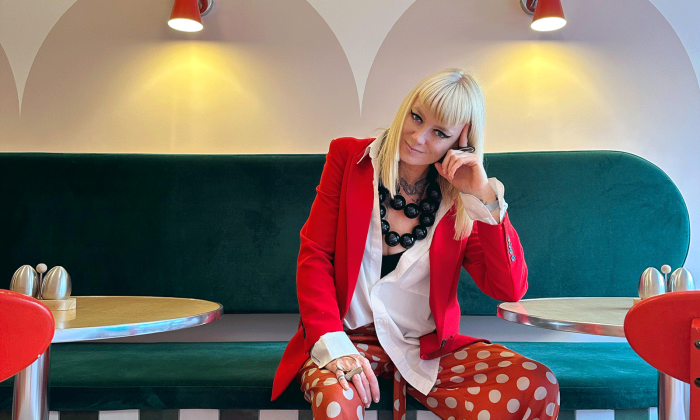
Credit: Clare Lewington
Hannah, to start, could you introduce yourself and tell us a little about your journey into interior design? You began your career in fashion retail design before launching your own studio in 2020 – how did that path shape the designer you are today?
I founded Hannah Drakeford Design in 2020 after a 21-year career in retail design came to an end just before the pandemic. I’d long dreamed of founding my own studio, so it became a decisive “now or never” moment to pursue interior design full time.
Over the previous decade, I held senior creative roles for major high street brands, leading the design of flagship store window displays, interiors and, in-store experiences. A pivotal chapter was heading the European creative team for Forever 21, where I led the in-house production team. Collaborating with skilled craftspeople deepened my understanding of fabrication and reinforced the value of strong relationships between design and build.
That background continues to shape my approach today—combining creativity with practicality, and a bold, storytelling mindset developed through window display design, where capturing attention and creating impact is everything. Whether I’m designing a shop or a cafe, that business is always going to stand apart from its neighbours on the high street.
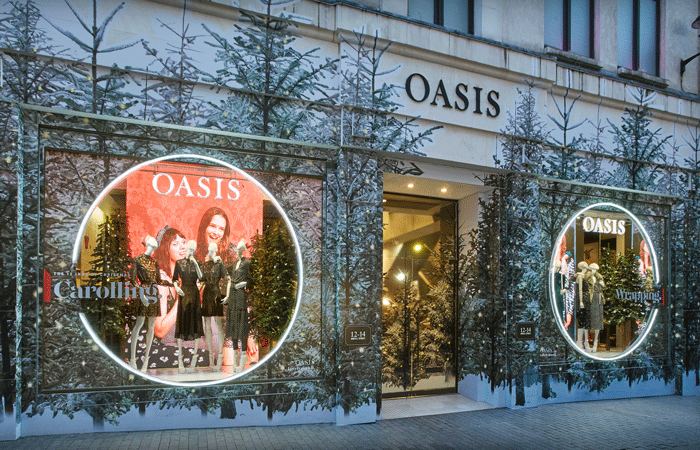
Oasis Christmas windows 2019, which I led the design of. Image credit: Melvyn Vincent
You founded Hannah Drakeford Design at a time when many people were rethinking their careers and creative direction. What gave you the confidence to start your own studio, and what has the journey been like as you have built a practice with such a distinct identity?
My original plan was to freelance as a retail designer while studying interior design, but when the pandemic hit, the fashion retail sector disappeared overnight. I had to quickly rethink how to earn a living while finding my place in a new industry, which unexpectedly brought out a strong entrepreneurial side.
I began a side hustle, designing and selling homewares through Etsy and local markets, and things accelerated when my work was picked up by Made.com. Alongside this, I actively sought support—securing grant funding and business mentorship through Lewisham Council and Goldsmiths University and working with graduate interns to keep my homewares business running alongside my interior design work.
Before founding my studio, I already had a clear sense of my design identity and the confidence to inspire others. What had held me back was fear of financial instability. Being forced out of that comfort zone gave me the push I needed, and looking back, I’m incredibly proud to have chosen a path rooted in creative fulfilment.
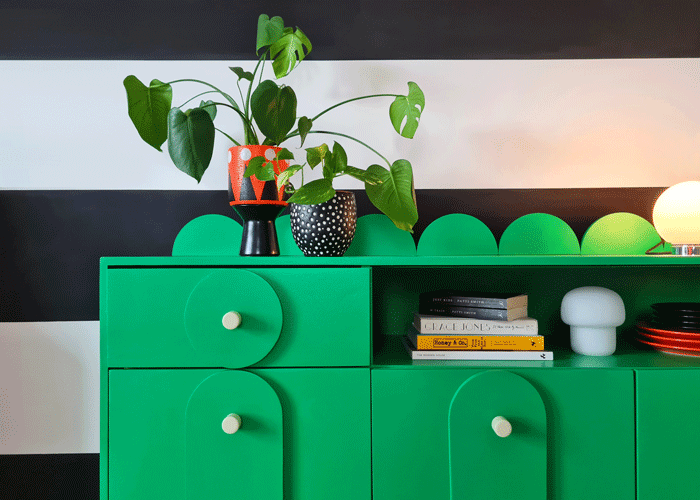
Handmade planters from my previous homewares line with my upcycled green sideboard
Colour feels completely central to your work and your personality as a designer. What is it about colour that excites you so much, and how do you use it to create spaces that genuinely lift people’s mood and bring a sense of joy to everyday life?
I’ve always been drawn to bold, saturated colours, be it in the design of the homes I’ve lived in over the years or the way I’ve always dressed. Wearing bright colours makes you stand out from the crowd, sparks conversation and instills confidence, but it also conveys playfulness and sense that you don’t take yourself too seriously—all of these factors have become central to my design work.
I’m obsessed with colour psychology and the vital role colour plays in the narrative of a space—shaping how you experience and remember it, but above all I want the people who move around in these spaces to experience the same sense of empowerment I feel when I surround myself in bold hues. I want all my design work to spark joy and inspire others to bring a little colour into their own lives.
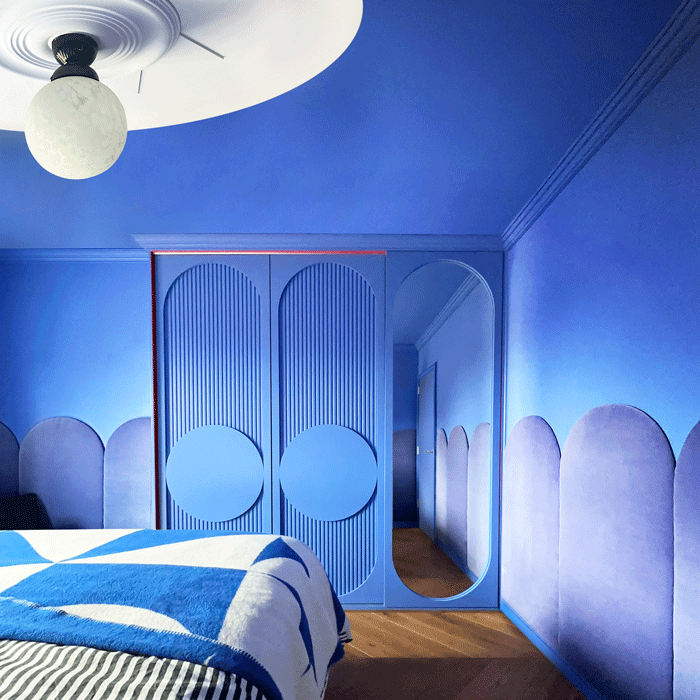
Master bedroom, including self-designed built-in wardrobes
Your projects have a wonderful sense of playfulness, often mixing bold palettes, geometric forms and retro references. Where do you tend to find inspiration, and what kinds of influences tend to spark the ideas behind a new scheme?
My main sources of inspiration are art and architecture. I’m a huge 20th century history nerd and the majority of my inspiration is rooted in the post-war period. I’ve always been drawn to artists who use colour in their work in a really bold, graphical style, as many of the 1960’s abstract expressionists did. Auguste Herbin is an artist whose work I turn to time and again for his use of colour and geometric form.
Whenever I travel to a new city, I’ll always seek out any brutalist architecture there and spend time exploring and photographing the shapes and forms. A lot of people consider brutalism to be austere and uninviting, but I find beauty in its balance and rythms, and I find in particular that it heavily influences the furniture I design.
Travel in general is vital to broadening your creative horizons. I think we’ve all become a little too reliant on gathering inspiration from other designer’s work on social media. We’d all do well to remember that Instagram and Pinterest show you what’s already popular and what aligns with your past likes, whereas real life throws unfiltered inputs at you—including things you would never have searched for. That randomness is essential for originality.
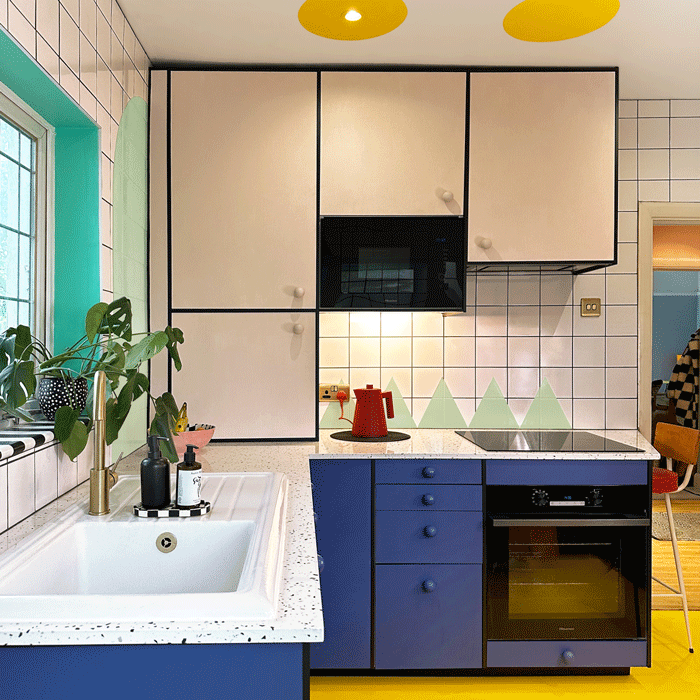
Client project: A colourful, Memphis Milano-inspired kitchen. Sutton, London
You have spoken about encouraging people to repurpose furniture and materials rather than always buying new. How do you approach sustainability in a way that still feels creative and exciting for clients rather than restrictive?
The importance of repairing and repurposing was drummed into me when growing up in a low-income household. It made me despise excess and waste and is something I’ve naturally carried into my work as a designer.
I’ve used the platform I have on social media to share some of the furniture upcycling projects I’ve carried out in my own home—demonstrating that not only can you repurpose that old, unloved piece of furniture instead of replacing it, but that with a little imagination and some basic DIY skills, you can completely transform it into a show-stopping design piece that you’ll love for years to come.
I did a deep-dive into the fast furniture industry for a recent project and was utterly horrified to learn that on average 670,000 tonnes of furniture are discarded every year in the UK alone, with the vast majority going straight to landfill due to the lack of recyclable materials used in their construction. I believe making sustainability fun and approachable is the best way to engage people in repurposing and upcycling.
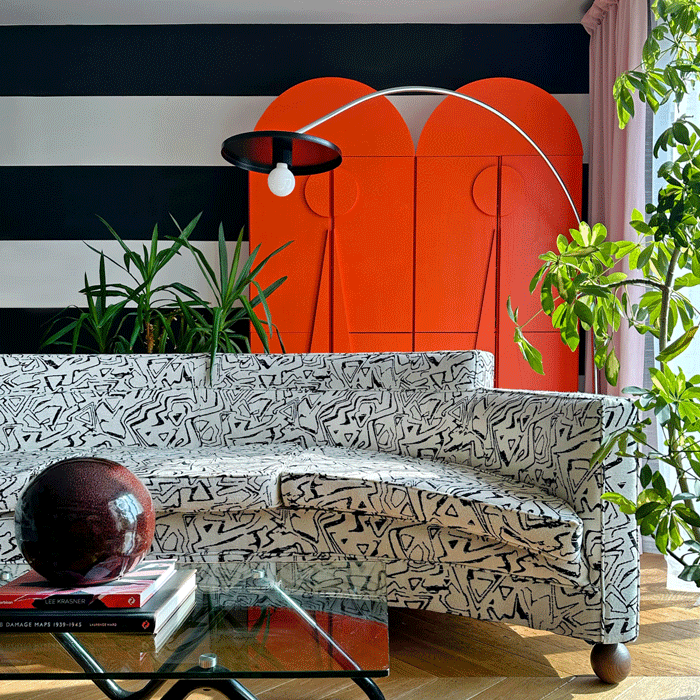
Upcycled orange cabinet
Your recent project, Intervallo on Deptford High Street, must feel particularly special given that your studio is just around the corner. What was it like designing a space on your own local high street, and how did that personal connection shape the way you approached the project?
It was a complete coincidence that I ended up designing a bar on my own high street in Deptford; the client had admired my work for some time but didn’t realise my studio was only ten minutes away.
That local connection became especially meaningful during the research phase. Alongside evoking the small-town aperitivo bars my client frequented when living in Italy — often unchanged since the 1970s, I was determined to create a space that would bring people together and feel embedded in the community. Drawing on my familiarity with the area’s history, I uncovered archival images from its time as Fiburn’s Record Store in the 60s and 70s, along with stories of locals gathering there to connect and share music. That sense of social energy became central to the design narrative.
I focused on creating an intimate, welcoming layout that encourages interaction, paired with bold colour and strong branding to give it a clear identity. Seeing it now as a thriving hub for Deptford’s creative Italian community has been incredibly rewarding—especially knowing it’s become a place for connection, conversation and shared experience on my own doorstep.
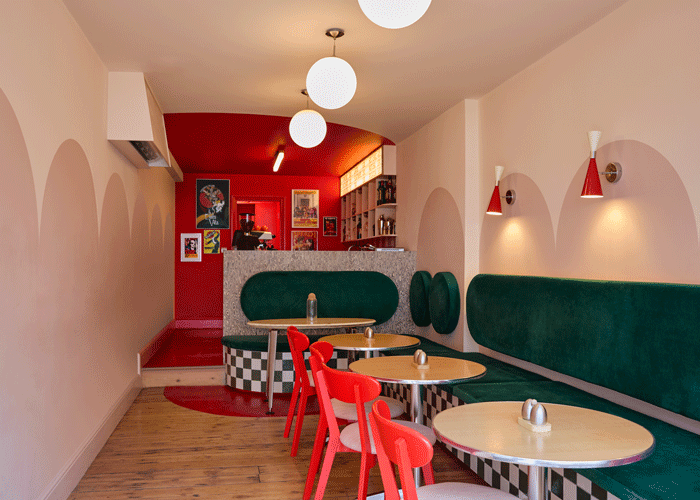
Intervallo interior. Credit: Clare Lewington
Alongside your studio work, you are also involved with initiatives like First Hand Collective, which activate meanwhile spaces for communities. What do projects like this teach you about the wider role design can play in bringing people together and energising neighbourhoods?
So far this year, our collective has been focused on placemaking within housing developments. In conversations with landlords and developers, a common challenge has emerged: communities feel fragmented and residents’ voices often go unheard, particularly as perceived waves of gentrification reshape neighbourhoods without prioritising meaningful community spaces.
In response, we’re driven to activate underused areas within these developments, transforming them into community forums—places where residents can gather, shape the future of their neighbourhoods, and reclaim a sense of ownership through resident-led programming.
Here, design becomes a tool for connection. Storytelling plays a key role in fostering engagement, with each activation rooted in the area’s history to reinforce an authentic sense of place. Combined with thoughtful, inclusive programming, these spaces create platforms where every voice—no matter how big or small—can be heard.
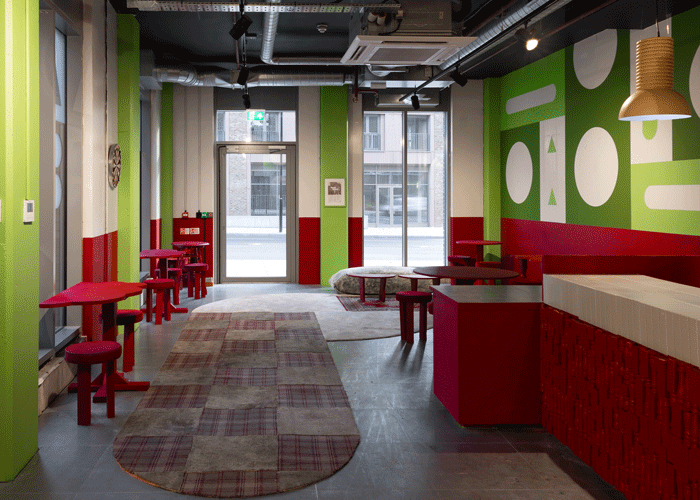
Pop-up pub: The Craft & Draft, New Acres, Wandsworth. A community space built in collaboration with residents out of building waste and secondhand materials (First Hand Collective)
Finally, looking ahead, your work is expanding into hospitality projects and even product design. What are you most excited to explore next, and where do you hope this colourful design journey will take you in the years ahead?
I’ve learned since founding my studio that I thrive creatively when I have multiple focuses. I have a couple of product ranges launching later this year that I’m very excited about, and I’m forever hungry for new design challenges, be that in the world of interiors, product or furniture design.
Intervallo was the first hospitality venue I’ve designed and I intend it to be the first of many. I’d also love to make a splash in the world of hotel design, but wherever in the world this design journey takes me, I’ll always be looking for opportunities to design spaces for my community in south east London.
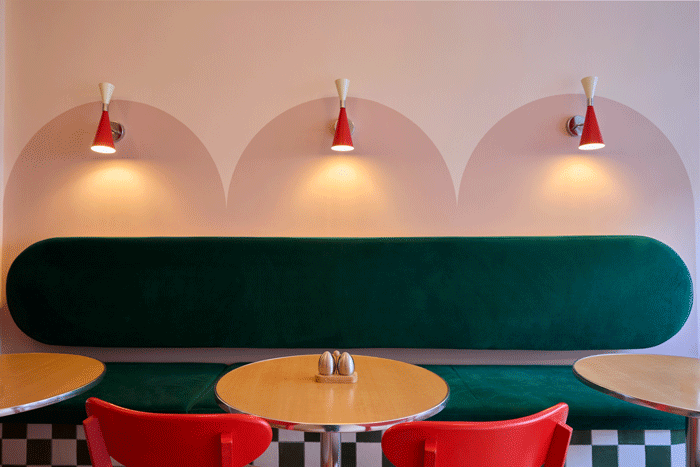
Intervallo interior