








A New Era for Sensory Wellness and Neuroarchitecture
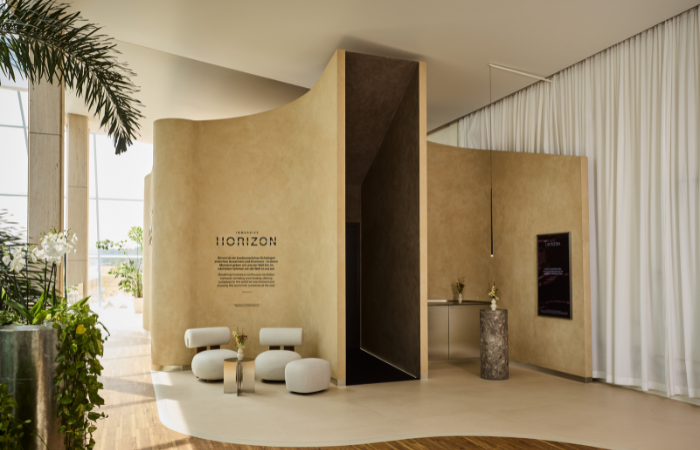
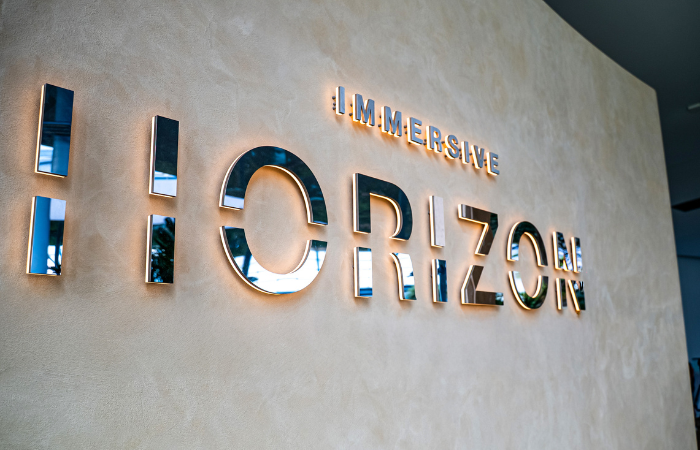
An experiential and immersive breathing space has opened inside one of Europe’s leading thermal destinations, Thermen & Badewelt Sinsheim.
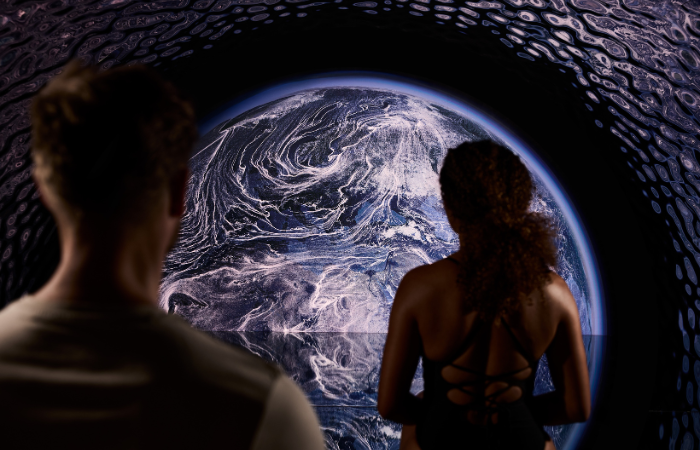
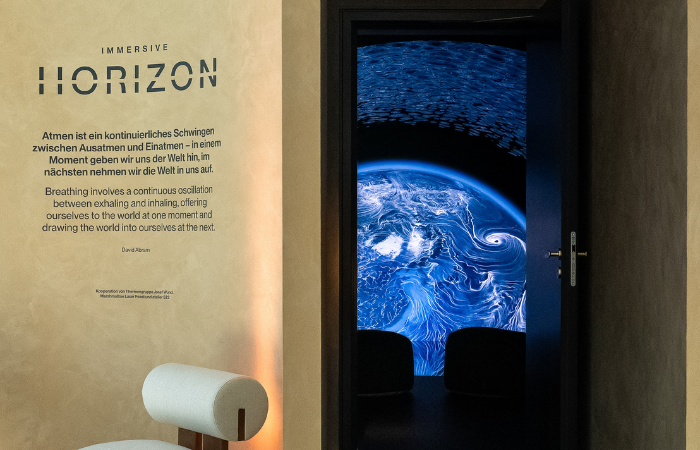
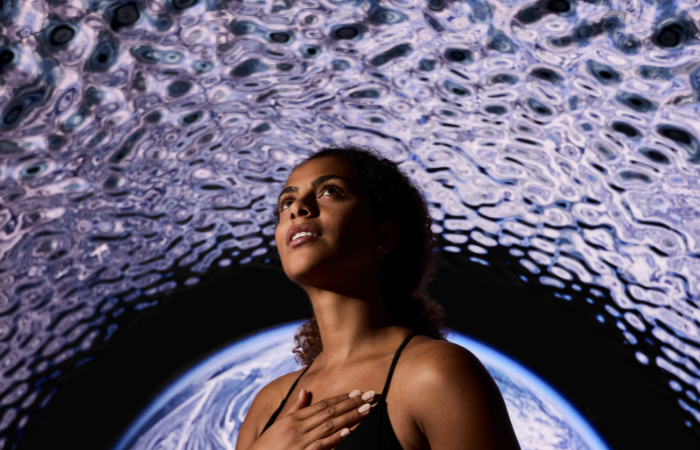
Commissioned by Thermengruppe Josef Wund, the installation, brought to life through the artistry of Marshmallow Laser Feast, the spatial design expertise of atelier 522, and the sensory innovation and research of White Mirror, creates an environment where architecture itself appears to inhale and exhale, inviting visitors to attune their bodies to the natural cycles of the planet.
White Mirror is a leading sensory innovation consultancy specialising in the design of science-backed, immersive experiences that enhance wellbeing and performance.
The work marks the second chapter of White Mirror’s “Experience as Medicine” series, which reimagines how sensory environments can heal, restore and reconnect. Inside Immersive Horizon, guests step into a transformative space where:
-
A mirrored floor and chrome surfaces dissolve the boundary between body and space
-
Breathing is guided by sensory stimuli and evidence-based patterns
-
NASA climate data shapes the rhythm of the experience
-
Light and sound pulses bring visitors into a sense of planetary coherence
Ramy Elnagar, Founder of White Mirror:
“Immersive Horizon ‘Breathing Planet’ exemplifies our vision of Experience as Medicine. It demonstrates how environments designed with intention and science can act as catalysts for restoration, emotional resonance, and long-term wellbeing.”
The project reinforces White Mirror’s role as a trusted partner for global brands seeking to integrate science-backed wellness design into hospitality, leisure, workplace and automotive environments.
A New Global Partnership: Intentional Spaces — The Power of Place
Alongside the installation, Thermengruppe Josef Wund, Johns Hopkins University and White Mirror have launched Intentional Spaces: The Power of Place, a global initiative to advance neuroarchitecture, the science of how design affects the brain and wellbeing.
Led by the International Arts + Mind Lab (IAM Lab) at Johns Hopkins University School of Medicine, the project explores how sensory design can measurably enhance emotional, cognitive and physical wellbeing. Rooted in neuroscience, psychology and the arts, the initiative lays the foundation for a new field of applied research and practice.
Franz Hofstetter, Chief Innovation Officer:
“At Thermengruppe Josef Wund, we’ve always believed that our spaces can do more than relax, they can heal, inspire, and connect. Through this partnership with Johns Hopkins and White Mirror, we’re moving from intuition to evidence.”
As part of the collaboration, the IAM Lab research team conducted a qualitative study interviewing global experts in light, sound, haptics, architecture and spatial design. Their findings underpin Intentional Spaces: The Power of Place, Roadmap & Foundations, one of the most comprehensive strategy documents to date in neuroaesthetics and intentional design.
Dr. Susan Magsamen, Founder and Executive Director of IAM Lab:
“Everything is an aesthetic experience, the cities we traverse, the rooms in which we live and work, and the sounds, sights and smells we encounter throughout our day all impact how we feel. Through collaborations like this one, we’re moving from theory to transformation.”
Toward a Sensory Design Playbook
The initiative builds on the momentum of the Intentional Spaces Summit at Johns Hopkins University, which convened more than 300 global leaders in architecture, neuroscience and design. Findings from the multi-year study will inform the development of a Sensory Design Playbook, a practical framework for integrating neuroaesthetic evidence into future environments.
The Playbook aims to establish:
-
Measurable principles linking sensory input with emotional and physiological wellbeing
-
A toolbox for evaluating impact
-
Actionable guidelines for architects, designers and policymakers
Ramy Elnagar adds:
“We are the products of our environments. The world we design is actively designing us back. This partnership represents a pivotal step toward creating spaces that don’t just look beautiful, but that regulate the nervous system and foster human connection.”
Together, Immersive Horizon: Breathing Planet and the Intentional Spaces initiative show that the environments we inhabit are not passive. They influence our breath, our nervous system, our clarity and our emotional balance. Through science, empathy and imagination, this work invites us to reimagine the built world as a living, breathing extension of our own wellbeing and to design with intention, resonance and care.