




Johanna and Friedrich of Gräfling on Space, Materiality and Multidisciplinary Thinking
What happens when a studio refuses to stay in just one lane? In this conversation, Johanna and Friedrich Gräfling of Gräfling share how their internationally shaped backgrounds and cross-disciplinary outlook have helped build a practice that moves fluidly between architecture, interiors, art, cultural programming and research.
Shaped by international experiences across Maastricht, Paris, London, Frankfurt and rural Wiesen, the conversation reveals a studio alive with curiosity, colour and creative exchange. Johanna and Friedrich speak warmly about architecture as something far richer than a fixed discipline, sharing how art, cultural programming, material experimentation and research all feed into spaces that feel expressive, layered and full of life. You’ll come away with a clearer sense of how Gräfling brings together hand-crafted materiality, artistic collaboration, hospitality thinking and cultural dialogue to create work with atmosphere, individuality and joy.
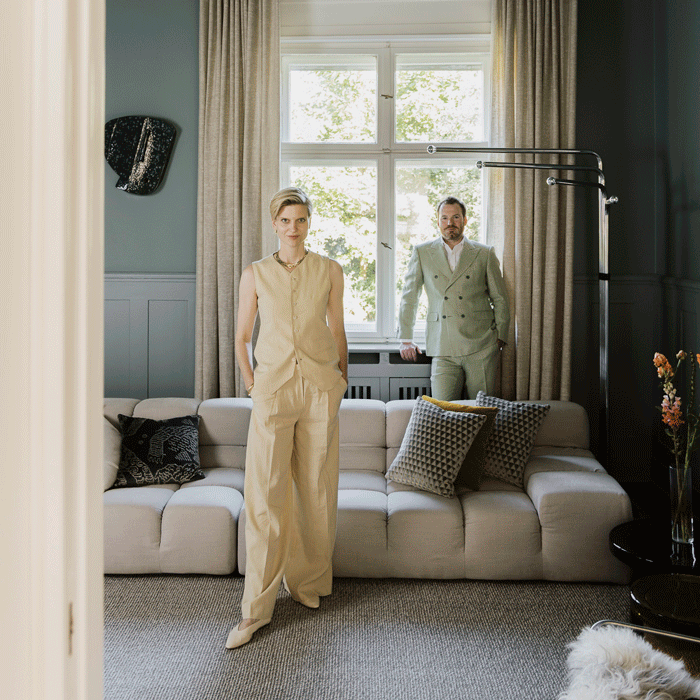
Johanna and Friedrich Gräfling of Gräfling
Johanna and Friedrich, your practice operates fluidly across architecture, art, cultural programming, and research; could you introduce yourselves and explain how your individual backgrounds in art history, economics, and architectural research have shaped the conceptual foundation of Gräfling as a multidisciplinary studio?
We both come from complementary disciplinary backgrounds. Johanna studied art history and economics in Maastrich, Paris and London, while Friedrich trained in architecture at the Architectural Association in London.
From early on, our conversations revolved less around architecture as an isolated discipline and more around how cultural production shapes environments – how art, economic structures, social rituals and spatial design continuously influence one another.
This perspective led us to establish our studio not as a conventional architectural office but as a multidisciplinary platform operating between architecture, interior design, art, curatorial practice and research.
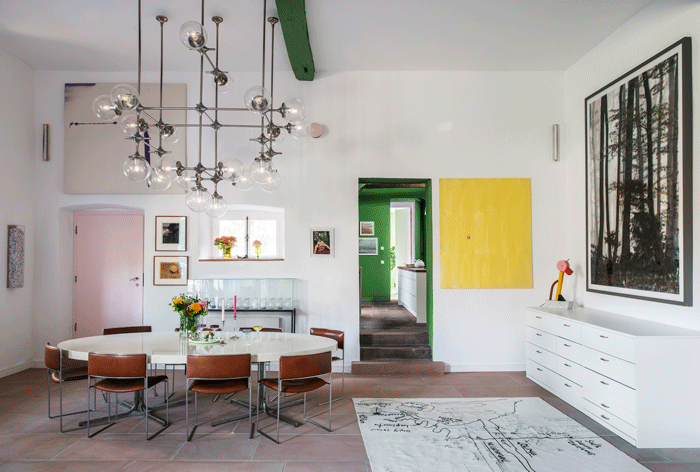
Rather than separating these fields, our projects often treat architecture and interiors as a form of art in itself, where spatial design, materiality, artistic dialogue and cultural context shape the project from the very beginning. In this sense, space is understood less as a technical object and more as a cultural framework that evolves through collaboration and interpretation.
Your work consistently positions architecture not as a fixed outcome but as an open process shaped by experimentation, reinterpretation, and dialogue; how does this philosophy translate into the early conceptual stages of a commercial or cultural project, particularly when working within historic or contextually sensitive environments?
For us architecture rarely begins with a fixed visual idea. Instead it starts with reading the context of a space historically, socially and atmospherically.
Especially when working within historically layered buildings or sensitive environments, the early stages of a project become a research process: studying the existing architecture, ornamentation, proportions and spatial hierarchies in order to understand how the building originally functioned.
Rather than copying historical forms or falling into nostalgic restrictions, we are interested in learning from these structures, using elements such as scale, proportions, spatial rhythms or material logic to translate them into a contemporary language. The goal is not replication but reinterpretation: allowing architecture to evolve through dialogue between past and present while remaining responsive to contemporary needs and uses.
Across your projects, materiality plays a central role, from hand-pigmented clay plasters to carefully sourced stone and artisanal finishes; how do you approach material research, and how does this depth of investigation influence both the experiential and commercial value of a space?
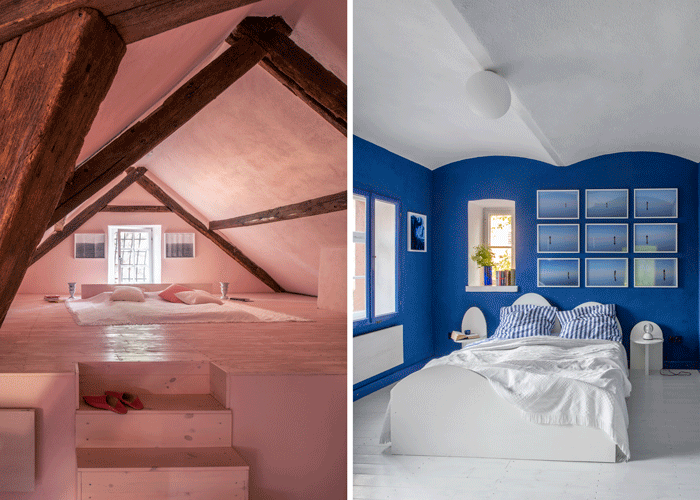
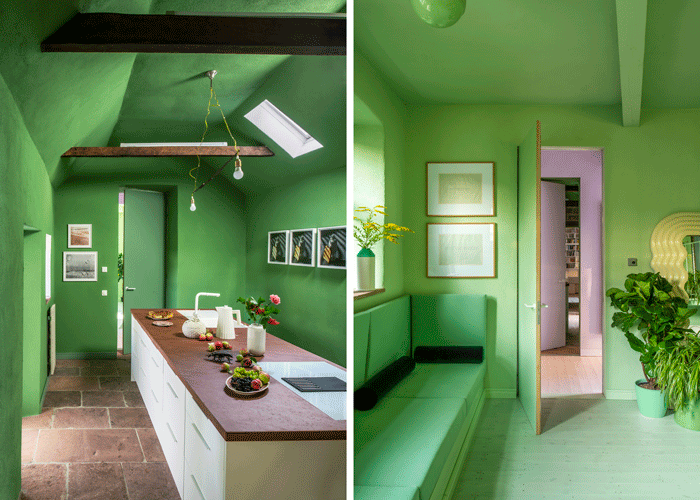
Our projects frequently involve hand-pigmented clay plasters, natural mineral paints, locally sourced woods, stone, marble, granite and custom terrazzo mixtures.
Our research process is highly experimental. Pigments are mixed, surfaces tested and finishes adjusted until the material develops authenticity while feeling contemporary.
Material decisions are always closely linked to the spatial context of a project. Our studio carefully studies movement, how people enter a space, how rooms unfold and how materials can emphasise the way people live, atmospheres and moments of gathering. In this way material research contributes not only to aesthetic expression but the long-term value of a space.
Art is not treated as decoration within your practice but as an active, living context that informs spatial strategy; how do you integrate artists, commissions, and curatorial thinking into architectural and interior projects in a way that creates meaningful dialogue rather than aesthetic layering?
Because we are both deeply engaged with the art world as gallerists, curators and collectors, art naturally forms an integral part of our thinking.
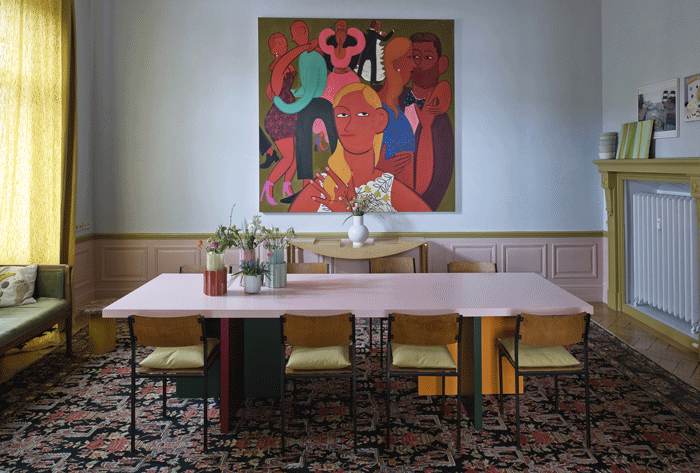
However, artworks are never approached just as decoration. Instead they are considered active components within the architectural space. This often involves collaborating directly with artists during the design process; commissioning site-specific works, developing surfaces, textiles or furniture together, or integrating artistic thinking into spatial compositions.
In the most successful projects architecture and art begin to respond to one another: the artwork activates the atmosphere of a space, while the architecture provides a framework that amplifies the conceptual dimension of the work.
Through initiatives such as Salon Kennedy and Kunstverein Wiesen, you have created platforms that extend beyond traditional architectural practice into cultural diplomacy and territorial strategy; how do these initiatives inform your commissioned projects, and how do they allow you to test ideas that later translate into built work?
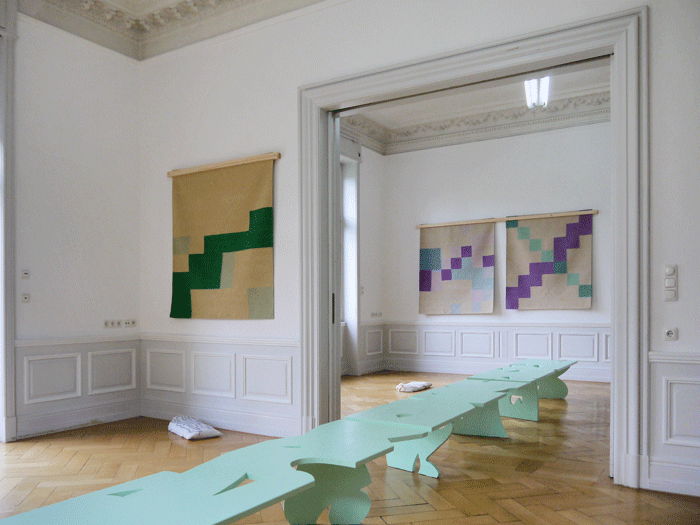
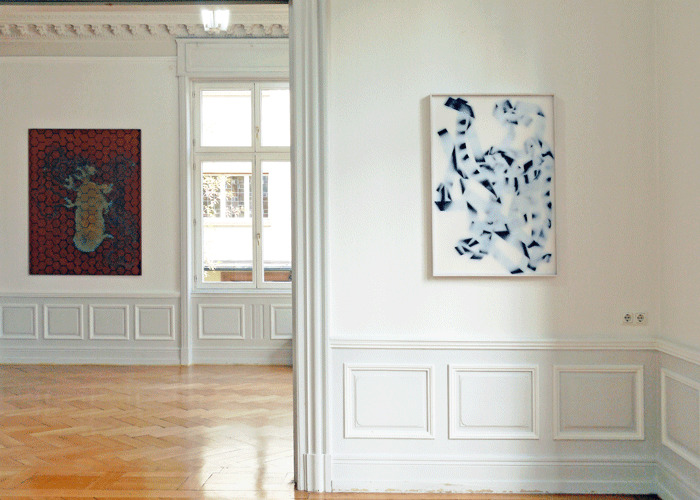
Salon Kennedy operates as a hybrid between salon, gallery and cultural platform. The programme is built around close collaborations with selected international artists with whom we have an ongoing partnership. Exhibitions, installations and curated gatherings are often accompanied by dinners and conversations that allow collectors, artists and guests to engage closely with the works.
The platform we created also works closely with collectors, supporting them in building thoughtful collections and developing deeper engagement.. Rather than focusing on short term relationships,, the emphasis lies on long-term dialogue: introducing collectors directly to artists, discussing the conceptual foundations of their work and situating them within broader artistic discourse.
Unlike many gallery formats, Salon Kennedy exists in two parallel contexts: an urban space in Frankfurt and a rural counterpart in Wiesen. This dual structure creates a dialogue between city and countryside, exhibition and retreat, discourse and production.
Kunstverein Wiesen, by contrast, operates as a non-profit art club dedicated to experimentation, production and cultural exchange. Located in a rural environment, it allows artists to develop projects in dialogue with landscape, village structures and local communities.
Together these initiatives function as laboratories for artistic collaboration and cultural exchange, where slower and more experimental formats can emerge alongside our studio’s architectural work.
Your research explores the relationship between cultural production, socio-economic frameworks, and territorial development; when working on larger-scale or commercially driven projects, how do you balance creative ambition with strategic planning, ensuring that design contributes to sustainable urban or regional networks?
Beyond private projects, we are increasingly collaborating with companies, hotels, hospitality projects and cultural institutions, developing cultural and artistic strategies that extend beyond conventional design commissions.
These collaborations aim to create environments that offer more than visual design. They generate cultural narratives, conversation pieces and shared points of reference for employees, guests, visitors and local communities.
Education, publishing, and public discourse form an integral part of your methodology; in what ways does teaching and academic engagement sharpen your approach to design precision, and how does this ongoing exchange influence the way you document, present, and communicate your projects to clients and collaborators?
Through lectures, workshops and teaching positions – including engagements with institutions such as TU Darmstadt, the University of Wuppertal and the Architectural Association we both explore how cultural production can influence spatial development on both urban and territorial scales.
Many of these questions originate from earlier research projects such as “The Contemporary Court”, which examined how cultural infrastructures can shape territorial development and social exchange.
These explorations investigate how dialogue between urban and rural contexts can generate new networks, cultural infrastructures and forms of collective learning.
Looking ahead, as global design discourse increasingly addresses sustainability, cultural identity, and shifting economic models, how do you see your practice expanding its role at the intersection of architecture, art, and research, and what new territories or typologies are you most interested in exploring next?
In addition to architectural projects and our gallery programme, we recently launched Gräfling Editions, a platform for collectible design objects ranging from unique pieces to small production series and made-to-order furniture.
The first pieces including lighting, tables, seating and shelving are currently being developed in collaboration with designers, artists and craftsmen. In the long term, the initiative is intended to evolve further, potentially expanding into a dedicated design gallery. At the same time, the gallery activities themselves may expand further, potentially establishing additional locations beyond Germany to strengthen international dialogue with artists, collectors and cultural institutions.
Alongside these initiatives, the studio remains particularly interested in holistic architectural and interior projects, especially within hospitality and cultural contexts, where architecture, art and design can come together.