









Sensing Place: Biophilia Beyond What’s Visible with Kate Mooney
At Design Insider, we’re constantly exploring how design goes beyond the visual, how it connects us to place, emotion, and experience. That’s why we’re excited to introduce the latest voice in our contributor series: Kate Mooney, Founder of award-winning design studio OCCA, whose thoughtful approach to hospitality interiors has earned international recognition.
In this compelling piece, in her own words Kate challenges conventional understandings of biophilia, cutting through trend fatigue to reveal its original, sensory-rooted power. From sleep tourism at Equinox Hotels to the soft resonance of cicadas in a Tokyo lobby, she explores how lighting, scent, sound and tactility are reshaping the hospitality landscape.

‘Biophilia has a problem. Once a radical philosophy – bridging the instinctive connection between humans and nature – it now teeters on the edge of trend fatigue. Like “wellness” and “sustainability” before it, the term has become diluted, overused, and often misapplied – another green wall in the lobby, or ferns in guest suites.
But biophilic design was never meant to be decorative. At its core, it’s about connection. Sensory, emotional, physiological connection. And in hospitality, this connection holds untapped power – firstly to elevate the guest experience, but also to embed brand identity, and create deep local resonance to support long-term commercial success.
This is the new biophilia. And it starts with the senses.
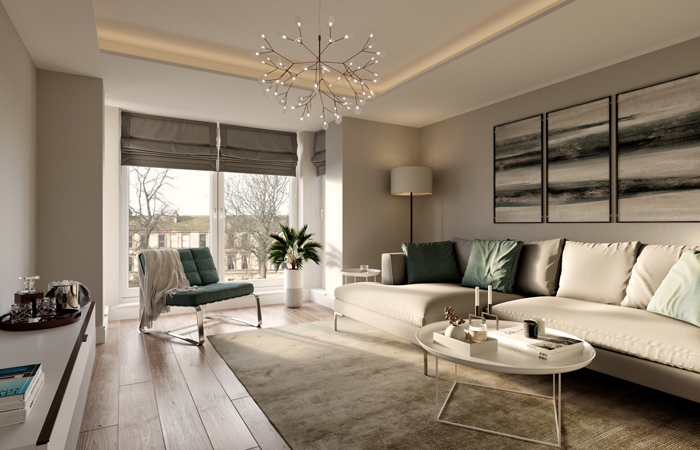
Westpoint Homes Middlefield: CGI and interior design by OCCA
Branding through the unseen
In the luxury space, scent has long been a stealthy tool of emotional branding. Step into The Edition and you’re immediately wrapped in a bespoke fragrance that whispers elegance before a word is spoken. The smell becomes a story of its own.
Pioneering hotel brands are expanding the sensory toolkit beyond biophilia’s traditional aim of grounding guests in place – and instead, using sound, light, and touch to transform how a space performs. Nowhere is this more ironic – or more ambitious – than at Equinox Hotel New York. In a city famously known for never sleeping, the hotel’s new Sleep Lab suites are designed precisely to encourage it. Developed with specialists like White Mirror and Dr. Matthew Walker, these suites combine adaptive mattress technology, tailored soundscapes and neuroscience-backed rituals to support deep rest, recovery, and performance. It’s biophilic design with a twist – less about evoking nature, more about restoring human nature. Welcome to the rise of sleep tourism.
Lighting, too, is being redefined. Brands, particularly in the lifestyle and luxury sector are programming circadian lighting to echo the natural progression of daylight – from the crisp, energising tones of morning to the golden lull of evening. When this tech gained initial traction in the early 2000s, it was rightly seen as somewhat gimmickry. However, with more than 25 years of research, data and fine-tuning, circadian lighting is now sophisticated, hidden and a physiological intervention designed to ground guests, regulate sleep cycles and create spaces that make guests feel good.
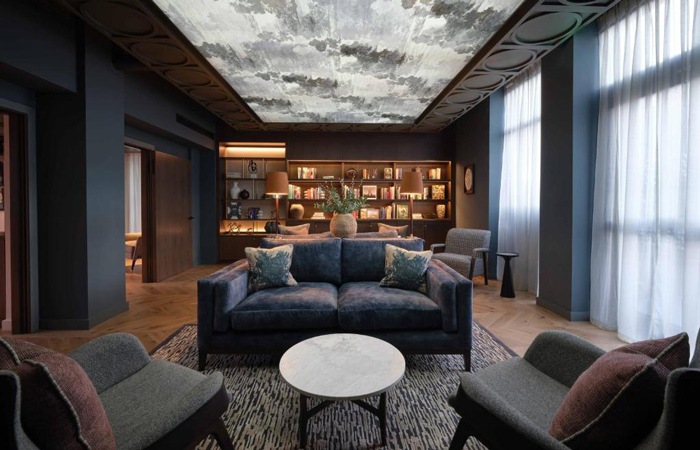
Resident Hotel: FF&E procurement sourced by OCCA Design | Interior design by WISH Architecture
Evoking place without the pastiche
Designing with nature means tuning into the ecological and cultural essence of a place – and expressing that essence in invisible, emotionally resonant ways.
In Tokyo, a hotel might weave the soft cicada hum of summer into its lobby acoustics – a nostalgic nod to local memory. In Norway, cool-spectrum lighting can emulate the long Nordic day, helping international guests adjust more naturally to its rhythms.
Done right, these gestures don’t shout. They whisper. They don’t imitate nature – they evoke it.
Overarching this, though, and one of our biggest challenges when designing the prototype rooms for the Fairfield by Marriott brand was to create these touchpoints, in a select-service sector and market, while allowing the brand to resonate and thread in all locations in Europe and the Middle East.
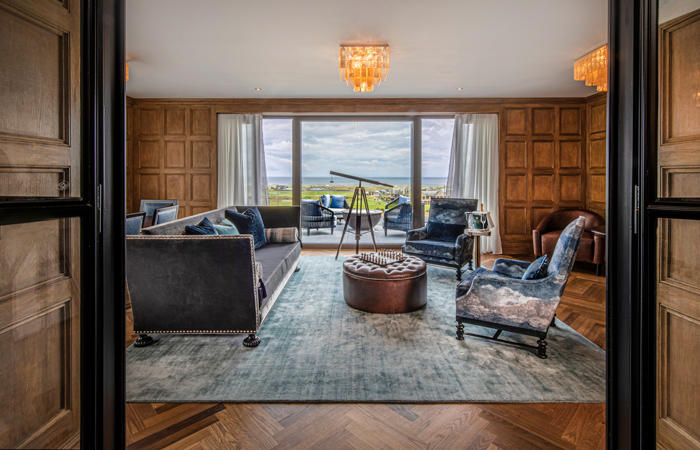
OCH Penthouse 5
Designing for the body
True biophilic design bypasses visual spectacle and goes straight to the nervous system. It fosters connection through tactile, sonic and olfactory cues that anchor us in the moment.
Six Senses Douro Valley deploys natural textures in finishes, acoustics and spatial layout – the fact that guests arrive and travel down into the hotel is no coincidence. The descent into the hotel upon arrival on the top flow is deliberate, evoking a sense of grounding from the outset. The material palette has been meticulously curated to dampen artificial reverberation and enhance the resonance of elemental sounds – flowing water, footsteps on stone or the hush of the atmosphere around vineyards. These choices rarely register consciously, yet they subtly recalibrate the nervous system. Guests feel more attuned, more alert and more at ease – without ever quite knowing why.
The return of resonance
Beyond the emotional impact, the commercial value is compelling. Environments that integrate biophilic sensory cues have been shown to increase guest satisfaction, length of stay, and average daily rate (ADR). Properties that feel restorative generate better reviews, more return visits, and stronger brand advocacy.
For owners, this investment is good business. Lighting that adapts to its environment can reduce energy costs and improve operational efficiency. As guest expectations evolve toward more conscious, emotionally resonant travel, properties that engage on a multi-sensory level are better positioned to lead.
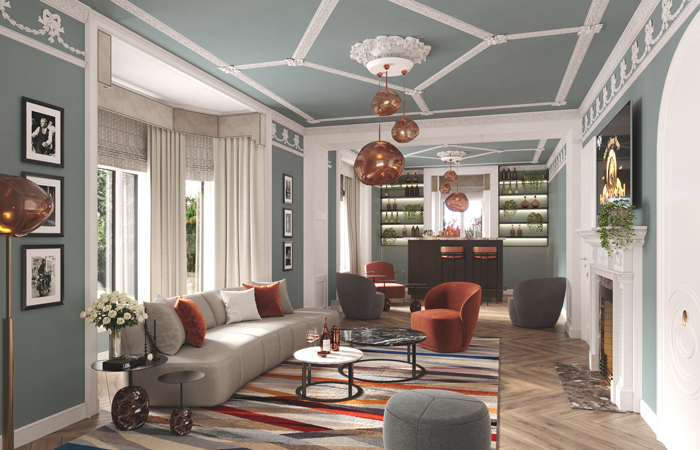
Combe Royal: Design and procurement by OCCA
The future of hotel design is felt
In an industry obsessed with visuals, the most powerful design strategies might be the ones guests can’t see at all.
Sensory biophilic design invites hoteliers and designers to work more intuitively – to think beyond aesthetics and consider atmosphere, emotion and embodiment. The art is to treat biophilia as an invisible thread that ties together brand, place and human experience.’