



Specifying Bravely: Real-World Lessons from Across the Hospitality Design Chain
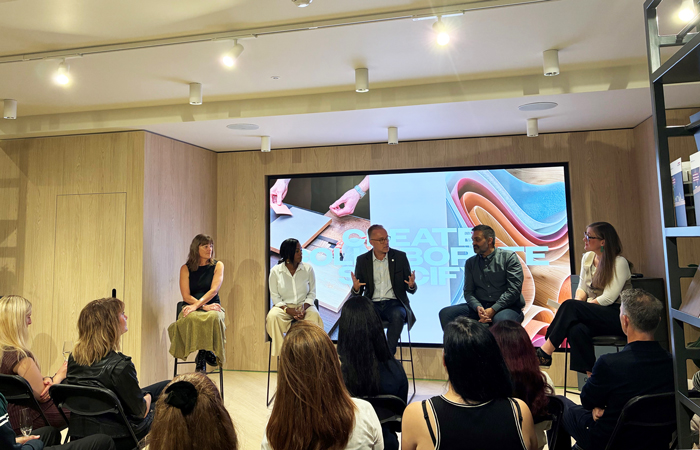
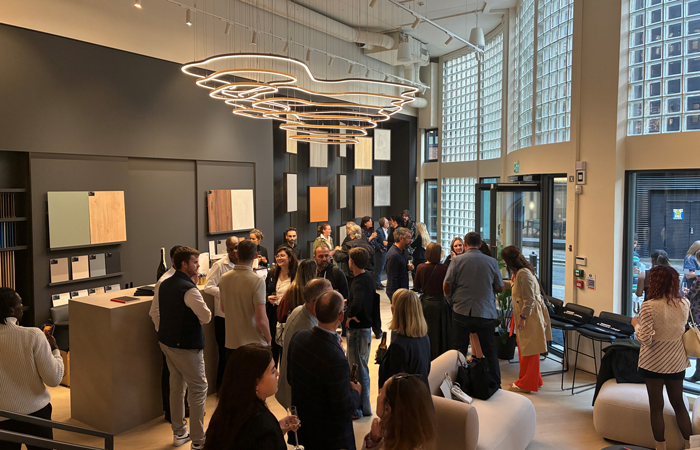
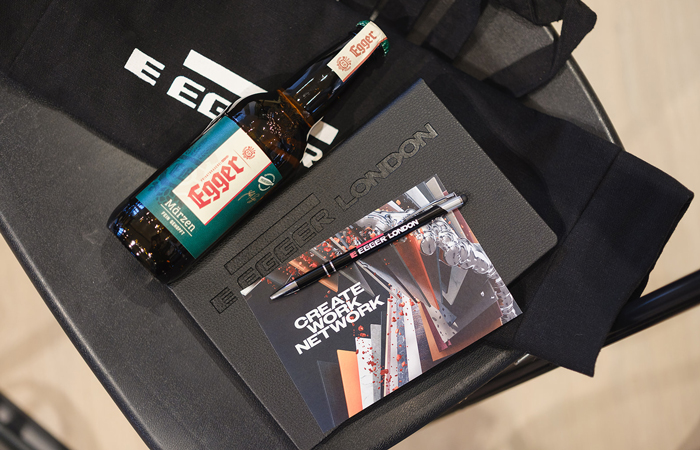
On the evening of 17th September 2025, as part of London Design Festival, the industry gathered at the EGGER London showroom for a panel discussion that brought multiple perspectives to one timely question: what does it really mean to specify bravely?

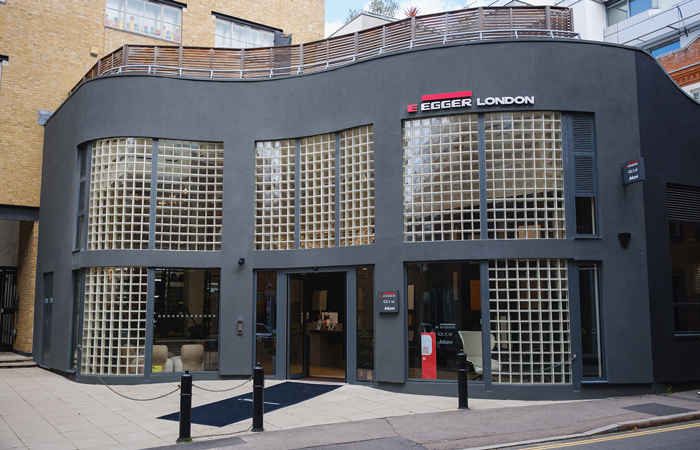
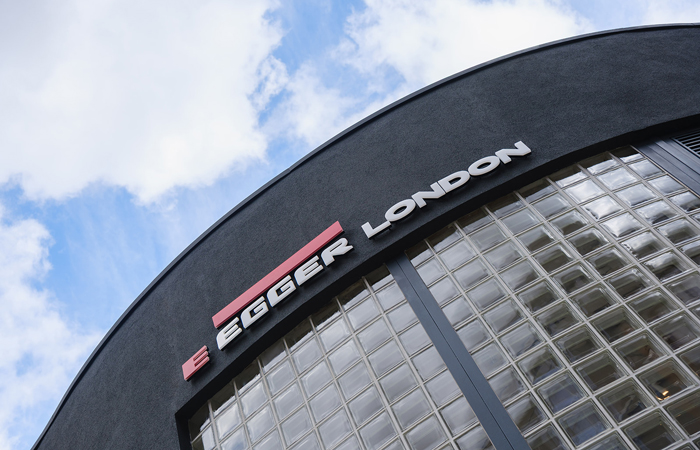
EGGER London is a collaborative showroom in the heart of Clerkenwell, created by three European powerhouses in materials innovation: EGGER, CLEAF, and BLUM. Together, they offer a seamless design solution across surfaces, textures, furniture fittings, and components, enabling specifiers to bring bold design ideas to life with confidence, practicality, and performance in mind.
Located inside the landmark One Dallington Street building, the showroom is a light-filled, immersive design space tailored specifically to the needs of commercial designers. With hundreds of full-size samples, digital tools, and expert guidance on site, EGGER London is not just a materials library, it’s a space for collaboration, experimentation, and education.
That made it the perfect setting for this panel: Specify Bravely — When Bold Gets Real!
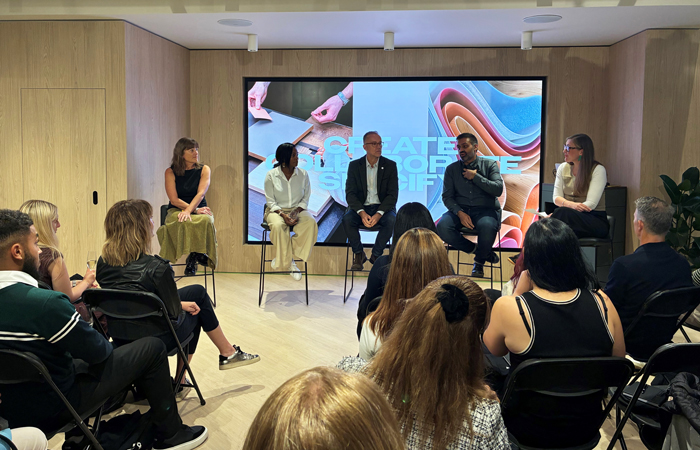
Moderator, Design Insider Editorial Director, Alys Bryan, introduced the conversation by stating:
‘In commercial interiors, bravery is easy to talk about, but far harder to deliver. This panel brings together multiple sides of the specification process to explore what it really means to be bold, from design intent to operational reality. When should we take creative risks, and when is restraint the smarter choice? Where are the common points of tension and how can we collaborate more effectively to create designs that are brave, buildable, and commercially sound?’
Speakers welcomed to the stage were:
- Arun Rana, Design Director at Accor
- Sven Morne Goosen, COO at YOTEL
- Toni Black, Interior Director and Partner at Blacksheep
- Amanda Page, Commercial Director at Sylvan Enterprises
Together, they reflect multiple stages in the design and delivery process, from the manufacturer to the hotel operator — giving us a comprehensive look at when and how bold decisions in specification pay off, and when they don’t.
What Does It Mean to Specify Bravely?
Bravery in commercial interiors is often romanticised as a design flourish, a loud pattern, a bold colour, or an unexpected detail. But for the panel, bravery is something far more grounded in responsibility, collaboration, and realism.
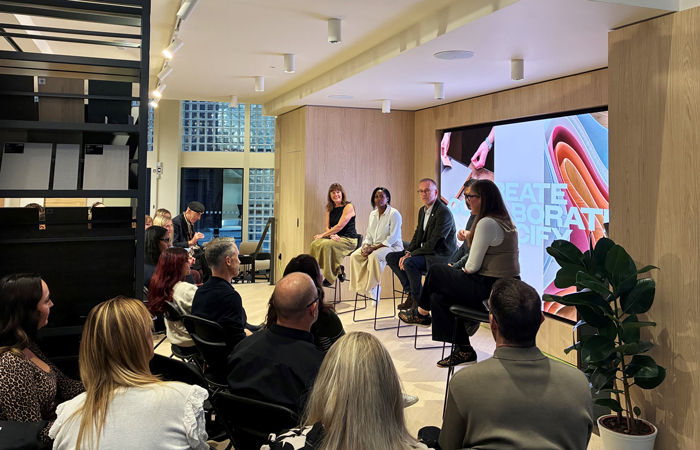
Arun Rana explained:
“It’s not just about taking risks with using new or outrageous materials or being really statement with your interiors. For me, it’s about being responsible, looking at the specification from all angles and making sure it’s suitable for the space. That’s the bravery!”
Amanda Page offered a manufacturer’s perspective. For Sylvan, bravery is often about getting designers and clients to trust their expertise when suggesting unfamiliar solutions:
“There was one project where we were suggesting an MFC range. The polisher saw the sample and said, ‘I’ve just spent eight hours distressing oak to get this finish. We could have saved them a quarter of the cost and all that labour. But the designers and the hotel weren’t interested, they just didn’t trust that an MFC could deliver what they wanted. Had they taken that leap of faith, they would have been ahead of the curve. Bravery means trusting your supplier.”
What Happens When We Play It Too Safe?
Avoiding risk might seem like the safer choice, but the panel agreed it often leads to regret, disappointment, and missed potential.
Toni Black spoke candidly about the frustration that can build when clients back away from bold ideas:
“The consequence of not being brave is someone not being happy with the end result. They say, ‘It’s not like your visuals,’ and you just think, you could have learnt from our expertise. For designers, that’s hard. You’ve got to convince everyone, the operator, the client, the supplier, and when they don’t back you, you can’t deliver what you know would work.”
Sven shared a vivid example of this disconnect at YOTEL New York:
“We spent a quarter of a million updating the lobby, new polished concrete floor, new lighting, suspended ceiling, LED tracks to highlight our luggage robot. But there was no guest reaction. Then, in a high-traffic area, we painted one scuffed white wall black. Ownership said no at first, but I pushed. Within hours, social media lit up, people thought we were fully renovating. Sometimes the smallest change has the biggest impact. That’s what being brave actually looks like.”
For Amanda, the dangers of not listening or testing ideas thoroughly were even more costly:
“We worked with a designer who specified an unusual material for within a bathroom. We tested the material, we even submersed samples in bowls of water around the factory, and the material failed. The supplier themselves advised against its use in bathrooms. But when we flagged it to the designers they chose to proceed regardless. A year later, it had all failed and needed replacing. That wasn’t just a bad decision, it was expensive, embarrassing, and avoidable.”
Who Benefits When We’re Brave?
The panel agreed that bravery done well benefits everyone, not just the client or the guest, but also suppliers, housekeepers, and long-term operators.
Sven shared how a specification that was meant to elevate brand perception ended up solving a completely different issue:
“In Boston, we renovated the corridors to help drive a higher room rate. But what it solved was noise complaints. We had housekeepers pushing trolleys, guests talking loudly, noise had been a real issue. The new carpet, dark walls and ceilings changed everything. When we first stepped off the elevator, everyone went quiet. Complaints vanished. That’s a brave decision delivering real operational value.”
Amanda also highlighted how brave decisions, like switching to water-based lacquer, paid off in unexpected ways:
“We did it because the client wanted a sustainable solution. Our production team didn’t want to move away from the finish they were experienced in using. But we switched and now our finish lasts, it’s better for the environment, and better for the health and safety of our team. That was a brave production decision, and it worked.”
Where Does Bravery Tip into Recklessness?
The line between innovation and impracticality can be thin, especially when collaboration breaks down.
Toni pointed out that without joined-up conversations between all stakeholders, good ideas go bad:
“Sometimes you design something beautiful, but by the time the developer and the procurement team get involved, it’s been value-engineered beyond recognition. The client wants the original visuals, the operator wants it to work, and the developer wants it cheap. The bravest thing you can do is get everyone around the table at the beginning. That’s the only way to avoid disaster.”
Arun added that the true danger lies in lack of due diligence:
“We’ve had people specify materials without knowing their slip rating, the fire rating, or how they clean the material. Designers need to test things properly. I’ve tested materials to destruction to emulate the high wear conditions they are under in hospitality, I’ve even sat on desks to check the cantilever. If you’re not doing that, you’re not doing your due diligence.”
The Realities of Value Engineering
One of the most discussed pain points was the role of value engineering — and its ability to erode brave design decisions if not managed properly.
Sven laid it out plainly:
“From original scope to final delivery, what we get is not what was designed. But the underwriting, the financial expectations, stay the same. That’s a problem. You value engineer a design to save £100,000, but then you lose millions in long-term guest satisfaction, maintenance or revenue. That’s not value. That’s short-sighted.”
Amanda shared an example of how working with a supplier and manufacturer early in the process can remove the need for last minute value engineering, sharing this example:
“We delivered a project recently where we were brought in from the beginning. Designers, QS, manufacturer, developer, we were all around the same table from day one. The original FF&E budget was £10k per room. We got it down to £4k, and the design integrity remained intact. Everyone won, but only because we worked together from the start.”
The Smart Spec Checklist
Arun offered a list of practical checkpoints that guide his specification decisions, what he calls his mental “smart spec” checklist:
“Fabrics, will it shrink when washed? Tiles, what’s the pendulum test? Laminates, is it HPL or melamine? Fire rating, does it meet standards across Europe? Reorderability, can I get a replacement in two years if it’s damaged? I’m the one who gets the call when the headboard has two greasy patches, or the carpet can’t be cleaned because someone dyed their hair red in the room. You have to specify knowing that’s going to happen. I don’t care how good it looks, if it doesn’t hold up, I won’t approve it!”
What Does Bravery Look Like in the Future?
To close, each panellist shared their view on what brave specification will look like in the next five years.
Amanda predicted brave shifts in manufacturing:
“It’ll be about making brave production decisions, investing in automation, using new sustainable coatings, taking business-level risks that people might not see, but which really matter.”
Toni called for braver choices with real benefits:
“I think it’s about designing with function in mind, not just what looks good, but what really serves the guest, the staff, and the business. That’s the brave thing, making design meaningful.”
Sven warned against bland bravery:
“AI and digital tools can help us stay creative, but they could also create an homogeneous world.”
Arun concluded with a challenge:
“Stop looking at the tree. Look at the forest. Bravery is making choices that last, for the space, for the people using it, and for the planet. That’s the new brave.”
Ending Thoughts
In the end, the conversation brought clarity to a topic often clouded by marketing language or creative bravado. To specify bravely doesn’t mean chasing the loudest idea or the newest material, it means making well-informed, collaborative decisions that balance creativity with commercial and operational realities.
From procurement to post-occupancy, bravery isn’t about risk, it’s about rigour, responsibility, and resilience.
Photography Copyright: Owen Billcliffe
Supplier Finder is the UK’s only search platform for accredited suppliers of commercial interior furnishings.
At Supplier Finder, our mission is simple: to help you find the perfect commercial furnishing suppliers for your interior schemes and projects. We understand the importance of having confidence in the suppliers you specify and the products that bring your designs to life. That’s why each supplier featured on our platform is accredited through Commercial Interiors UK’s rigorous membership application process. This ensures that you engage with only the best in the industry!