





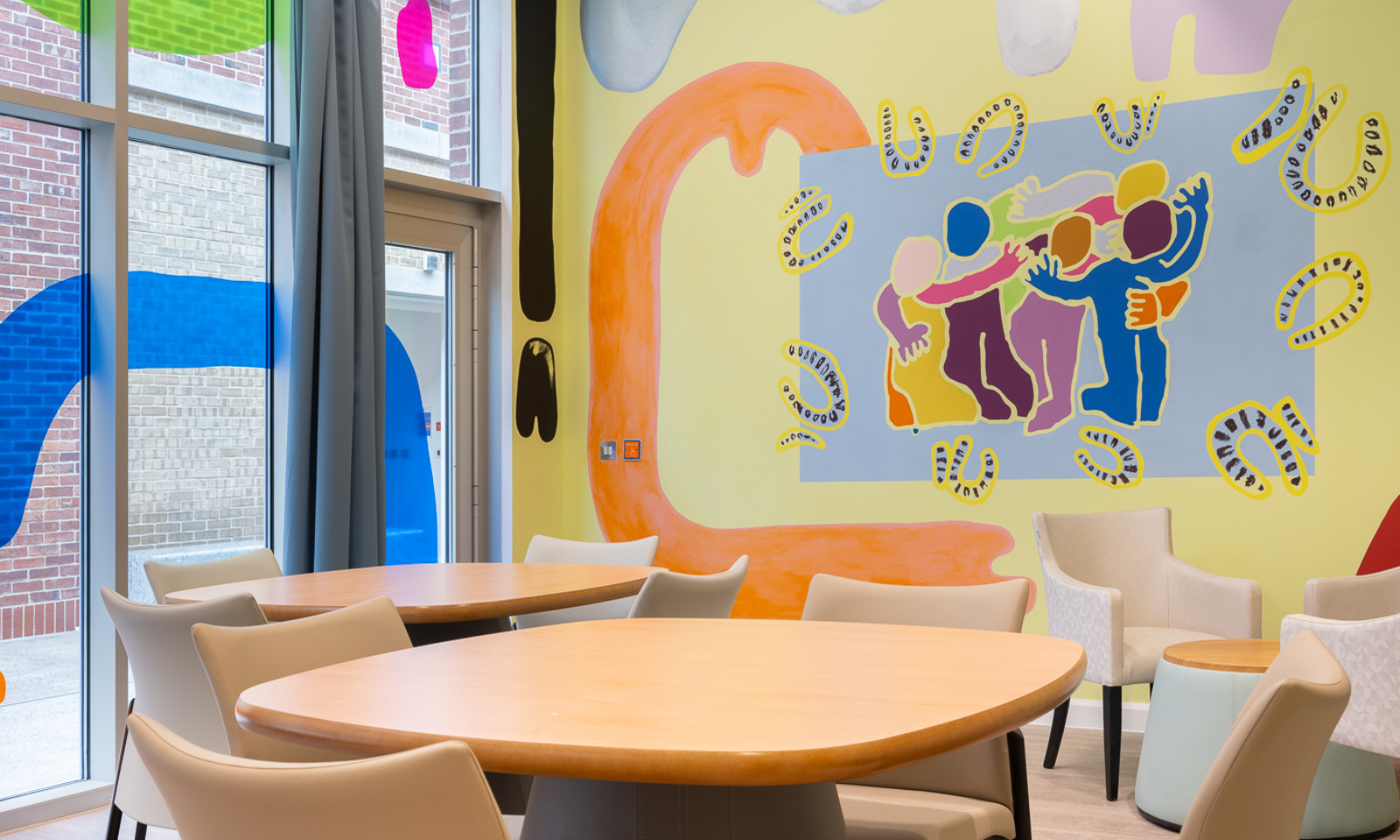
StudioMorey x Hospital Rooms Bring Art to Healthcare Settings
Monthly Column By Jim Biddulph
The design community often talks about the emotional qualities of materials and the atmospheres they help create, and how surface, colour and texture operate as more than aesthetic gestures. That ongoing dialogue feels particularly charged when we turn our attention to mental health settings, where the stakes of design are heightened and where a historic reliance on clinical sterility has overshadowed the human need for comfort, cultural richness and dignity.
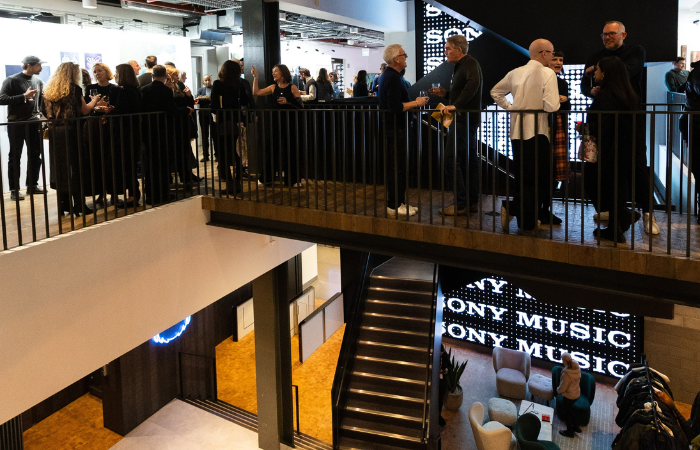
StudioMorey’s second Art Fair, held at Sony Music’s Kings Cross headquarters in late November, serves as a powerful reminder of how art and design can reframe our expectations of such clinical spaces and bring people together.
Although the night celebrated the work of thirty emerging artists, with almost £100,000 raised across sales and donations, the real resonance lay in its support for Hospital Rooms, the charity radically reimagining how mental health hospital environments can feel.
The organisation was founded after artist Tim A Shaw and curator Niamh White visited a friend sectioned under the Mental Health Act and were horrified by the cold, clinical emptiness of those surroundings. The charity has since pioneered an approach that treats hospital rooms as cultural spaces capable of offering solace and dignity. Their projects demonstrate, in very tangible ways, that atmospheric quality is inseparable from emotional wellbeing.
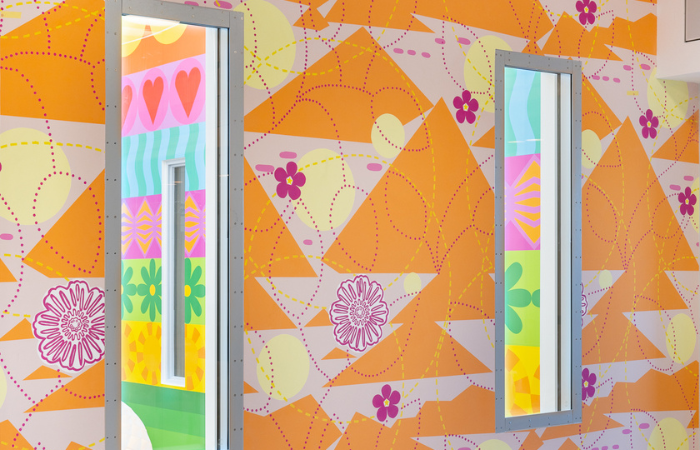
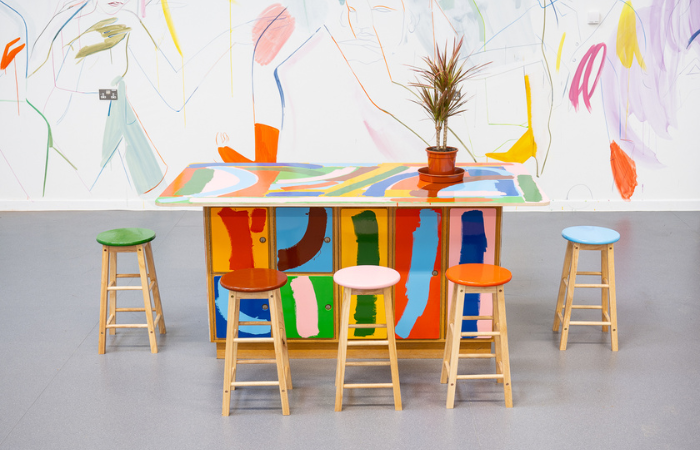
Their portfolio makes a compelling case for how artists and designers can meaningfully intervene in clinical environments without diluting their creative identities. In projects featuring the work of artists such as John Booth and Jo Bruton, we see an approach that treats hospital rooms as canvases for atmospheric recalibration rather than neutral backdrops.
Booth’s distinctive, joyfully graphic language, full of bold outlines and unapologetic colour, has been used to lift areas that often suffer from visual monotony, creating spaces that feel animated and socially open without tipping into overstimulation. While Bruton’s layered patterns and softer chromatic shifts introduce a sense of rhythm and tactility that gently dissolves the hard edges typical of psychiatric interiors.
Together, these interventions show how artists can collaborate with clinical teams to create spaces that respect safety requirements yet feel culturally and emotionally rich: spaces for patients that acknowledge vulnerability without becoming sparse; corridors that feel like routes to possibility rather than confinement; and communal areas that invite connection instead of merely containing it.
The location of the fair – Sony Music’s MoreySmith-designed headquarters – was an apt backdrop. MoreySmith’s long-standing design ethos has always balanced functionality with atmosphere, and Studio Morey, its residential and hospitality practice, continues this thread with an emphasis on characterful, emotionally intelligent interiors.
Linda Morey-Burrows has spent more than three decades embedding art within interior architecture, and her commitment was evident throughout the event:
“It has been an absolute delight to put this amazing collection together,” she said on the night. “Art has been an integral part of our work and my personal passion over the past 32 years… I hope the success of this event will not only raise funds for the artists and our chosen charity, Hospital Rooms, but create a platform for artists to exhibit their work to further establish themselves.”
That auction extended across painting, mixed media and ceramics, with 35 pieces sold directly and six high-value works donated by established artists, including Nick Knight, Caroline Jackson, Michael Landy and Kathrin Linkersdorff. All of the money generated by the auction pieces went directly to the charity, while the other artists each received 70% of the sale price, with the remaining 30% going to Hospital Rooms.
As Shaw explains, the funds raised will feed directly into the Goodmayes Hospital Project in East London, which supports Black men’s mental health through the creation of thirteen specially commissioned, site-specific artworks.
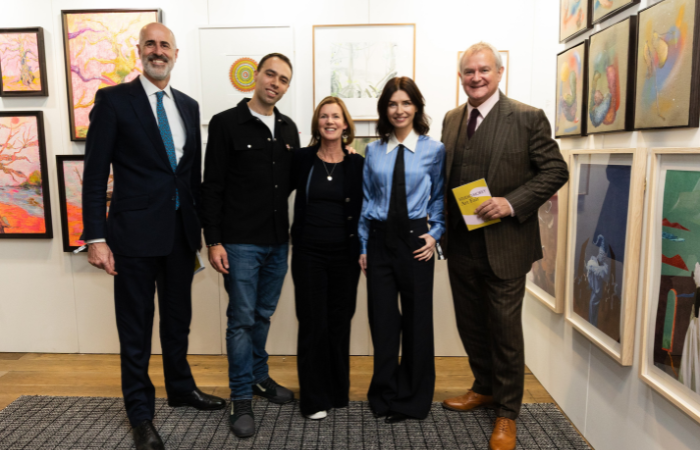
The night itself was celebratory, even glamorous, with Hugh Bonneville among the guests. But it also underscores a simple but often overlooked truth: interior design in mental health settings is not ornamental, it’s therapeutic.
It shapes experience, influences behaviour and communicates value. What Hospital Rooms does, and what events like the StudioMorey Art Fair help make possible, is a reframing of mental health interiors from spaces of control to spaces of care.
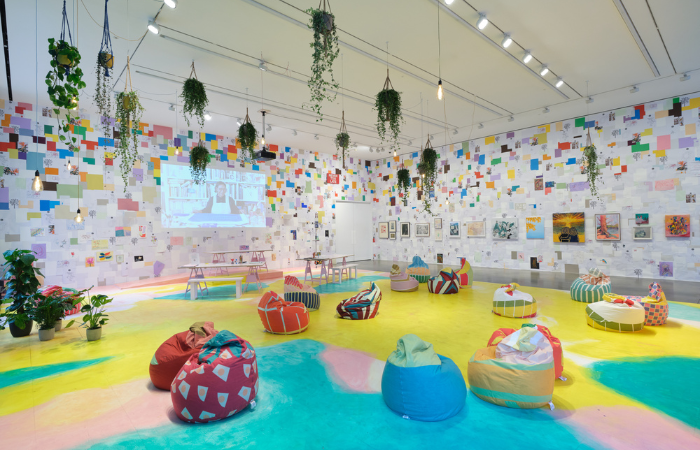
That reframing is also a reminder that emerging artists play a vital role in shaping the future of these environments. Their work, diverse in form and tone, offers new languages for designing spaces that feel human, responsive and culturally alive. The synergy is clear; Hospital Rooms commissions artists through a careful process that considers the needs, vulnerabilities and lived experiences of the community in each setting.
These are installations that transform entire wards, therapy rooms and patient bedrooms. They soften edges, challenge oppressive colour palettes, and introduce forms that feel cultural rather than institutional, without compromising safety.