



The Circular Hub: Communicating a Clearer Vision for Circular Design
The journey to create a space that tested circularity for the Workspace Design Show began with a simple but important challenge: how do you design an exhibition space using circular thinking rather than a linear approach?
The answer was The Circular Hub, an outstanding installation and a clear highlight of the show, designed by MCM Architecture and Future Works, both B Corps, in partnership with Nested Living, a regenerative design studio. More than a temporary exhibition feature, the space stood as a compelling example of what the future of workplace design could look like. Through this installation, Ana Rita Martins and her team demonstrated not only an expert ability to communicate complex ideas clearly, but also a determination to push the conversation forward across the commercial interiors sector.
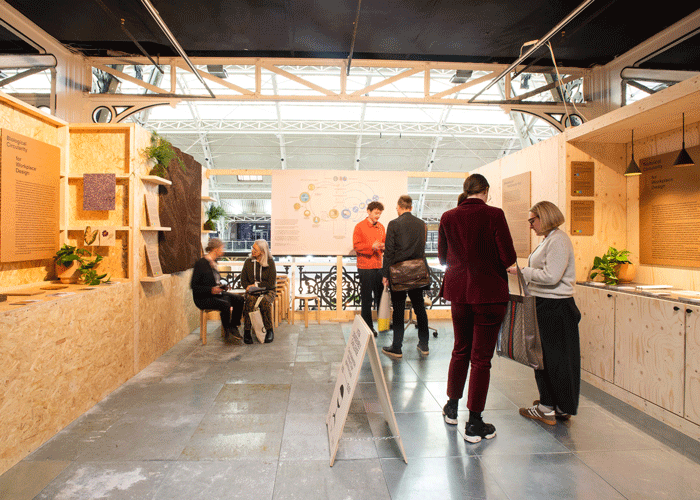
Recognising that exhibitions are, by nature, temporary and often inherently wasteful, the ambition was to create a design that could be dismantled and reused, leaving almost no trace, as though it had never existed. Central to this approach was a commitment to working with elements already in circulation, while ensuring that any new materials introduced could safely return to an ongoing cycle of use.
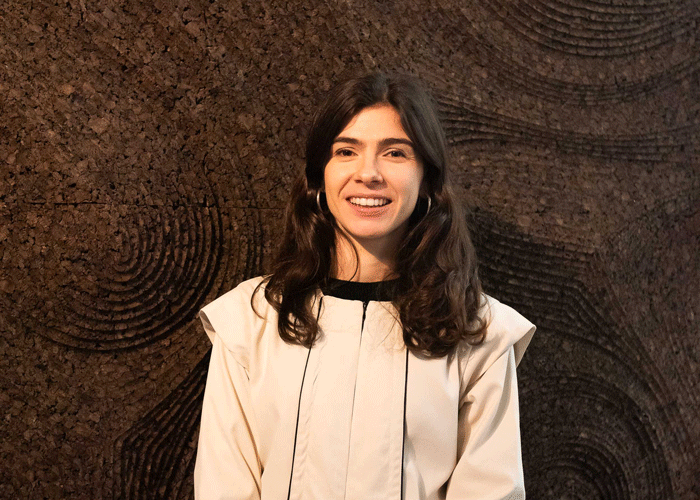
The Circular Hub was conceptualised by Ana Rita Martins, Sustainability Lead at MCM, as a dedicated space to explore circularity across both products and typologies. Materials were traced from raw to refined, with natural and synthetic options placed side by side to reveal the different pathways circular design can take. The space was developed through collaborative thinking with Future Works, the innovation venture of The Furniture Practice, to reimagine how circularity can help shape the future of interior and workplace design.
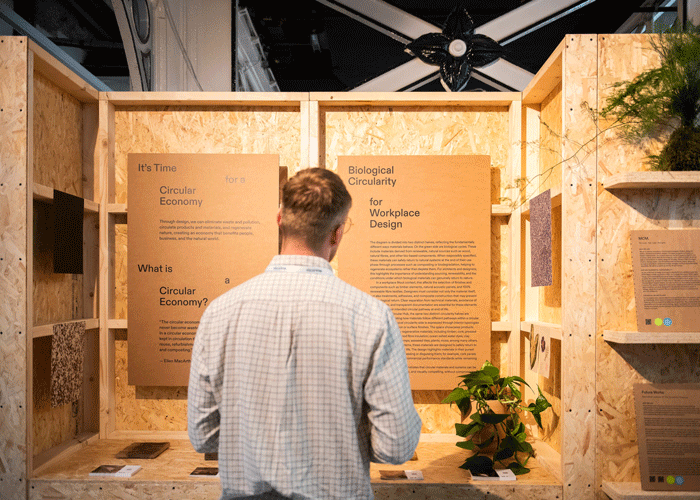
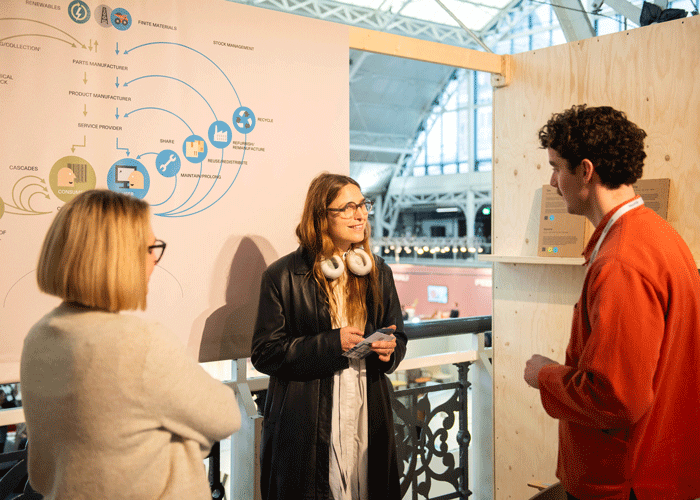
As leading experts in Sustainability, we wanted to start by explaining what circularity means to us and our industry. But like all sustainability concepts, circularity is complex and open to many interpretations. For this reason, we chose to rely on the definition of one of the global leaders in circular thinking: the Ellen MacArthur Foundation. Their definition and the well-known butterfly diagram provides a clear framework that offers an equation for circularity.
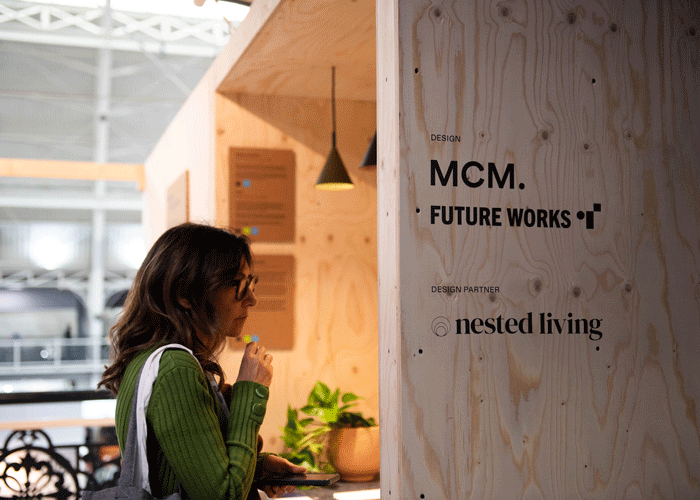
The Circular Hub represented two distinct halves of circularity, reflecting the fundamentally different ways materials behave within a circular economy. For that reason we partnered with the regenerative studio Nested Living to explore circular constructive ideas. The other product partners were Materials Assemble, Gencork, Tate, Vitra, Planteria and Studio Omelette, demonstrating how working together is essential to circular design.
The biological side was of circularity expressed through interior typologies such as walls, insulation and surface finishes. Our space showcased products made from biologically regenerative materials, including timber, cork, pressed flora linen wallpaper, wood fibre insulation, ocean salted water dyes, clay plaster, organic waste lamps, seaweed tiles, plants and moss. These materials were sourced from natural systems and designed to safely return to the environment at the end of their life. Rather than over-processing or disguising them, the design highlighted materials in their purest form. For example, cork panels were heat-pressed to meet commercial performance standards while remaining fully biodegradable.
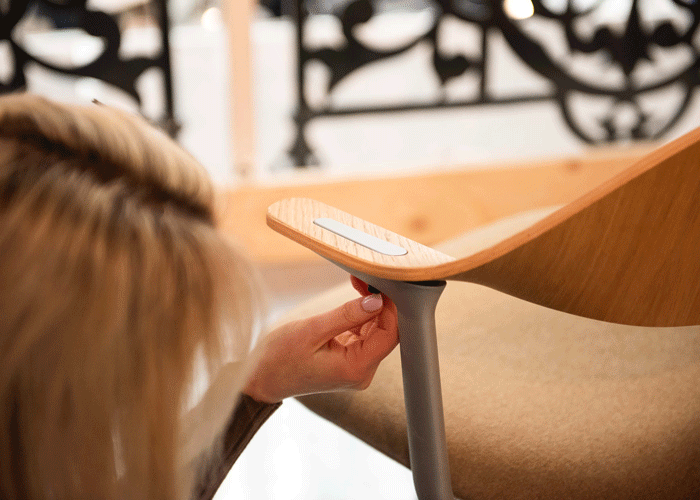
The technical side featured a fully circular partition system designed for clear disassembly and reuse, with the same principles as the MCM Studio wall system developed by MCM with Nested Living. Constructed from plywood, the walls are dry-assembled and mechanically fixed, and innovative recycled jeans insulation, simply celebrating the qualities of timber while enabling complete material recovery. Details such as waste stone terrazzo tiles or second life metal tiles demonstrated how reclaimed materials can achieve a refined, commercial finish. The space also incorporated the Vitra Mynt chair, showcasing contemporary furniture designed with demountability and future disassembly in mind.
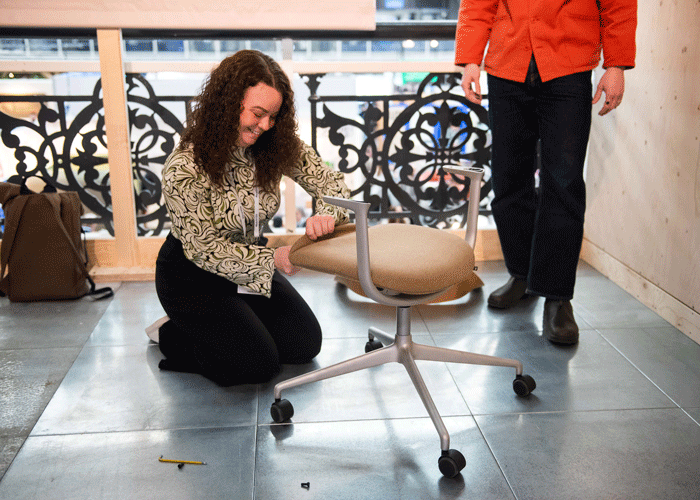
At the end of the show, as agreed, there were several reuse streams. The walls were dismantled and resold to a local reuse center that agreed to reuse them after the show. The cork was previously used on another exhibition stand and will return to the workshop for use in future exhibitions, while the printed boards and diagrams were also retained for two upcoming design exhibitions. The flooring is second-life and was returned to Tate for use in a dedicated fit-out project. The rest of the finishes were returned to their original owners after being loaned for the Workplace Design Show.
Photography: Max Colson