


The Great Shoreditch Design Off: Chaos, Comedy, and Creative Knowledge
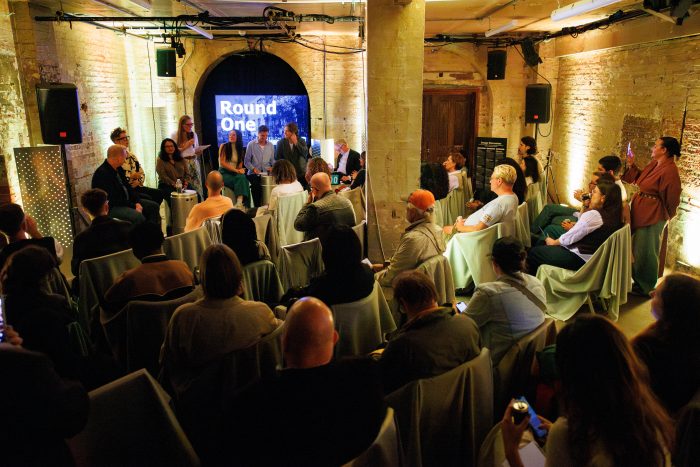
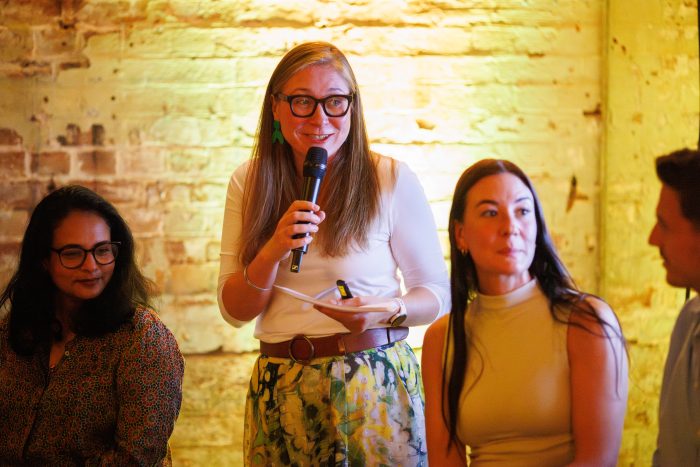
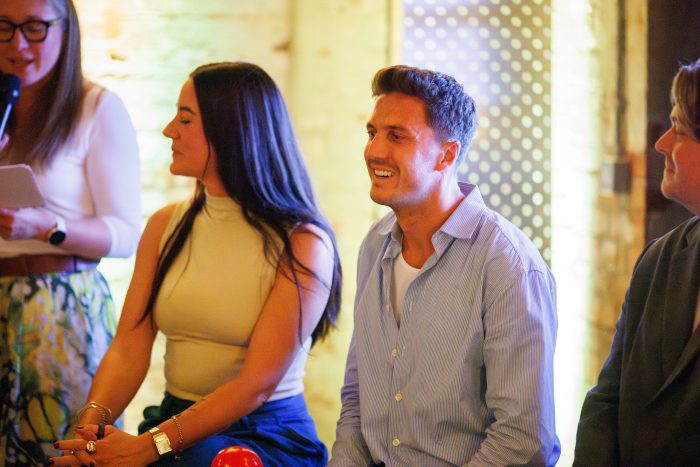
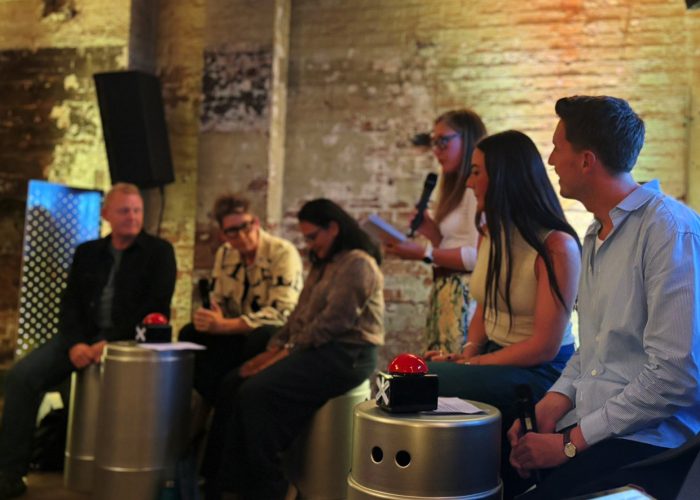
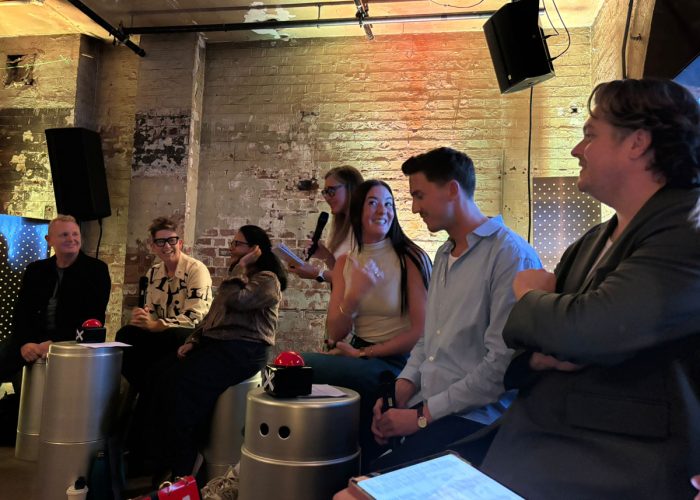
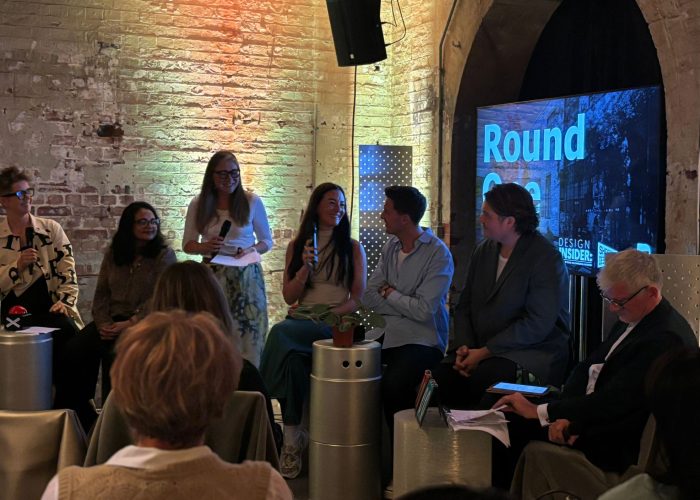
The very first Great Shoreditch Design Off was everything we hoped it would be: part quiz show, part panel debate, part design cabaret. Hosted by Design Insider Editorial Director Alys Bryan, for Design London Shoreditch as part of the London Design Festival, and curated within a talks programme led by Roddy Clarke, the evening brought together six designers, writers and thinkers for a lively, unpredictable contest based on popular afternoon TV gameshows!
On stage were two teams captained by familiar voices in the design industry. Leading Team Katie was journalist, author and sustainability advocate Katie Treggiden, joined by Craig Jones, founder of Jones + Partners, and Ankita Dwivedi, CEO of Firstplanit. Facing them, Roddy Clarke captained Team Roddy alongside Jess Adkins, Brand Experience Design Lead at M Moser, and Russell Whitehead, co-founder of 2LG Studio.
Together they formed a line-up as sharp, opinionated, and unpredictable as any quizmaster could hope for.
Round One: The Prizes
The evening kicked off with the cruellest challenge of all: each contestant had to bring along a prize that embodied “design perfection,” knowing it might be lost forever to the other team if they were to loose.
The table quickly filled with treasures: Craig arrived with a scalpel handle, Katie placed down a sycamore seed, Ankita risked a humble piece of A4 paper, Roddy brought a plant, Jess rolled in a dice, and Russell, in a move of spectacular self-belief, offered up his own book. Each prize accompanied by an explanation of how it delivered design perfection.
By the end of the night, some of these objects had been triumphantly claimed, others reluctantly surrendered, and one or two were held aloft like the FA Cup of design quizzes.
Round Two: Quickfire Rounds
The quiz shifted gears into quickfire questions, short, sharp, and buzzer-driven. Contestants tackled design trivia from festival history to architectural gossip.
When asked in what year the London Design Festival launched, fingers flew for the buzzer with the correct answer of 2003. Michael Czerwinski, our resident “dictionary corner,” expanded with context: LDF was co-founded by Sir John Sorrell and Ben Evans, and now attracts over half a million visitors each year, not bad when compared with global heavyweights like Milan Design Week, which has been running since 1961.
Other quickfire highlights included identifying Pentagram’s Vince Frost as the original designer of LDF’s identity, recognising Thomas Heatherwick as the man who once declared “architects have made the world boring,” and correctly naming the World Design Congress at the Barbican as the UK gathering that brought global leaders together to explore design’s role in tackling the climate and nature crisis.
Exhibitions also made an appearance. Contestants were asked which UK exhibition celebrates disability by reframing objects as tools for identity and expression, the answer was Design and Disability at the V&A, running until February 2026. Later, they faced the challenge of naming the Design Museum’s upcoming More Than Human exhibition, which explores how design can serve non-human lifeforms, from plants and animals to entire ecosystems, opening in July 2025.
It was trivia with teeth, but also a chance for Michael to drop the kind of context and detail that made the quiz feel both playful and genuinely insightful.
Round Three: Knowledge Rounds
If the quickfire section tested reflexes, the knowledge round was about depth. Each team was asked short questions as a group, followed by an in-depth challenge for one member to expand on.
Team Katie correctly named Herman Miller and Humanscale as the two American seating companies battling for sustainability dominance. Craig took the follow-up and imagined workplaces powered by battery tech rather than plug sockets:
“Imagine if you built a building with no infrastructure … the cost savings if you could just wheel in the furniture and run the building on battery technology would be extraordinary.”
Team Roddy stumbled on their quick question, unable to name Design and Disability at the V&A. But Jess rose to the follow-up, reframing experience design as something far beyond branding:
“It’s inclusivity, it’s storytelling, it’s connecting people to place. It’s not enough anymore for a brand to throw the logo on the wall and say ‘job done.’ Design needs to be meaningful, immersive, and human.”
Back with Team Katie, Ankita was asked what three sustainability buzzwords she was tired of hearing, “eco-friendly,” “circular,” and “carbon-neutral” all made the list. She went on to highlight the danger of greenwashing:
“Greenwashing is making claims without substantial data. Sustainability isn’t one thing, it’s environmental, social, human health, material impact, all interrelated. Designers need to unpack this clearly so clients can trust what they’re buying into.”
On Team Roddy’s side, Russell was given the stage to reflect on inclusivity in design:
“I hate gatekeeping. We need to open the doors and say if you’re interested in being in the creative industries, yes, come in. Creativity should be a space where everyone can belong.”
Katie closed the round with a question on regenerative design. She explored how language shapes perception and possibility, using cultural examples to illustrate her point:
“In Greek, there are different words for light blue and dark blue, which means those colours are perceived more distinctly. Language isn’t just how we describe things; it actively shapes our experience of them. So what if we swapped the phrase ‘planning permission’ for ‘community consent’? That small shift changes how we think about building, who gets to decide, and the values that drive design. Language can unlock new approaches, and if we want to change the design industry, we must also change the words we use.”
Finally, Roddy was asked what tools designers can use beyond materials and form. His answer was characteristically sharp:
“Conversation is key. Panels have often been about a few people talking at a room, but if we’re going to face today’s urgent challenges, dialogue has to involve everyone.”
Round Four: Wild Cards
The final round handed control to the audience. Questions ranged from the big to the philosophical. Was “less more”? The answer, agreed on both sides, was that we need to do more with less. Where will we be in 15 years’ time? Some suggested the planet might be “f***ed,” while Katie countered with what she calls defiant hope, the idea that against all odds, we must still believe in and work toward a better future.
Russell left the audience with a particularly uplifting note:
“Instead of guarding creativity, we should invite more people into it. The world doesn’t need more gatekeepers, it needs more openness, more imagination, and more voices shaping the future.”
It was a reminder that while the quiz delivered its fair share of laughs and lively competition, it also left space for reflection on the role of design in shaping our lives and our world.
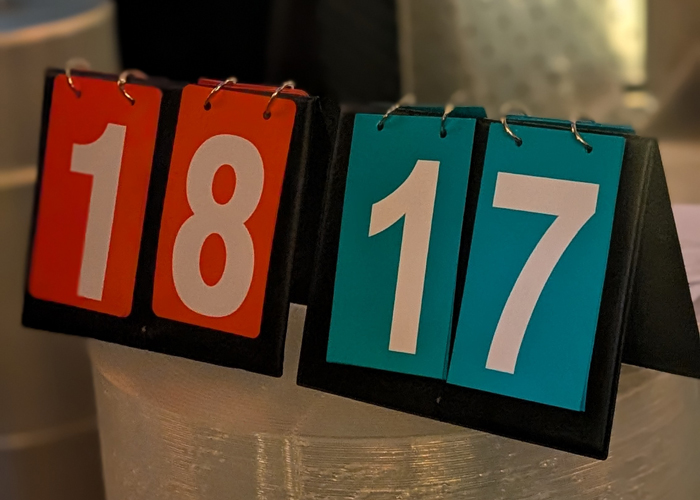
And the Winners Were…
With Michael Czerwinski keeping score, Carly corralling audience questions, and host Alys Bryan steering the joyful chaos, Team Katie clinched victory (by the skin of their teeth). Team Roddy may have lost their plant, dice, and book, but both teams won the audience over.
The Great Shoreditch Design Off was exactly what design should be: funny, fierce, chaotic, and above all, full of heart. Plans are already forming for a 2026 rematch, so contestants, start thinking about what you’ll risk on the prize table next time!