







The New Luxury Code: How a Global Design Vanguard Is Rewriting the Rules of Hotel Design
Luxury is in flux. The glittering veneers of the past are giving way to something quieter, more meaningful, and infinitely more human. Across the world’s most celebrated hotels and private retreats, a new generation of designers are redefining what sophistication feels like – it is less a matter of status, more a question of soul.
At the centre of this shift is an unlikely alliance of philosophies: emotional connection, cultural honesty, material integrity and a reawakening of craft. Designers who once defined opulence through marble and chandeliers now talk about light, place and purpose.
From space to spirit
For Tara Bernerd, luxury begins with breathing room. “We are seeing a real evolution in how people live today,” she says. “Increasingly, it is possible to work from almost anywhere, and that freedom has changed the way people travel and what they look for in a hotel. Whether designing a city hotel or a resort by the coast, space has become the ultimate contemporary luxury.”
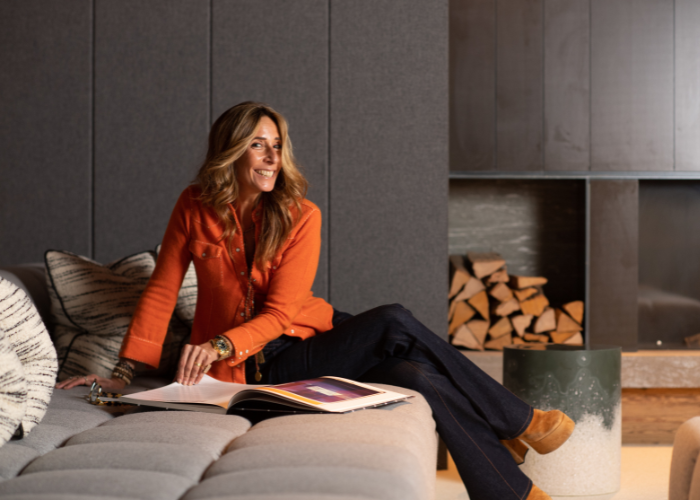
Tara Bernerd, Founder and Creative Director of Tara Bernerd & Partners
Bernerd’s studio, known for projects like Rosewood Munich and Six Senses Milan, uses biophilic design – planters, green walls, and natural light – to cultivate calm. Her belief that “the future of hotels lies in understanding the human touch” has become a mantra echoed across continents.
Taking this concept of ‘breathing room’ to a whole new literal level, Thermengruppe Josef Wund has unveiled an installation, brought to life through the artistry of Marshmallow Laser Feast, the spatial design expertise of atelier 522, and the sensory innovation and research of White Mirror, where the architecture physically breathes. Featuring a mirrored floor and chrome surfaces to dissolve the boundary between body and space, the ‘breathing’ is guided by sensory stimuli and evidence-based patterns. “It uses NASA climate data to shape the rhythm of the experience,” says Ramy Elnagar, Founder of White Mirror. “Light and sound also pulses, which brings visitors into a sense of planetary coherence.”

Ramy Elnagar, Founder of White Mirror
Clint Nagata, Founder and Creative Partner of BLINK Design Group, agrees that connection – not cost – is the new benchmark. “Historically, luxury has been defined by gilded surfaces and heavy drapery,” he says. “Luxury is no longer defined by cost but by how deeply it connects. The pendulum has swung in the opposite direction. Biophilic and regenerative design, soft minimalism – these are the new luxury.”
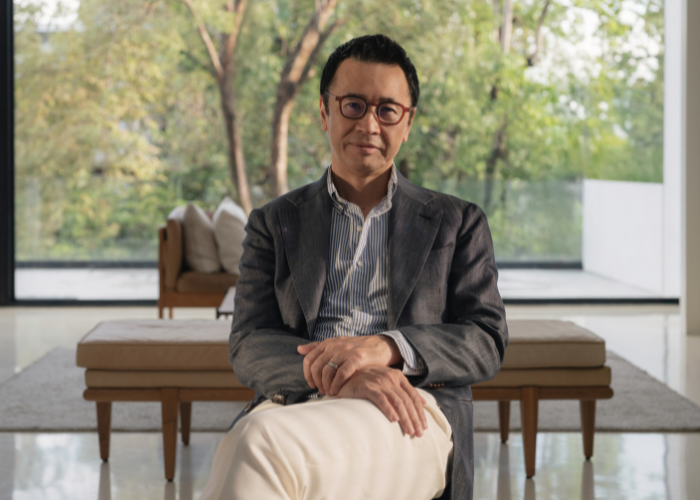
Clint Nagata, Founder and Creative Partner of BLINK Design Group
Design as emotion
Bernerd sees emotion as the new architecture. “You only have one chance to make a first impression,” she says. “Emotion plays a huge part in that arrival experience and how we connect with a space.”
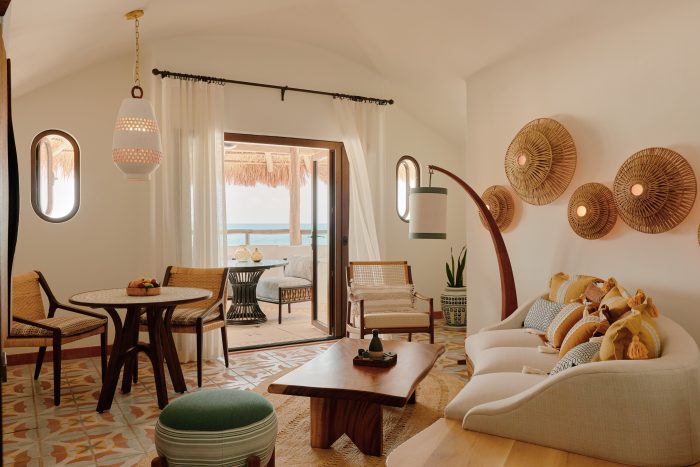
Maroma, A Belmond Hotel, designed by Tara Bernerd & Partners
At Maroma, A Belmond Hotel, she worked with local artisans to carve an aesthetic that “feels timeless, soulful and deeply rooted in its setting.” For Nagata, that same sense of rootedness is where authenticity begins. “The successful global brands will treat local culture not as a backdrop, but as a co-author of the experience,” he notes. “Rather than imposing a rigid visual language, they’ll allow more adaptive identities – shaped by place, anchored by ethos.”
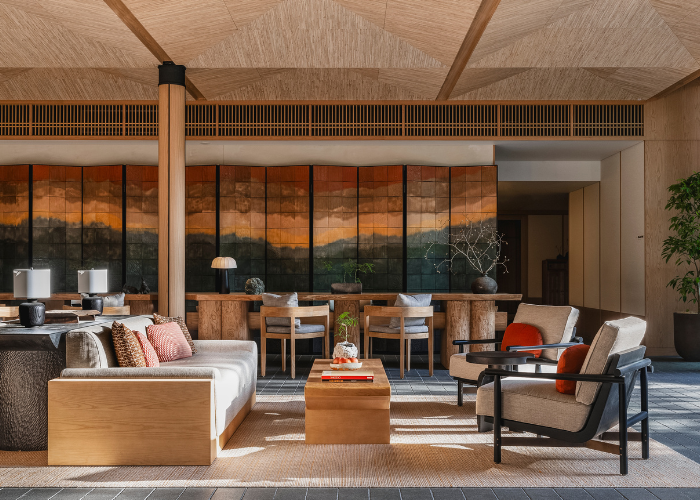
Six Senses, Kyoto, designed by BLINK Design Group
Kate Mooney, Founder and Principal of OCCA, calls it a return to sincerity. “The sweet spot is where the brand provides consistency and the location gives it soul,” she explains. “The trick is to design experiences that feel rooted, not themed – recognisably of the brand, but unmistakably of the place.”

Kate Mooney, Founder and Principal of OCCA
The soul of experience: dining, drama and design
Few places express this convergence of emotion and craft more vividly than a hotel’s F&B spaces. “Hotel F&B has become the soul of the guest experience,” says Simon Rawlings, Chief Creative Officer of David Collins Studio (DCS). “Today’s travellers are looking for connection and theatre – spaces that stimulate the senses while feeling deeply comfortable.”

Simon Rawlings, Chief Creative Officer of David Collins Studio
He continues, “The boundaries between F&B and hospitality design are increasingly fluid. Today’s hotel restaurants and bars are conceived as standalone destinations, designed with their own narrative and sense of place. At Delaire Graff Estate in South Africa, our restaurant interiors draw strength from locality – celebrating craftspeople and techniques unique to the region, and visually connecting to the surrounding vineyards.”
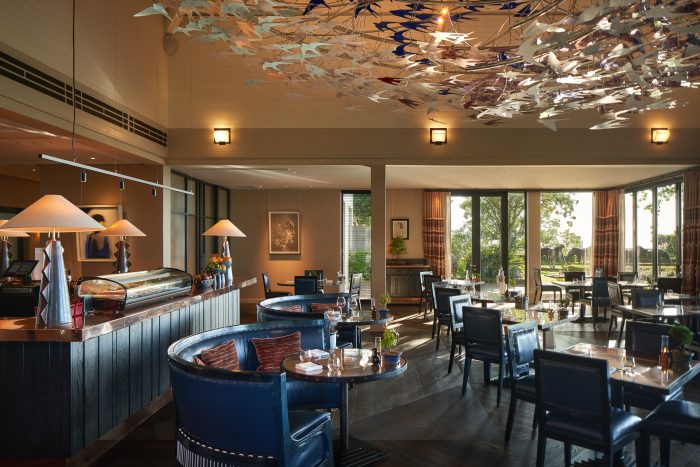
Delaire Graff Estate, South Africa, designed by David Collins Studio
Rawlings describes his studio’s work as “sensory compositions: acoustically attuned, atmospherically lit, and richly layered with details that reveal themselves slowly.”
This is part of a wider movement in which the dining room becomes a stage, not for spectacle but for feeling. “Guests no longer respond to overt opulence,” he says. “They want places that feel grounded, tactile and emotionally resonant. The emphasis is shifting from excess to experience; craftsmanship, narrative and emotional connection are the new hallmarks of modern luxury.”
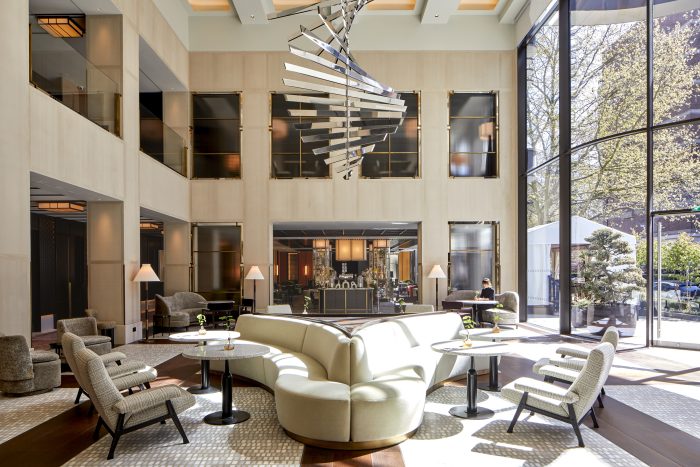
Nobu Hotel, London Portman Square, designed by David Collins Studio
At Nobu Hotel London Portman Square, DCS crafted what Rawlings calls “a language of quiet luxury – layered natural materials, thoughtful lighting and cultural authenticity that aligns with Nobu’s Japanese heritage.”
The blurred line between home and hotel
If the emotional connection defines the mood of modern hospitality, branded residences are defining its form. “With the growth in branded residences, we see the boundaries between home and hotel dissolving,” says Mooney. “It’s a movement from hospitality as service to hospitality as lifestyle.”
This crossover has recalibrated expectations. Guests now crave the comfort of domestic familiarity within the service of world-class hospitality. “Branded residences show guests what it feels like to live within a brand,” she adds. “And that expectation now flows back into hotels.”

Westpoint Homes, Middlefield, designed by OCCA
Bernerd’s work at Four Seasons Fort Lauderdale demonstrates that synergy: “The residences must feel truly like a home, while the hotel can be a stage for glamour and connection. The two should speak the same design language, but each with its own emphasis.”
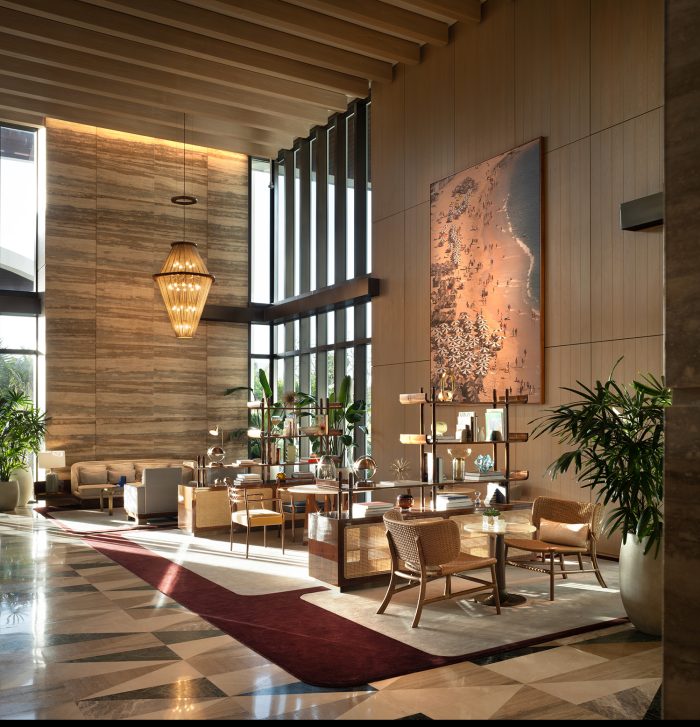
Four Seasons Fort Lauderdale, designed by Tara Bernerd & Partners
Nagata sees this as part of a broader “blurring of the line between residences and hotel. Hotels will increasingly resemble private members’ clubs, with a greater focus on intimacy, familiarity and seamless living.”
Together, these perspectives reveal a single truth: the new luxury experience is, at the heart, a state of mind.
Craft, light and the poetics of place
Nowhere is that state of mind arguably more beautifully articulated than in the work of Tatiana Sheveleva, Founder of CHAPI Design. Her recent interiors for The Ritz-Carlton Yacht Collection’s Luminara and Residence 22 at Nekajui, a Ritz-Carlton Reserve in Costa Rica redefine the relationship between design and nature.

Tatiana Sheveleva, Founder, CHAPI Design
“Luminara is the vessel where light becomes language,” she says. “Every curve, texture and material was selected for its beauty and how it interacts with sunlight, moonlight and the shifting reflections of the sea.”
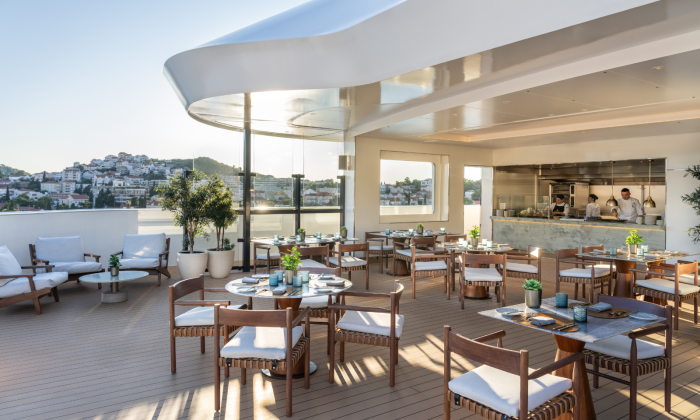
Luminara, The Ritz-Carlton Yacht Collection, designed by CHAPI Design
Her Costa Rican residence follows the same philosophy. “Every moment is designed to remind you where you are – in the heart of Costa Rica, a rare and secret world,” she reflects. “We leaned into tactility. Every piece had to feel rooted in the land – nothing ornamental, nothing extraneous. Instead, everything was intentional.”
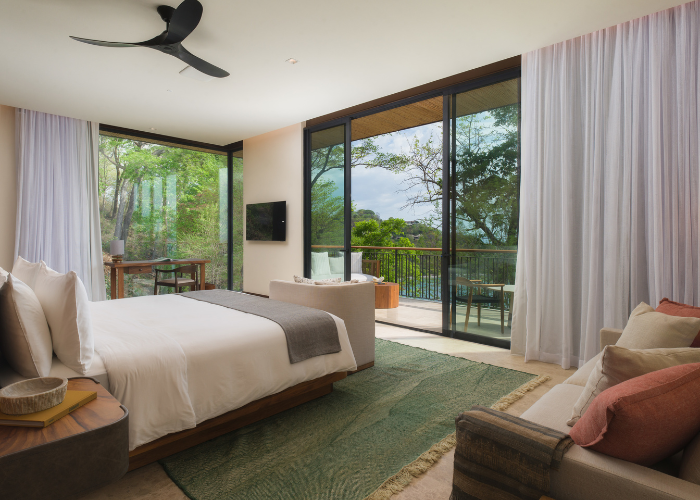
Costa Rican residence, designed by CHAPI Design
Mooney calls this approach “the quiet new glamour,” where craft, narrative, and restraint replace spectacle. “Luxury hotel design is shifting from surface glamour to more depth and integrity,” she says. “Materiality is becoming more honest and less bling or ‘on trend.’ Guests are looking for a sense of authenticity – quieter, with fewer layers of decoration and more layers of meaning.”
For Rawlings, that same craftsmanship is the cornerstone of DCS’s philosophy. “Artisan craft lies at the heart of what we do,” he says. “Longstanding relationships with trusted makers allow us to layer hand-finished materials, bespoke lighting, and custom furniture into each project — infusing spaces with depth, integrity, and timelessness.”
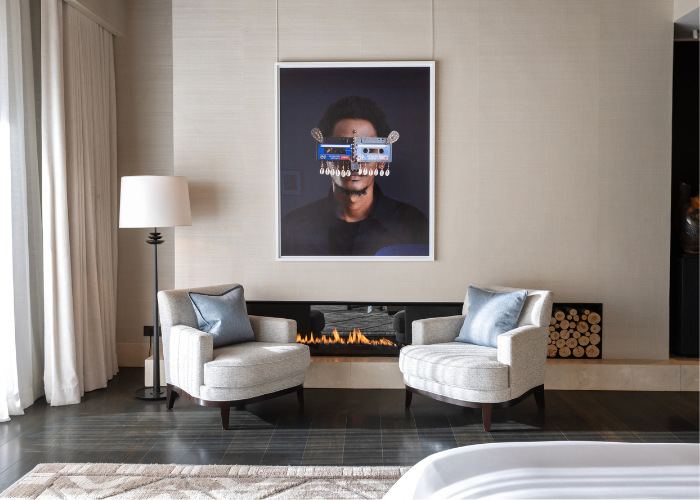
Delaire Graff Owner’s Villa, designed by David Collins Studio
He sees wellness as the next chapter of this sensory dialogue: “Wellness means making guests feel their best in a space. It’s expressed in the rhythm of light, the tactility of surfaces, the way a room allows you to exhale. Technology will quietly support that, but the soul of hospitality remains human — warmth, generosity, welcome.”
The art of feeling
That layered meaning finds its most powerful expression in art. “In today’s hospitality landscape, art is now the measure of luxury itself,” says Patrick McCrae, Founder of Artiq. “A thoughtfully chosen artwork tells a story, invites reflection and shapes the atmosphere of a space.”
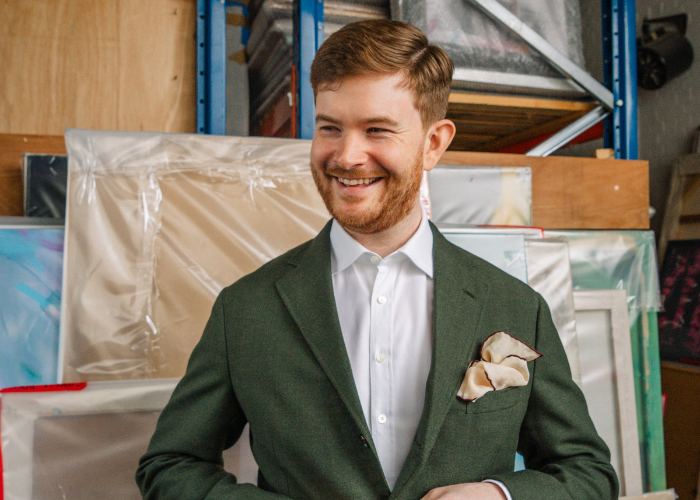
Patrick McCrae, Founder, Artiq
Artiq curated more than 100 works by Ligurian artists. “The most compelling works are those shaped by time, patience and meticulous attention to detail,” he says. “Luxury today is inseparable from authenticity. Guests expect spaces that are rooted in place, conscious of origin, and ethically minded.”
Rawlings shares that sentiment. At Bar Tre Dita in The St. Regis Chicago, his studio commissioned a 96-foot mural by decorative artist Dean Barger – “an abstracted view of the Chicago skyline, suspended as a draped art installation,” he explains. “We champion artistic collaboration because art deepens narrative and emotional connection. It transforms atmosphere.”
The next chapter
When asked what will define the next era of hospitality, these designers agree: authenticity and emotional resonance.
“Perhaps the next chapter is not about a single style,” says Bernerd, “but about a deeper sense of meaning in design, where every detail has a reason to be there.”
Nagata calls it “purposeful travel.” Mooney speaks of “layers of meaning.” Sheveleva designs light as emotion, McCrae curates art as memory, and Rawlings distils it into one elegant truth: “If we do things properly once, they’ll stand the test of time.”
Together, they are writing a new luxury code – one that doesn’t need to shout to assert itself. Where the rarest material isn’t marble or gold, but feeling of a space itself.