



What Tolù Adẹ̀kọ́ Designs for After You Leave: Memory, Emotion, Responsibility
Design Insider sat down to speak with Tolù Adẹ̀kọ́, founder and creative director of Adẹ̀kọ́ & Co, a London-based studio known for its narrative-led approach to hospitality design. Adeko’s work sits at the intersection of interior design, storytelling, and human experience, with a particular focus on creating emotionally resonant bars, restaurants, and social spaces.
While the conversation was anchored by Palomino, a temporary hospitality installation created for installation at Olympia during Decorex, it quickly became clear that this project was merely a lens through which to understand a much wider design philosophy. What emerged was a portrait of a designer deeply invested in memory, emotion, and responsibility, and a studio driven not by aesthetics alone, but by meaning.

Tolù Adẹ̀kọ́, founder and creative director of Adẹ̀kọ́ & Co
For Tolù, hospitality design has never been about creating visually impressive backdrops for consumption. It is about people, how spaces make us feel, how they shape behaviour, and how they remain with us long after we have left. His studio approaches every project, temporary or permanent, as an opportunity to curate moments. Sometimes celebratory, sometimes quiet, sometimes deeply personal, but always human.
“I’m more concerned about the memory that a space helps you create,” he explains. “In a way, I feel like I’m curating people’s memories.”
That idea underpins everything the studio does. Hospitality, in this context, is not about novelty or spectacle, but about emotional connection, designing spaces that quietly support the moments people come together to experience.
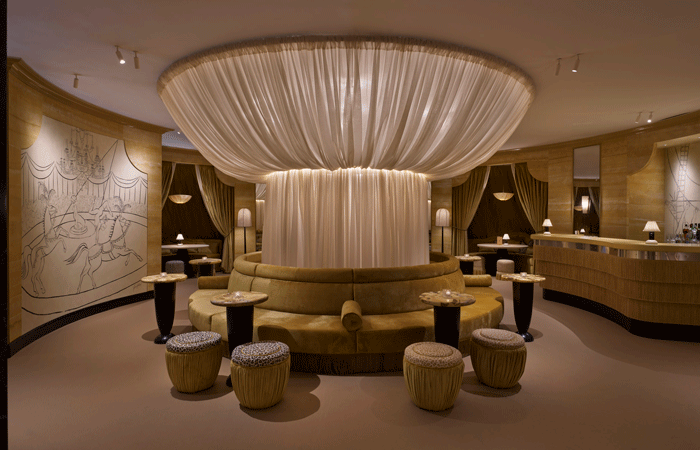
The Palomino Lounge, Olympia, Decorex
Narrative before form
Before materials are selected or layouts tested, Tolù begins with a single question, what is the story here? Every project starts with research, often extensive, until a narrative emerges that feels grounded in place, history, and use.
“It’s almost like being a detective,” he says. “You keep digging until there’s that moment of clarity. That’s when you know what the space needs to be.”
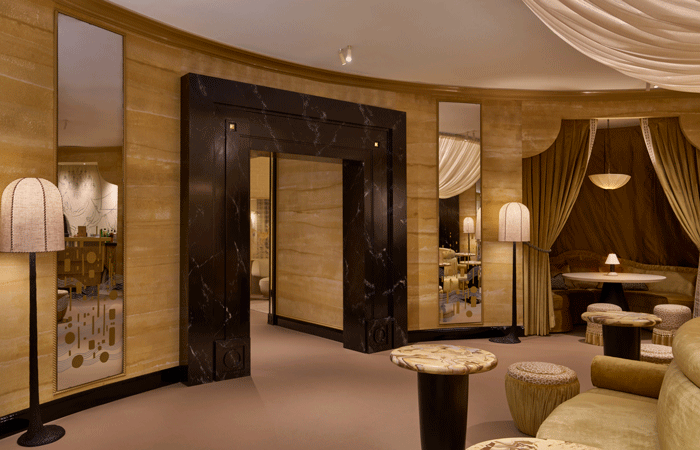
The Palomino Lounge, Olympia, Decorex
This approach deliberately resists the formulaic replication that has crept into parts of the hospitality sector. While consistency can be commercially appealing, Tolù believes it often comes at the expense of relevance and emotional depth.
“Each building has its own narrative, its own voice,” he says. “Even if two spaces sit next door to each other, they shouldn’t feel the same. Our role is to uncover what’s already there, not impose a template.”
That philosophy became the foundation for Palomino.
Translating history into hospitality
Commissioned to create a temporary hospitality space for Decorex, the studio approached Palomino as they would a live project. The first step was understanding Olympia itself, not just as an exhibition venue, but as a site with a long history of performance and spectacle.
Research revealed Olympia’s early role as a stage for everything from aquatic acrobatics to elevated circus productions attended by royalty. Rather than referencing this history literally, Tolù sought to reinterpret its spirit.
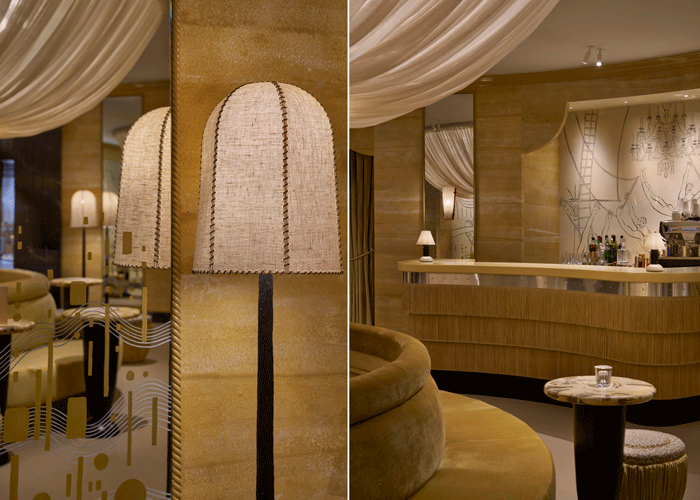
The Palomino Lounge, Olympia, Decorex
“It wasn’t about recreating a circus,” he explains. “It was about capturing that sense of theatre, anticipation, and performance, and translating it into a contemporary hospitality experience.”
Palomino was conceived as a speakeasy-style bar and lounge, unfolding across five interconnected rooms and anchored by a central space, The Grand Salon.
Beyond the guest experience, Palomino was also designed for peers. Tolù sees temporary installations as rare opportunities to share work openly with the design community, particularly when much of a studio’s output unfolds internationally or over long timelines.
“You can’t take everyone to see projects in Morocco or Chicago,” he says. “But spaces like this allow you to bring those ideas home.” In that sense, Palomino became a live conversation, experienced collectively, rather than explained retrospectively.
Designing behaviour through space
A defining characteristic of Tolù’s work is his understanding of spatial psychology. Layout, proportion, light, and circulation are all used to influence how people move, interact, and feel, often subconsciously.
“There’s a lot of psychology in how spaces work,” he explains. “Scale, pinch points, contrast, they all affect behaviour.”
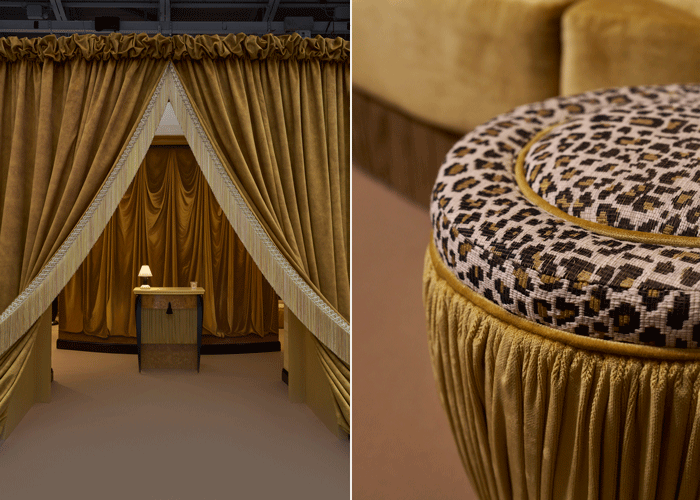
The Palomino Lounge, Olympia, Decorex
At Palomino, this thinking shaped the journey through the space. A deliberately compressed entrance created anticipation before opening into the circular form of The Grand Salon. Circular layouts, Tolù notes, naturally encourage sociability, widening sightlines and heightening awareness of others.
“We want people to feel connected,” he says. “Not just to the people next to them, but to the room as a whole.”
Beyond the central space, more intimate zones offered contrast, tucked-away niches for smaller groups, relaxed lounges for retreat, and darker areas designed to heighten atmosphere and sensory awareness.
Designing like a set
Rather than designing static interiors and hoping people will use them as intended, Tolù describes his process as closer to set design. Scenes are imagined, rehearsed, and refined.
“We’re constantly thinking about what might happen,” he says. “How people arrive, where they sit, what they order, how long they stay.”
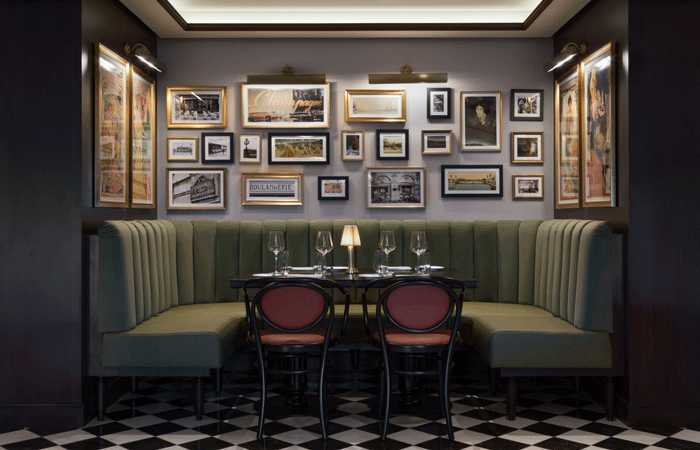
This anticipatory approach allows spaces to support multiple experiences over time. A first visit may centre on the drama of the main salon, a return visit might reveal quieter corners or overlooked details.
“It shouldn’t be a one-note experience,” Tolù adds. “You should be able to come back and experience it differently.”
Layering the senses
While spatial planning provides structure, Tolù is clear that hospitality succeeds in the details, particularly sensory ones. Sound, scent, lighting, and materiality are treated as integral to the experience, not as afterthoughts.
“The interior needs to be right, the service needs to be right, the music needs to be right, the smell needs to be right,” he says. “Everything has to align.”
At Palomino, this meant collaborating with sound specialists to curate music that responded to the materials and mood of the space, working closely with lighting designers to layer intimacy and drama, and introducing scent to subtly embed memory.
Design, Tolù insists, cannot operate in isolation. Service is an equal partner. When atmosphere, operation, and spatial intent align, the experience feels effortless. When they do not, even the most carefully designed interior can fall flat.
Craft, collaboration, and curiosity
Collaboration sits at the core of the studio’s practice. Palomino brought together a network of artists, artisans, and specialists, from hand-painted muralists to bespoke furniture makers.
“There’s real magic in collaboration when you trust people,” Tolù says. “You commission them, give them space, and they bring something you couldn’t create alone.”
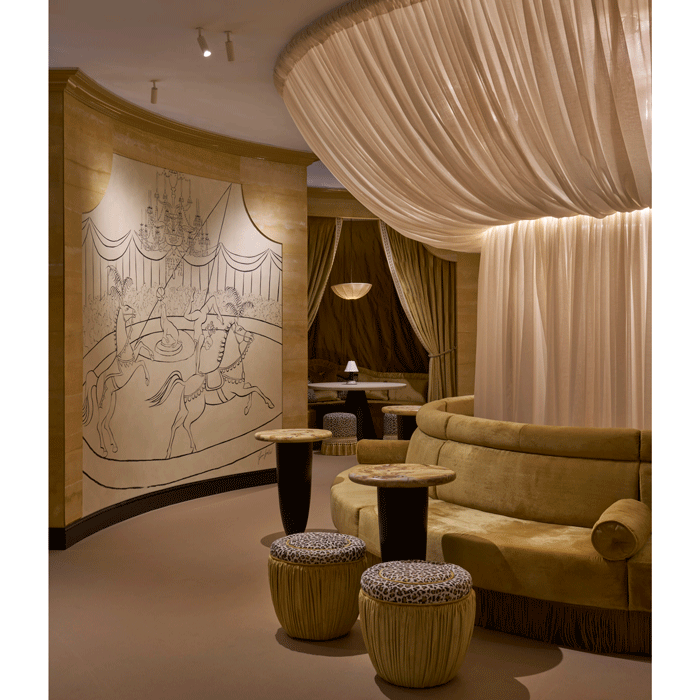
The Palomino Lounge, Olympia, Decorex
Hand-painted textiles were developed in collaboration with specialist artists, applied across the space in continuous lengths so that their craft read as atmosphere rather than surface, often mistaken for wallpaper but deliberately without visible joins.
Experimentation is often driven by curiosity. Tolù enjoys using materials where they are not traditionally expected, questioning convention rather than following it. At Palomino, fringes and drapery were treated as architectural elements rather than decorative details, while finishes were designed to invite touch. These moments of surprise introduce warmth, tactility, and a sense of play.
Temporary installations, he notes, provide valuable freedom. “They become creative laboratories,” he explains. “A place to test ideas that might influence future live projects.”
Learning through use
Despite the theatrical qualities of Palomino, fundamentals remain non-negotiable. Comfort, ergonomics, and usability are rigorously tested.
“Ten centimetres can make a huge difference,” Tolù notes. “Chair rakes, table heights, bar proportions, they all shape experience.”
That attention to comfort is reinforced by the studio’s ongoing relationship with furniture design. Rather than starting from scratch each time, forms are continually refined across projects, building a quiet but valuable body of knowledge. “We don’t duplicate,” Tolù explains. “We evolve.”
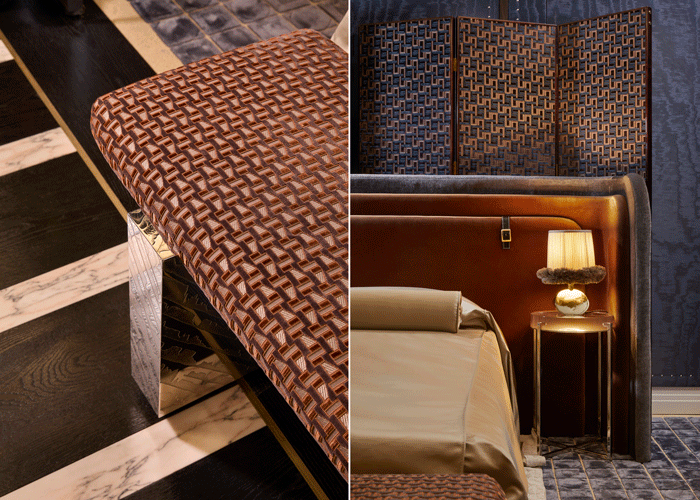
Zimmer & Rohde bedroom suite at Wow!house 2024
One of Palomino’s most meaningful moments came not from industry praise, but from observing guests move comfortably through the space. Tolù recalls two elderly women, long-time Olympia visitors, one using a walking aid, who described it as the best installation they had experienced. For him, it was a reminder that good design is measured not by spectacle, but by ease, dignity, and inclusion.
Designing with an afterlife in mind
Sustainability, particularly for temporary installations, is addressed at the design stage. At Palomino, fabrics were repurposed, furniture donated, and large-scale elements rehomed with local organisations. Components were designed to be dismantled, stored, or reused.
“Sustainability has to be planned from the beginning,” Tolù says. “Otherwise you’re reacting once the show is over.”
Looking ahead
For Tolù, hospitality spaces must work across generations. He speaks about designing for four generations occupying the same room, each engaging differently, but sharing the same atmosphere.
“Children might not remember what was said,” he notes, “but they’ll remember the smell, the texture, the feeling.” In that way, hospitality interiors become part of family memory.
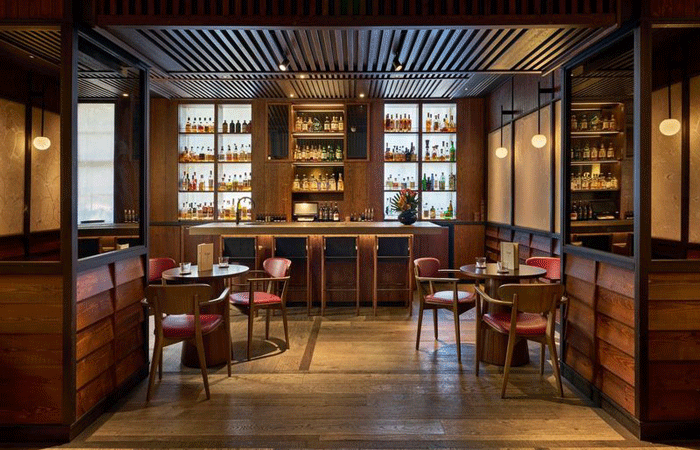
That responsibility brings with it an acceptance of risk. Hospitality design does not always resolve perfectly, Tolù acknowledges. Alignment can falter, experiences can misfire. But for him, that vulnerability is inseparable from designing for real people in real moments.
“There’s a massive responsibility in what we do,” he reflects. “These spaces become part of people’s lives, sometimes at moments of celebration, sometimes at moments of sadness.”
The greatest reward comes from seeing genuine connection, people returning, moving comfortably through a space, or simply feeling at ease within it.
“When a space quietly supports what people came there to do,” he concludes, “that’s when you know it’s worked.”
Palomino may have been temporary, but the thinking behind it is enduring. For Tolù and his studio, hospitality design is not about fleeting impressions. It is about creating places that stay with us, emotionally, sensorially, and long after we’ve walked away.