








Workplace Matters: Rethinking Sustainable Materials Innovation in Workplace Architecture and Design
Workplace Matters is an editorial series exploring thought-provoking and knowledge-based perspectives on the workplace. Through expert insight and experience-led commentary, this monthly series sparks meaningful conversations and helps shape the evolving discourse around workplace design.
Workplace Matters continues with a considered contribution from Harry Sumner, Sustainable Design Lead at Bennetts Associates, who examines how innovation in sustainable materials is not always about discovering something new, but about rethinking how we use what we already know.

Harry Sumner
Sustainable material innovation is often framed as a search for the next miracle product. Yet in practice, impactful innovations frequently come not from new discoveries, but from rethinking how we use familiar materials.
Designers are increasingly challenged to filter between materials that genuinely do better and those simply repackaging business-as-usual. Beyond the compelling narrative, we often find materials lacking environmental transparency, relying on optimistic carbon accounting or ambiguous marketing claims.
One response to this time-consuming challenge is to rethink familiar and intuitive natural materials, which tend to offer simpler, more local manufacturing and supply chains.
Low-tech, high-tech
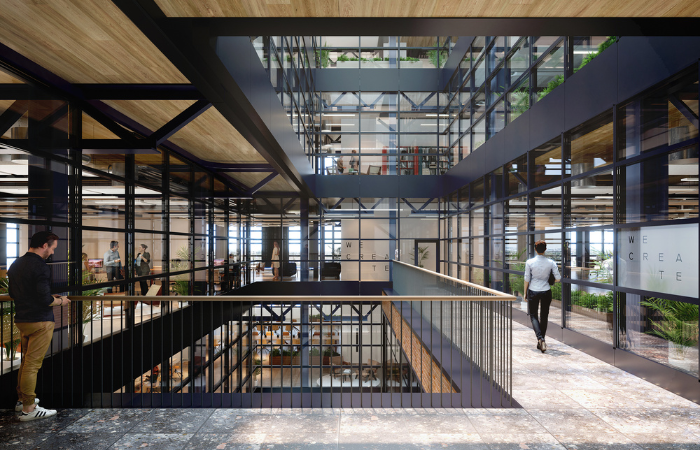
Timber Square Print Building, Image Credit: Landsec
A “low tech, high tech” design approach can be powerful for delivering sustainable, healthy outcomes. Seemingly “low-tech” natural materials which have vernacular precedent — such as stone, timber, earth and natural fibres — can be used with contemporary design methods. The outcome is high-performance solutions which maintain material integrity and simplicity.
Developments in engineered timber show the potential of natural materials at scale, enabling fast, lightweight structures that can unlock reuse for existing buildings. Other, more radical natural materials offer similarly compelling advantages. Indigenous stone, whether large format or blockwork, can form structurally functional façades with a regional architectural identity. The unstabilised earth blocks used at The Apex, Tribeca are made from local clay-rich earth and chopped straw, emitting a fraction of the carbon of the traditional concrete blocks they replace.
Data is not the only answer
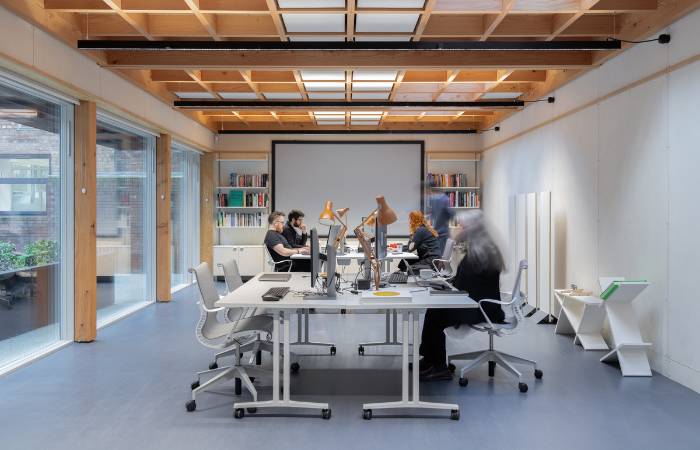
Robotics Living Lab Pavilion, Image Credit: Ella Wheatley
Quantifying sustainability is now the norm, but an overdependence on data can sometimes steer us away from the best environmental outcome. Environmental Product Declarations (EPDs) give the illusion that designers can simply judge materials’ credentials on a level playing field. In reality, no two EPDs are made equal. Results vary with assumptions, software and the assessor’s skill — all of which need consideration alongside the data. Data is important, but for decisions with innovative materials, a qualitative lifecycle understanding is often equally valuable.
Natural materials innovation in the workplace
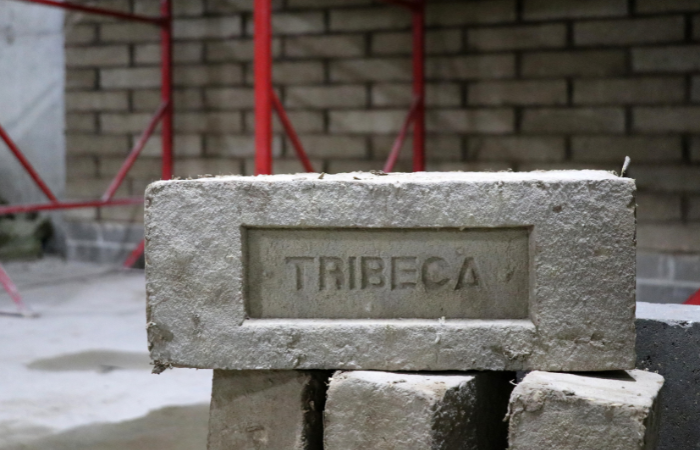
Earth block used at The Apex Tribeca, Image Credit: Will Claxton/UrbanR
The Manchester Work in Progress Pavilion for the Robotics Living Lab (RoLL) demonstrates this low-tech, high-tech materials approach in practice. The adaptable workspace and event space champions native materials with modern methods of construction to reduce carbon and complexity. A homegrown Douglas Fir frame supports off-site manufactured cassettes insulated with Cotswolds straw, a rapidly renewable material. None of these are new materials, far from it.
Beyond environmental performance, natural materials create warmer workplaces that support wellbeing. Projects such as Timber Square, set to be the UK’s tallest CLT commercial development, highlight their growing appeal. The exposed CLT is not purely aesthetic or structural. As with many natural materials, timber’s hygroscopic properties also help regulate humidity and support improved indoor air quality, working to enhance occupant comfort.
Closing thoughts
Innovation is not always about inventing something wholly new. There is lots to be gained through unlocking new potential in materials we already know and understand intuitively, by using them more intelligently.
About Harry
Harry helps drive in-house sustainability capabilities at Bennetts Associates.
He is passionate about delivering resilient, regenerative buildings and advocates for an integrated approach to architectural design. In addition to embedded project support, he currently leads bespoke sustainability services for a range of clients, including the development of sustainable design guidance, carbon assessment, and Building Performance Evaluation (BPE). He recently led the testing of a number of projects against the UK Net Zero Carbon Building Standard Pilot, including for the Robotics Living Lab.
Alongside his role in practice, Harry lectures at The Bartlett School of Architecture (UCL) and actively supports collaboration between academia and practice.