





Workplace Matters: Why the Multi-Use Workplace Matters More Than Ever
Workplace Matters is an editorial series exploring thought-provoking and knowledge-based perspectives on the workplace. Through expert insight and experience-led commentary, this monthly series sparks meaningful conversations and helps shape the evolving discourse around workplace design.
Workplace Matters continues with a candid contribution from Oliver Barker, Managing Director at strategy, design and build experts AIS. At a time when global uncertainty persists, economic growth in the UK remains weak or modest at best, Oliver considers the growing need to maximise the potential of the workplace by embracing a multi-use approach.

Oliver Barker, Managing Director at strategy, design and build experts AIS
With inflation continuing to sit above the Bank of England’s target and global supply chains remaining under pressure, the sharp reality is that businesses can no longer afford to treat office space as static or single purpose. Every square metre counts and yet too many organisations we speak to are stuck with under-used boardrooms, executive offices and breakout areas while staff struggle for flexible, functional space.
For property, workplace and design teams, the question is no longer how much space do we need? It is how can we make every part of it work harder? We need to consider how to flex areas between collaboration, focused work, client engagement and social use to not only reduce inefficiency but also support hybrid working patterns and fluctuating occupancy levels.
What multi-use means in practice
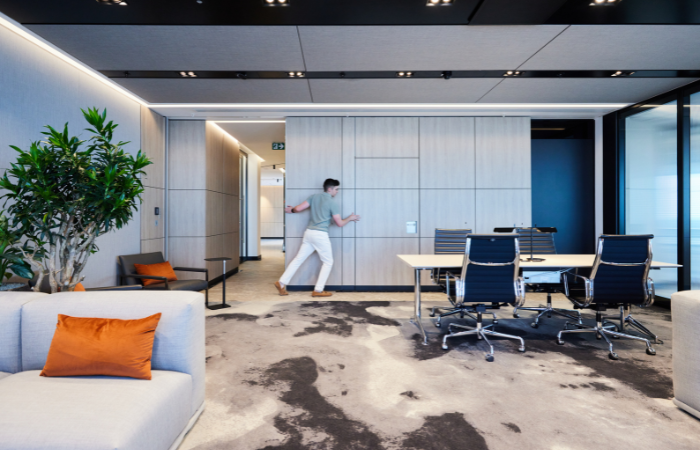
Global Insurance Provider
True multi-use spaces are built to adapt intentionally. They involve making conscious, data-driven design choices rather than simply populating an area with moveable modular furniture and whiteboards on wheels and, frankly, hoping for the best. Too often, spaces are designed based on assumptions about how people should work rather than how they actually do.
A genuinely multi-use workplace starts with data: utilisation studies, occupancy tracking, behavioural analysis, booking patterns and qualitative staff feedback. Which rooms are consistently over-subscribed? Which sit empty? What are the peak days? Where do informal conversations naturally happen? If boardrooms are used a third of the time, they should be reconfigurable.
If collaboration peaks mid-week, then adjacent spaces need to be able to expand. If the majority of meetings are now hybrid, technology needs to be in place to support seamless interactions. This insight should shape every design decision.
Redesigning the brief
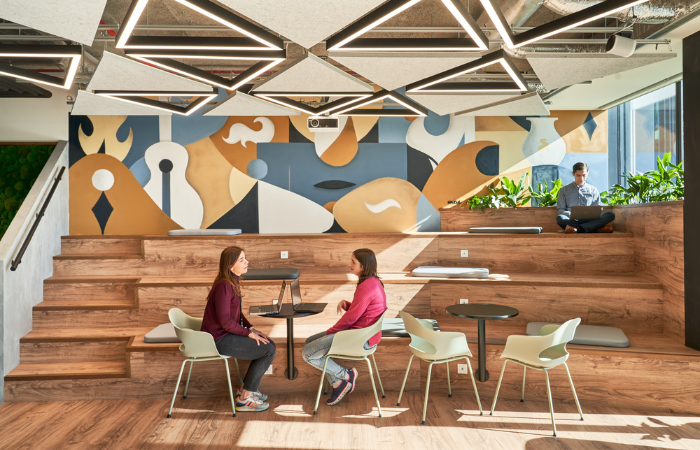
Checkout Porto
The shift in thinking must begin at briefing stage. When a brief includes requests for spaces such as a boardroom or executive office, we need to ask why and consider a range of viable use cases from the outset if we are to maximise the full floorplate. This approach involves mapping operational requirements, identifying underutilisation patterns and establishing performance criteria for each potential mode of use. In practical terms that can be as simple as adding room booking for private offices so they can be adapted for use. A room is no longer labelled by status; it is defined by capability.
Concepts can then be developed with the right systems in mind. Power, data and connectivity should be built in to support multiple layouts and uses with minimal disruption. Careful consideration of acoustics can support both private conversations and higher energy collaboration. Technology should be integrated throughout the project to enable smooth transitions and genuine day 2 functionality, rather than seen as a final add on or an optional package.
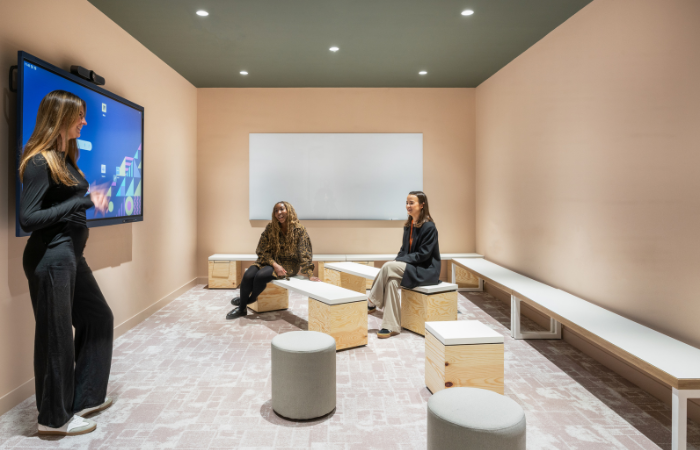
Shawbrook Bank
Stick with me here – when it comes to the detailed design, there is value in borrowing from flatpack principles. Not for aesthetics, but in systems thinking. We must prioritise function, quality and sustainability over permanency. Every element should be capable of serving multiple purposes to allow for quick reconfiguration. This means selecting durable components that can withstand change and provide longevity.
The result is a space that can change function without it feeling temporary, maximising the value of every square foot. OpEx becomes just as important as CapEx.
The proof is in the pudding
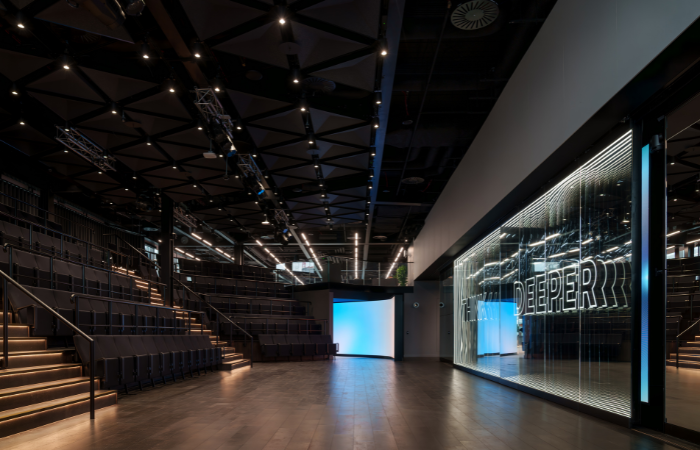
Revolut London
The true test of a multi-use space comes post occupancy. In the short term, the adaptability that has been built-in should ensure performance. But we all know that needs change over time and organisational structures shift. Therefore, to make sure a space continues to perform we have to maintain our initial data-led mindset. We are advocates of using Permanent Occupancy Evaluation data to support continuous improvement. It offers much more than a snapshot from a traditional POE.
Ultimately, multi-use workplaces should not be treated as finished products. They are living systems that require ongoing measurement, adjustment and care. Organisations that position themselves to use and maintain a data-led approach are better placed to ensure their workplaces continue to support real working behaviours.
AIS is a global leader in creating workplaces that inspire, perform, and help people thrive. From strategy and change management to design, furniture, and construction, we deliver flexible, end-to-end solutions that transform how people experience their spaces.