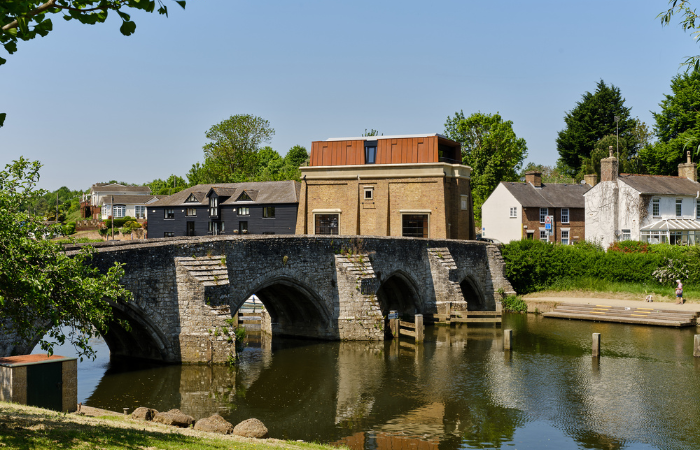
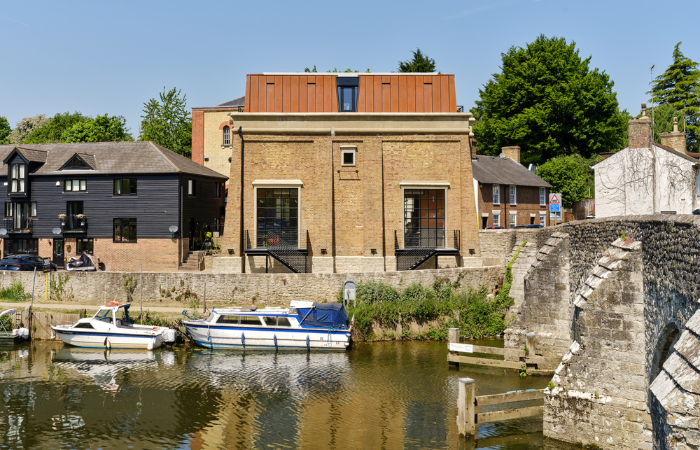
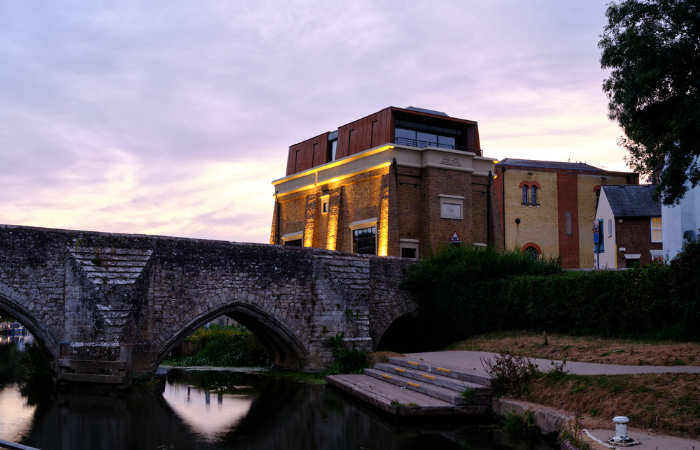
Tucked along the banks of the River Medway in East Farleigh, Kent, stands a striking reminder of Victorian engineering and architectural eclecticism, a fantastic example of adaptive reuse that Felix Lewis Architects have brought sensitively and beautifully back to life.
Built in 1860 by James Pilbrow, this Grade II-listed boiler house is a rare example of Egyptian Revival architecture in Britain – a style that flourished briefly in the mid-nineteenth century, when fascination with the temples of Karnak, Luxor and Edfu – particularly the Temple of Horus – inspired civic and industrial buildings across the country. Once crowned by an extraordinary obelisk chimney, now long vanished, the building had endured decades of change and underuse.
Today, it has been reimagined as The Works – a new headquarters for Chord Electronics, the British hi-fi and audio specialist renowned worldwide for precision, innovation and craft.
Felix Lewis Architects is a Kent-based architecture and interiors practice with studios in Maidstone,Tunbridge Wells, Reigate and Hawkhurst. Founded in 2014 by Felix Lewis, the practice has grown into a dynamic team working across Kent, Surrey and Sussex on private homes, commercial workplaces, educational spaces and heritage refurbishments.
The client’s ambition was twofold: to create a workplace that embodied the quality and ingenuity of their products, and to address the pressing challenge of the building’s riverside location. With the River Medway only metres away, flooding has always shaped the building’s use and resilience. The new design therefore not only had to unlock the potential of this unique historic structure, but also ensure that it could withstand and adapt to the realities of its environment.
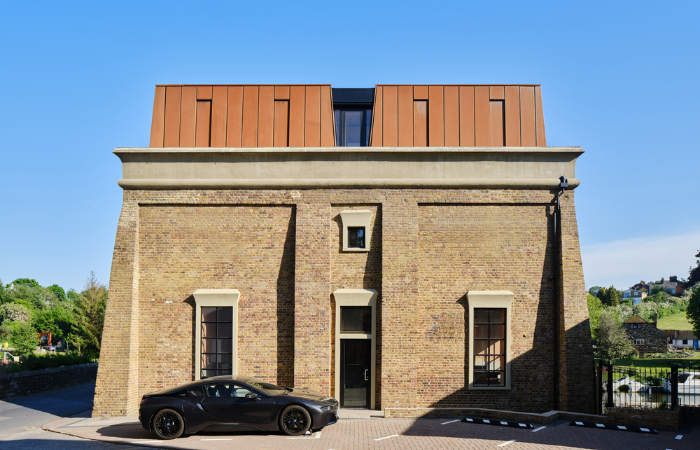
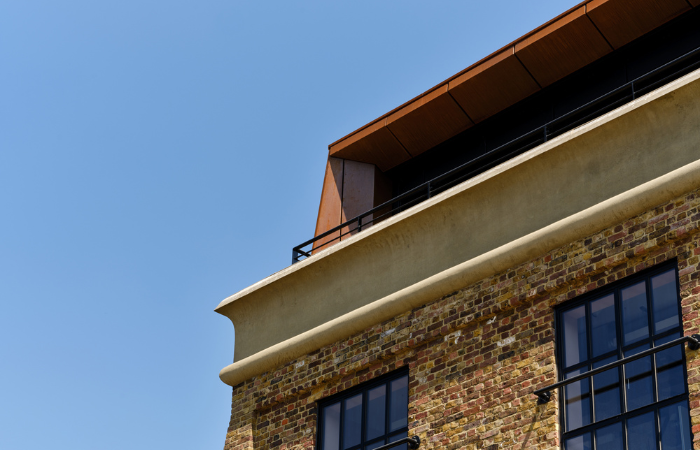
The most visible intervention is a new roof extension, which both expands the building’s capacity and restores a sense of verticality to its silhouette. Drawing inspiration from the form of the Egyptian pylon – monumental gateways that once framed temple entrances – the extension rises between the building’s central buttresses, creating a tapered, sculptural profile. A slim light slot divides the new volume, echoing the original rhythms of the façade and allowing daylight to pour deep into the upper floor.
Clad in Corten steel, the extension brings a contemporary industrial material into dialogue with the robust nineteenth-century masonry. As it weathers, the steel will develop a rich patina of earthy tones, harmonising with the stone and brick below. This evolving surface is a reminder that historic buildings are never static: they adapt, acquire new layers, and reinterpret their identities for future generations.
From the river, the extension appears as though extruded from the original structure, replacing the long-lost chimney with a new architectural marker. It draws the eye upward, recalibrating the proportions of the building and asserting its renewed purpose as a place of design, engineering and craft.
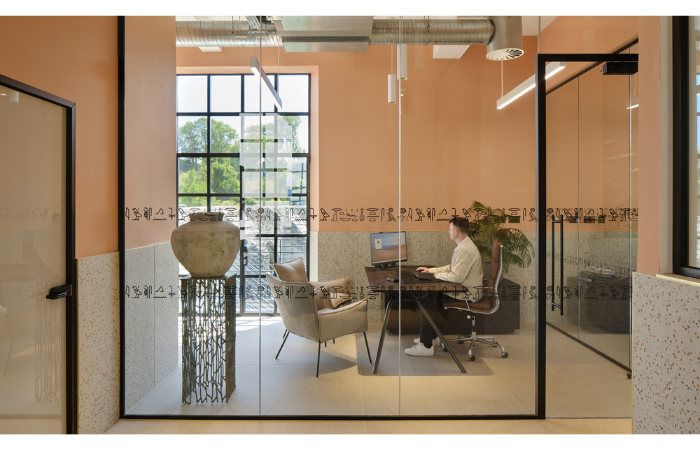
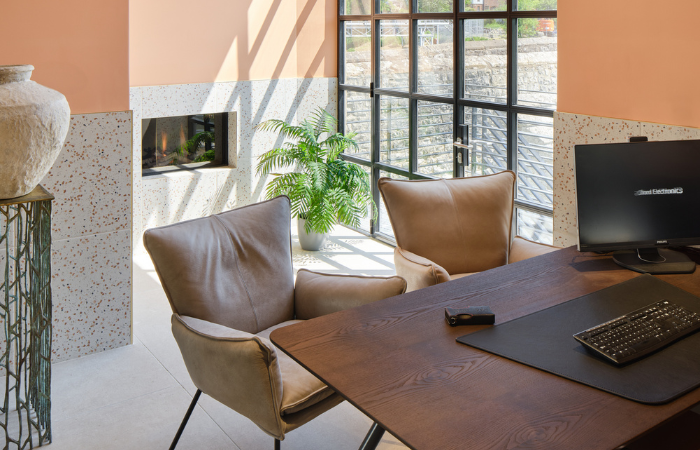
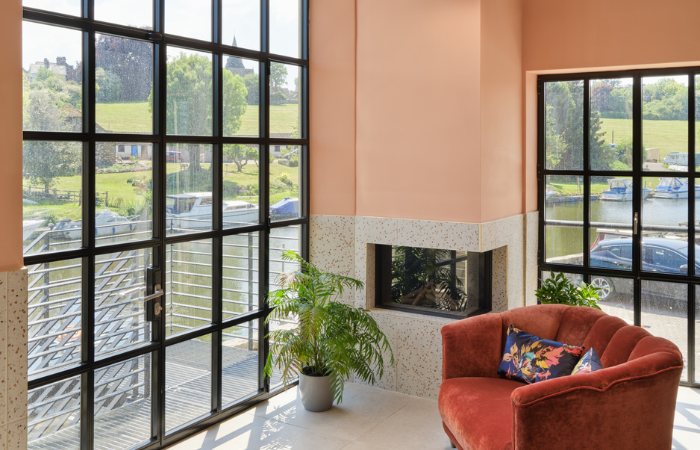
Inside The Works, Felix Lewis Architects have transformed what was once a dark, cellular interior into a light-filled, flexible workspace. Glazed partitions open up long views through the building, enabling staff to feel connected across floors and spaces. Steel framed windows frame sweeping vistas of the river, linking the workplace to its setting and providing moments of calm reflection.
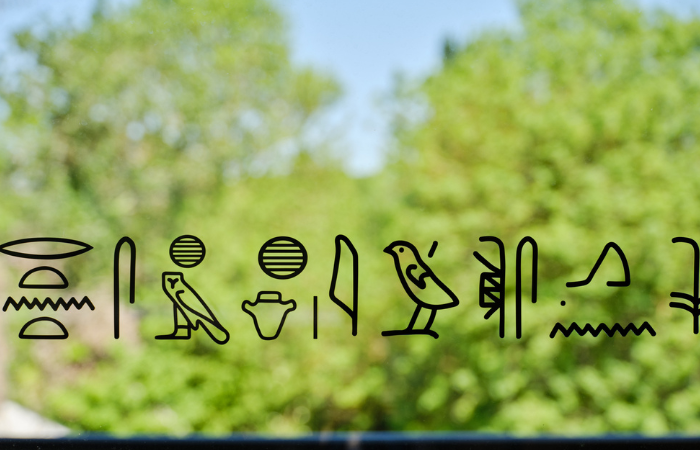
The interiors strike a careful balance between contemporary clarity and historical resonance. A warm palette of sandy hues recalls the sun-baked tones of Egyptian temple paintings, while bespoke glass partitions etched with hieroglyph-inspired motifs tell a dual story: that of the Nile, whose floods nourished ancient civilisation, and the Medway, whose seasonal swells have shaped this site. These subtle gestures embed the building’s identity within a larger narrative of rivers, resilience and renewal.
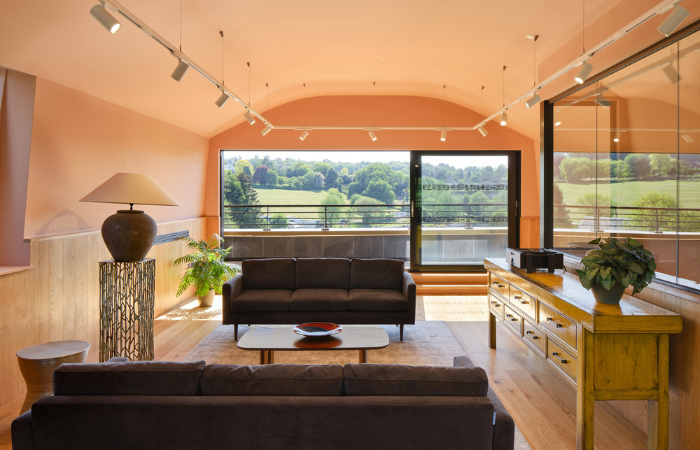
An executive suite is located in the new rooftop storey, commanding panoramic views across the Medway valley. These spacesembody the company’s ethos of precision and performance–functional yet beautiful, understated yet distinctive.
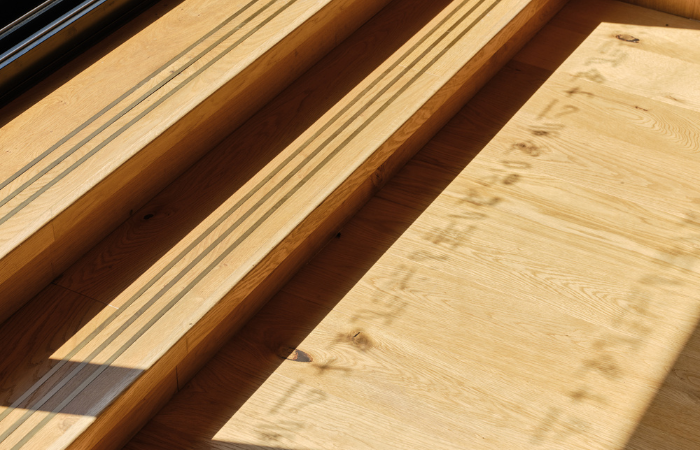
Flood resilience was not an afterthought, but a central design driver. The ground floor has been tanked and finished with robust terrazzo and tiling, ensuring that water ingress causes minimal disruption. Electrical systems have been raised safely above potential flood levels, while exposed concrete detailing at the base of the staircase provides a durable anchor point. Lightweight, movable furniture further enhances adaptability, allowing spaces to be quickly reset after a flood.
This pragmatic approach ensures that the building can operate effectively in its riverside setting,without compromising on aesthetics. The result is an architecture that embraces its environment rather than resists it–a model for resilient design in an era of increasing climate uncertainty.
For Chord Electronics, The Works represents more than just additional office space. It provides a home that reflects the identity of the brand: technically accomplished, uncompromising in quality,and proud of its British roots. Marketing and finance teams now share an environment designed to inspire creativity, collaboration and excellence, while clients and visitors are welcomed into a space that reflects the artistry and engineering precision of the company’s products.
John Franks, CEO at Chord, reflects on the transformation:
“Our newly designed conversion for the Works building has transformed how we work and present ourselves as a high-end audio company. Felix Lewis has managed to work with the character of the original listed, Egyptian inspired, industrial nineteenth century building, designing a beautiful contemporary extension with a superb aesthetic that reflects our brand perfectly.
The spaces are not only visually striking but also highly functional, creating an inspiring environment for both staff and clients alike. The architect’s fine attention to detail and ability to balance heritage with contemporary design added real value to the project, exceeding our expectations at every stage.”
Felix Lewis, Founder and Director at Felix Lewis Architects, added:
“This project was about embracing the extraordinary character of a rare piece of Egyptian Revival architecture, while ensuring that it could support a contemporary business in a challenging riverside location. By drawing on historic references and designing with flood resilience at the core, we aimed to create a workplace that honours the past, responds to the present, and provides a sustainable legacy for the future. It has been a privilege to work with Chord Electronics on such a unique and ambitious commission.”
Challenges Faced Adapting the Structure
Integrating modern sustainable technology within a Grade II listed building presented significant technical and design challenges, particularly concealing the air-sourced heat pumps without compromising the building’s historic integrity. Every intervention was approached with sensitivity to the existing fabric and character, balancing environmental performance with strict conservation requirements. The heat pumps were discreetly located within the building to remain invisible, preserving the building’s external appearance and relationship to its heritage context.
Felix, Director at Felix Lewis Architects said:
“For me, adaptive reuse is the most professionally rewarding work I can undertake. As a practice almost all of our work is restoring, adapting and extending existing structures. Every building holds value, most obviously so in listed structures, but also in more ordinary forms of construction. The value is not just in the physical materials and embodied energy, but also in the history and character is has accumulated over time.”
A key aspect of the environmental strategy was the introduction of a highly efficient ventilation system designed to work harmoniously with the existing structure, with a heavy masonry building at ground and first floor with a lightweight construction at roof level. Fresh air is drawn into the building at roof level, passing through a heat recovery system that uses the old chimney riser as vertical ducting. Stale air is extracted at road level, completing a balanced air flow cycle. Importantly, all air intake and extract points utilise existing openings, avoiding new penetrations into the historic masonry and maintaining the integrity of the original envelope.
Felix added:
“Adaptive reuse is about more than preservation; it is about uncovering new possibilities within existing structures, understanding not just what a building once was, but also how it got to be the way it is. Even over a short period of time, owners and occupiers change and add to buildings.”
Internally, the original timber floor structure was retained. New services were intentionally left exposed to emphasize the generous height of the former industrial space and to showcase the building’s form. This approach highlights the connection between the building’s utilitarian past and its renewed purpose as an office space, illustrating how contemporary systems can coexist respectfully with historic elements.
The building’s proximity to a Grade I listed medieval bridge, itself a scheduled monument, demanded particular care in preserving the setting. Materials and detailing were chosen to complement, rather than imitate, the original structure, maintaining a clear distinction between old and new while ensuring continuity of form and proportion.
Situated within an active floodplain, the building required a resilient design response. Instead of resisting natural flooding, the scheme was developed to work with it. The ground floor was fully tanked to prevent water ingress into the fabric, and lightweight furniture allows quick relocation in flood conditions. Electrical sockets were installed at dado height, and the heat pump was raised on a plinth to protect essential equipment. This adaptive design ensures that the building remains both functional and safeguarded against environmental risks.
To secure the building’s future and remove it from the “at risk” register, an upward extension was added, providing additional flood-protected floor space. Designed to be visually subordinate, the extension uses contemporary materials that complement the existing brickwork, reinforcing the building’s industrial character.
Felix finished by saying:
“The true success of adaptive reuse lies in not just purely restoring, but also in retaining good adaptations, removing the bad and adding something new. Ultimately the aim is to achieve a balance between respecting the inherited qualities of a structure while thoughtfully introducing new elements that breathe fresh life into it – creating something better than the sum of its parts.”
Throughout the project, the guiding principle was retention and respect. Original riveted roof beams were preserved and integrated into the new design, while unsympathetic twentieth-century additions – such as the 1980s porthole windows – were removed and replaced with reinstated original brickwork. These careful restorations restored the building’s authenticity and enhanced its architectural coherence.
The Works is a story of heritage and reinvention, of resilience and craft. It demonstrates how sensitive yet confident design can breathe new life into overlooked buildings, transforming them into assets for the future. By rebalancing the building’s form, rethinking its interiors, and embedding resilience at every level, Felix Lewis Architects have created a workplace that is as distinctive as the products it represents.
For Chord Electronics, it is a new home that embodies their values and aspirations. For East Farleigh, it is the revival of an architectural landmark–a building that once powered industry, now powering creativity and innovation.