





Designing Magnetic Cities: Philip Tidd on Germany’s New Workplace Era
Design Insider sat down, for an exclusive interview, with Philip Tidd, Principle and Strategy Director at Gensler, to explore how Germany’s workplaces and the cities that hold them are evolving.
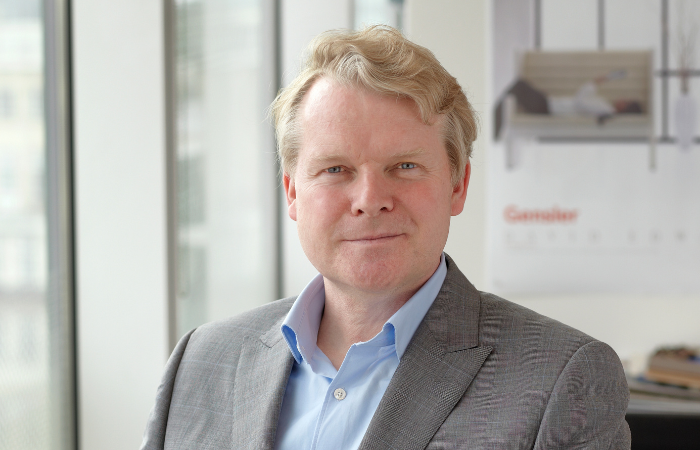
Based in Munich, Philip founded Gensler’s German practice in 2018, later opening a Berlin studio in 2022. Today he serves as European Client Relationships Leader, a role that sees him criss-cross the continent to help global organisations translate strategy into culturally attuned, regulation-ready design.
Philip begins:“I was excited to be asked by Gensler to establish an office in Munich in 2018. Munich is a top location for design thinking with a confluence of innovation from the world-leading Universities, the commitment to quality and detail of German industry, and the dynamic energy of the tech start-up scene. In 2022, I then led a team to open a second office in the vibrant city of Berlin.”
An architect by training, he has over 25 years of experience working across Northern Europe including Germany, the Netherlands, Scandinavia and Switzerland, with a long view on how culture, regulation and building typologies shape design outcomes.
He says: “We work a lot with global clients who want to deliver consistently across the world and adapt for different countries. A big part of my role is helping them navigate those cultural and regulatory nuances, especially in workplace strategy where demand to reimagine the office has accelerated post-pandemic.”
From Hospitality Cues to Living Ecosystems: Synopsys Munich
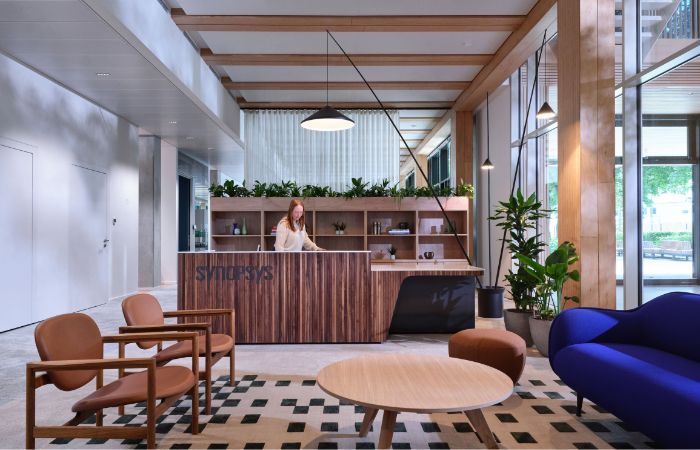
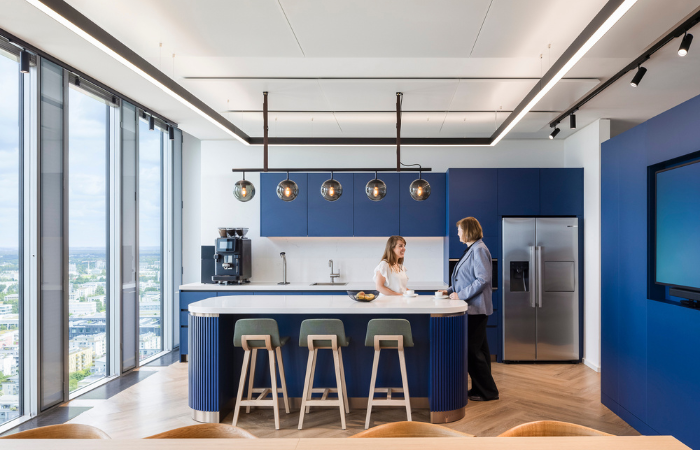
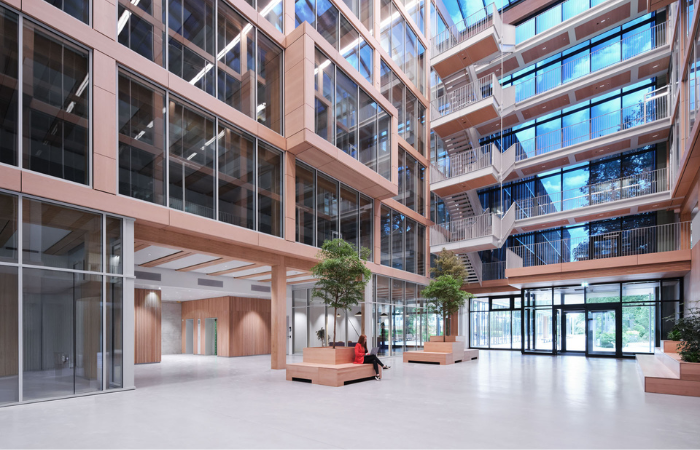
When we ask about recent work, Philip lights up at Synopsys Munich, a hospitality-inflected workplace set within the I8, one of the city’s first mass-timber hybrid buildings.“We’re very proud of this project. It’s won several awards, including a German Design Award. The building itself is beautiful, one of the first mass-timber hybrids here, so the interior design continues that connection to nature.”
The hospitality influence is intentional but restrained. “Synopsys wanted that look and feel, but not exuberant. It’s quite understated. We approached the office as a living ecosystem, testing more than 20 spatial configurations to get the balance right between focus, collaboration and communication.”
What happened next is the headline. “After moving from an office on the city’s outskirts into this new space. Attendance increased by 50%. That’s pretty huge, especially in Germany, where hybrid working has become the norm. Clients want people back in the office for the right reasons: collaboration, communication and building culture.”
Evolving Traditions: Fish & Richardson’s Vertical Panorama
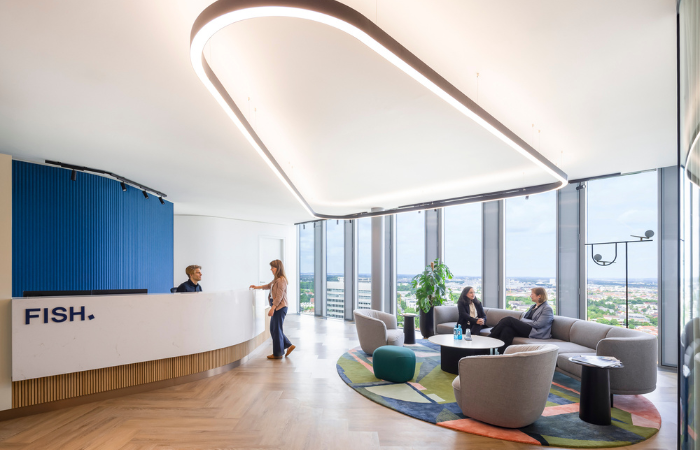
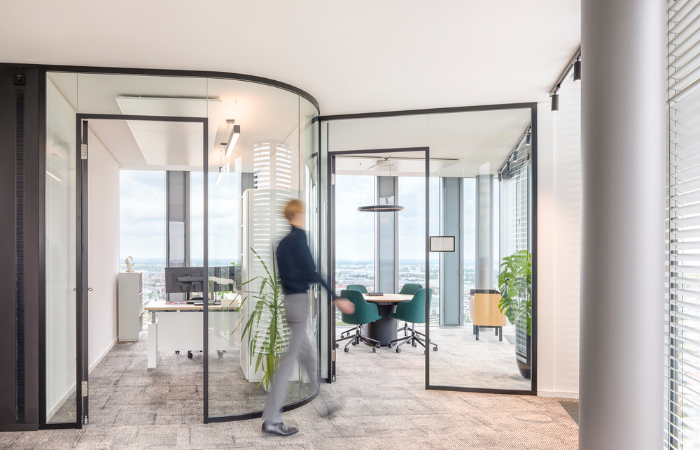
Gensler’s new Munich workplace for law firm Fish & Richardson is a study in how traditional professions are modernising carefully.“The legal sector has been very traditional, cellular layouts, partners in private offices,” Philip notes.
“We’re now seeing a move toward more transparency and openness. Not large-scale open plan like the UK or US, that’s not typical in Germany, but a more nuanced openness that enhances collaboration, engagement and experience.”
Context matters. “They’re on one of the highest floors of the HighLight Towers, with spectacular Alpine views on a clear day,” he says. “It’s bright and vibrant, and it celebrates where you are.”
As with Synopsys, the priorities are shifting away from a single archetype of work. “Post-pandemic, many clients rushed to create collaboration areas,” he reflects. “People still need to get their work done. The blend is critical, spaces for heads-down focus alongside places to meet, co-create and socialise.”
Designing with Culture, not Around It
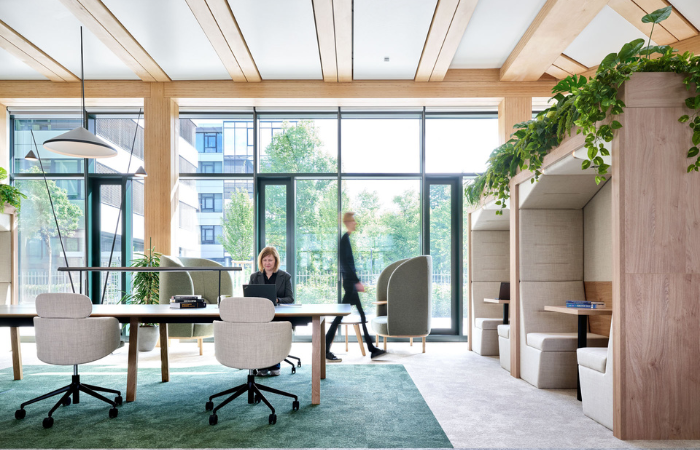
If there’s a throughline in Gensler’s German portfolio, it’s that culture and regulation are design inputs, not obstacles. “Northern European countries such as Germany, the Netherlands, and Scandinavia tend to take a more socially democratic approach to office design,” Philip says.
“There’s greater end-user involvement and more consultation. In Germany you also have workers’ councils that play a formal role in shaping workplace decisions, all focused on protecting the wellbeing of employees. Some international clients can see this as restrictive at first, but in the end it leads to better workplaces.”
He continues, “German office design is also governed by strict ASR guidelines, short for Arbeitsstättenrichtlinien—which define spatial, ergonomic and wellbeing standards. They’re based on strong principles: ergonomics, access to daylight, views to the outside, and fresh air.”
He highlights one of the most distinctive: the eight-metre rule. “You’re not supposed to be more than eight metres from a window with a view to the outside world,” he explains. “That shapes shallower floorplates, often around 18 metres, so planning is different from London’s deep-plan buildings.”
Air quality and personal comfort are equally important. “Air conditioning is far less common in Germany because it’s often viewed as unhealthy,” he adds.
“Instead, most offices integrate natural ventilation. You’ll see vertical façade panels that open from floor to ceiling so people can bring in fresh air themselves. It’s such a cultural habit that when you enter a room, the first thing people do is open a window to ventilate. It’s a deeply ingrained part of the workday, and frankly, a healthy one.”
For Gensler, this environment feels like home turf. “Human-centred design has been our ethos for decades,” Philip says. “The German focus on user wellbeing and access to natural elements aligns perfectly with how we work.”
Magnetic Cities: Why Munich (and Berlin) Keep Talent
Gensler’s City Pulse 2025 research identifies Munich and Berlin among the world’s most magnetic cities, places where economic opportunity and quality of life converge. Philip knows both well; he lived in Berlin in the 1990s and now calls Munich home.
“Munich’s attraction rests on two pillars,” he argues. “Talent and quality of life. TUM, the Technical University of Munich, is arguably Germany’s top university for engineering, AI and advanced manufacturing. It’s like the MIT of Germany. And Munich is a beautiful, liveable city.”
He draws directly from Gensler’s data:
- Munich ranks fourth globally for attracting new residents.
- Twenty percent of residents have lived there for five years or less.
- It ranks seventh globally for staying power, with 49% of residents saying they’re unlikely to move.
- And 75% report being satisfied or very satisfied with the city as a place to live.
“Those numbers tell a clear story,” he says. “Munich’s drawing people in and keeping them.”
Berlin performs strongly too. “Berlin ranks fifth for resident retention,” he explains. “51% of Berliners say they’re unlikely to move, and 72% are satisfied with the city’s quality of life. It’s a larger, more diverse city than Munich, and that scale makes it quite different in character, but both are clearly magnetic.”
Workplaces play a role in that magnetism: “Projects like Synopsys, Fish & Richardson, or Celonis, a homegrown decacorn founded by TUM graduates, show how high-quality workplaces in central locations support talent strategies,” Philip says. “In Munich we’re seeing a marked flight to quality and to the city centre.”
He adds more detail about market behaviour: “Munich has a very clear real estate hierarchy, A-, B-, and C-locations. A few years ago, B-locations on the edge of the city were attractive: cheaper, easier to reach by car. That’s changed completely.
Those older B-locations are now emptying out because companies want to be in A-locations, right in the middle of the city. You can see that especially in the Altstadt and in Werksviertel, where the I8 building sits. It’s the new gravitational pull of the workplace.”
Berlin, he notes, operates differently: “It’s historically polycentric because of its past as a divided city, so there isn’t one single centre. Munich is much more defined, which makes that flight to the centre even stronger.”
Germany vs. UK: More in Common Than Not
Are German and UK workplaces diverging? “Honestly, they’ve got more in common than not,” Philip says. “The biggest differences are building physics and rules. Germany’s regulations create shallower floor plates and champion daylight and operable windows. That demands a different planning mindset.”
But the strategic brief is converging across markets: “Clients everywhere want in-person collaboration and a great employee experience, while also ensuring there are excellent focus settings,” he stresses. “Our Workplace Survey shows the number one reason people cite for coming to the office is to focus. So the pendulum is settling on mix and balance, not one-note collaboration or one-note desking.”
How Change Takes Root: Participation and Proof
Asked how Gensler helps clients embrace new ways of working, Philip points to participatory design and evidence-based prototyping: “We treat the workplace as a system,” he explains. “You co-create scenarios with users, test them, iterate, then you show outcomes.”
Synopsys is his case in point: “When a 50% attendance uplift follows a move, it builds organisational confidence. And in Germany, with workers’ councils and consultation norms, that engagement isn’t just nice to have, it’s how you get great results.”
Private Investment, Public Benefit
Philip’s urban lens keeps returning to one big idea, workplace improvements ripple into the city: “High-quality workplaces in central, mixed-use areas help strengthen the urban fabric,” he argues. “You avoid mono-functionality, extend activation into evenings and weekends, and reinforce sustainable mobility patterns. It’s the city-workplace feedback loop in action.”
That’s guiding a new wave of briefs: “We’re seeing more repositioning of older buildings, sometimes in yesterday’s B-locations, sometimes just past their shelf life for today’s demands,” he says. “The most exciting work blends mixed use with re-use, bringing under-performing assets back into the heart of the city.”
What’s Next: Tech-Enabled Participation and a New German Momentum
Germany has weathered headwinds, Philip acknowledges, from energy shocks to macro uncertainty. But his outlook is upbeat: “There’s new momentum and new leadership,” he says. “We’re excited about the opportunities ahead.”
A major accelerant is design technology and AI, used not as a black box, but as a participatory engine. “Our in-house tools are making engagement more powerful,” he explains. “It’s tech-enabled co-design. Clients and users can see options, understand trade-offs and make better, faster decisions.”
It’s also about the kinds of partners and places Gensler is now working with. “In Munich especially we’re collaborating with prominent developers on central-city repositioning,” he says. “That’s where mixed use becomes the cornerstone of a vibrant, resilient city.”
He smiles, summing up both practice and place: “At the end of the day, quality, of building, location and experience, wins. If you get that right, people choose to be there. And when people choose to be there, workplaces thrive and cities become magnetic.”