





International Women’s Day 2026 – Sharing the Load: Reimagining Parenthood in the Built Environment
International Women’s Day on 8th March has long created space for important conversations around equality, leadership and the realities of balancing career progression with family life. Parenthood, in particular, has historically been positioned as part of the women’s narrative, however, this conversation widened the breadth of the discussion.
Prompted by International Women’s Day, chapmanbdsp brought together a group of professionals, mothers and fathers, to explore parenthood not as a “women’s issue,” but as a shared responsibility.
The round table welcomed Lucy Scott, Tania Guerra, Max Gibbens and Mark Poulter from chapmanbdsp; Dan Higginson of Greycoat; Vidal Fernandez of BIG – Bjarke Ingels Group; Amrita Mahindroo of DROO – Da Costa Mahindroo Architects; and Gill Parker of For Everyday Life. Together, they shared honest, generous reflections on their lived experience of balancing professional ambition with family life.
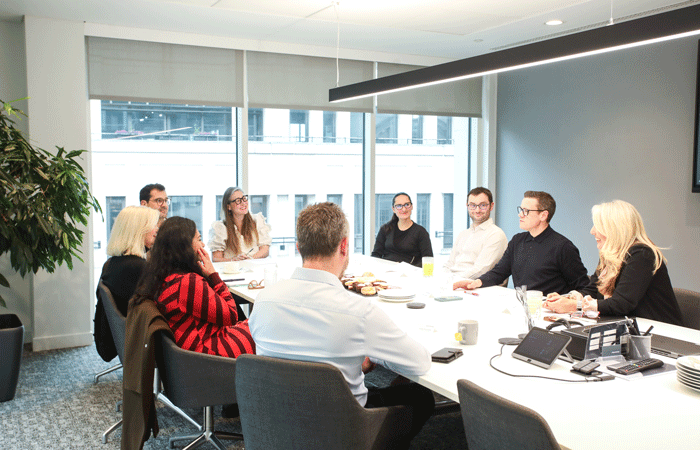
Over the course of the discussion, participants explored how intense project cycles intersect with parenting responsibilities, how hybrid and flexible working have reshaped team culture, and how becoming a parent can sharpen organisation, prioritisation and leadership. They spoke openly about pacing career journeys, about redefining gender expectations, and about the importance of supportive workplace cultures that allow both mothers and fathers to be present, at work and at home.
Balancing Ambition and Parenthood in a Fast-Paced Industry
The round table opened with a discussion about balancing ambitious careers with family life in a deadline-driven sector. The participants spoke openly about reframing expectations, both of themselves and of the industry.
Lucy Scott shared a perspective that resonated strongly around the table: “If you’re career-driven, it’s easy to feel like you always have to say yes. But saying no isn’t a weakness – it’s choosing the right priorities for your life.” That shift in mindset, seeing boundaries not as limitation but as alignment, set the tone for the conversation.
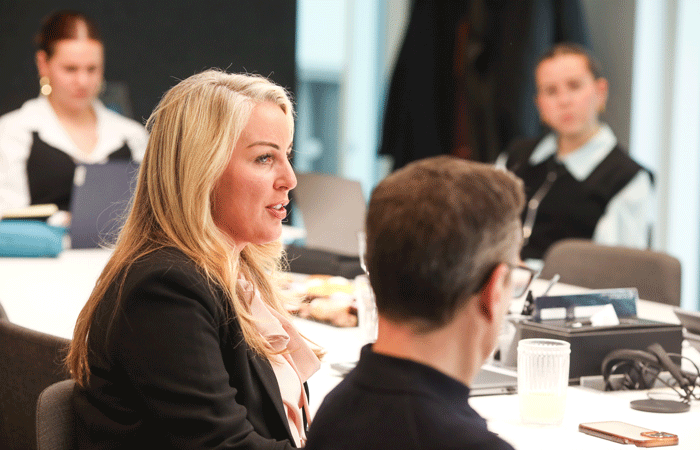
Lucy Scott, Board Director at chapmanbdsp
Dan Higginson built on this idea from a leadership standpoint, reminding the group, “Sometimes saying no is fine. We live in a world where not everything is urgent.”
There was clear agreement that parenting often strengthens professional judgement. It sharpens decision-making, clarifies priorities and challenges the culture of constant urgency. The conversation quickly moved away from sacrifice and towards recognising that careers and families are parallel commitments requiring planning and communication.
Working Smarter: Flexibility as Strength
Hybrid and flexible working were discussed as strategic tools. Lucy reflected on how her own approach has evolved: “Flexibility is there for a reason, and we should work with it when needed. I think it can enable you to work smarter and more efficiently.”
Participants described how flexibility enables clearer structure, stronger time management and better focus. It benefits parents, certainly, but it also benefits child-free colleagues who value autonomy and trust in how they deliver their work.
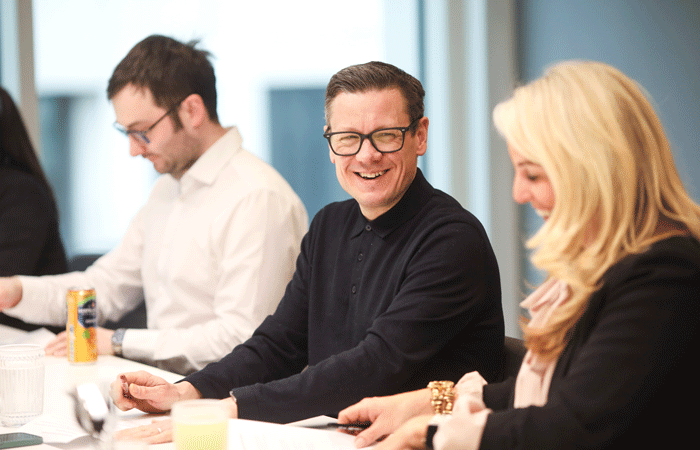
Dan Higginson, Director at Greycoat
The group acknowledged that hybrid working has changed communication rhythms, with more online meetings and careful diary management. But the overall feeling was positive: flexibility has become part of modern professional life.
Dan added a broader leadership lens: “Good supportive leadership is about demonstrating that life’s most important moments don’t come twice, creating a workplace culture where people have the flexibility to be present for them.”
There was shared agreement that flexibility works best when it is embedded culturally, when it is available to everyone, understood by everyone and balanced across teams.
Organisation, Boundaries and Learning to Protect Time
A consistent theme throughout the afternoon was how parenting strengthens organisation. Amrita Mahindroo reflected candidly, “Being a mother has pushed me to become more organised. I’ve learned to build in time buffers, and knowing when to say no has become essential.”
Others nodded in agreement. Building buffers, planning realistically and managing internal deadlines were described as game-changing skills for delivering projects more effectively.
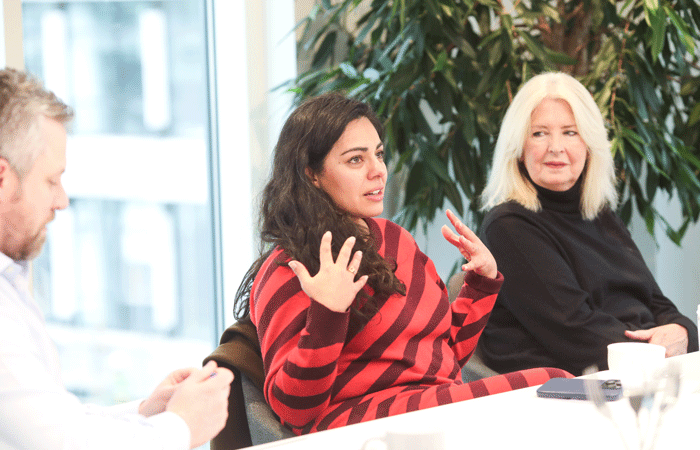
Left: Amrita Mahindroo, Founder and Director of DROO – Da Costa Mahindroo Architects. Right: Gill Parker of For Everyday Life.
Gill Parker summarised one of the most practical lessons shared around the table: “You learn to protect your time.” That might mean announcing a hard stop at the beginning of a meeting, structuring the day more intentionally, or creating clearer boundaries between work and home.
Wanting to Excel at Work and at Home
The emotional heart of the discussion came through in Vidal Fernandez’s reflection: “There’s a part of me that wants to excel in my work, and another part that wants to show up fully for my family. I want to be exceptional in my career and equally present as a parent.”
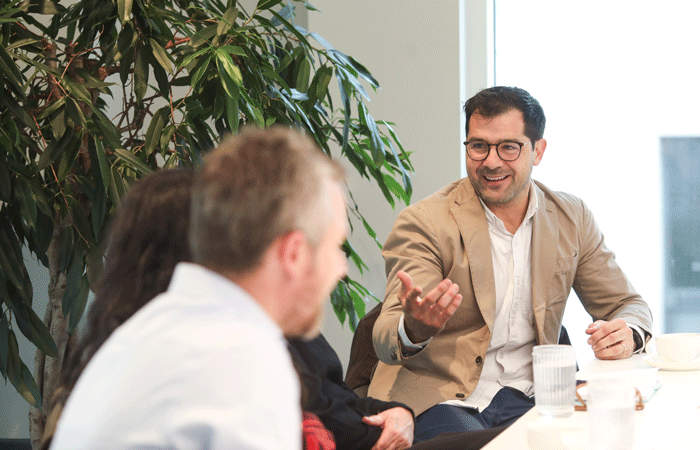
Vidal Fernandez, Associate of BIG – Bjarke Ingels Group
Tania offered a practical example of how that balance plays out in real time: “The last two or three weeks have been very busy, a meeting every day at 8:30. There needs to be a lot of team effort with partners, and my partner has taken more work to support me.”
That ambition, to do both well, was widely shared. The conversation acknowledged that it is not always perfectly balanced, but it is intentional.
Mark Poulter shared a personal example of reshaping work to reflect those priorities: “18 months ago I chose to reduce my working week to four days. It meant earning less and adjusting our finances but having a weekday off as a family (Fun Friday!) was definitely worth it. For us, the family came first. If it’s possible, I truly recommend considering reduced hours for a more enjoyable home life, particularly with pre-school age kids.”
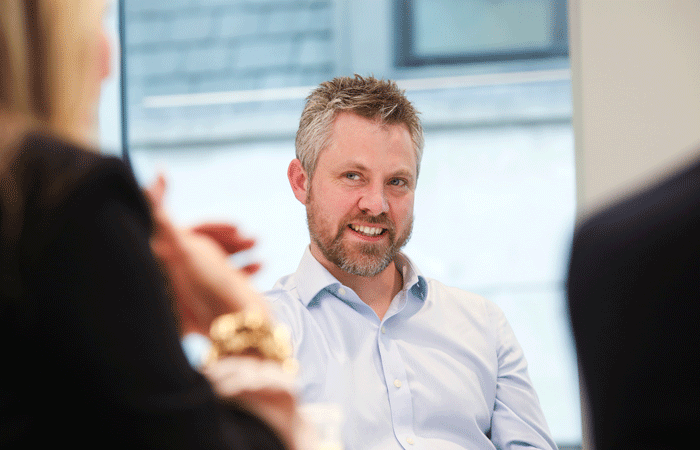
Mark Poulter, Project Director at chapmanbdsp
His experience sparked discussion about sequencing careers over the long term. Several participants agreed that intensity can move between partners over time, depending on life stage and opportunity.
Gill reinforced that long-term view with reassurance: “You don’t have to choose between a successful career and being a present parent. You can have both, if you’re willing to pace yourself.”
Compassion, Openness and Changing Culture
The discussion also highlighted how workplace culture has evolved. Max Gibbens reflected on a generational shift: “Today, we’re talking much more openly about how parenting affects mental health, and as a result, there’s growing understanding and acceptance of those challenges.”
That openness was visible in the room. Participants spoke honestly about difficult early stages of parenthood, hospital stays and emotional strain.
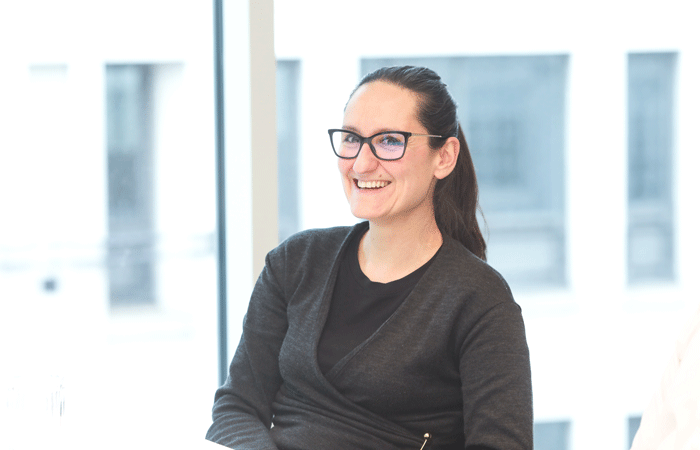
Tania Guerra, Associate Mechanical Engineer at chapmanbdsp
Tania Guerra described the internal tension many working parents recognise: “When I returned to work after maternity leave and started working part-time, it was emotionally challenging. I was thinking about work on my days at home and about my daughter at nursery when I was in the office. It wasn’t easy, but chapmanbdsp was incredibly flexible and understanding, which gave me real peace of mind.”
Amrita highlighted the importance of wider family support, explaining, “Grandparents have been our temporary solution for childcare.” For many around the table, extended family networks were described as an essential part of making dual careers sustainable.
Across the afternoon, one idea remained consistent: when flexibility is used well, when responsibilities are shared and when leadership models balance, it becomes entirely possible to build a thriving career and a present family life.
Perspective, Leadership and the Permission to Be Human
As the conversation drew to a close, it shifted from logistics and strategy to something more reflective: perspective.
There was agreement that while flexible working and shared responsibility are important, what truly makes them sustainable is culture. One participant observed that the role of a business is not to scrutinise who leaves early, but to facilitate balance in a structured way. Colleagues, it was noted, rarely resent parents adjusting their hours. What causes tension is disorganisation, when work is left unclear, when communication is missing, or when responsibilities are unexpectedly passed on.
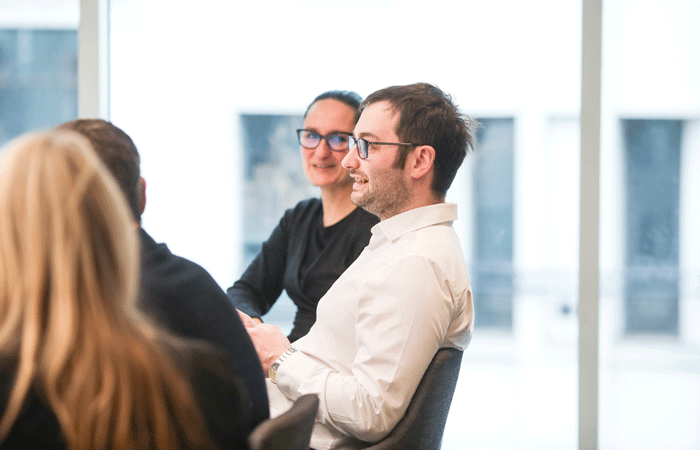
Max Gibbens at chapmanbdsp
There was laughter and recognition as participants spoke about the pressure to optimise everything, school participation, WhatsApp groups, costume days, networking, fitness, career progression, all within the same 24 hours. The expectations can feel endless.
Yet the room gently dismantled that pressure, sharing that if children are fed, clothed and safe, that is already success. Not every club needs to be attended. Not every event requires a handmade costume. Not every email demands an immediate reply.
There was strong agreement that being kind to yourself is not indulgent, it is necessary. You cannot operate at full capacity indefinitely. Protecting time, filling your own glass and occasionally saying “I can’t do everything today” are part of long-term sustainability.
Crucially, this was framed as a leadership responsibility too. When senior leaders demonstrate that life’s most important moments matter, it creates space for others to do the same.
As the discussion wrapped up, the tone was hopeful. Modern workplaces are evolving. Conversations about parenting and mental health are more open than ever before. Expectations are being examined rather than silently absorbed.
The final sentiment was simple but powerful: pace yourself. Communicate clearly. Share the load. And remember that it is possible to build a thriving career and a present family life, not perfectly, but intentionally.