







Sustainable Disruption: How Jane Abernethy Is Building a Net Positive Future at Humanscale
As Humanscale prepares to launch its latest CSR report, in a candid and deeply insightful conversation, Design Insider’s Alys Bryan sat down with Jane Abernethy, Chief Sustainability Officer at Humanscale, to explore her remarkable journey from industrial design to leading one of the most ambitious sustainability programmes in the commercial furniture industry.
Jane brings a unique blend of artistic sensibility, scientific thinking, and quiet determination to her work, qualities that have made her a defining voice in the movement for regenerative, transparent, and circular design. From pioneering net positive products to scaling global initiatives, Jane’s leadership has helped transform Humanscale into a recognised disruptor in sustainable manufacturing.

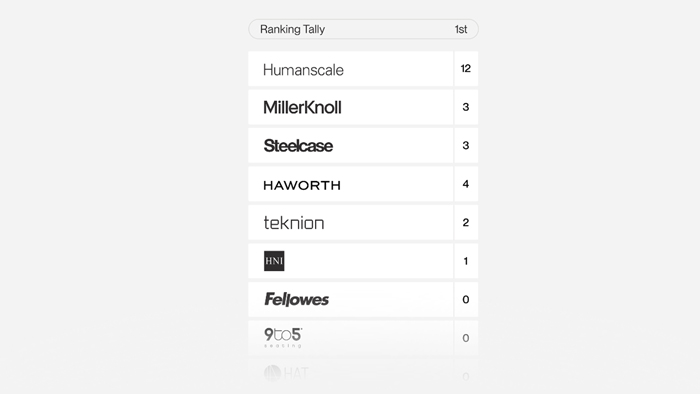
As this conversation is published, the timeliness of Jane’s insights could not be clearer. In August 2025, MMQB released its inaugural Sustainability Scorecard for the contract furniture industry, ranking Humanscale firmly at the top. The independent analysis cut through industry-wide greenwashing by evaluating verified data from EcoVadis, CDP, B Corp, JUST, and TRUE Zero Waste. Humanscale distinguished itself by leading in four out of twelve categories, securing top-three positions in seven, and standing alone in offering a full suite of climate-positive products. With 29 climate-positive products, representing 55% of its 2024 revenue, and holding more Declare labels than any other company, Humanscale’s position as a disruptor is not just aspirational but evidenced in hard data. This makes our conversation with Jane especially relevant, offering an inside look at the leadership driving this verified sustainability success.
From Designer to Disruptor: A Career Built on Creativity and Challenge
Jane Abernethy’s early interest in design was shaped by an equal love for science and art, two seemingly divergent disciplines that she would later unite through industrial design. She initially considered a career in architecture and was accepted into architecture schools, but after shadowing practicing architects, the pace and structure of the profession gave her to pause.
“I realised that architecture projects were long, full of stakeholder complexities, and didn’t offer the same type of creative agility,” Jane recalls. “I felt that product design would give me the opportunity to iterate more quickly, and to bring meaningful ideas into the world at a faster pace.”
She discovered industrial design as a discipline while still weighing up her options, and once she did, it felt like a natural fit. Jane completed her undergraduate degree at Carleton University in Canada, but her education also spanned continents: a semester at UTC in Paris offered a technically rigorous, engineering-driven experience, while a term at Monash University in Australia immersed her in the conceptual, artistic side of design. “Seeing both approaches helped me think more holistically,” she says. “It gave me a wide-angle view of what design could do.”

Early in her career, Jane joined Humanscale as an intern. She later worked in design consultancy and briefly explored freelancing before returning to New York in 2007 to rejoin Humanscale’s in-house design team. “At the time, I thought I’d stay for five months. Then the recession hit. I stayed and found endless opportunities to grow.”
It wasn’t long before Jane’s scope expanded beyond design. During a company-wide meeting focused on achieving sustainability certifications, her knowledge and passion for environmental issues stood out. When asked to lead the initiative, she made a pivotal career decision: to leave behind the design studio and take up a leadership role in sustainability, but only if she could make a systemic impact.
“I loved design,” she says. “So I wasn’t going to step away from it lightly. But if I could make a meaningful difference in how the company operated, in how it made decisions and approached its products, then it was worth doing.”
Her commitment to leading with clarity and conviction also led her to an unconventional preparation technique: opera lessons. “I was suddenly in meetings with manufacturing directors, often men with decades of experience. I knew I needed to be heard, so I took vocal training to project not just my voice, but presence.”
That decision underscored a broader awareness of how gender and leadership intersect. Jane was intentional about her posture, wardrobe, and communication style, walking the fine line between assertiveness and authenticity. “I wanted to reflect who I was, while also commanding attention in rooms where decisions were made.”
Reimagining Business Through a Regenerative Lens
One of Jane’s most lasting contributions at Humanscale has been her leadership in moving the company beyond conventional sustainability goals. Reducing harm is important, she insists, but it’s not enough. “The idea that a company can do less harm and celebrate it as success has always felt insufficient,” she says. “We’re still moving in the wrong direction, just more slowly.”
In response to our conversation question about creating net positive products, Jane explained that Humanscale’s goal is not only to minimise impact but to contribute positively to the planet. “Could we actually manufacture or be a for-profit company and leave the world better off because we’re here, not in spite of us but because we’re here?”
That idea is now operational through the Living Product Challenge, which uses third-party audits to measure both “footprints” (negative impacts) and “handprints” (positive impacts created outside the company’s typical sphere of influence). For example, Humanscale directly partners with nonprofits to install solar arrays or other renewable technologies that benefit communities, creating measurable benefits beyond their product output.
Jane is quick to credit the academic community behind the concept, especially Dr. Greg Norris, who pioneered the use of handprint accounting. “He taught that measuring only your footprint leads to a tragic conclusion, that the world might be better off without you. But if you also track your positive impact, you realise you can be a net benefit.”
This systems-based thinking influences everything from sourcing to engineering. And it’s working. As of last year, 55% of the company’s product sales were certified climate positive, a milestone achieved by engaging every department, from procurement to production.
Jane also emphasised that shifting the company’s mindset took time, and trust. “When we initially started, people were sceptical,” she recalled. “They’d join a meeting just to see what it was about. But after a few successful projects, people began to see how their work contributed. It shifted how they saw themselves, their roles, and the company.”
Today, sustainability is no longer the responsibility of one department. “It’s become part of how we think as a business,” she said. “From quality control to sourcing, people see their jobs as contributing to something bigger.”
Designing with Intent: From Toxins to Timelessness
Jane’s training as a designer continues to shape her problem-solving philosophy. One of her guiding principles is deceptively simple: “Nobody wants a toaster. They want toast.” It’s a mindset that emphasises purpose over product, and it’s helped Humanscale make progress in places where others get stuck.
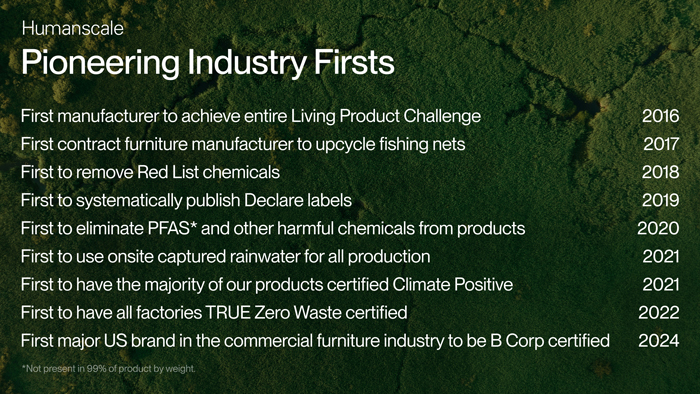
When asked how this design ethos influences her team’s work, Jane shared a powerful example: PFAS chemicals, also known as “forever chemicals,” were being applied to some of the textiles in Humanscale’s product lines, not because they were requested, but because mills used them by default.
“We didn’t ask for them, and yet there they were, toxic, persistent, and dangerous. We couldn’t find an alternative coating that worked. So we went back to the purpose: stain resistance. We asked, ‘Is this coating even effective?’ And it turned out, it wasn’t. It didn’t stay on.”
By simply removing the coating, and confirming that it didn’t serve its intended purpose, they achieved a better outcome without costly R&D. “This is where design thinking is a superpower,” she says. “It helps you break free of assumed answers.”
That philosophy also informs the company’s stance against fast furniture. “When people truly value the items around them, emotionally and physically, they care for them. They keep them. That’s a more sustainable cycle.” Humanscale’s products are designed to be durable, repairable, and timeless, with warranties that extend 15 years or more. “Sustainability isn’t just about materials. It’s about emotional attachment.”
Leading First, Learning Fast
Humanscale’s position as a sustainability leader didn’t emerge by playing it safe, and Jane is the first to acknowledge that taking bold steps often means venturing into the unknown. When asked what challenges this raised Jane explained:
“I think the decision itself is a challenge,” she shared, “but then the tenacity to stick with that decision and keep everyone focused in the same direction… that has been almost as hard as making the decisions to begin with.”
Many of those decisions have placed Humanscale ahead of the curve, from being the first to create a climate-positive certified product line, to launching a remanufactured furniture platform, to investing in ocean plastics and regenerative design before they were industry trends, and becoming the first major commercial furniture brand to earn B-Corp certification. But being first has its own risks.
Jane credits much of this fearless innovation to Humanscale’s founder, Bob King. “He’s not very risk averse. He has the appetite for risk, taking on some very unique and different things that not every company would be willing to tackle.”
That culture of risk tolerance has enabled the team to pursue transformative, not just incremental, change. “I would put circularity, where we are right now, as something that’s not fully clear,” Jane said. “It’s not totally clear how it’s playing out, what is the best place in the market for these products to be sold back into… but we’re figuring a lot out.”

Whether it’s retraining sales teams, overcoming legislative friction, or reengineering how products are tracked and reintroduced into the market, disruption at Humanscale is not just a tagline. It’s a strategy.
“It does take tenacity,” she added. “But we’ve always had enough challenge and ambition to keep going. That’s what’s kept me here for almost 18 years.”
Circularity in a Linear World: The Realities of Building a Loop
Circularity has become a buzzword in commercial interiors, but Jane has long warned that achieving true circularity is more complex than it sounds. In response to a question about the toughest systemic barriers, she pointed to a single core challenge: “The world isn’t built for circularity. Every part of the system, legal, financial, logistical, is designed for a linear flow.”
She described how Refreshed, Humanscale’s initiative to remanufacture and resell previously owned chairs, ran into seemingly small but compounding roadblocks. In the U.S., label requirements for remanufactured furniture differ by state, and in some cases, directly contradict. “One state demands a yellow label. Another requires red. Some want factory inspections. It’s chaos, and that’s just for labelling.”
Even returning products through existing customer systems can be difficult. “We’ve built everything to move forward, supply chains, payments, ownership. Reversing that flow means rebuilding everything. It’s not one big wall, it’s thousands of speed bumps.”
Despite these challenges, Jane sees enormous potential. “On average, remanufacturing a chair reduces its carbon footprint by around 60%. That’s the biggest single intervention we can make. It’s worth figuring out.”
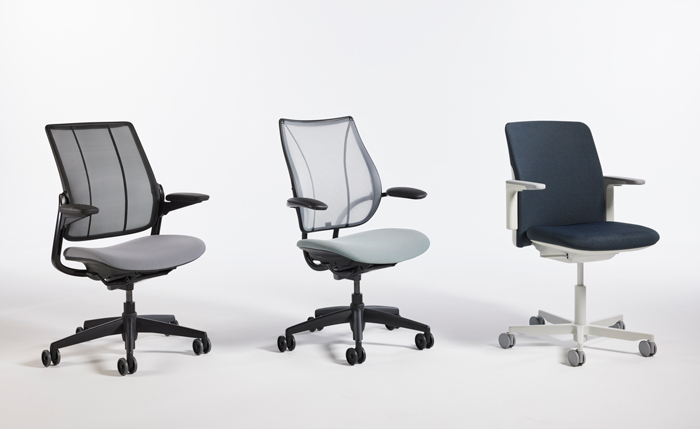
The Refreshed line currently includes Freedom and Liberty task chairs, with plans to expand. But scaling won’t be as simple as replicating success. “Each location, each market, each product has unique challenges. We’re solving it one step at a time.”
Collaborative Change and the Power of Transparency
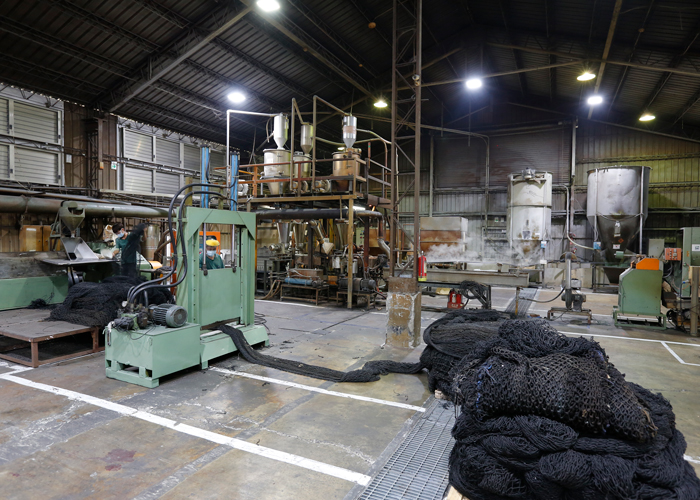
When asked about Humanscale’s pioneering use of ocean-bound plastics in collaboration with Bureo, Jane lit up. “That project began as a materials challenge, how do we make high-performance components using recycled nets? But it became something bigger.”
The Smart Ocean Chair was the result, but the real win came when major furniture brands followed suit. “It was proof of concept, not just for us, but for the industry. If we want to clean the oceans, we need competitors to join us.”
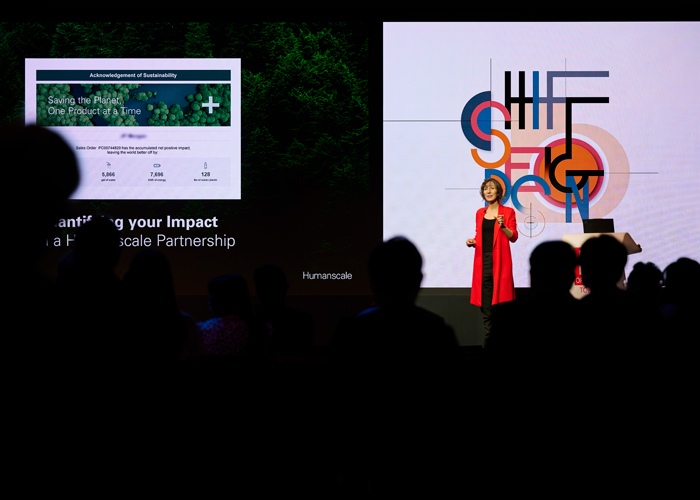
Jane’s advocacy extends far beyond Humanscale. She serves on the board of Mindful Materials, chairs sustainability initiatives for the company’s trade association, and speaks at conferences to help architects, designers, and specifiers create ripple effects through their choices.
“I’m not just sharing, I’m learning, too,” she says. “And I think that mindset is essential. Change scales when knowledge flows freely.”
Transparency is key to that transformation. “Declare labels, audits, full ingredient lists, this is how trust is built. Greenwashing doesn’t stand up to scrutiny anymore. And that’s good.”
Looking Ahead: Biomimicry, Circularity, and Designing for Life
When reflecting on what she’s most proud of, Jane doesn’t point to accolades or press releases. She points to people, her team.
“They’re incredible. They care. They push boundaries. Some have gone on to lead change elsewhere. That’s the legacy I’m proud of.”
She’s equally proud of the structural change she’s helped bring to Humanscale. “When I started, there wasn’t even a dedicated sustainability role. Now it’s woven through the company, through systems, incentives, and everyday decisions.”
Asked if she considers herself a disruptor, she nods. “Yes. I’m always asking how things could be better. And I don’t give up easily.”
Looking to the future, Jane is doubling down on solving circularity and deepening her study of biomimicry, the science of learning from nature to solve human challenges.
“Nature has already solved sustainability. Every organism creates conditions conducive to life. That’s the design brief I want to follow.”
Find Humanscale on Supplier Finder
Supplier Finder is the UK’s only search platform for accredited suppliers of commercial interior furnishings.
At Supplier Finder, our mission is simple: to help you find the perfect commercial furnishing suppliers for your interior schemes and projects. We understand the importance of having confidence in the suppliers you specify and the products that bring your designs to life. That’s why each supplier featured on our platform is accredited through Commercial Interiors UK’s rigorous membership application process. This ensures that you engage with only the best in the industry!