





Form Follows Feeling: Designing for Human Experience with Suchi Reddy
What if design wasn’t driven by function alone, but by how a space makes us feel? We spoke to Suchi Reddy about her philosophy of “form follows feeling”, and how it is shaping a new generation of human-centred spaces across Humanscale’s global showroom portfolio.
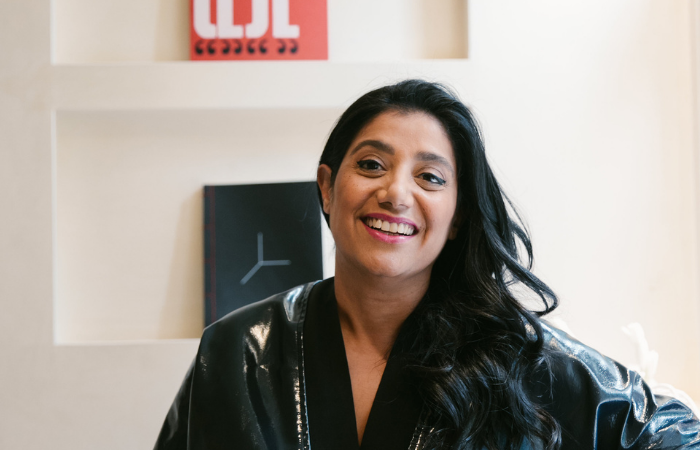
Suchi Reddy
Suchi, as the founding Principal of Reddymade and a designer whose work explores the intersection of spatial experience and neuroaesthetics, could you begin by introducing yourself and outlining the philosophy of “form follows feeling” that underpins your practice?
I’m an architect and designer and the founding principal of Reddymade, a New York–based practice working across architecture, interiors, installations, and public art. For more than two decades my work has explored how environments shape human perception and wellbeing, often drawing on research from neuroaesthetics—the study of how our brains respond to spatial and sensory conditions.
The philosophy guiding my work is what I call “form follows feeling.” It builds on the modernist idea of form following function but recognizes that emotional and physiological responses to space are equally important. When we design, we think carefully about light, proportion, movement, and materiality as tools for creating environments that feel intuitive and supportive. Ultimately, design should not only perform well—it should enhance how people feel and function within a space.
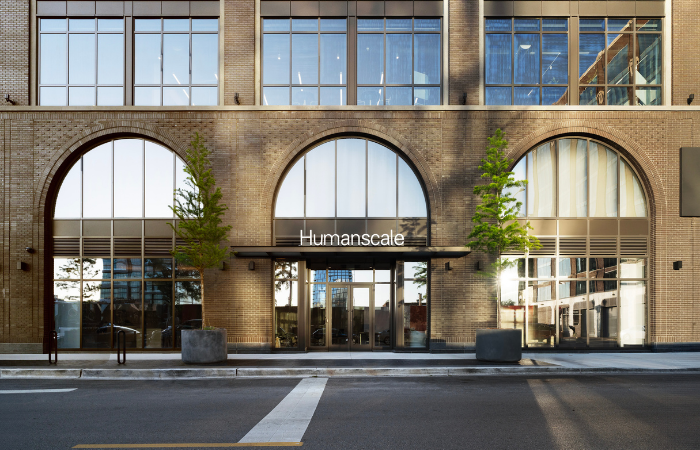
Humanscale showroom, Chicago
You have collaborated with Humanscale on a growing portfolio of international showrooms, most recently in San Francisco. How do you translate Humanscale’s human-centered ethos into physical space while ensuring each showroom reflects its cultural context?
Humanscale’s commitment to human-centered design in their products aligns closely with my own focus on wellbeing and embodied experience in architecture. When translating that ethos into spatial design, we prioritize clarity, comfort, and movement—qualities that mirror the way Humanscale products support the body.
Across the showrooms we’ve developed a shared architectural language that emphasizes calmness, fluid circulation, and carefully framed product displays. The intention is to create environments where visitors experience the products as part of a broader ecosystem of work and movement.
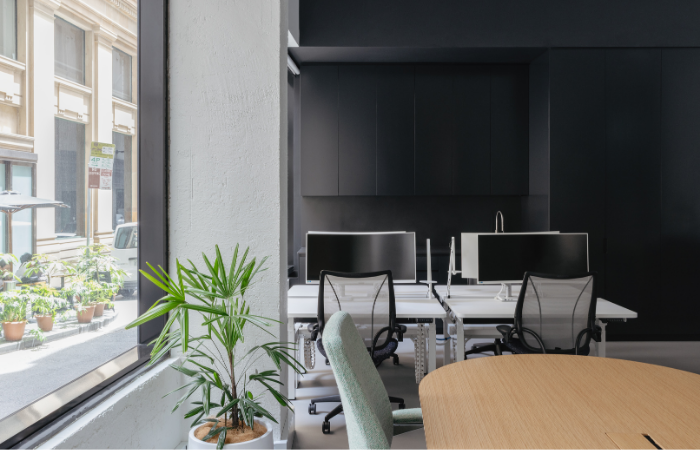
Humanscale showroom, Sydney
At the same time, each showroom is shaped by the character of its location. In San Francisco, we were interested in reflecting the brands’ ethos through a space that feels dynamic and flexible, and the city’s legacy of innovation and creative thinking by supporting a local startup who made the enclosed meeting spaces. While the broader architectural language remains consistent, each showroom is calibrated to its local context through its mood, materiality, and rhythm—something that becomes especially meaningful in places like Sydney, where we worked to carefully maintain the characteristics of the Heritage building the showroom is in, to maximizing light and spatial openness which play an important role in shaping the experience.
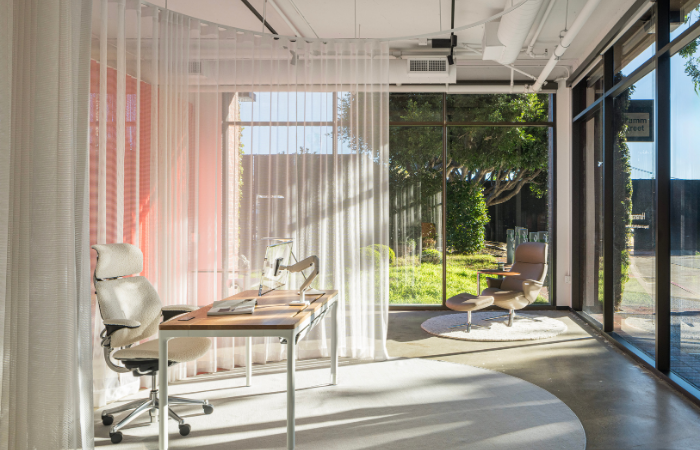
Humanscale showroom, San Francisco
The San Francisco showroom is designed as both a retail environment and a working showroom. What spatial strategies did you use to create an experiential journey without overwhelming visitors?
The challenge was presenting a wide range of products while maintaining a sense of calm and clarity – though Humanscale product is designed to create workspaces that feel inspiring and generative, so it was much easier working in this hybrid capacity for them than it might be for another brand. The product lends itself beautifully to the concept.
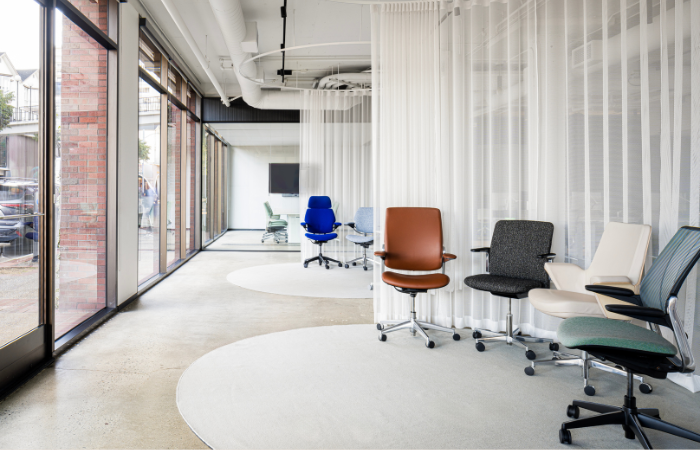
Humanscale showroom, San Francisco
We approached the showroom as a spatial narrative, organizing the experience into a sequence of zones that unfold gradually rather than presenting everything at once. Soft transitions guide visitors intuitively through the space, creating a sense of flow while maintaining open sightlines. This allows people to understand the breadth of the collection without feeling visually overloaded.
By giving each vignette room to breathe and emphasizing natural light and warm materials, the showroom feels legible, welcoming, and aligned with Humanscale’s philosophy of simplicity.
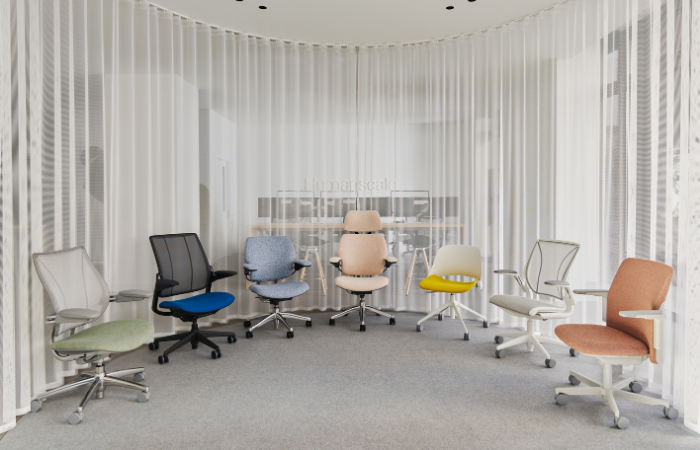
Humanscale showroom, Shanghai
Across cities including Chicago, Paris, Sydney, and Shanghai, you have developed a recognizable architectural language for Humanscale showrooms. How do curved geometries and modular systems support the brand’s emphasis on ergonomics and movement?
The curves of the human body and human movement, ultimately are the inspiration for both the products and the space.Our approach was to work with fluid shapes and non linear movement to soften the environment, creating a sense of continuity, flow and calm that supports exploration without overwhelming the visitor. In Sydney, this sense of flow was particularly important to achieve in a narrow, high ceilinged space- here the half circles we used in other cities transformed into undulating forms allowing visitors to move through the showroom in a way that feels intuitive and relaxed.
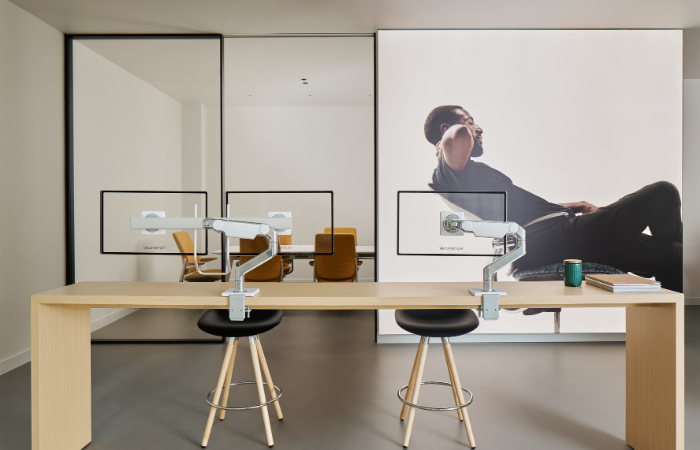
Humanscale showroom, Shanghai
Sustainability is central to Humanscale’s identity. In projects like the Chicago showroom, designed to be Living Building Challenge 4.0 Ready, how do you align materials and construction with these environmental commitments while maintaining a refined aesthetic?
Sustainability is deeply embedded in Humanscale’s culture, so it naturally shapes the design process from the beginning. We approach each project with careful attention to material sourcing, lifecycle impact, and construction practices that align with rigorous standards such as the Living Building Challenge.
Interestingly, sustainability often reinforces a minimal aesthetic. A restrained palette, thoughtful detailing, and durable materials reduce excess while highlighting the intrinsic qualities of each element.This was a key strategy to vetting over 200 products both for sustainability and ethical labor practices involved in their making before we arrived at our refined palette.
Rather than relying on decorative layers, we focus on clarity and authenticity—allowing materials to express their natural character. The result is an environment that feels quietly refined while embodying the same values of responsibility and transparency that define Humanscale’s products.
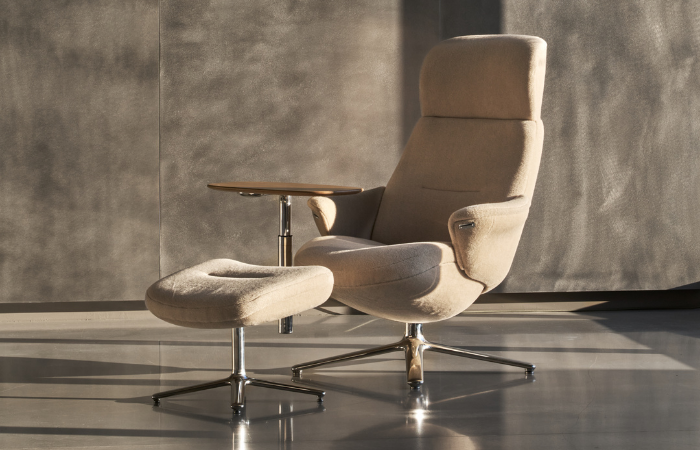
Humanscale showroom, Chicago
Your collaboration with Humanscale has intentionally prioritized female-led design and construction teams. How has this approach shaped the delivery and narrative of the projects?
From the beginning we saw the showroom program as an opportunity to rethink how design teams are assembled. Architecture and construction still have significant gender disparities, particularly in leadership roles.
By intentionally working with female-led teams across architecture, engineering, and construction, we’re able to support talented practitioners while demonstrating the strength of diverse leadership. Each project becomes both a physical environment and an example of how the design process itself can reflect values of equity and inclusion.
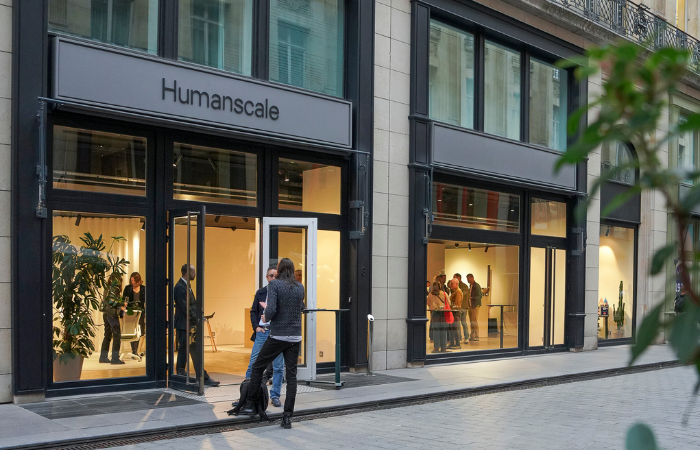
Humanscale showroom, Paris
What has been especially meaningful is the collaborative spirit that emerges from this approach. It highlights the many voices that contribute to shaping a space and reflects a broader vision of how design practice can operate more equitably.
Your work draws on neuroaesthetic research about how environments influence cognition and wellbeing. How do you apply these ideas within a commercial showroom environment?
Neuroaesthetics helps us understand how spatial cues influence how we feel and think. Light levels, visual complexity, proportion, and materiality all shape our cognitive and emotional responses.
In the Humanscale showrooms we calibrate these elements carefully. Layered lighting supports visual comfort, materials are selected for tactility and warmth, and circulation paths are designed to feel intuitive and legible.
In Sydney, natural light became an especially important part of the experience. Allowing daylight to move through the space reinforces a sense of clarity and ease, while highlighting the products in a way that feels natural rather than staged. The goal is always to create an environment where visitors feel comfortable, attentive, and engaged.
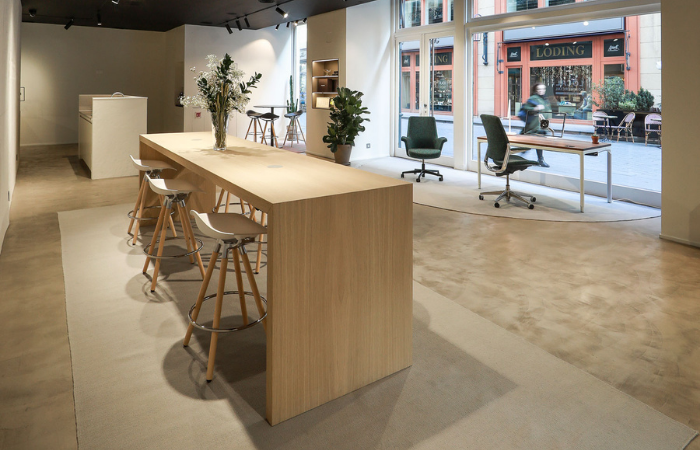
Humanscale showroom, Paris
As Humanscale expands globally, how do you see the next generation of showrooms evolving?
Showrooms are increasingly becoming places of dialogue rather than simple product displays. As work culture continues to evolve, these spaces can act as platforms for conversations about wellbeing, sustainability, and the future of work and community.
From a design perspective, I see them becoming more experiential—environments where visitors can physically understand the relationship between movement, ergonomics, and spatial design.
They also function as community touchpoints within the design industry, hosting events and discussions that bring people together around shared ideas. In that sense, the showroom becomes less about displaying objects and more about communicating a broader philosophy of living and working well. Together we are always better.
Thank you to Suchi for her time.
Find Humanscale on Supplier Finder
Supplier Finder is the UK’s only search platform for accredited suppliers of commercial interior furnishings.
At Supplier Finder, our mission is simple: to help you find the perfect commercial furnishing suppliers for your interior schemes and projects. We understand the importance of having confidence in the suppliers you specify and the products that bring your designs to life. That’s why each supplier featured on our platform is accredited through Commercial Interiors UK’s rigorous membership application process. This ensures that you engage with only the best in the industry!