



A conversation between: Jim Biddulph & Sophia Gravina, Spira Design
Sophia Gravina is an architect with experience across culture, workplace and retail areas in the UK, but it was her time working in the aged healthcare sector in New Zealand that sparked a passion for inclusive design.

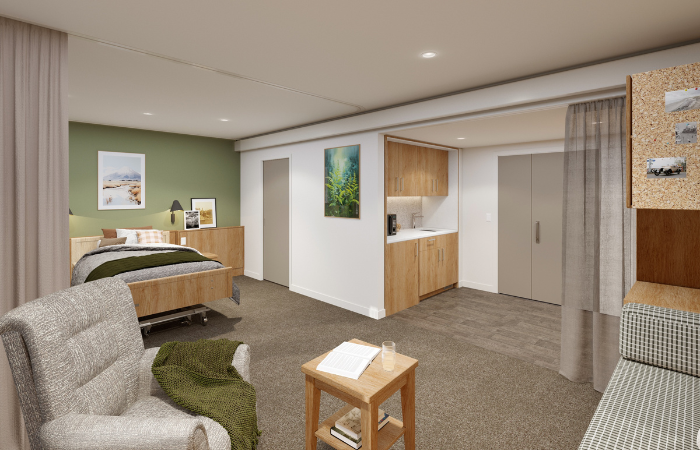
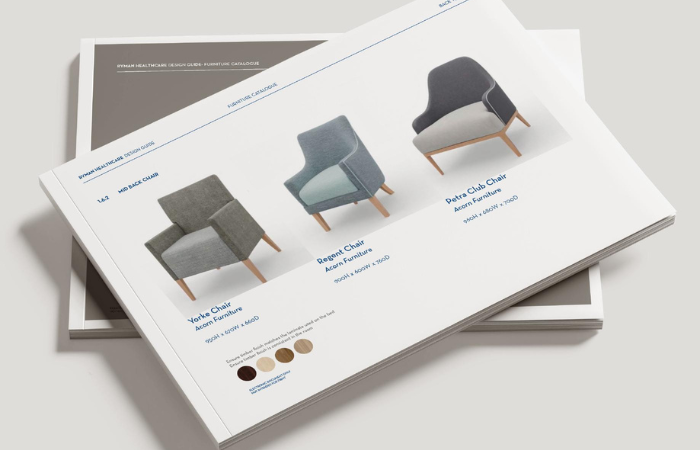
During her time with Ryman Healthcare, she developed a new care suite that promoted a sense of dignity, felt more domestic, and allowed residents to express their individuality, while still meeting essential clinical requirements.
Having become convinced that there must be a better way to translate complex regulations and the extensive research behind them into intuitive tools that integrate into designers’ existing workflows, she founded Spira Design in 2025. The Spira Visual Contrast tool was launched in January and is the first free online tool to enable designers to assess interior schemes for compliance with UK visual contrast regulations. I spoke to Sophia to find out more about her surprisingly unique career path and what the launch offers the sector.
JB: While we have an increasingly ageing population, there is some argument to say that their needs are overlooked in the design of new buildings. Can you share some insights into your experiences in this sector?
SG: I’ve noticed a subtle tendency to ‘other’ the elderly, which is strange because we all aspire to become elderly ourselves and continue to thrive in those later years! There’s a natural reluctance to confront the frailties that come with age, and this can sometimes translate into a lack of empathy in design. Accessibility is too often treated as an optional add-on rather than an integral part of good design. My practice focuses on creating beautiful, accessible spaces, and developing digital tools that empower other designers to do the same.
JB: Unpicking and understanding users’ needs is at the heart of your practice and I’m intrigued to hear more about how this process unfolds.
SG: Empathy is easiest when you have a lived experience to draw from. For me, navigating public transport during the late stages of pregnancy, and later with a pushchair, was a massive wake-up call. Suddenly, the world was full of obstacles I’d never noticed before.
In my work, I use ‘user personas’ as a technique to understand and consider individuals living with dementia, visual impairments, or mobility issues. I find clients engage well with this process because it makes the impact of design tangible. It’s about dignity: if a user has to ask for directions because signage is unclear, or if they struggle to stand up because a chair is unsuitable, they lose a bit of independence. My role is to use thoughtful design to give that dignity back.
JB: Such in-depth research sounds revealing, although perhaps also highlights restraints or difficulties to overcome. How do you go about turning them into opportunities and a clear vision for the design stage?
SG: I like to spend a fair amount of time in the feasibility stage of a project before proposing any design solutions. I have experience working with complex stakeholder groups, and I find that a shared understanding of the problem and goals is an essential foundation to prevent redundant work and decision fatigue. I frame this through a ‘discovery’ scope where I connect the commercial strategy of a project with the user needs to frame a success metric to track progress against.
JB: Beyond the research and planning stages, there is a collaborative approach to your work and I’m intrigued to know more about how you interact with and ultimately support clients during the detailed design stages of a project.
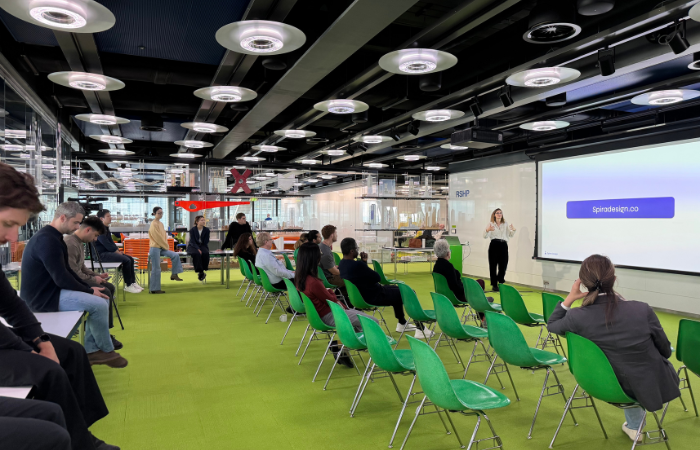
SG: I start by listening. I’m an advocate for respecting expertise, and I find sometimes that designers can be too quick to exclude those without design credentials, but I believe there is value in listening to and learning from individuals from other fields. Designers seek to transpose the most current research from a range of domains into their designs.
Within the healthcare setting, there is a complex layering of needs and the designer acts as the mediator to listen, prioritise and solve. I find it important to take the time to ask, for example, how a clinician assists a resident to shower, before redesigning the bathroom. Equally important is to understand the way a building ages in use and the maintenance and operations team best know this. Such knowledge can be helpful when selecting materials for full-cycle cost effectiveness. For example, a more expensive wall cladding can mitigate the repeated additional costs and disruptions of patching and painting scratched walls over time in vulnerable or high-traffic areas.
JB: Can you explain the drivers behind the new Visual Contrast Designer tool and how clients can use it to improve user experience?
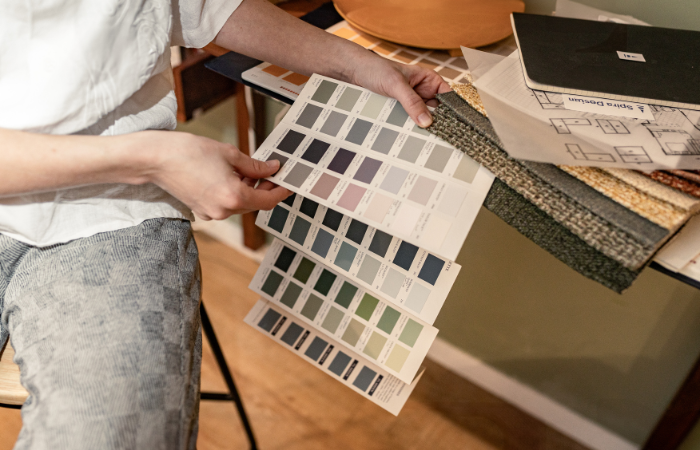
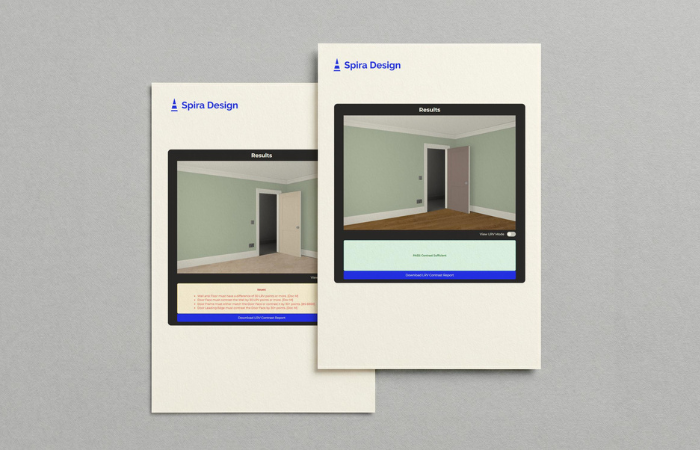
SG: Visual contrast is a bit of a hidden hero in inclusive design. While working at Ryman in New Zealand, I worked with dementia experts who taught me how crucial contrast is for independent navigation. If the floor, the walls, and the seating all blend into one beige blur, a person with a cognitive impairment will feel lost and anxious. Having the correct contrast between these items benefits a wide range of users, including people with visual or cognitive impairments, dementia, or a broad range of neurodiversities. The reduction in sensory load also benefits some of those with neurodiversities. It also compensates for a loss of vision as people age, promotes concentration for children in learning environments, and generally advances the sensory legibility of the space. There is a broad range of users who benefit from a considered visual contrast, which is why it is a requirement for all commercial buildings, but it is a real headache to calculate manually.
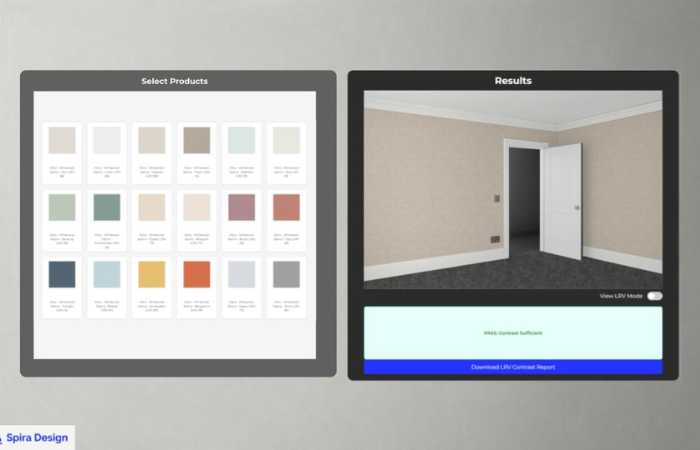
Spira Design’s tool automates that. You pick real products from suppliers, and the tool tells you instantly if they are suitable according to Approved Document M. It turns a “dry” regulatory chore into a creative, real-time part of the design process.
JB: Are there any current or future projects that you can share with our readers?
SG: I’m currently focused on getting the Visual Contrast tool into as many hands as possible, but I have a few more problem-solving tools in the works.
Accessible bathrooms are a huge point of interest. They are so often ‘copy-pasted’ because project timelines don’t often allow the necessary time investment into designing them properly. I’m working on a tool to make compliant, beautiful, accessible bathrooms the path of least resistance.
Another idea I’m still weighing up is a sensory mapping tool to help digitise those user-led personas I mentioned earlier. Clear metrics can be easier to advocate for in a corporate landscape, so if I can translate the “intuitive” side of design into a language that shows commercial and human success, it assists designs in both the design and approvals processes.
The Spira Visual Contrast tool is available HERE.