


Workplace Matters: Flex Space is Winning. But Why Does It Still Feel Like Nobody Works There?
Workplace Matters is an editorial series exploring thought-provoking and knowledge-based perspectives on the workplace. Through expert insight and experience-led commentary, this monthly series sparks meaningful conversations and helps shape the evolving discourse around workplace design.
Workplace Matters continues with a contribution from Rob Venice, Founder and Creative Director of Motive. As the flex workspace market continues to grow and evolve, Rob explores the increasing importance of identity, belonging and emotional connection within the workplace, arguing that functionality alone is no longer enough.
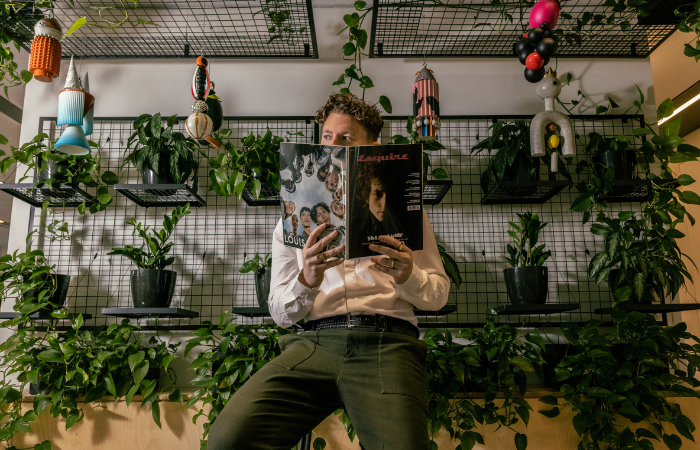
Hearsties – a bespoke collection of hanging totems at Hearst Magazines London headquarters
As we’ve seen from the explosive growth of the flex market in recent years, the model clearly works. It’s on track to grow from roughly 12% of the market currently to closer to 20% by 2030. The appeal is obvious: speed, optionality, reduced risk. In a world where businesses pivot faster than ever, flex space feels like a perfectly tuned instrument. Plug in, power up, get moving. The challenge is what happens next.
Too often, occupiers move into a neutral shell and stop there. The space functions, but it doesn’t mean anything. And if a workplace doesn’t reflect who you are, people struggle to build a sense of belonging. The issue isn’t functionality. It’s identity.
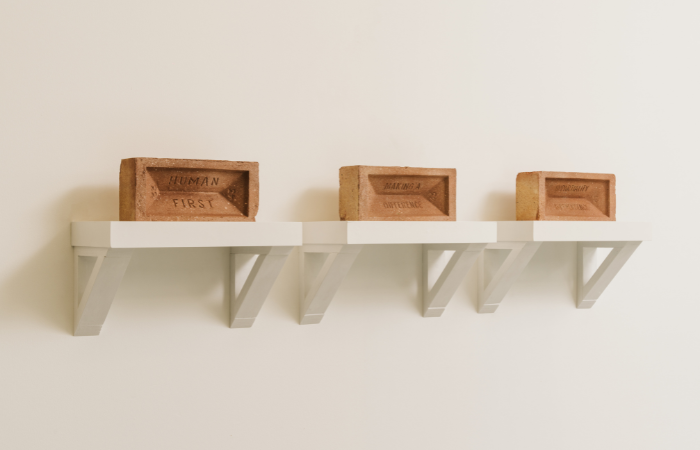
Authentic London bricks engraved with the brands values at IFF Research Workspace
That tension is only increasing as flex evolves. This is no longer just about short-term convenience for start-ups. Occupiers are staying longer, with UK contract occupancy sitting around 88% and demand still rising. Companies want stability, but they also want meaning. The flex market now caters to major brands that aren’t just looking to house their teams, but to create environments that inspire them and strengthen their connection to each other and the business.
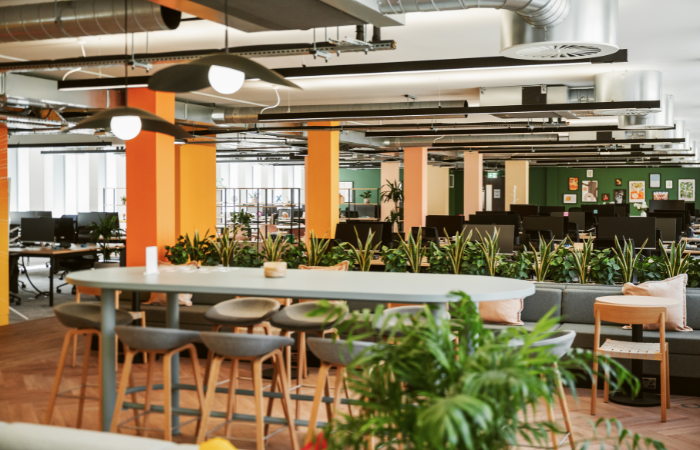
Lindus Health office by Motive
That emotional need, in what are often emotionally neutral spaces, is exactly why I started Motive. Our focus is on injecting brand sentiment into pre-fitted environments, or working alongside fit-out firms to ensure purpose and meaning are embedded from the outset. It’s an area that’s been consistently overlooked, and the rise of flex has only amplified the demand for it.
Brand integration is now essential. Not as a surface layer, but as a design methodology.
The real power of brand immersion is how holistic design can alter people’s mindsets; artefacts create social permission, ownership reduces hierarchy, openness builds intrigue and trust, and trust transforms how people work together.
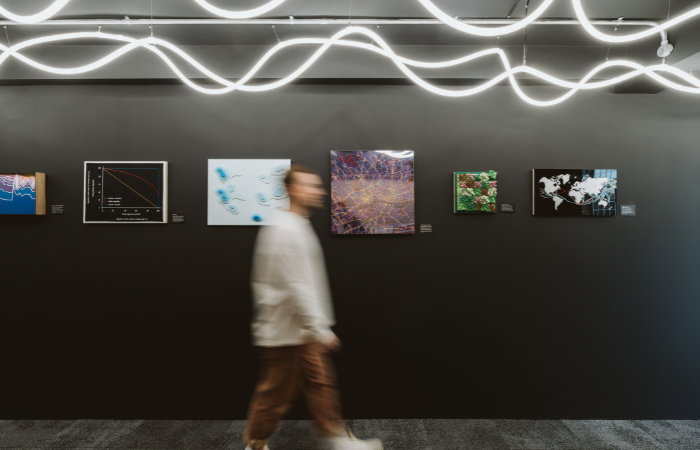
AI-generated artwork inspired by pioneers in machine learning at Faculty’s Workspace
Without that layer of intentionality, offices tend to reinforce silos. People interact through roles rather than relationships. Culture becomes something you explain in onboarding slides instead of something people experience daily.
To avoid the “one size fits all” trap, you have to design from the inside out. That means understanding how a business actually operates, what behaviours need to be encouraged, and what emotional cues support that. The company’s DNA, essentially. From there, the space becomes a series of deliberate interventions rather than a generic layout.
Workplaces shouldn’t be a mood board. They should be a story. More importantly, your story. Because if it’s not, you’re reinforcing someone else’s identity instead of your own and wondering why it all feels so hollow.
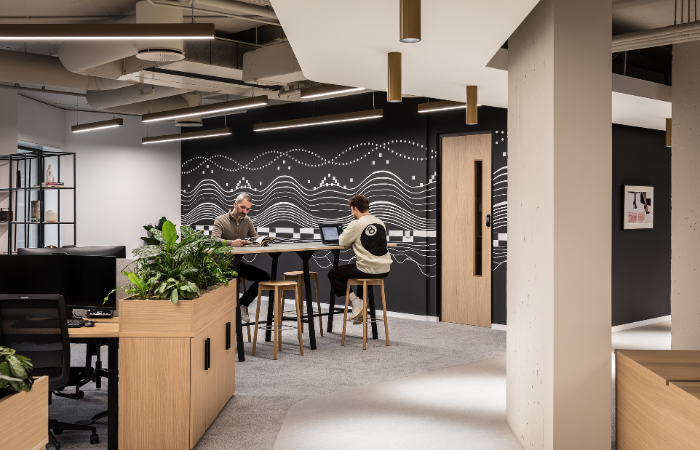
ICE Services London HQ_Brand Integration by Motive, Photography by Oliver Pohlmann
In practice, that means embedding brand cues into shared moments, not just “wow” features. It means creating spaces that signal intention without saying a word, and designing touchpoints that spark interaction between people, as well as individual inspiration.
Brand integration isn’t about logos on walls or values vinyled onto glass. It’s about designing from the inside out. Who you are, how you work, what you believe, and what you want people to feel the moment they step inside.
The most effective spaces don’t chase trends. They hold meaning. They carry memory. They can’t be mistaken for anyone else’s.
Flex space rightfully exists to provide a tenant-first platform. Identity will define its success.
Written by Rob Venice, founder and creative director of Motive.