


Designing for Experience: Becky du Feu on Shaping Meaningful F&B Spaces
In this interview, we speak with Becky, Founder of Studio du Feu, about her evolving approach to hospitality design and what continues to draw her to the F&B sector. Reflecting on a 20-year career, Becky shares how her focus has shifted from aesthetics to experience, shaping spaces that feel intuitive, considered and grounded in real use.
PaStation
With more than 20 years of experience spanning hospitality, retail and commercial design, how has your creative perspective evolved, and what is it about the F&B sector that continues to hold your attention?
Over the years, I’ve definitely shifted from thinking purely about how things look to thinking much more about how they feel and function. It’s less about creating a “moment” and more about shaping a complete experience. The F&B sector still really excites me because it’s so immediate and ever-changing, you’re designing for real, everyday interactions. It’s social, it’s cultural, and it constantly keeps you on your toes.
You speak about the importance of truly understanding a client’s vision at the outset of a project. What does that discovery process involve for you, and how do you translate those early conversations into a clear and confident design direction?
It starts with a lot of listening. We spend time getting to know the client, how they think, what they’re trying to build, and sometimes even what they’re struggling to articulate. It’s not just about the brief on paper, it’s about the bigger picture. From there, we pull everything together into a clear idea or story that becomes our anchor. Once that’s in place, the design decisions tend to flow quite naturally.
PaStation
Travel and global influences clearly inform the way you see design. How do those references find their way into your work in a manner that feels authentic and considered, rather than overplayed?
I think it’s more about absorbing than directly referencing. You pick up on atmosphere, materials, little details, and those things stay with you. When we design, it’s about reinterpreting those impressions in a subtle way rather than copying them.
As Founder of Studio du Feu, how would you define the studio’s approach to hospitality design, and what do you believe distinguishes it within a highly competitive sector?
We’re quite grounded in our approach. Everything starts with a strong idea, but we’re always thinking about how that idea works in reality, how it supports the brand, the team, and the customer experience. I think what sets us apart is that balance between creativity and practicality. We’re not just designing for impact, we’re designing for longevity.
PaStation
You have spoken about fostering a collaborative internal culture. How does that way of working shape the creative process, and how does it translate into a stronger experience or outcome for the client?
We really value open conversation in the studio. Everyone is encouraged to contribute, question, and build on ideas. It means projects evolve in a more natural way, rather than being driven by one fixed vision. For clients, that usually leads to a more resolved outcome, something that’s been looked at from different angles and properly thought through.
For the PaStation redesign, warmth and approachability were central to the brief. How did you translate those qualities into the physical design of the space, particularly within a fast-casual setting?
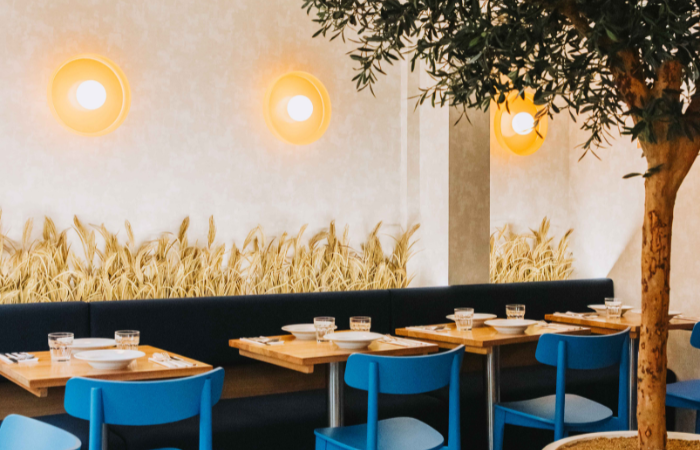
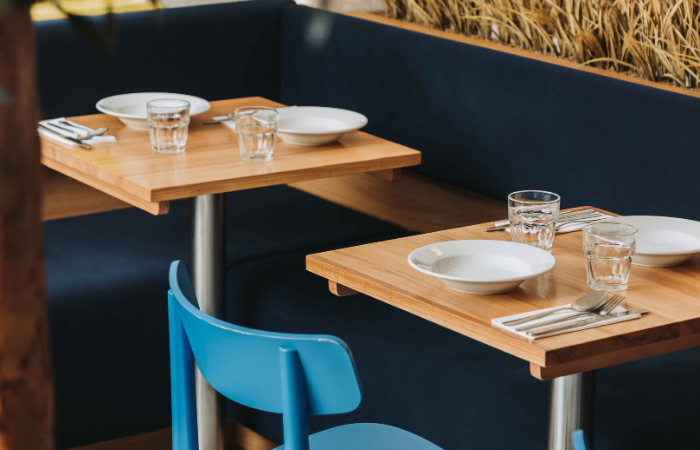
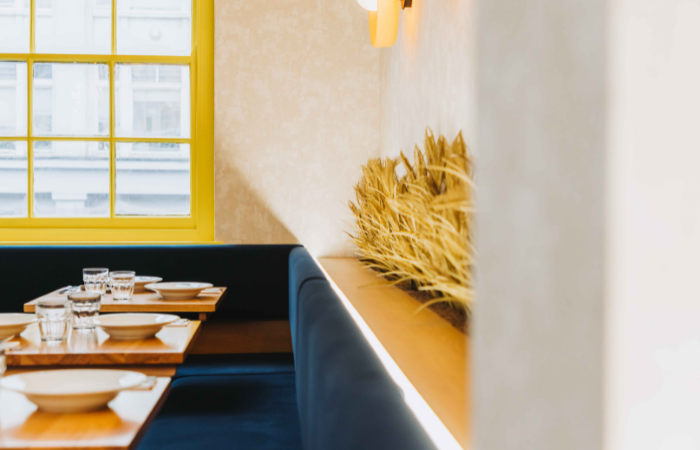
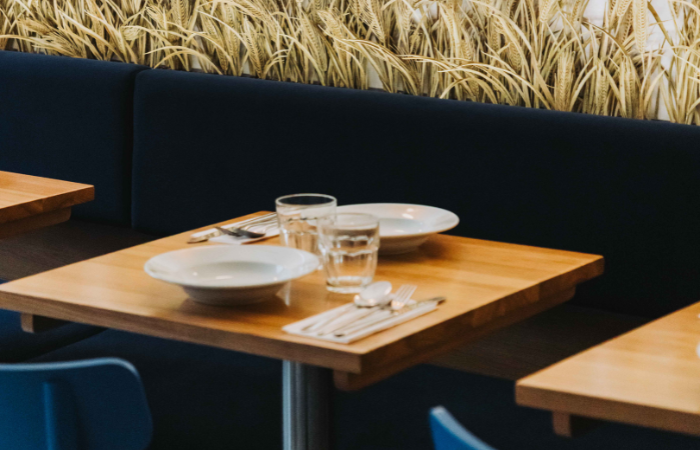
We approached it by softening what is typically a very functional, fast-paced environment. A lot of that came down to materiality, introducing warmer tones, tactile finishes, and elements like faux wheat and an olive tree to bring a sense of natural warmth and familiarity into the space. We also made a conscious effort to weave PaStation’s brand colours through the interior, giving it a strong and recognisable identity without overwhelming the experience.
Lighting played a big role as well. Rather than something overly bright or clinical, we focused on a softer, more ambient quality to create a sense of ease, even if people are only there for a short time.
PaStation
The use of bold brand colours, particularly blue and yellow, gives the scheme a strong visual identity. How did you strike the balance between energy and recognisability on one hand, and comfort and ease on the other?
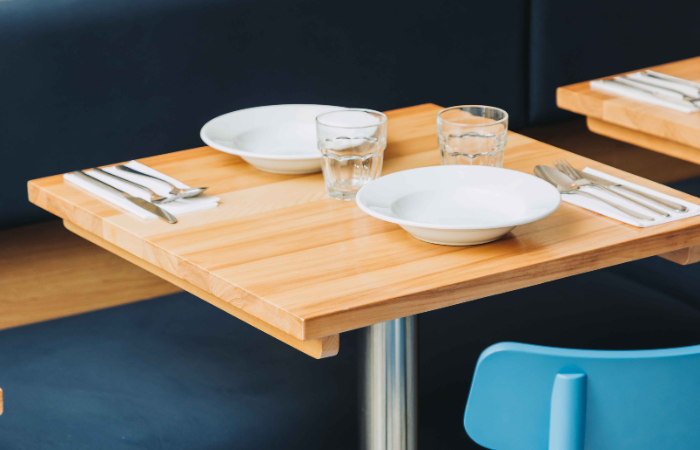
It was really about being selective. The colours are quite bold, so we used them in a more controlled way, almost like accents, and balanced them with more neutral elements. That way you still get the energy and identity, but it doesn’t feel overwhelming when you’re actually in the space.
In a fast-casual environment, design has to perform on an operational level. How did flow, functionality and customer journey influence your decisions for PaStation?
They were a big part of the process. We carefully mapped how people move through the space, from walking in, to ordering, collecting food, and finding a seat, making sure each step feels intuitive and efficient.
The layout was designed to minimise friction and avoid bottlenecks, so the experience feels smooth and easy to navigate. When that flow works well, it naturally creates a more seamless and enjoyable experience for the customer.
PaStation
When redesigning a concept like PaStation, how do you decide what should be protected as part of the brand’s identity, and what needs to be challenged, refined or completely rethought?
It really starts with understanding what people already connect with. If something holds genuine value or recognition, we make sure to retain and build on it. At the same time, we take a thoughtful look at what could be improve, whether that’s from a visual or operational perspective, and use that as an opportunity to move things forward.
In most cases, it’s less about a complete reset and more about a considered evolution.
Hospitality interiors are being asked to do more than ever, balancing brand identity, operational performance, social media visibility and customer comfort. How is that changing the way F&B spaces are being designed, and which shifts do you think are genuinely meaningful rather than short-lived?
Social media has become a really important part of how people experience and share spaces, and that was definitely something we considered with PaStation. We wanted to create moments within the design that people would naturally be drawn to and want to capture.
Elements like the olive tree and the wheat installations were introduced not just for their connection to the brand story, but also because they create strong, visually engaging focal points. These are the kinds of features that encourage people to take photos, share them, and tag PaStation, helping to extend the experience beyond the physical space.
That said, it’s important that these moments feel authentic rather than forced. When they’re rooted in the concept and overall narrative, they add real value rather than just becoming short-lived trends.
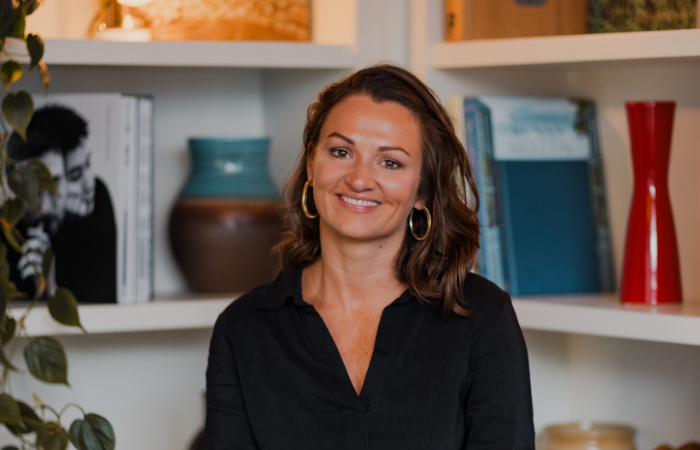
Becky du Feu is the driving force behind Studio du Feu. With over 20 years of experience in the creative industry, she has worked across retail, leisure, hospitality, and commercial sectors both in the UK and internationally, bringing a wealth of knowledge and insight to every project.
At the heart of Becky’s approach is a deep understanding that strong client relationships are key to successful design. By truly connecting with each client and fully embracing their vision, she ensures every project is both meaningful and impactful. This ethos also shapes the culture within Studio du Feu, where Becky fosters a collaborative environment in which every team member feels heard, supported, and aligned.
A passionate traveller, Becky is constantly inspired by the world around her. Whether exploring new destinations or discovering emerging design trends, she returns with fresh ideas, renewed creativity, and, more often than not, a camera roll full of cocktail snapshots.