





Re-Design vs Design Perfection: Pippa Nissen, Director & Co-Founder, Nissen Richards Studio
Welcome to Re-Design vs Design Perfection, a playful new Design Insider series leading creatives to choose one object they’d happily reimagine and another they consider flawlessly designed. Pippa Nissen, Director & Co-Founder, Nissen Richards Studio shares her choices offering a surprising window into who she is as a designer, revealing the quirks, values and subtle sensitivities that shape her creative worldview.
Re-design
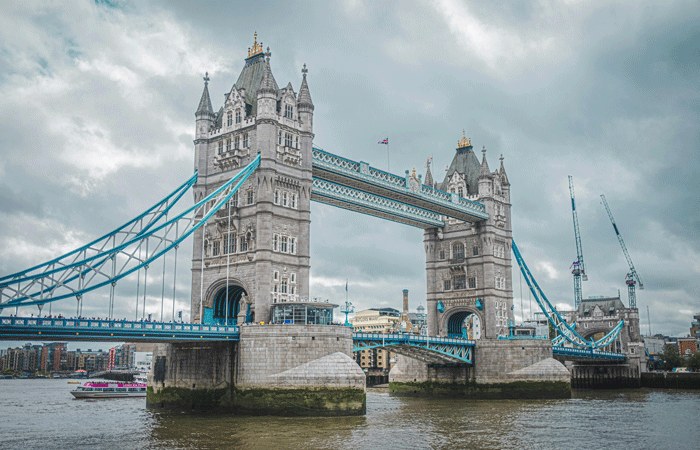
For me, Tower Bridge has always cried out for a redesign.
It is an extraordinarily clumsy piece of architecture, unresolved and over-dressed, caught awkwardly between fantasy and function. It wants to be both a medieval display and an industrial machine, but never fully commits to either. The result is a bridge with odd, heavy proportions, with towers that seem too thick and self-conscious and a high-level walkway stretched between them as trying to force coherence to the whole assemble.
What troubles me most is that the experience matches the appearance. To cross the bridge at street level is to walk slowly along beside all the tourists, full of traffic and noise. To walk along the high walk above feels totally separated and detached from the city rather than connected to the iconic landmark.
Occasionally it looks pretty. Against a spectacular sunset from the Millennium Bridge, it can fall into silhouette and suddenly look almost beautiful. For me, it is also a signal on the horizon telling me I am nearly home to East London.
But it is an embarrassing piece of English design stuck in nostalgia and mimicry, that doesn’t submit to function or elegance. Neither castle nor pure gesture – more like a tea cosy stuck on top of industrial structure.
If I were to redesign it, I would commit fully to one style and go for it. Either unapologetically industrial with elegant lines showing the lines of structure, or completely fantastical, full of carvings and stories.
Design Perfection
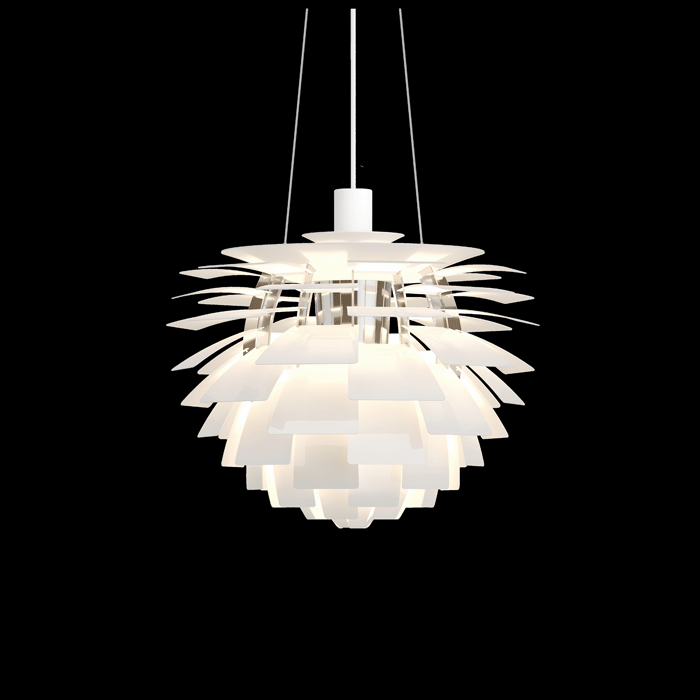
There are objects that simply do their job, and then there are those rare things that seem to float beyond function and become pure poetry. For me, that is the Louis Poulsen lampshade – a family of beautiful designs by Poul Henningsen, including the PH 5 and most of all the Artichoke.
The Artichoke is design perfection because it never seems to be still, even when hanging motionless. It is playful, almost kinetic, like a modern chandelier caught mid-movement. Its layered leaves catch the light in shifting tones of luminosity, as the whole thing glows. Nothing about the design is harsh, with the shades designed to block the bare light bulb inside so nothing glares. It is all about softness, suspension and control. It takes the practical problem of how to light a room beautifully and transforms it into theatre.
I love it not only for its form, but for everything it represents to me. My father was Danish, and, when my children were young, we went to Copenhagen at Christmas every year, always ending up in Tivoli Gardens that are full of playful Danish lamps on every corner. The Ascot Hotel, where we stayed, had eight of these lamps in the lobby and breakfast room. To us as a family they felt magical, almost like floating sculptures that were grand and intimate at the same time. My uncle worked for Louis Poulsen and my cousin has a reproduction of an original drawing of the designs on her wall. It has always felt like more than lighting, it feels personal.
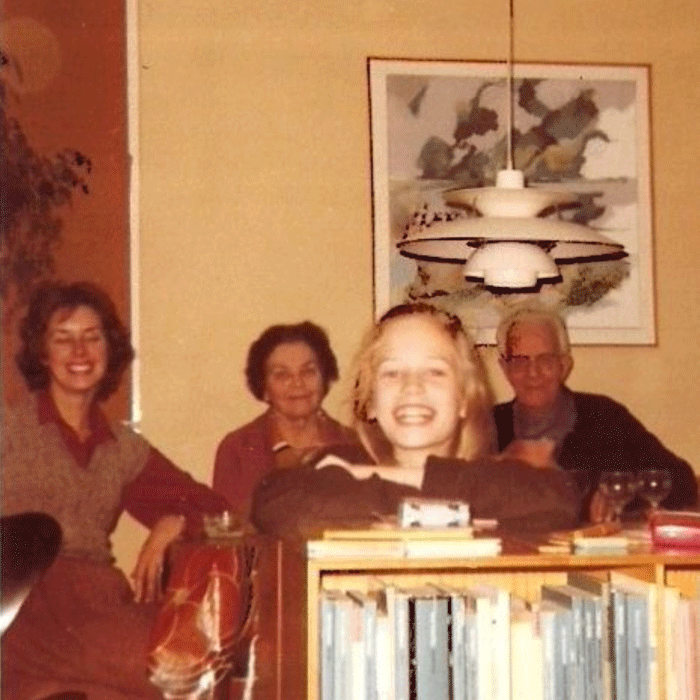
Then there is also the PH 5, which hung above my childhood dining table in Highgate as an iconic 1970s memory. It is calm and clever, a simplified version of its sister the Artichoke. Again it lit everything beautifully while keeping the bulb hidden.
This is design perfection – beauty solving function so completely that it becomes poetry.
Pippa Nissen, Director and Founder, Nissen Richards Studio
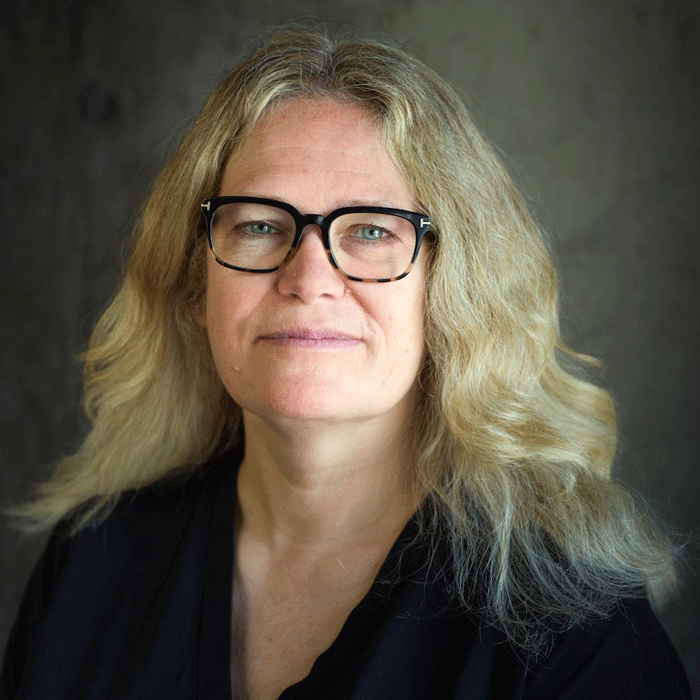
Pippa Nissen is a Director and Founder of Nissen Richards Studio, a London-based practice working globally with over 50 creative awards to its name.
Pippa studied architecture at the University of Cambridge, gaining first class honours, returning to teach as a Design Fellow, and also led a museum design unit at London Metropolitan University. Pippa additionally studied for an MA in Theatre Design at Slade School of Fine Art, graduating with distinction. Her unique fusion of architecture and theatre design and deep understanding of both space and scenography are amongst the many elements that set Nissen Richards Studio apart. In the 16 years since the studio was founded, Pippa has become one of the international museum sector’s most experienced and awarded designers, with projects completed for many of the world’s greatest cultural institutions. These include the refurbishments of the UK’s National Portrait Gallery and The Courtauld Gallery, both of which were shortlisted for The Stirling Prize, with The Courtauld going on to win The People’s Poll Award.
Cultural sector clients include The British Museum, The Natural History Museum, Historic Royal Palaces, The Tate, The British Library, National Trust, The Imperial War Museum, Chatsworth House, the V&A and The Fitzwilliam. International clients include MUNCH, Kode, The National Library of Norway, The National Gallery of Norway, D.A.G, Sarawak Brooke Dockyards Museum and Iceland’s Vatnajökull National Park. The studio has also completed theatre work, under Pippa’s direction, for The Actors Touring Company, Aldeburgh Festival, Albany Theatre, Basel Opera and Teatro Orientación in Mexico.