







Tim Groom Architects Unveil The Bower at Hyll Hotel, Cotswolds – opening 2027
Tim Groom Architects (TGA) has announced its latest project, The Bower at Hyll Hotel, a new purpose-built venue for weddings, gatherings and private dining, set within the 60-acre grounds of the acclaimed Hyll Hotel in the Cotswolds.
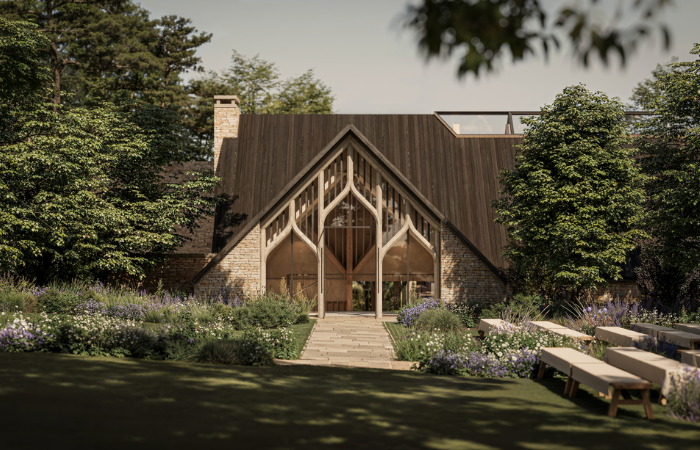
Scheduled to open in early 2027, the building is conceived as a contemporary addition to the landscape, shaped in a careful response to its setting.
Manchester-based practice Tim Groom Architects is recognised for its rigorous, design-led approach and carefully considered buildings. From major urban projects to finely crafted bespoke commissions, the practice is known for architecture shaped by context, material integrity and long-term relevance.
Commissioned by Hyll owners Paul Baker and Sarah Ramsbottom, the brief called for a one-of-a-kind building with a strong sense of atmosphere – an environment that feels both intimate and ceremonial, embedded within the surrounding landscape. The name ‘The Bower,’ an Old English term for a sheltered place in nature, reflects this ambition.
Tim Groom, Director, Tim Groom Architects says:
‘We had extensive conversations with the client about what The Bower should be – what it means and how it should feel. We began with a sense of romanticism, not in a clichéd sense, but something grounded in the landscape itself. The architecture is deliberately simple – timber, stone, proportion – but that simplicity is deceptive. Every element has intent.’
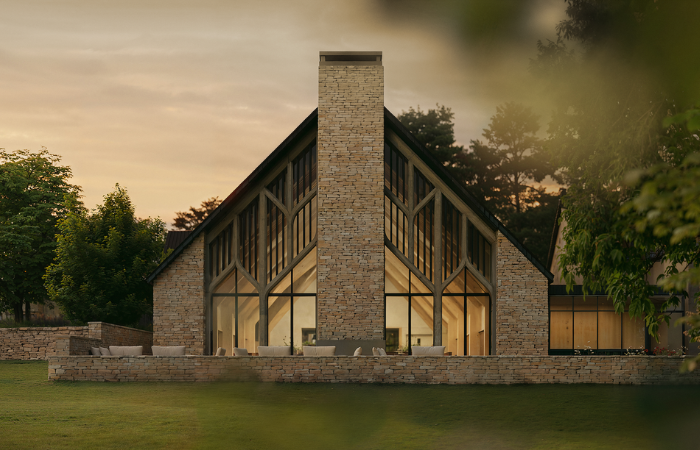
The building draws subtle inspiration from ecclesiastical architecture, not in a literal or religious sense, but in its atmosphere of reverence and ceremony. The main space is calm, with a quiet grandeur that avoids ostentation in favour of composure and clarity.
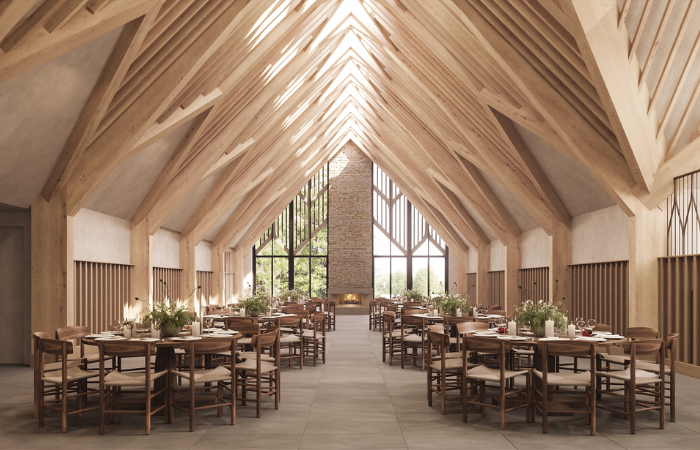
Working within the heritage context of Hyll, TGA has developed a building that exists in dialogue with the existing hotel. Rather than acting as a neutral backdrop, The Bower is designed to create atmosphere through light, material and spatial sequencing.
Openings are carefully framed to capture views of the surrounding landscape, while a series of thresholds, arches and rooflights allow daylight to animate the interior throughout the day and across seasons.
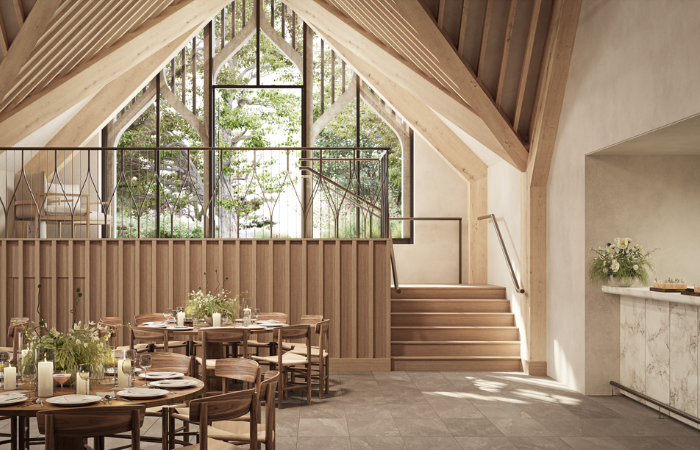
Although designed to accommodate up to 100 guests, the space retains a sense of intimacy. A strong timber frame forms the primary structure, expressed internally with crafted joints and connections. Fluted stone elements articulate window openings, while a central hearth anchors the interior, reinforcing the building’s role as a place of gathering and celebration.
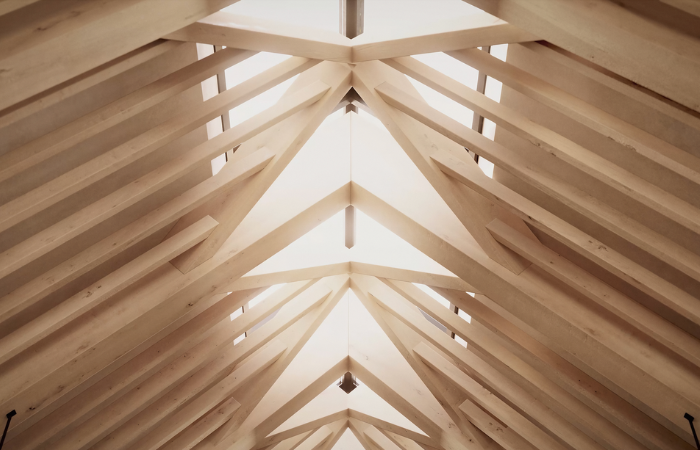
TGA’s material approach is led by context. In the Cotswolds, this translates into a restrained palette of stone and timber – materials chosen for their durability, tactility and ability to age gracefully within the landscape. The result is a building that feels both grounded and enduring, balancing rural familiarity with contemporary precision.
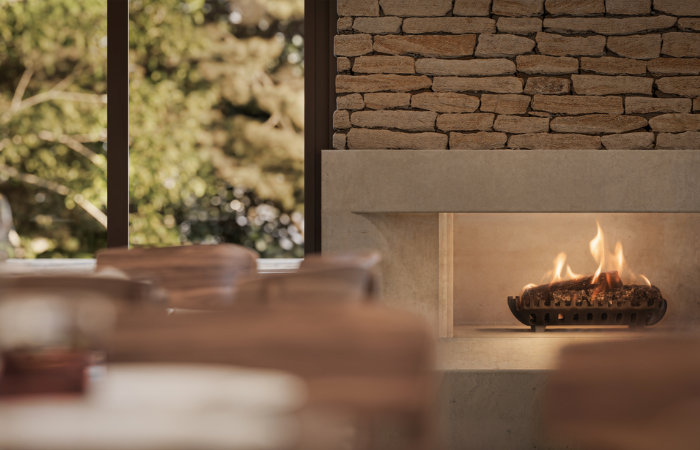
Paul Baker and Sarah Ramsbottom, owners of Hyll Hotel, commented:
‘This was a challenging brief. We asked Tim to create a building with emotional resonance that responded to the landscape rather than competing with it, and he has completely honoured that vision. We wanted guests to feel at one with their surroundings – to feel sheltered by the trees. ‘The Bower’ perfectly captures that sense of quiet refuge in nature.’
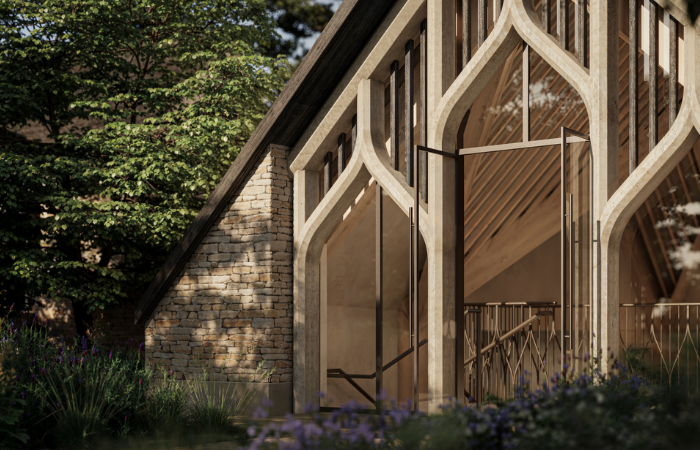
While distinct from the urban projects that often define TGA’s portfolio, The Bower reflects the studio’s core principles: attention to context, integrity of materials and a commitment to clarity and restraint. The project demonstrates how these values can be translated into a rural setting without compromise.
Tim Groom, Director, Tim Groom Architects:
‘This has been one of our most demanding and rewarding projects to date. It required us to think about how atmosphere, material and detail shape the experience of a building. It’s ultimately about creating a sequence of moments: standing at the bar, watching a ceremony unfold, or simply listening to rain on the roof. The architecture is there to frame and support those experiences.’