



Behind the Design of Six Senses London: AvroKO and Heathfield & Co on Crafting Atmosphere
At Six Senses London The Whiteley, decorative lighting played a central role in shaping the atmosphere of the Grade II-listed landmark, balancing heritage, wellness and contemporary luxury across accommodation and public spaces.
For this exclusive Design Insider interview, Patrick Watson, Commercial Director at Heathfield & Co, and Luca Ferraro, Associate & Senior Design Manager at AvroKO, discuss the creative collaboration behind the bespoke lighting scheme for Six Senses The Whiteley. Together, they explore how lighting helped shape the atmosphere of the historic landmark, balancing heritage, wellness and contemporary luxury throughout the hotel.

Patrick Watson
We begin by speaking with Patrick about the development, manufacture and delivery of 27 bespoke lighting designs. We then hear from Luca on the design vision and role of lighting within the wider guest experience.
1. Six Senses London at The Whiteley required 27 entirely bespoke lighting designs across guestrooms, suites and public areas. From Heathfield & Co’s perspective, what made this project such a significant and creatively demanding commission?
Scale alone doesn’t make a project demanding — it’s the depth of thinking required at every level. Here, we were developing 27 entirely original designs, each one needing to work individually and as part of a unified whole across 109 rooms, suites and public spaces. There was no off-the-shelf solution for any of it. Every fitting had to earn its place architecturally, atmospherically and technically. For our team, that kind of creative responsibility across a project of this size is where we do our best work. It stretched us in the best possible way.
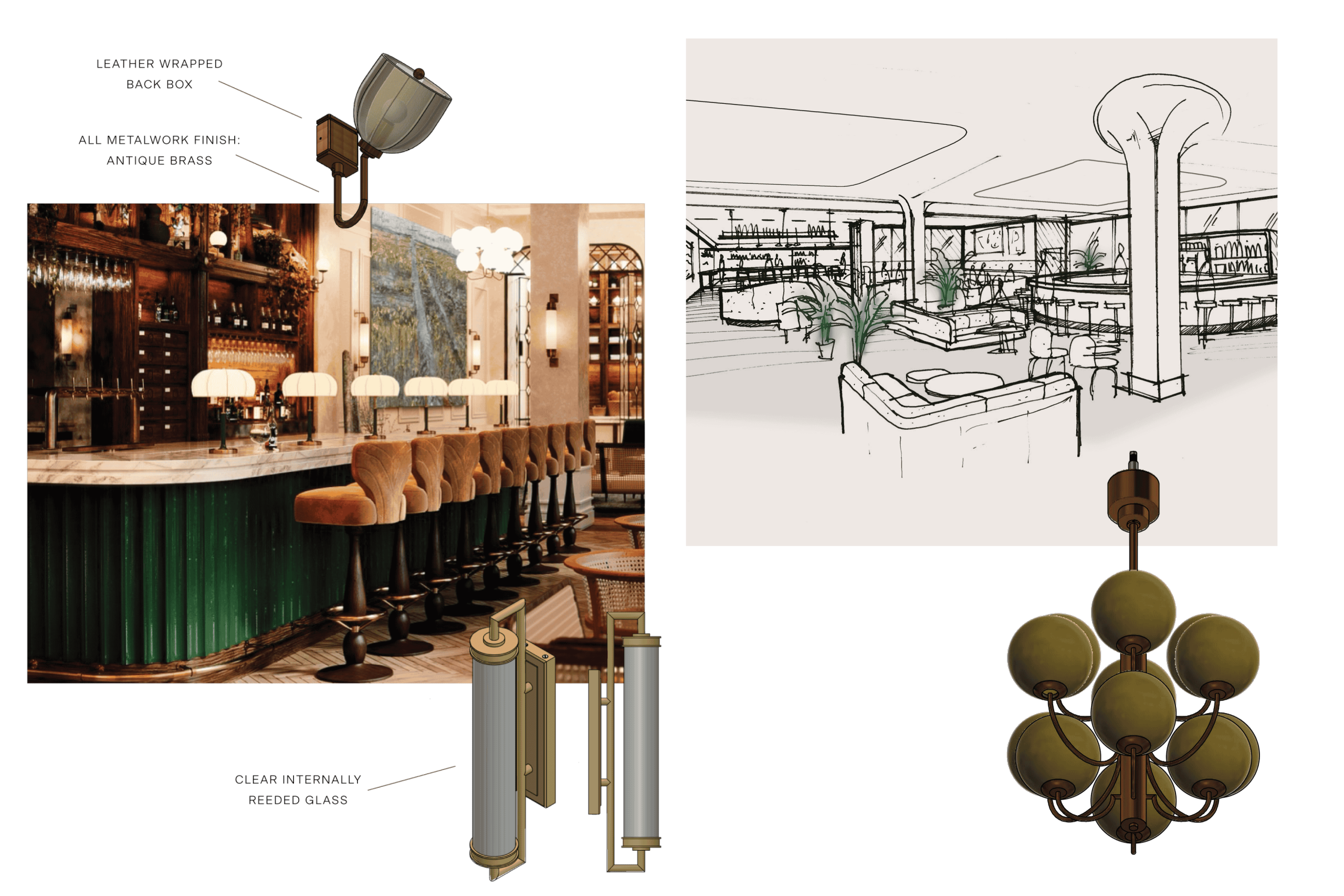
2. The lighting needed to support a Grade II-listed Art Deco building while also contributing to a contemporary, wellness-led guest experience. How did Heathfield & Co approach that balance between heritage, technical performance and atmosphere?
AvroKO’s instinct was to ground the design in the building’s inherent Art Deco and post-Victorian proportions, and we followed that lead. For us, that translated into fittings with warmth and weight to them — forms that felt considered and enduring rather than trend-led, and finishes chosen to sit comfortably alongside the tactile, organic materials AvroKO were specifying throughout. Practically, it also meant integrating modern, energy-efficient lighting engines in a way that was entirely invisible — no exposed wiring, no compromised plasterwork, nothing that jarred against the architecture. The wellness element added another layer: every fitting was specified to contribute to a consistent colour temperature throughout the property, supporting guests’ circadian rhythms without them ever being aware of the thinking behind it. The craft is in making all of that feel effortless.
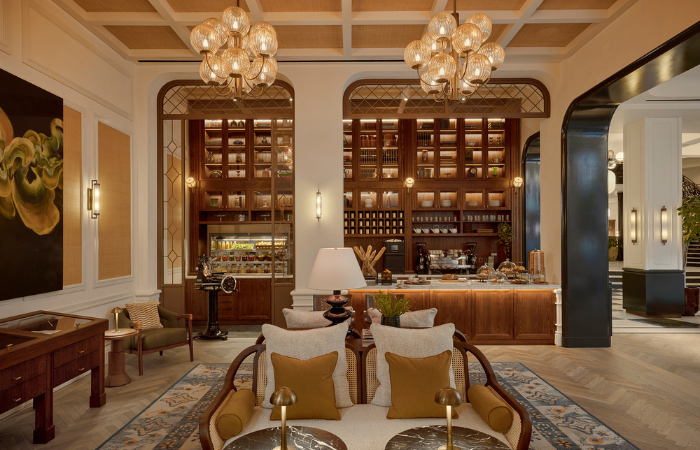
3. Can you talk us through the bespoke design process, from the earliest conversations with AvroKO and Blue Moon Procurement through to sampling, refinement, manufacture and final quality control in your Kent workshop?
The process on a project like this is genuinely interactive — it doesn’t move in a straight line. The early conversations with AvroKO were very much about understanding the intent behind each space: what they wanted a guest to feel, not just see. From there, our team designed the products, and then a real back-and-forth began — drawings, physical samples, revisions. What looks right on paper can behave very differently in a finished room, so the sampling stage is where a huge amount of the critical thinking happens. Once we moved into production, everything was assembled and quality-controlled at our workshop in Kent. That step is non-negotiable for us on hospitality projects of this complexity — it’s how we maintain the level of craft while still delivering at the scale and timeline the project requires.
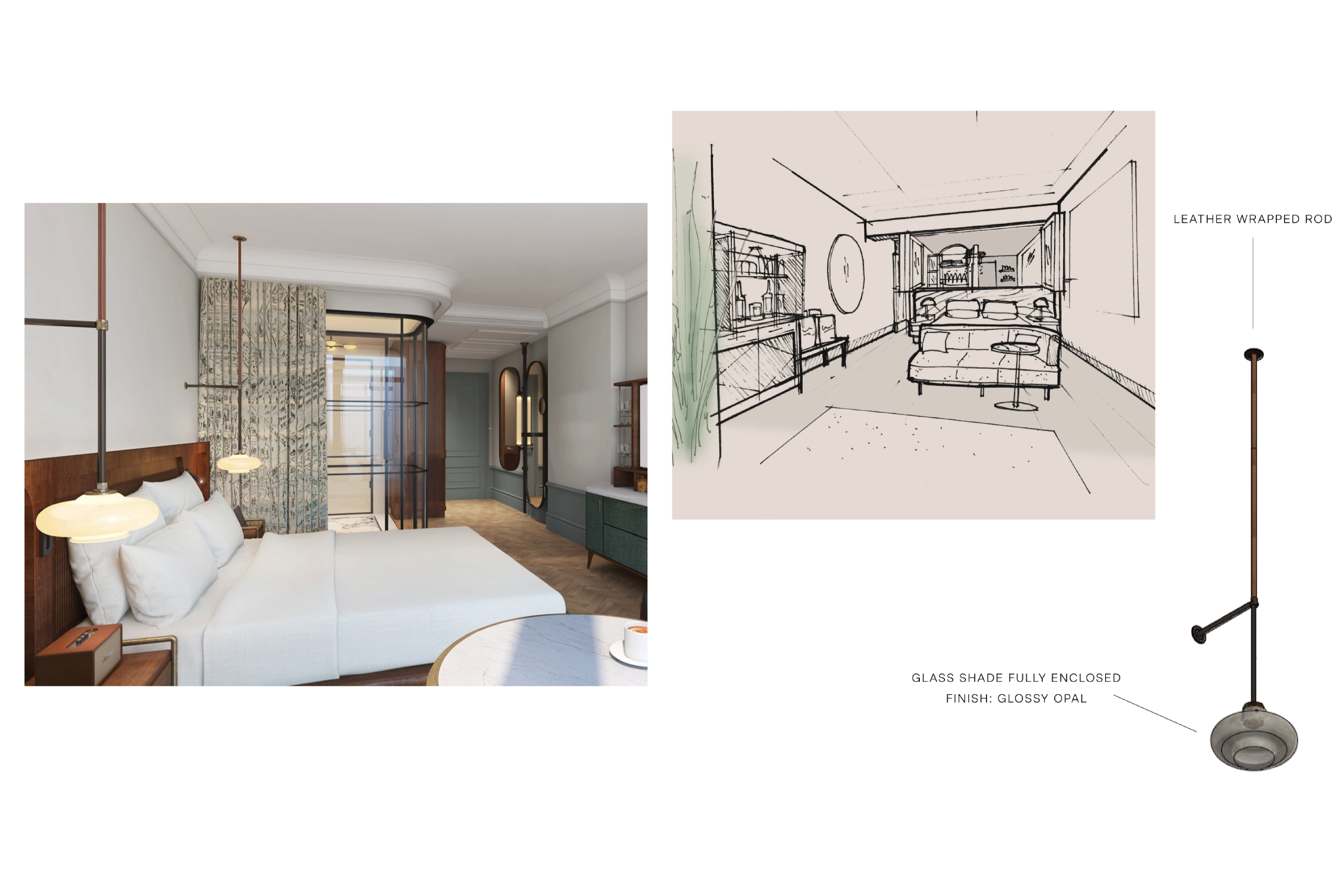
4. Decorative lighting often needs to feel effortless to the guest, even when the design and engineering behind it are highly complex. What were some of the details, decisions or technical challenges that helped achieve that sense of calm refinement across the property?
One of the most significant decisions was around cohesion. Rather than using different light qualities to differentiate spaces, AvroKO held a consistent colour temperature across the entire property and let the nature of each fitting — its form, its scale, its placement — do the atmospheric work instead. That’s a more demanding brief for a lighting manufacturer, because every design has to carry its own weight. We also developed IP44-rated fittings for the bathrooms that needed to meet rigorous safety standards without losing the warmth and refinement of the wider scheme. And throughout, we were working in a protected building — every installation decision had to be made with the fabric of the architecture in mind. The guest shouldn’t see any of that thinking. But it’s all there.
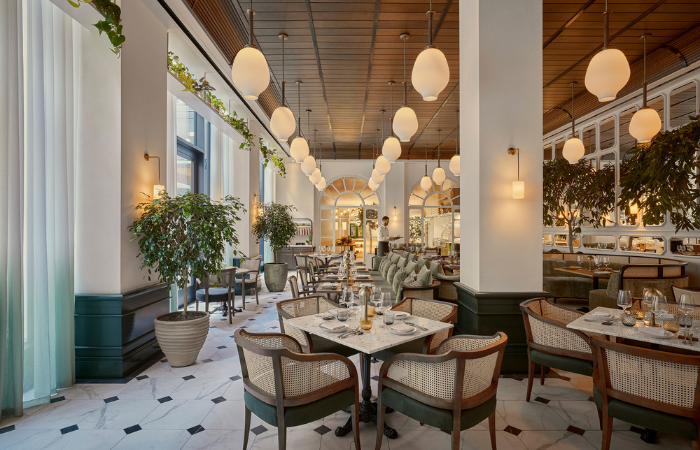
5. Where was the greatest joy for Heathfield & Co within this project — whether in the collaboration with AvroKO, the making process, the scale of the commission, or seeing the lighting become part of the completed Six Senses London experience?
Honestly, it was the collaboration. AvroKO brought an extraordinary level of rigour and intention to every decision, and working with a team like that raises the standard of your own thinking. There’s a real satisfaction in a partnership where the other party genuinely cares about the details. Seeing the completed scheme is always the moment it comes together, of course. But the work that happens in between — the iteration, the problem-solving, the refinement — that’s where the real craft lives.

Luca Ferraro
1. What was the overriding design concept for the project, and what role did lighting play in shaping that vision?
The concept is rooted in the legacy of William Whiteley and the spirit of the Great Exhibition of 1851 — an event that took place in Hyde Park, just moments from the hotel. Whiteley’s ambition to bring the world’s finest goods and cultures under one roof became our organizing principle, reinterpreted through a contemporary lens. Lighting was central to that from the very beginning — not as a finishing layer but as a material in its own right, one that gives the building its emotional range and allows the atmosphere to shift meaningfully throughout the day.
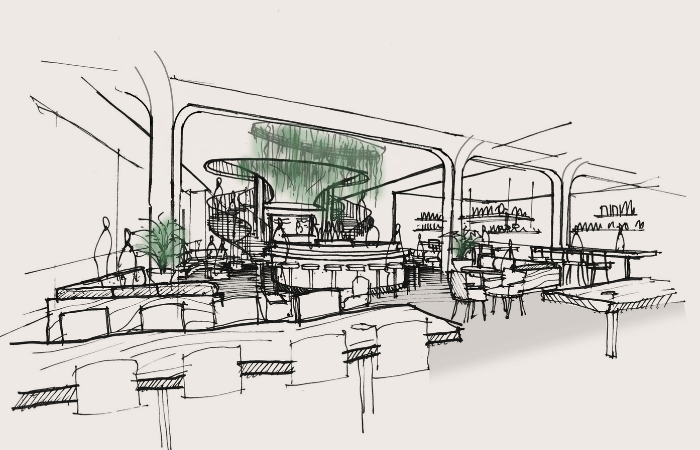
2. How did that idea influence the way decorative fixtures were planned, positioned and developed across the guestrooms, suites and public spaces?
The intention was always to let the decorative fixtures carry the space rather than relying on architectural lighting to do that work. It’s a more demanding approach — every fixture has to earn its place both aesthetically and technically — but the result is something that feels genuinely warm and considered rather than lit. In the evenings especially, the ambient glow from the chandeliers and wall lights creates a quality of light that’s closer to candlelight than contemporary hospitality. That sense of romance is something modern architecture tends to design out. We wanted to design it back in.
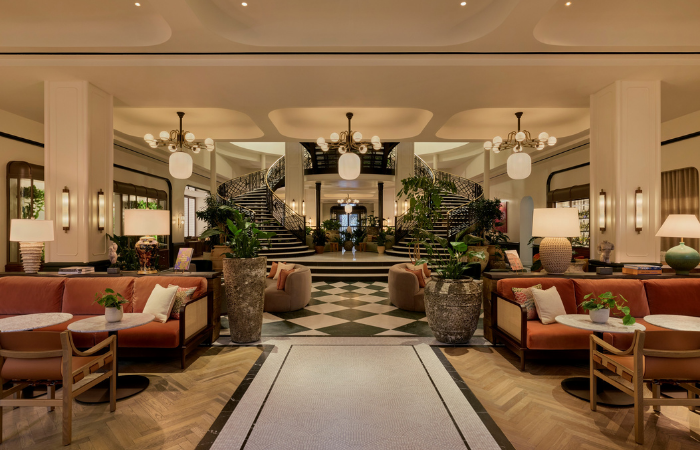
3. What qualities were you looking for in supplier partners, and what made Heathfield & Co the right collaborator?
Collaboration is a quality that we value highly. And while it sounds simple, it’s actually quite rare at this level. What it really means in practice is honest communication — being able to have direct conversations about what’s working and what isn’t with the shared goal of a successful outcome in every aspect of the design. With Heathfield & Co, there was a shared understanding from early on that the aesthetic and technical demands of a building of this caliber (and therefore, sensitivity) required genuine flexibility from both sides. That mutual willingness to problem-solve rather than just deliver is what made the partnership work.
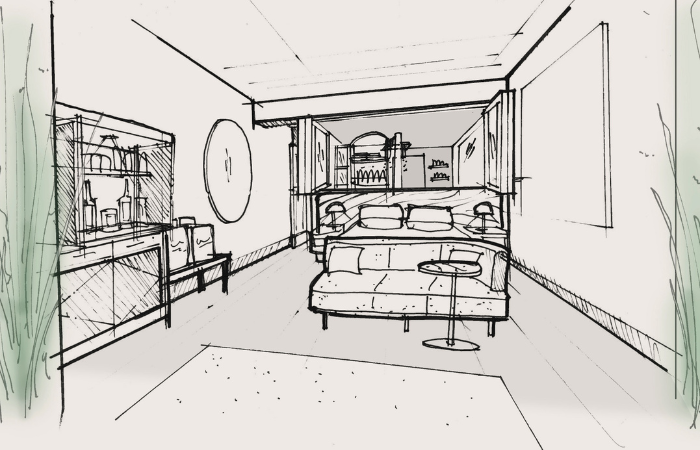
4. How did the relationship evolve through the five-year development process?
It deepened naturally over time, which is what you hope for on a project of this length and complexity. The early stages were about establishing trust and aligning on intent — understanding not just what we wanted the fixtures to look like but what we needed them to do within a protected historic building. As we moved into sampling and technical development, the conversations became more granular and more candid. It would be a lie to say that everything was easy – issues always crop up on a project of this scale. But the measure of a good partnership is how you navigate those moments, and together we chose to focus on finding solutions.
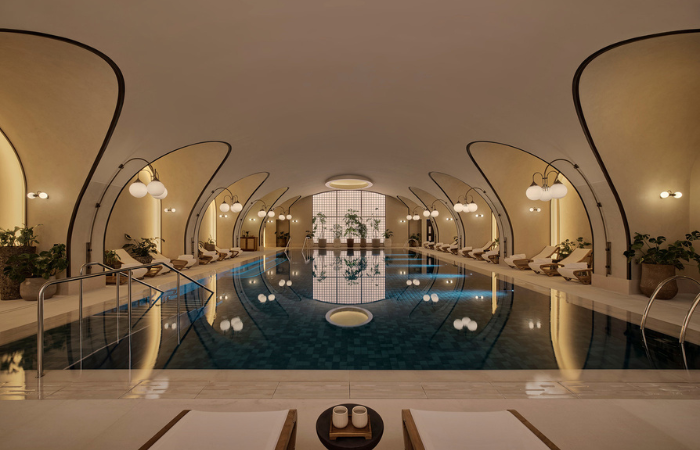
5. How do you hope people will experience the lighting transition from day to evening, and where is the quiet joy of the scheme most strongly felt?
The best outcome is that guests don’t consciously register the transition at all — they simply find themselves in a different mood as the evening arrives. The shift is gradual and intuitive, following the natural movement of daylight rather than imposing itself on it. In particular, the ground floor lobby in the early evening is where the scheme reveals itself most beautifully. Sitting facing the heritage staircase, you can take in the open kitchen, sweep across the bar, and come back to the stair — all of it bathed in the warm, candle-like glow of the chandeliers and wall lights. The interplay of light and shadow across the interior architecture and landscaping at that hour is genuinely something to linger over.
This conversation offers a glimpse behind the scenes of a project where lighting was treated not as an accessory, but as a fundamental part of the guest experience. The result is a scheme that balances heritage, craftsmanship and contemporary luxury, revealing the depth of thought behind every detail.
Design Insider would like to extend its thanks to Patrick Watson and Luca Ferraro for sharing the story behind the project and their perspectives on the collaboration that brought it to life.
Photography: Martin Morrell
Find Heathfield & Co on Supplier Finder
Supplier Finder is the UK’s only search platform for accredited suppliers of commercial interior furnishings.
At Supplier Finder, our mission is simple: to help you find the perfect commercial furnishing suppliers for your interior schemes and projects. We understand the importance of having confidence in the suppliers you specify and the products that bring your designs to life. That’s why each supplier featured on our platform is accredited through Commercial Interiors UK’s rigorous membership application process. This ensures that you engage with only the best in the industry!