


Giving Waste a New Life: A Conversation with Designer Clara Chu
Somewhere in a factory bin is a scrap of leather nobody wanted. In six months, it might be on someone’s shoulder in London; structured, colourful, and worn as luxury. That is not a metaphor. That is Clara Chu’s business model.
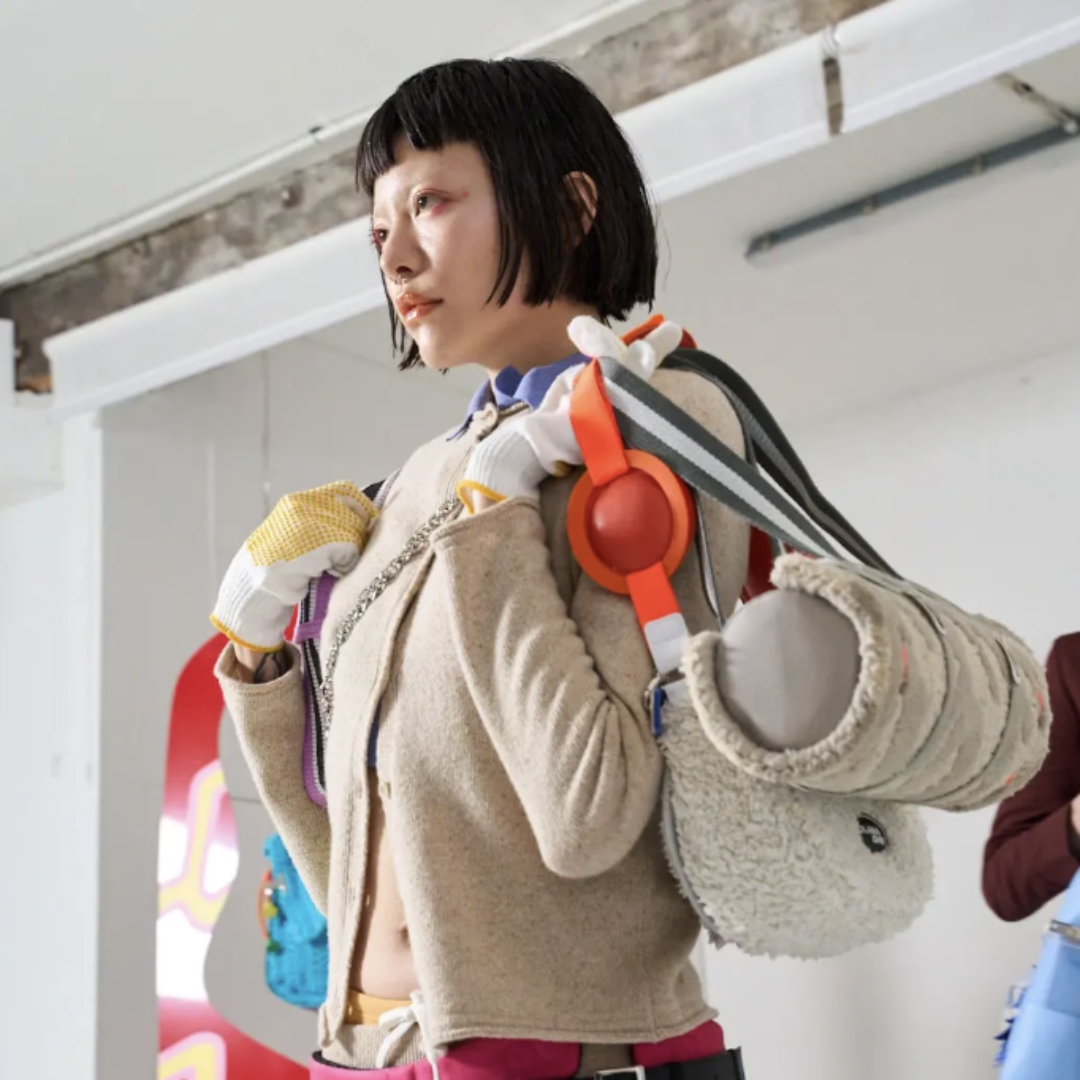
Born and raised in Hong Kong and now based in London, Clara has built her career on a simple rule: she refuses to design with anything new. Instead of starting with a pencil and paper, she lets the physical materials guide her creativity. By prioritising reuse, working in small batches, and tracking the origin of every single component, her strictly “circular” approach ensures her vibrant creations are genuinely upcycled from start to finish.
At Ocee & Four Design, they wanted to put her brilliant mind to the test with offcuts of their own.

Offcuts, in Ocee & Four’s case: high-quality upholstery leather and fabric too small or irregular for the furniture, but far too good to throw away. Rather than let them pile up, the company gave them to the one designer they knew wouldn’t just use them, but understand them. Today, those very same offcuts have walked the runway at London Fashion Week.
Together, they are proving that the furniture and fashion industries can join forces to rewrite the rules of what is throw away. Ocee & Four Design sat down with Clara to discuss the new collaboration, her creative journey, and how we can all start looking at leftover materials a little differently.
1. How did this collaboration first come about, and what was your initial reaction when offered the upholstery offcuts?
For the past couple of years, I have been running workshops with organisations like Somerset House and different youth centres to teach people how to use waste. It started when one of the Ocee & Four Account managers reached out to me.
Later, I was on a Gen Z panel talk where I met Ellie (Gough), Key Account Manager at Ocee & Four Design, and we talked about the huge amount of waste in the interiors industry. When they offered me upholstery offcuts, I was so excited to experiment!
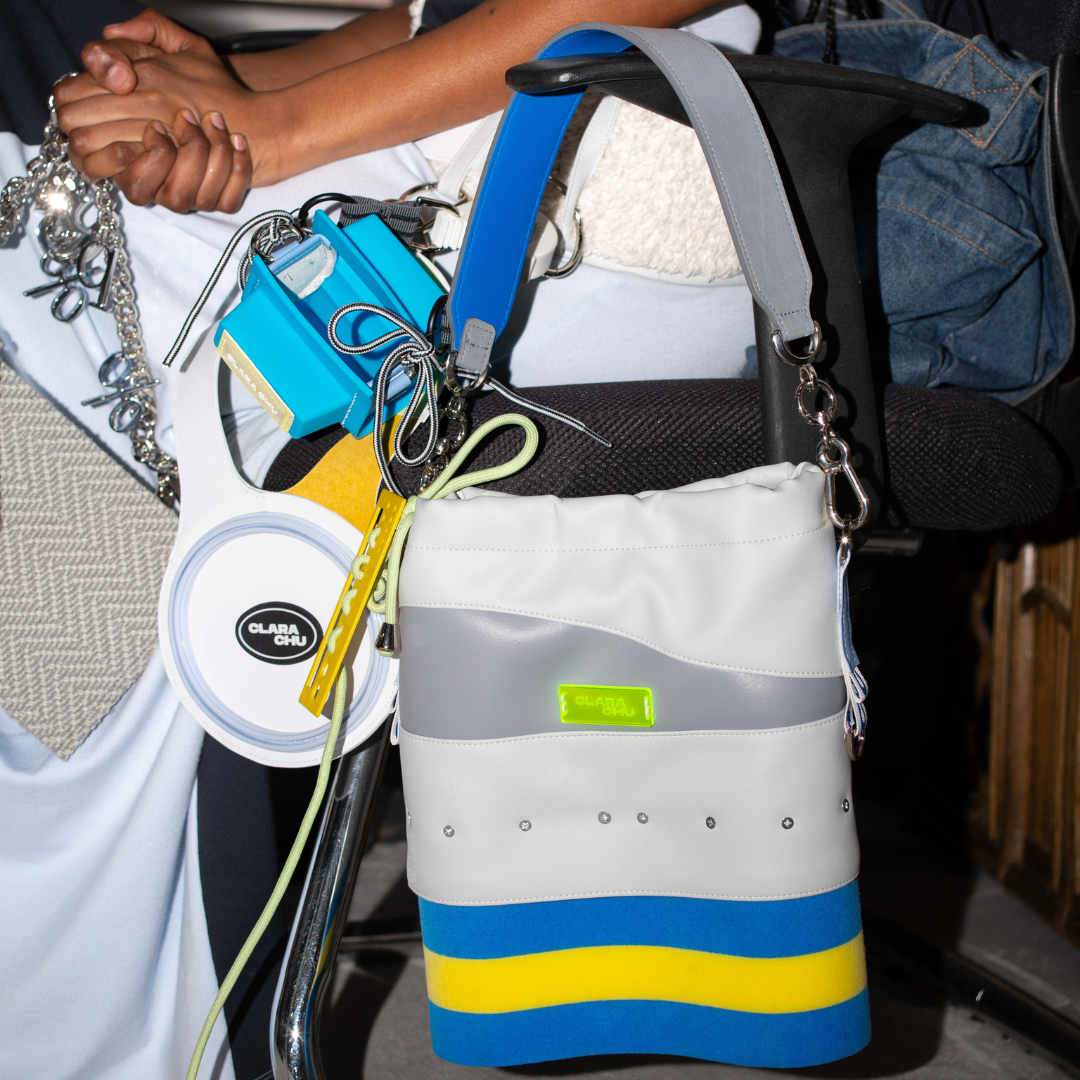
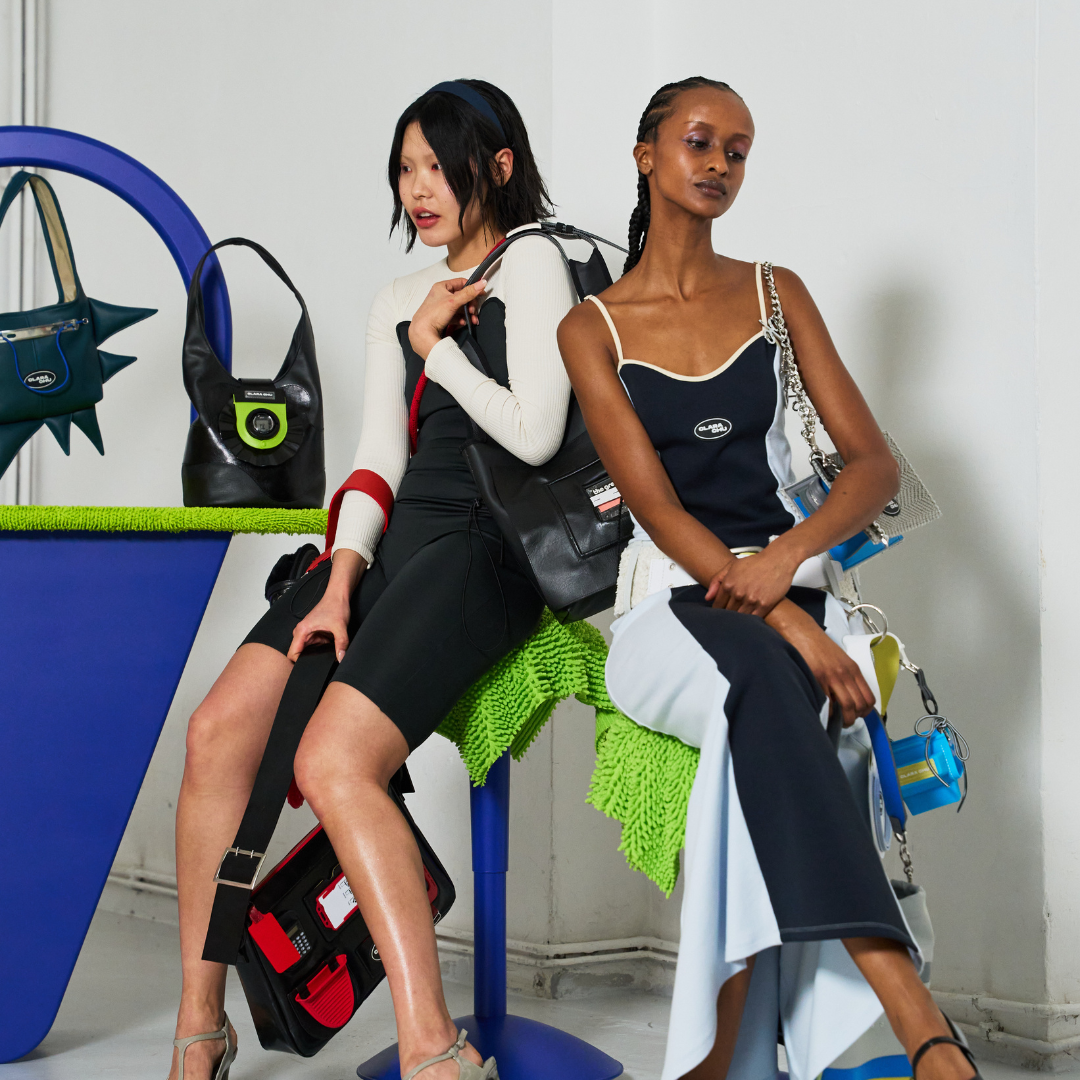
The first product we created is a bag made from leftover faux leather. We actually showed it at London Fashion Week in February, which was amazing. It really opened up our eyes to what is possible.
2. You grew up in Hong Kong and trained in London; two cities with very different cultures around buying and wasting things. How did this shape the way you see value in discarded objects?
Growing up in Hong Kong, I loved walking through the local markets and tight alleyways. You would see giant stacks of plastic chairs sitting right next to massive financial skyscrapers. It is a very compact city where the old and the new mix constantly.
This taught me to design in response to whatever materials are right in front of me. I love clashing unexpected materials together, like pairing cheap plastic with your premium faux leather offcuts. The high-quality furniture leather actually elevates the cheap plastic. It is all about having the mindset that you can make something cheap look premium by how you pair it.
3. You have said before that ‘material stops being waste the moment we see value in it.’ How can the furniture and interiors industry rethink its leftovers in practice?
It is about being responsible for what we create, no matter what industry we are in. We need to keep track of our supply chains. We need to ask: Where do our materials actually end up, and what happens to them next?
When you design something, you must understand the whole process. Too often, people forget about the very beginning and the very end of a product’s life. Keeping track of the ‘afterlife’ of materials is how we make a real change.
4. Furniture designers care deeply about how a material feels and performs, like ergonomics and durability. Do these functional qualities affect how you choose offcuts, or does the look come first?
The function and durability definitely come first. To make a truly sustainable product, it has to last. The aesthetic gets sandwiched in the middle of that process.
We want to extend the lifespan of these beautiful fabrics. But if the final bag isn’t durable and useful, people won’t use it, and then it has no purpose. Design must be intentional.
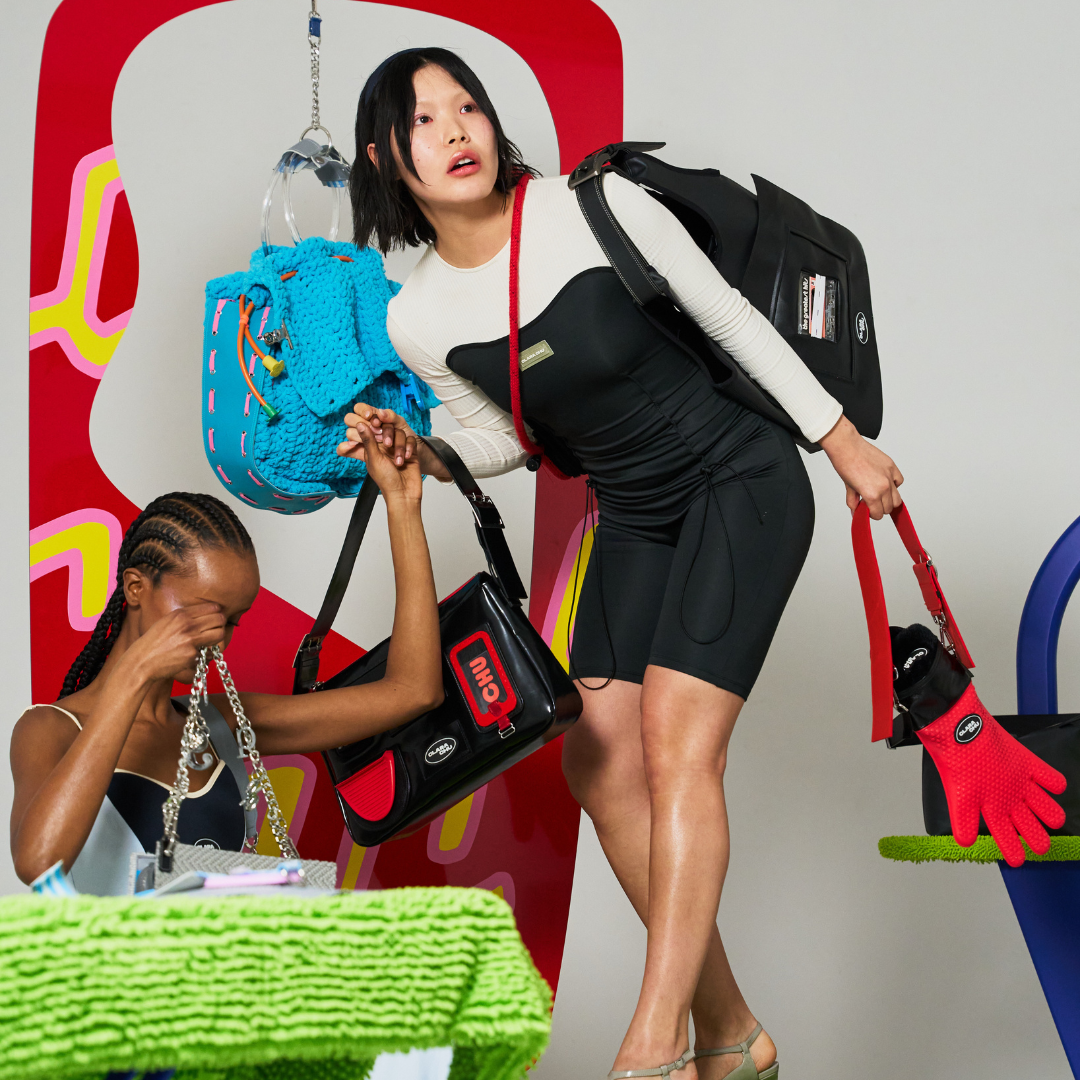
For example, my favourite piece from this project is a brown bag. It has a very classic, commercial shape, but we added elastic bands across it so you can slide hair clips inside. It is simple, functional, and represents exactly where I am as a designer right now. We also made a buckle bag pairing your textiles with an old USB cable and a silver binder. Design is about responding to the physical items in front of you.
5. You often pair materials in very structured, contrasting ways. Is this architectural style intentional?
It isn’t fully intentional, but I have always been deeply inspired by film props and interior spaces. Honestly, I often feel more like a product designer than a fashion designer. The architectural feel comes from wanting to make a solid, well-built product and figuring out how to assemble the pieces together so they last.
6. Do you find that designers from other fields, like furniture or architecture, understand your upcycled work differently than fashion people?
Yes, absolutely. People with backgrounds in architecture or product design understand how to put structural pieces together. They appreciate the tests I run to make sure plastic and leather hold together strongly.
I have always wanted to create a line that sits within the interior design world. I don’t just see my designs on bodies; I see the bigger picture. I want these products to be highly accessible and serve a real function in daily life, not just be viewed as handbags.
7. With upcycled materials, there is no set template or instruction book. How do you know when a piece is finally finished?
It is really hard! With upcycling, you can always keep adding more. For me, the process is very intuitive. I like that my feelings about a piece can change from day to day. Sometimes, you just look at it and know it is right, and other times you know it still needs work.
8. What does longevity mean to you? Is the dream for your pieces to last 20 years and be passed down?
Yes, definitely. Today, we are so much more aware of the environmental impact of fashion. When I started upcycling about seven years ago, nobody was really talking about it. Now, it is huge, and universities are actually teaching sustainability.
Buying second-hand and taking care of what we have is the future. Longevity is everything.
9. To wrap up, what is your dream future collaboration?
I would love to work with everyday household brands that people use every single day. Working with a toy company like Lego, or a home giant like Ikea, would be my absolute dream!
Designing a Better Future Together
This collaboration with Clara Chu is more than just a creative exercise. It is a real-world test of how Ocee & Four Design can close the loop on manufacturing waste. By sharing the offcuts, the company are keeping premium materials out of landfills and giving them a second, beautiful life, even on the fashion runway.
A huge thank you to Clara for sharing her vision with us.
Find Ocee & Four Design on Supplier Finder
Supplier Finder is the UK’s only search platform for accredited suppliers of commercial interior furnishings.
At Supplier Finder, our mission is simple: to help you find the perfect commercial furnishing suppliers for your interior schemes and projects. We understand the importance of having confidence in the suppliers you specify and the products that bring your designs to life. That’s why each supplier featured on our platform is accredited through Commercial Interiors UK’s rigorous membership application process. This ensures that you engage with only the best in the industry!