







Designing for Dignity: The Role of Flooring in Dementia and Mental Health Environments
Care Matters is an editorial series exploring thought-provoking and knowledge-led perspectives on care environments and later living design. Through expert insight and experience-led commentary, the series shines a light on the ideas helping to shape more supportive, inclusive and person-centred spaces.
In this latest edition, Catherine Helliker, Marketing Manager at danfloor, shares her perspective on the often-overlooked role flooring can play in therapeutic interiors, exploring how materials, acoustics and sensory design contribute to environments that promote comfort, wellbeing and dignity.
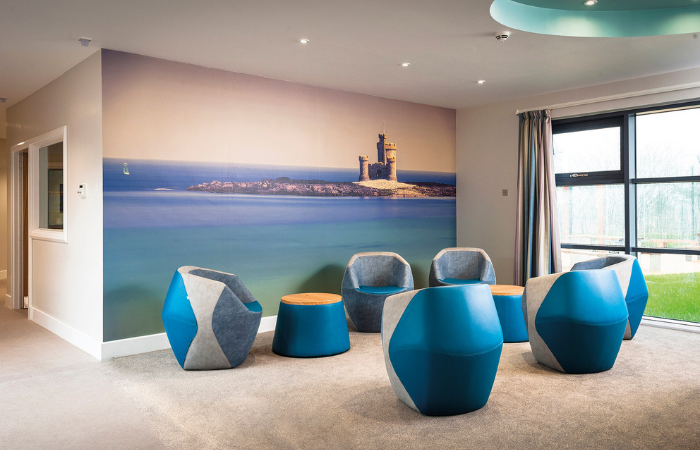
Manannan Court Equinox Tones
Having worked within the commercial flooring industry for many years at Danfloor, I’ve had the opportunity to work closely alongside interior designers, architects, healthcare providers, and specifiers on projects across a number of sectors including mental health, healthcare, and dementia care environments. One thing that has become increasingly clear through those conversations and projects is just how much interior environments can influence the way people feel and experience a space which can ultimately effect how they behave and communicate with others.
Good design is about far more than aesthetics alone. The atmosphere of a room is shaped by many elements including light, acoustics, colour, texture, layout, and material selection, all of which contribute to the sensory experience of an interior.
When environments are overly loud, visually overstimulating, harshly lit, or lacking in comfort, they can negatively affect wellbeing, particularly within settings where individuals may already be more sensitive to their surroundings.
Through working with designers and care providers, I’ve seen a growing focus on creating spaces that feel calmer, safer, and more supportive for the people using them every day. In therapeutic environments especially, understanding how people interact with a space is essential to creating interiors that support dignity, comfort, wellbeing and recovery.
The Importance of Acoustics in Therapeutic Interiors
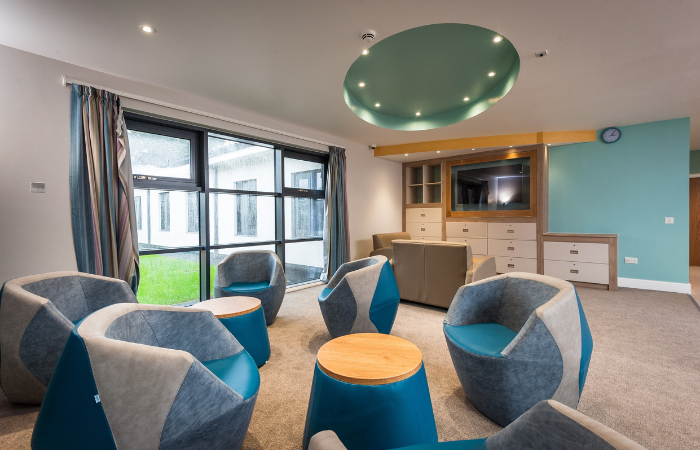
Manannan Court
One area that can be underestimated within residential care and mental health design is acoustics. Yet sound can have a significant impact on how people experience an environment.
In mental health and dementia care settings particularly, excessive noise and poor sound management can contribute to stress, confusion, exhaustion, and agitation, while also reducing privacy and dignity. Many residents or service users are already highly sensitive to environmental stimulation, making acoustic control an important consideration within therapeutic interiors.
From discussions with both designers and healthcare teams, it’s clear that quieter, more balanced environments can positively influence comfort, communication, concentration, and overall wellbeing for residents, patients, visitors, and staff alike.
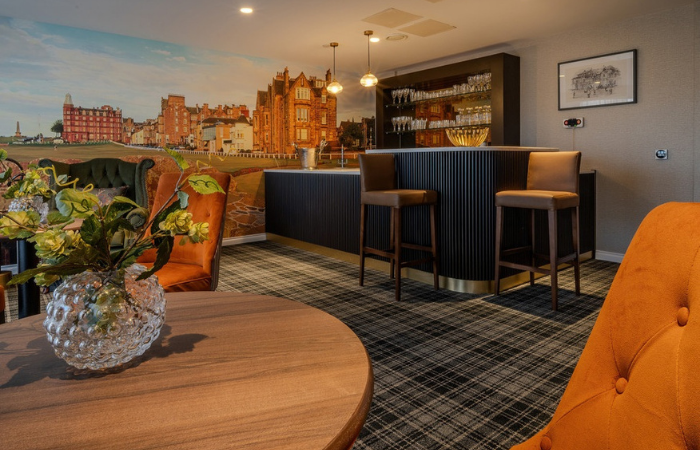
MORAR – St Andrews
Flooring can play an important role within this. Carpet helps absorb airborne sound and reduce reverberation, creating quieter and more comfortable interiors. It also reduces impact noise from footsteps, wheeled traffic, televisions and radios, helping communal and circulation spaces feel calmer and less disruptive throughout the day.
It’s often the smaller design decisions that have the biggest overall impact on making an environment feel more comfortable and less clinical.
Flooring as a Behavioural and Emotional Design Tool
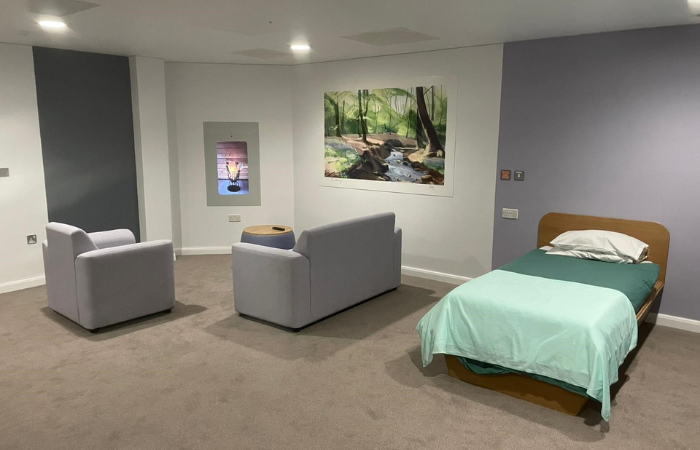
Sheffield NHS Trust
Over the years, I’ve come to appreciate that flooring should not simply be viewed as just a practical surface, but as an important part of the overall emotional and sensory experience of a space.
Materials such as carpets and other soft finishes can significantly influence how an environment feels, particularly within mental health facilities and dementia care settings where comfort, familiarity, and reassurance are especially important.
At home, most of us naturally associate softer textures and warm surfaces with comfort and security. Whether it’s stepping onto carpet first thing in the morning or relaxing within cozy and familiar surroundings, these details help spaces feel calmer and more welcoming.
Within therapeutic environments, those same principles become even more important. Individuals within secure mental health facilities or long-term care settings may spend extended periods away from home, often within environments that can feel clinical or institutional. Introducing softer, more domestic finishes can help spaces feel less intimidating and more supportive of wellbeing.

OSJ Diana Celella
Ian Callaghan, Lived Experience Programme Manager for Rethink Mental Illness and a former service user himself, expressed this powerfully when he said:
“Some carpeting would enormously improve an otherwise ‘cold’ environment. People like myself in secure units are there for often many years, and home comforts are few and far between. A carpet could therefore make a real difference.”
That perspective reinforces something many designers and specifiers are increasingly recognising, materials can have a genuine emotional impact on the people using a space.
Within dementia care settings particularly, carpets can contribute to a greater sense of familiarity and comfort while helping create warmer, more domestic interiors. Softer surfaces underfoot may also help individuals feel more confident moving through a space, reducing some of the harsher and more institutional characteristics sometimes associated with healthcare environments.
Balancing Performance with Comfort
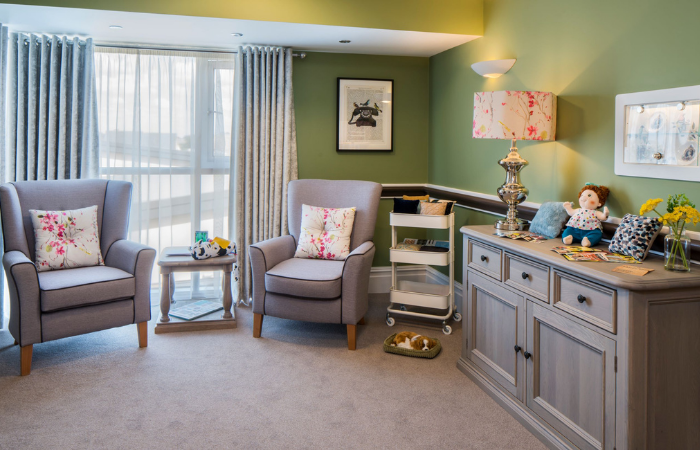
Upton Mill Care Home Interiors Victoria Gibbs
Of course, creating therapeutic interiors also involves balancing comfort with the demanding safety, hygiene, maintenance, and performance requirements expected within healthcare and mental health settings.
Through working alongside specifiers and facility operators, I understand the importance of specifying flooring products that are engineered to perform in demanding environments while still contributing positively to the atmosphere and safety of the space.
Features such as stain-resistant fibres, permanent antimicrobial treatments, impervious membranes, and robust wear warranties can provide reassurance that flooring will continue to perform over the long term while supporting infection control and cleaning requirements.
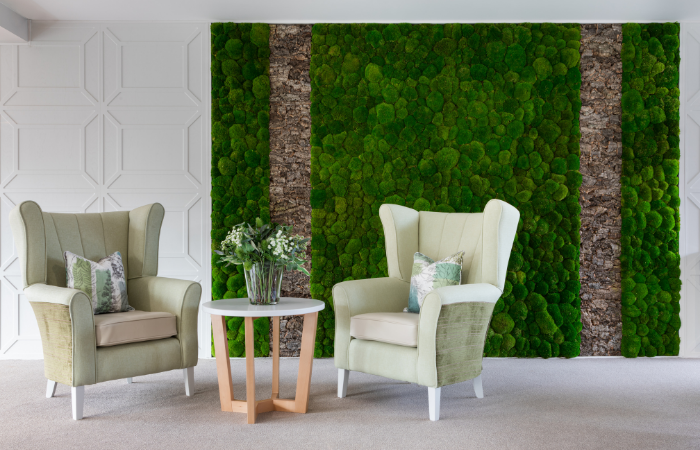
JRHT York- Diana Celella Tones Mushroom
At Danfloor, this balance sits at the heart of our product development. Our collections are designed to combine the durability and technical performance required within healthcare and mental health environments with the comfort, acoustic benefits, and aesthetic qualities needed to help create more therapeutic and supportive interiors.
Because ultimately, every material choice contributes to how people experience a space and flooring is at the foundation of any interior environment.
Find danfloor uk on Supplier Finder
Supplier Finder is the UK’s only search platform for accredited suppliers of commercial interior furnishings.
At Supplier Finder, our mission is simple: to help you find the perfect commercial furnishing suppliers for your interior schemes and projects. We understand the importance of having confidence in the suppliers you specify and the products that bring your designs to life. That’s why each supplier featured on our platform is accredited through Commercial Interiors UK’s rigorous membership application process. This ensures that you engage with only the best in the industry!