



Designing for Experience at Sea: Beyond Luxury
At Design Insider, we amplify the expertise of designers, suppliers and operators working across the global commercial interiors sector, including the fast-evolving world of cruise. Through interviews, project features and industry conversations, we explore how design is shaping the future of spaces at sea, from guest experience and material innovation to sustainability and operational complexity.
The perspectives shared here reflect input from leading cruise brands, designers and collaborators, offering a joined-up view of how thinking across the sector is evolving.
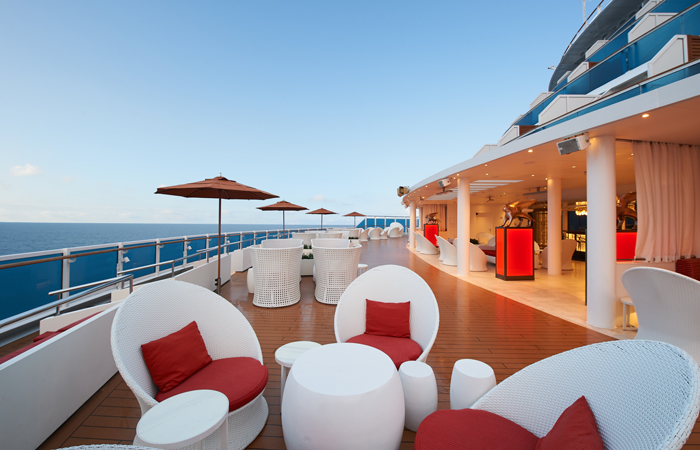
Carnival Cruise Line, Venezia, Carnevale Bar
Cruise design is no longer defined by luxury alone. While opulence once dominated the conversation, the focus has shifted towards experience, inclusivity and emotional connection. This change reflects both evolving guest expectations and a broader rethink of how spaces at sea should function.
The audience itself is changing too. Operators are seeing increased demand from multi generational groups, younger travellers and first time cruisers, each bringing different expectations of how a space should feel. As Lisa McCabe of Carnival Cruise Line notes, guests now expect a full range of experiences, from casual dining to formal settings, all within the same ship.
Designing for that range requires careful balance. Ships must accommodate energy and calm, social spaces and moments of retreat. Carnival’s approach highlights this clearly. While public areas are lively and active, cabins are designed to feel calm and restorative. That contrast is not incidental, it is essential to the overall experience.
This thinking also extends to inclusivity. Carnival’s certification as a sensory inclusive cruise line marks a meaningful step forward. From sensory kits to trained staff, the focus is on creating environments that genuinely support a wider range of needs. Accessibility is no longer treated as an add on, it is considered from the outset.
A similar shift can be seen in the growing emphasis on human centred design. On Mein Schiff Relax, detailed guest profiles shaped both aesthetic and functional decisions. These personas are grounded in real behaviours and preferences, helping to ensure that spaces feel intuitive and relevant rather than generic.
Within The Ritz Carlton Yacht Collection, the emphasis is on how guests interact with a space over time. “You’re designing for someone who is going to interact with the space every day,” says Alejandra Obregón. That longer relationship changes the design approach. Comfort and emotional connection become just as important as visual impact.
In this context, luxury itself is being redefined. Rather than relying on grand gestures, projects such as Mein Schiff Relax point towards a more restrained expression. Natural materials, subtle detailing and a focus on atmosphere create spaces that feel considered rather than showy. The effect is quieter, but no less powerful.
At the same time, sustainability is becoming a more visible part of the conversation. As My Nguyen of Holland America Line and Seabourn explains, innovation is gaining momentum, but progress depends on collaboration. Designers, manufacturers and operators need to work more closely together if ideas are to become practical outcomes.
Mike Lambourn of PriestmanGoode reinforces this point. When sustainability is addressed early in the design process, it has far greater impact. Decisions around materials, durability and lifecycle can shape the entire project, but only if they are embedded from the beginning rather than added later.
Taken together, these shifts point to a clear direction. Cruise interiors are moving away from singular expressions of luxury and towards more thoughtful, experience led environments. Spaces are being designed to respond more closely to how people actually travel and spend time on board.
Ultimately, success is not defined by how impressive a space looks on arrival. It is defined by how well it supports the journey, day after day.
This article brings together insights from a series of conversations and features originally published on Design Insider.
Design Insider is an online magazine and media outlet. We amplify the expertise of global commercial interior designers and suppliers by publishing the latest products, projects, and people from across the whole commercial sector, while also instigating the sector’s most important conversations. Design Insider is published and owned by Commercial Interiors UK.
Subscribe to our newsletter to stay close to the conversations, people and projects defining commercial interiors. Subscribe here.
–
Cruise Ship Interiors Design Expo Americas (CSI Americas) brings together leading cruise lines, design studios, shipyards, and the global cruise interiors supply chain on 9 – 10 June 2026 at the Miami Beach Convention Center. Join the cruise interiors community for two valuable days of knowledge-sharing, product discovery, and relationship-building across the industry. Register for your free pass.
Hotel & Resort Design South (HRDS) is the world’s only event dedicated to the design of hotel, resort, and private island developments across the Southern States, Caribbean, and Latin America. Dedicated to connection and collaboration, HRDS attracts leading hotel operators, designers, procurement firms, and interior suppliers to the Miami Beach Convention Center on 9 – 10 June 2026 to drive project success and together shape the next gen of hotel and resort design. Visit the website to register for free.