Great workplace design is about far more than creating an attractive office. It’s about understanding what makes a business unique and translating that into an environment people genuinely connect with.
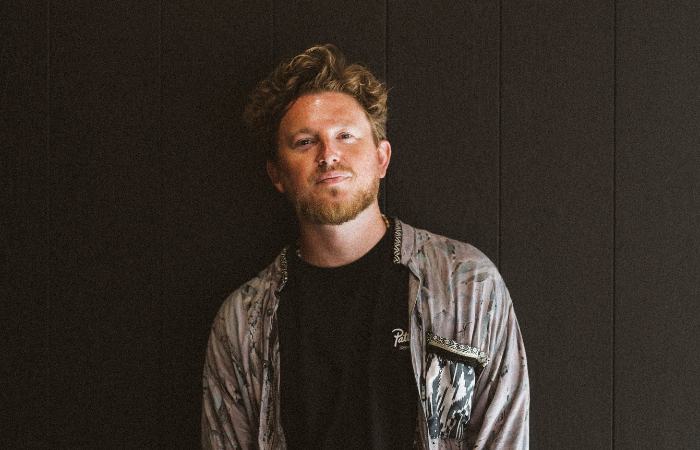
For Lindus’ new London headquarters, the challenge wasn’t to create a workplace about clinical research, but about the people transforming it. We spoke to Rob Venice, Founder and Creative Director of Motive, to explore how cultural research, storytelling and carefully considered design decisions transformed an ordinary office into a workplace that captures both the personality and ambition at the heart of the business.
1. The brief wasn’t simply to create a new office, but to express Lindus’ culture and mission through the workplace. How did you translate something as intangible as company culture into physical design decisions?
When we first meet a client what we’re trying to understand is the essence of the company. Not necessarily their values and goals, but the undercurrent that makes them who they are and what unites the team. Once we get to the root of culture and being, we can then start to figure out the types of installations that make sense for their story. With Lindus their culture was undeniably playful and fun loving, so despite the seriousness of their objectives, we could really lean into child-like wonder and riff on keys aspects of company DNA to great emotional effect.
2. Lindus operates in the clinical research sector, where it’s easy to lean into familiar healthcare aesthetics. What made you move away from those conventions, and how did you decide what the workplace should communicate instead?
When you strip back the nuts and bolts of what Lindus do, and you’re left with the true soul of who they are, medical references are pretty irrelevant. Early on we did play with concepts like traditional x-ray lightboxes and the like, but the more we got to know them, the more inspiration we got from things like cartoon characters, emojis and the kind of retro-futurism you get in Back to the Future.
3. Early in the project, what did you discover about Lindus that completely changed your approach? Was there a conversation, story or observation that became the foundation for the design?
I noticed in their previous office that their meeting rooms were named after past incidences, like one of the managers tackling a child on ice, and a make-believe employee that had been brought to life to prank a director. That’s when I knew we could have some fun. One of their founders also Djs, whilst another is a politician, so whilst they seem at odds with each other, it opens the door for storytelling and the importance of a narrative driving emotion.
4. Rather than relying heavily on logos and branding, the workplace tells the company’s story through murals, artwork and shared rituals. Why was storytelling a more effective design tool than traditional brand application?
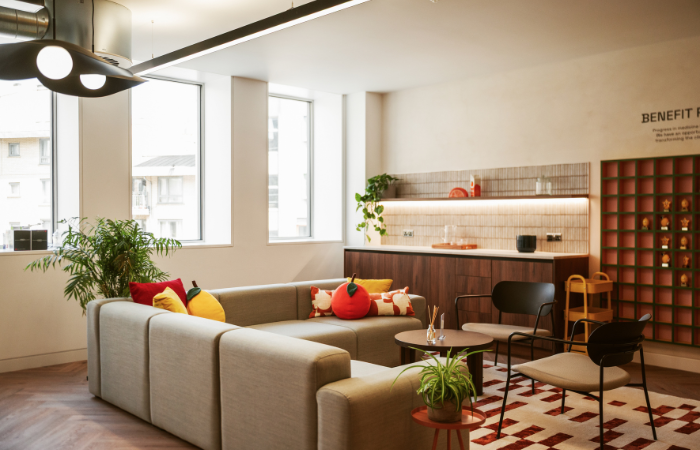
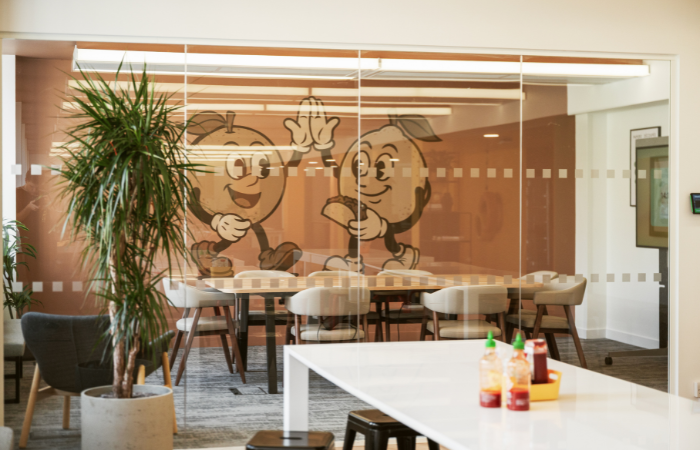
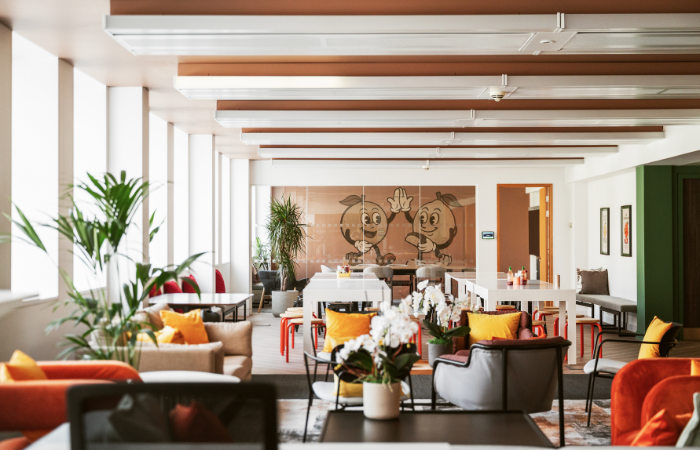
I believe it always is. We try to limit the use of logos and copy and pasting the brand guidelines, because it feels lazy and doesn’t reveal any more of a company’s DNA. If you enter the Lindus office and don’t ask why there’s a mural of an orange and a lemon passing tacos to each other whilst high fiving, you might be dead inside. And provoking intrigue is the point. Whether it’s a new client or new team member, these coded references provide an opportunity to ask questions and allow them in a little further into company lore.
5. The workplace balances scientific credibility with humour and personality. How did you ensure those more playful interventions strengthened the brief rather than becoming novelty features?
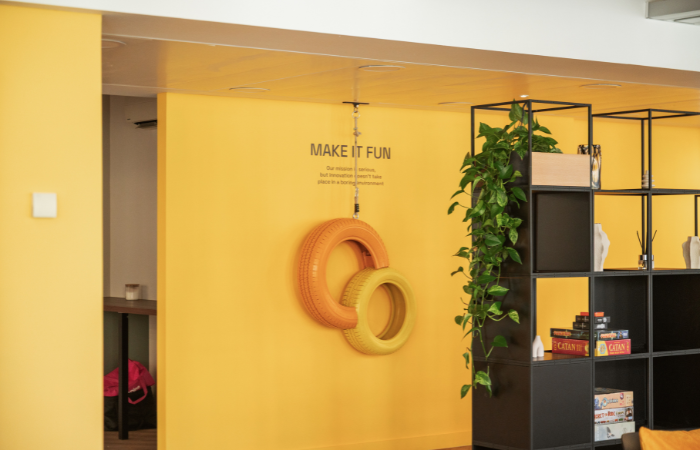
It’s a fine balance, and one you are constantly testing throughout the design phase in all honesty. Does a bespoke tire swing inspired by the company logo represent the company’s dedication to fun, or is it just silly? It can often come down to placement. The playful parts operate in areas that encourage free-thinking and chance encounters. The more understated pieces are at home in areas designed to be solution-focused.
6. The project draws inspiration from James Lind and one of the world’s earliest clinical trials, but that narrative never feels literal. How did you use that story to inform the design without allowing it to dominate the workplace experience?
It may seem like a Motive thing to do, but we were never going to propose a galleon ship meeting room. Most people know the story of James Lind curing sailors’ scurvy with oranges and lemons, but what’s key was that it was the first ever recorded clinical trial. So, we looked into what else Lind tested on sailors. That’s where the idea for the suite of characters that represent each of the company values came from. Each of them are a different citrus fruit that were trialled on those sailors. The story is there in the design, it’s just embedded a little deeper.
7. Many branded workplaces look impressive on day one but struggle to feel authentic once people move in. What design decisions were made specifically to ensure the space genuinely reflects how the Lindus team works every day?
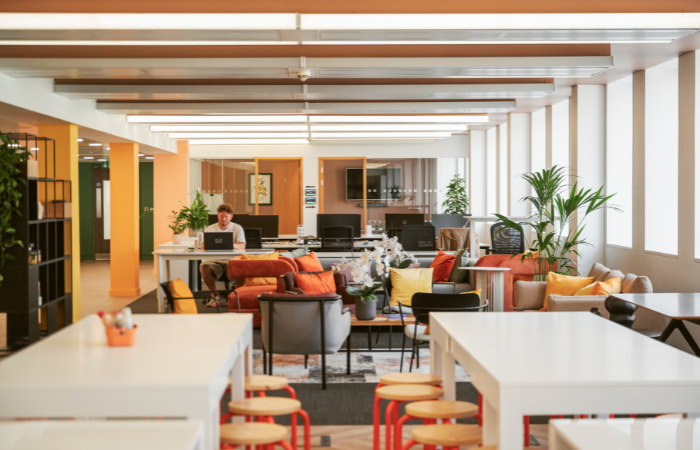
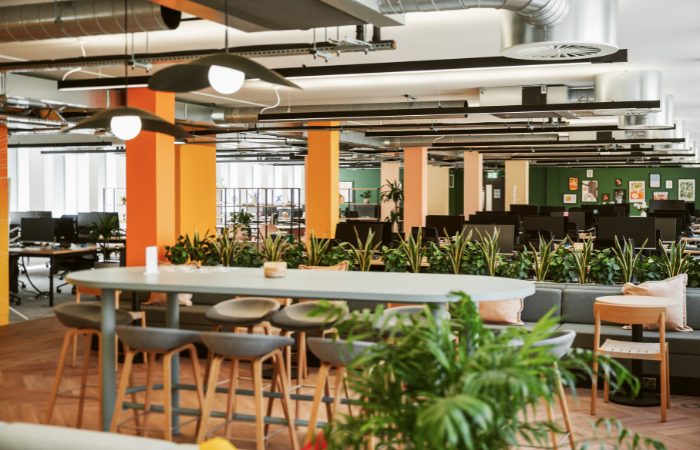
Together with the client team we had decided to split the floors into a working floor and a more breakout-style floor. This really helped define which references and installations belonged where. Understanding the headspace people would be in at certain times of the day or when they entered particular areas really helped marry form to function to appropriate inspiration, which is a key goal in achieving longevity in a space.
8. Looking back at the original brief, which part of the finished workplace best demonstrates that you’ve solved the client’s challenge and why?
It’s always very telling going back into an office once the team have moved in. Are interactive elements being used or ignored, have we captured the culture or have the references fallen flat? The first time I came back to the Lindis office and I saw that the citrus values characters we had created were on meeting room screens and people’s desktops, I knew we’d landed it.
Our thanks to Rob Venice, Founder and Creative Director of Motive, for taking the time to share the thinking behind the project and the design decisions that brought Lindus’ culture to life.