







Martha Brown Wins the Next Generation Exceptional Student Award 2026
Commercial Interiors UK and Design Insider are delighted to announce Martha Brown of Sheffield Hallam University as the winner of the Next Generation Exceptional Student Award 2026, sponsored by Silentnight Contract.
Created to celebrate emerging talent within the commercial interiors industry, the Next Generation Awards recognise the creativity, ambition and potential of individuals shaping the future of the sector. The Exceptional Student Award holds a unique place within the programme, offering second-year Interior Design degree students the opportunity to respond to a live commercial brief that reflects the realities, challenges and opportunities of professional practice.

Martha Brown, Sheffield Hallam University
The Brief
This year’s brief asked students to design a social space within a contemporary later-living setting, focusing on how design can support community, independence and wellbeing. Students were encouraged to move beyond traditional institutional approaches, instead taking inspiration from hospitality and residential environments to create spaces that felt welcoming, uplifting and socially engaging.
The project explored the role inclusive and accessible design can play in supporting older adults, asking students to consider physical and cognitive accessibility, sensory comfort, circulation, acoustics, lighting and materiality. Importantly, the brief challenged students to think beyond aesthetics, demonstrating how thoughtful design can actively support dignity, autonomy and connection in later life.
The Judging Process
Participating universities were provided with a comprehensive professional design brief, which five of the six participating courses integrated directly into their syllabus, while one university offered the project independently to students. Each student completed the project within a five-day design period, structured differently by each university.
The judging process for the Exceptional Student Award was designed to mirror the presentation and review methods often experienced within the commercial design industry. Course leaders first selected three standout submissions from their university to progress to the next stage. These entries were then reviewed digitally by the judging panel, who independently assessed each scheme against the project brief and judging criteria before selecting one finalist from each course.
Finalists were then invited to present their work directly to the judges during an online interview session, where they discussed their concepts, design thinking and technical decisions. For many students, it was their first experience presenting to an industry panel in this way, making the confidence, professionalism and quality of communication demonstrated throughout the process all the more impressive.
Meet the Judges
The 2026 judging panel brought together extensive expertise from across the commercial interiors, healthcare and later-living sectors.
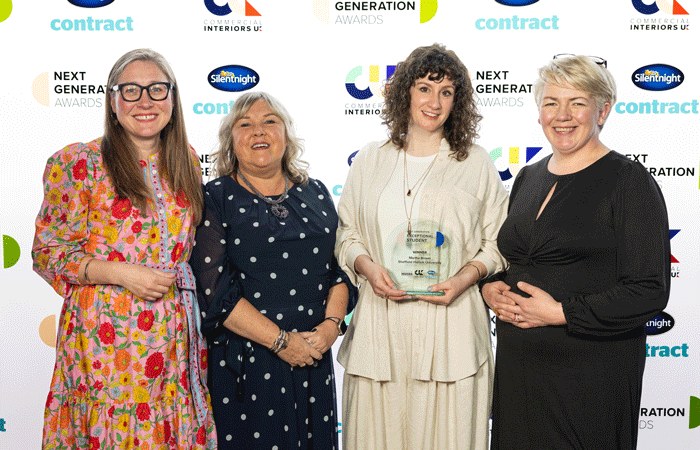
Left to right: Alys Bryan, Diana Celella, Martha Brown, Karen Nairstone
Jen Bernard, Creative Director and Managing Director of Bernard Interiors, leads an award-winning interior design practice specialising in luxury residential, retirement, care and hospitality projects across the UK and internationally.
Joining Jen on the panel was Karen Nairstone, Head of Business Development and Partnerships at Bernard Interiors, who brings more than 20 years of experience creating human-centred environments focused on resident wellbeing, operational performance and long-term value.
The panel also included Diana Celella, Director of The Drawing Room Interiors, an internationally recognised healthcare and later-living design specialist known for her expertise in evidence-based design and dementia-inclusive environments.
Representing Design Insider was Editorial Director Alys Bryan, whose background as a furniture designer and extensive experience within the commercial interiors sector gave further depth to the judging process.
The Winning Project
Together, the judges reviewed an exceptionally high standard of work. However, Martha Brown’s project, titled Common Ground, stood out for its maturity of thinking, clarity of concept and deeply considered response to the brief.
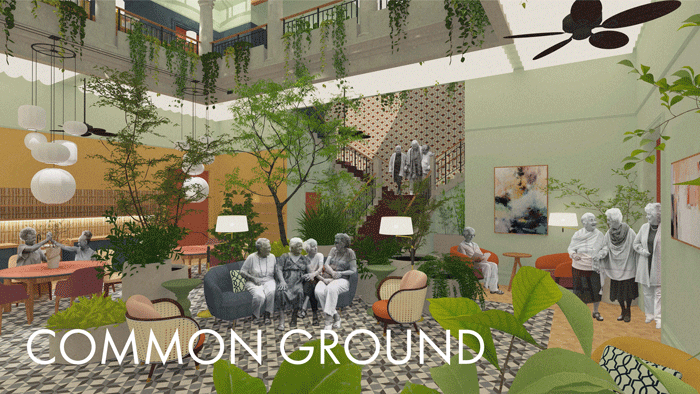
Common Ground, designed by Martha Brown
The judges commented:
“This project stood out for its confidence, clarity, and depth of thinking. The Common Ground concept was beautifully resolved, not just visually, but in how it supports wellbeing, independence, and social connection. The attention to inclusion, along with thoughtful touches like discreet observation areas, showed a real grasp of designing for later living. A thoroughly deserving winner.”
They added:
“A well-developed concept built on strong design pillars. The inherent participation gradient allows for person centric spaces to meet all needs whilst gently encouraging interaction and connection. The use of large-scale planting and organic lighting adds drama and interest, maximising the double height space, creating an inviting space to spend time in. A beautifully considered and engaging design.”
Common Ground
Martha’s winning project explored an important and increasingly relevant question: how can a communal winter garden within a contemporary later-living setting reduce loneliness and promote active ageing for older women?
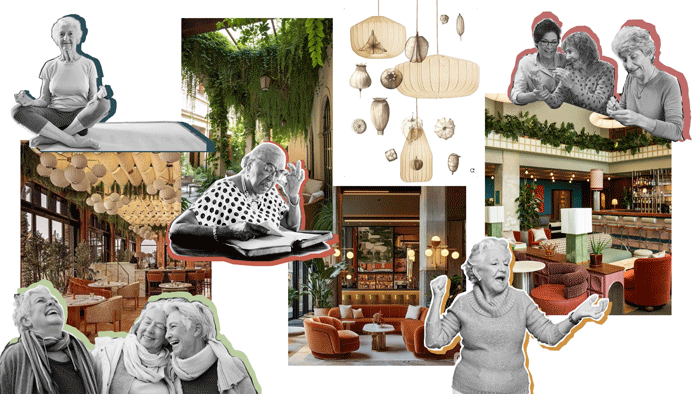
Inspiration and concept for Common Ground
Her proposal responded to growing concerns surrounding social isolation among older adults, particularly women living alone, while recognising the increasing desire for independence, participation and meaningful community in later life. Rather than designing a passive care environment, Common Ground reimagined shared space as an active social landscape that supports movement, creativity, connection and everyday interaction.
Design Approach
Drawing inspiration from co-housing principles, hospitality environments and biophilic design, Martha created a layered communal winter garden designed to support different levels of participation and social engagement. Her concept centred around what she described as a “participation gradient”, allowing residents to observe, join or lead activities depending on their confidence, mood or physical ability.
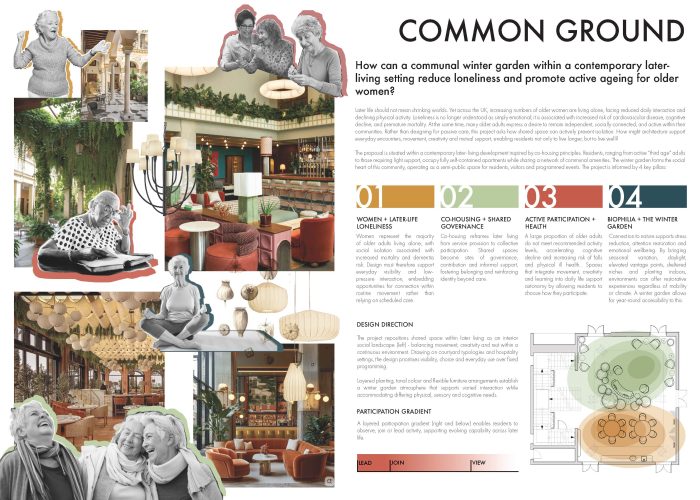
Martha communicated be concept digitally with clarity and expertise
At the heart of the design was a double-height atrium space combining social seating, creative workshop areas, planting and quieter reflective zones. Flexible furniture arrangements and subtle zoning created opportunities for both activity and retreat, while maintaining strong visual connection throughout the space.
Designing for Later Living
The scheme demonstrated a particularly thoughtful understanding of designing for later living. Inclusive detailing, intuitive circulation and carefully considered acoustics were embedded throughout the project, supporting residents with varied physical, sensory and cognitive needs. The design balanced openness and social visibility with moments of refuge and calm, helping residents feel connected without creating overwhelming environments.
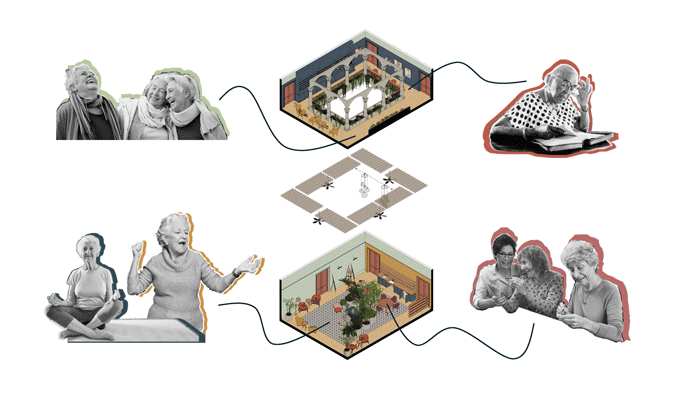
Text and images brought Martha’s design to life
Martha also explored how materiality, lighting and planting could shape emotional experience within the space. Large-scale greenery, layered textures and warm tonal palettes softened the historic architectural setting, while programmable lighting systems helped create visual comfort and support circadian wellbeing.
The judges were especially impressed by the way Martha translated research into practical and atmospheric design decisions. Her project demonstrated both conceptual depth and technical awareness, showing how commercial interior design can positively influence quality of life.
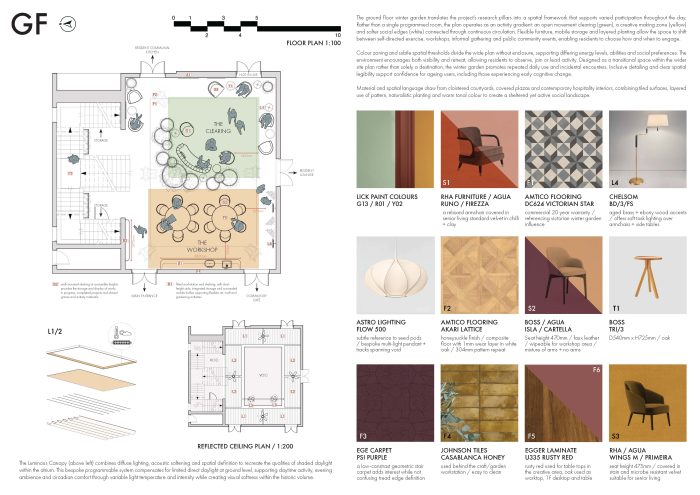
A requirement of the brief was to utilise Design Insider’s search platform Supplier Finder to select interior furnishings suitable for a commercial setting
Presentation and Communication
Alongside the visual quality of the work itself, Martha’s presentation and communication skills also distinguished her during the live judging process. She articulated her research, spatial planning and design rationale with confidence and professionalism, demonstrating a clear understanding of how interiors can support social wellbeing, independence and participation.
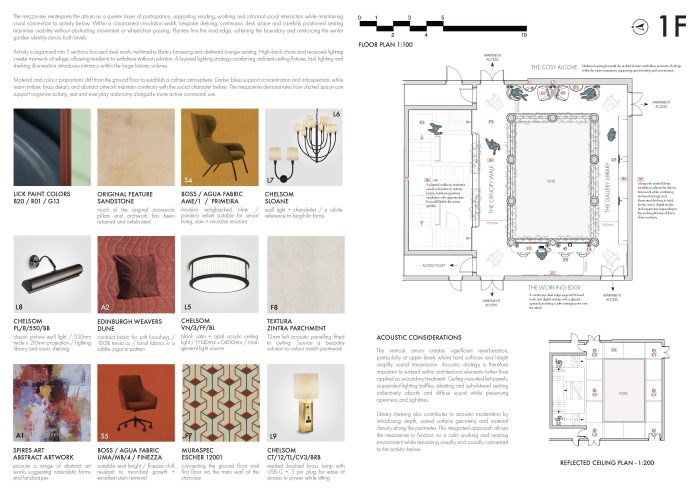
Scale drawings accompanied Martha’s design concept
Reflecting on the project, Martha explained that she is particularly interested in how spaces support everyday life within shared and community settings. She described how the project strengthened her interest in interiors that balance emotional warmth with functional clarity, while reinforcing the importance of translating research into practical, buildable design solutions.
The Prize
As the winner of the Next Generation Exceptional Student Award 2026, Martha will receive a two-week work placement with Bernard Interiors, offering valuable insight into professional practice within the luxury residential, retirement and hospitality sectors. Commercial Interiors UK will also support travel and accommodation expenses up to £1000.
When we spoke with Dr Sally Billau, Senior Lecturer + Course Leader BA (Hons) Interior Architecture + Design, Sheffield Hallam University about what this Award opportunity means to the university she shared:
‘We’re proud to share that one of our undergraduate Interior Architecture students has won the national CIUK competition—an outstanding achievement that highlights both their talent and the ambition of our course.
Engagement with competitions like CIUK is central to our teaching, giving students the chance to test ideas in a real-world context, connect with industry, and gain national recognition. This success is a powerful reflection of the creativity, rigour, and forward-thinking approach we champion, and we look forward to seeing what comes next.’
Looking Ahead
The Next Generation Awards continue to highlight the strength of emerging talent entering the commercial interiors industry, while creating valuable opportunities for students to engage directly with professional practice. Martha Brown’s Common Ground project is a powerful example of how the next generation of designers are approaching social, emotional and environmental challenges with creativity, empathy and commercial understanding.

Left to right: Dr Sally Billau, Martha Brown, and Caitlin Cadman, Senior Interior Designer at HLM Architects. Caitlin is a Sheffield Hallam Alumni and supported the students whilst they worked on the project brief.
Commercial Interiors UK and Design Insider congratulate Martha on this outstanding achievement and look forward to following her future career within the commercial interiors industry.