


Milan Material Finds – Part Two
In our second addition of Milan Design Week highlights, we turn our attention to the wider Fuorisalone, which this year focused on the theme Be the Project. It signalled a shift of attention away from outcome and towards process, positioning design as a dynamic, human-centred act shaped by intuition, responsibility and transformation.
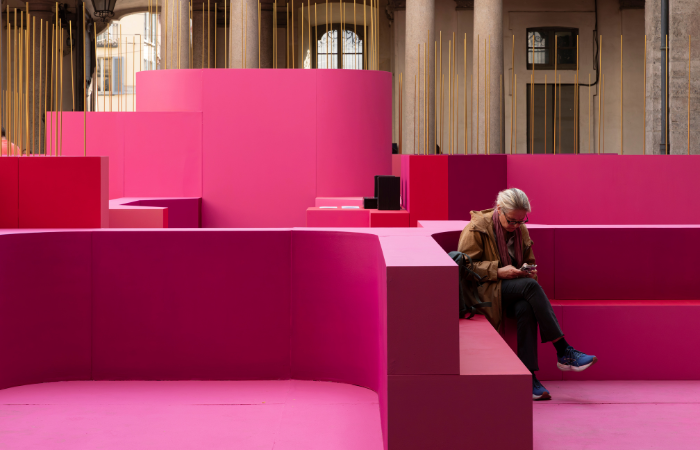
Image credit: Lorenzo Fraschetti
Across the city, installations and exhibitions shone a spotlight on making…although there were still the customary eye-cathcing, Instagram-worthy large scale takeovers that the event has become synonymous with. Among the large-scale interventions scattered across Milan was the pink labyrinth conceived by Lebanese architect Lina Ghotmeh. Rather than offering a singular viewpoint, the structure unfolded as a spatial experience shaped through movement and discovery that was led by participation rather than pure observation.
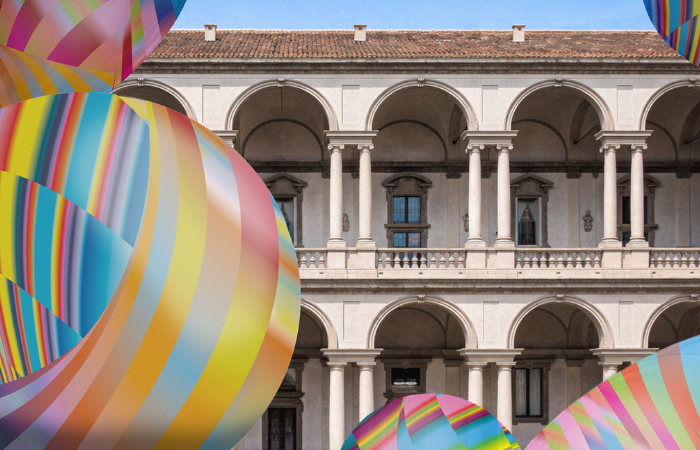
Image Credit: BRERA HORIZONTAL
Inflatable environments emerged as arecurring trend throughout the week. Temporary architectural forms created for Škoda Auto and USM emphasised (rather fittingly for a transient trade show) lightness, mobility and reversibility. But perhaps most impactful of these was found in the Brera District. There, Sara Ricciardi’s installation for American Express quite literally aimed to inspire happiness, Titled Serotonin: The Chemistry of Happiness the striped, rounded inflatables were designed to engulf the external loggia of Pinacoteca di Brera and quite simply, put a smile of visitors faces.
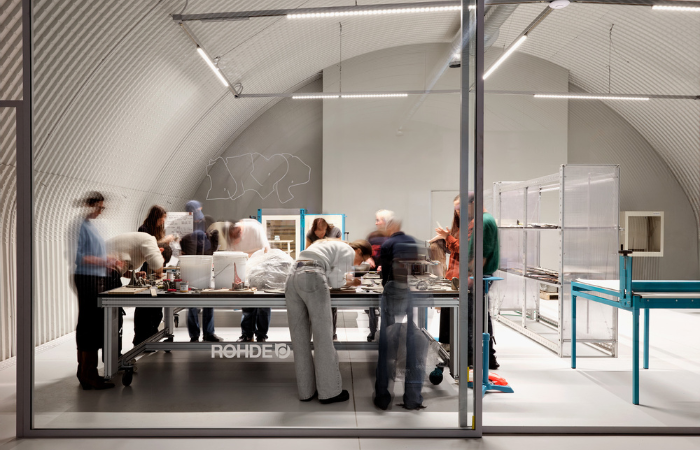
Image credit: Francesca Iovene
Turning to the theme of process, perhaps the most explicit exploration was found at Dropcity. Located in the old railway tunnels behind Milan Central Station, the relatively new initiative is home to extensive equipment, materials and ideas about the future of architecture and design all year round. During Design Week, the programme more than ten facilities, spanning ceramics, textiles, woodworking, model making and advanced 3D production, opened to the public.
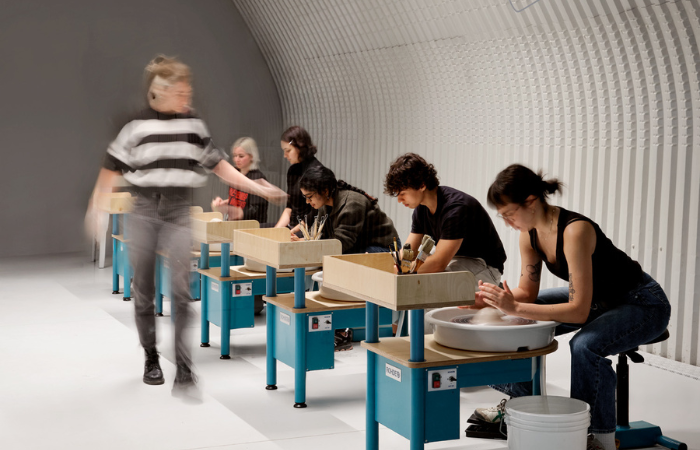
Image credit: Francesca Iovene
Makers, tools, and experimentation typically hidden within studios became visible, positioning making not as a backstage activity but as the central cultural act. It also offered graduates from Central St Martins Material Futures course the chance to showcase the culmination of their research, underlining the importance of networking for early career practitioners.
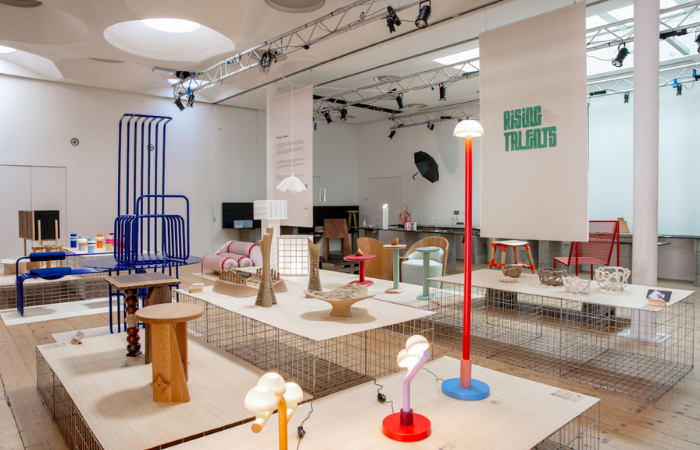
Image Credit: Anwyn Howarth
Celebrating its tenth edition under the theme TEN: The Evolving Now, the Isola Design Festival marked a decade of growth from neighbourhood initiative to one of Milan Design Week’s most influential independent districts. What began as an accessible platform for emerging designers has developed into a global network connecting disciplines from across the globe, with multiple events taking place in 2026 in the likes of Doha, Iceland and London.
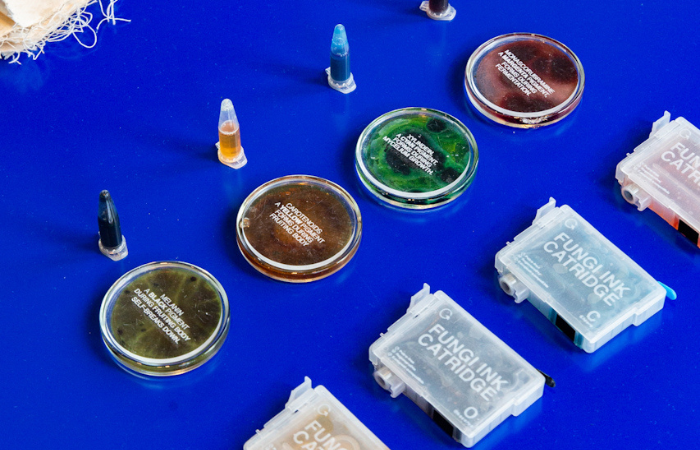
Image Credit: Anwyn Howarth
This anniversary edition returned symbolically to the heart of the district, reopening Fabbrica Sassetti, a former 1930s wool yarn factory, as the festival’s central hub. The building’s industrial heritage reinforces Isola’s long-standing identity rooted in materiality and process, which is further underlined by the Isola Design Awards Winners’ Showcase. One of the standout winners on display was GROWinK, which looks to tackle the somewhat inconspicuous but entirely problematic issue of printed matter ending up in landfill, along with the petroleum-based inks used in its creation. Rather than reimagining waste, the project offers new, fungi and bacteria-based ink solutions that naturally biodegrade.
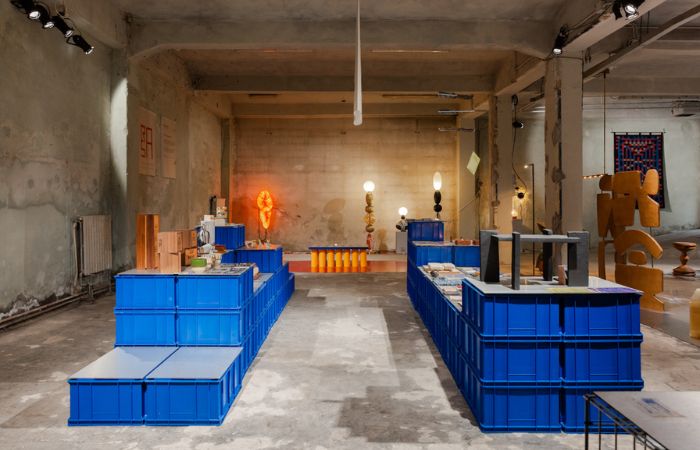
Image Credit: Anwyn Howarth
The recurring Isola Design Gallery brought together handcrafted and collectible works shaped by process and material sensitivity, while No Space for Waste expanded discussions around circular design and slow production. As is increasingly common at contemporary trade shows, the majority of the stand design found throughout Isola events put circularity and reuse front and centre. Elsewhere, Rasa — The Indian Collective examined craftsmanship through emotional and cultural narratives, presenting design as an experience shaped by heritage as much as innovation. Meanwhile, The Dutch Atelier highlighted conceptual experimentation and playfulness, once again underlining how their collective design identity continues to trailblaze while evolving through material exploration.
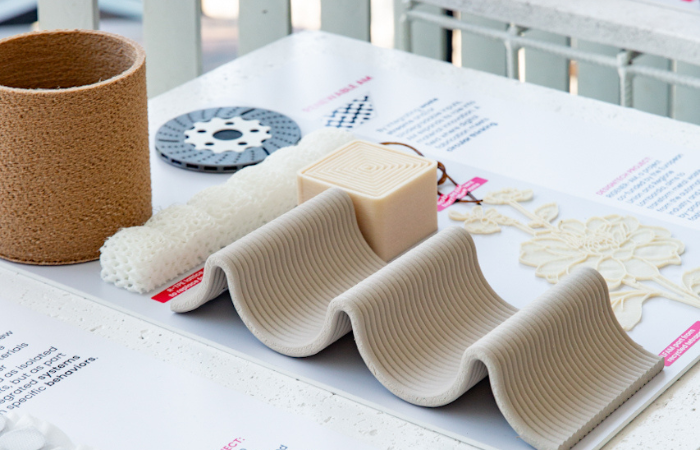
Image Credit: Anwyn Howarth
The New State of Materials, presented by Materially, also focused on circularity, decarbonisation and bio-based innovation, with a showcase of emerging material solutions and practices. Housed in Stecca3, they included SMUSH Materials, an Italian start-up incubated by PoliHub that is developing mycelium packaging to help do away with expanded polystyrene products.
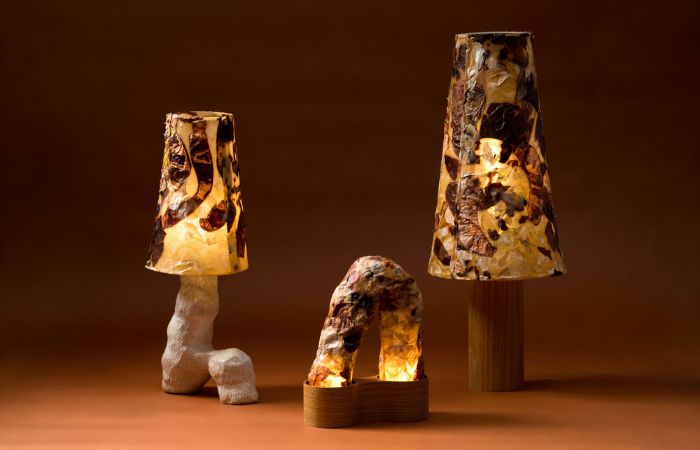
Image Credit: Studio Kloak
Other projects on display included Additive Nodes, a collaborative project between Ginger Additive, Polymaker, and designer Sina Lüder that brings together architecture and 3D printing, exploring the use of advanced polymers and printed joints to create innovative, adaptable, and expressive construction solutions. While Studio Kloak, Professor Coco Ree Lemery, offers a zero-waste biopolymer made from another as-yet-overlooked culinary waste stream: onion skins. The skin’s natural transparency is put to good use in the novel creation of lighting products.
In a Milan Design Week increasingly defined by spectacle and multinational brands – many of which on the fringes of the design world, at best – these projects led by hands-on making and material curiosity are a welcome reminder that design remains an invaluable tool in the process of change.