



VIA Antwerp by Merav Bustan wins Best Hotel Design of the year at the Independent Hotel Show Amsterdam 2026
VIA Antwerp, a lifestyle hotel designed by Berlin-based interior designer Merav Bustan, has received the Best Hotel Design Award of the year at the Independent Hotel Show Amsterdam 2026.
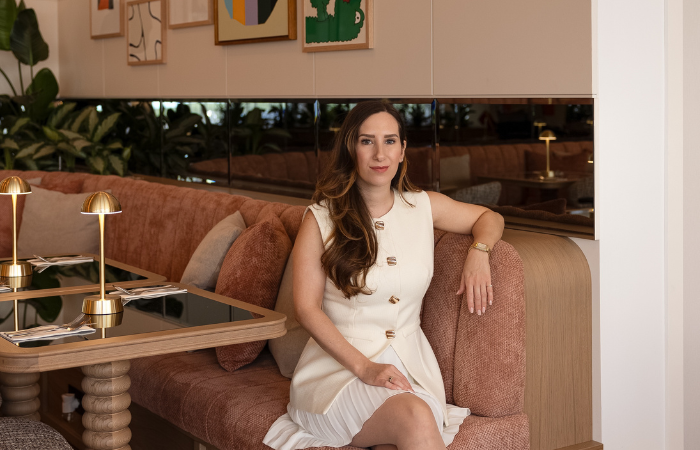
Presented annually, the award recognises outstanding hotel projects across the Benelux region and Germany, evaluating both design quality and the integration of guest experience, functionality, and innovation. The award ceremony took place on 22 April 2026 in Amsterdam.
A hotel as an urban living room
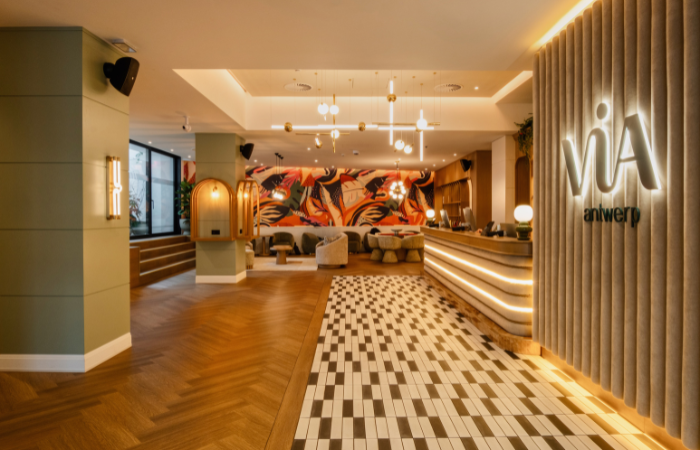
With VIA Antwerp, Bustan redefines the role of the hotel, positioning it as a space that engages with the life of the city, rather than serving solely as accommodation. Centred around the idea of a social interior, the project is designed as a fluid, all-day environment where guests and locals naturally overlap.
Framed as a “living room for the city,” the hotel operates as a continuous setting for work, social interaction, and everyday use. The project reflects a broader shift in hospitality, from static accommodation to spaces that function as social and cultural infrastructure in the community.
“Hotels today can no longer operate as just a places to stay – they must have a second life,” says Bustan. “With VIA Antwerp, the intention was to create an environment that encourages interaction and energy, while still offering comfort and ease for both hotel guests and locals.”
Space as scenography
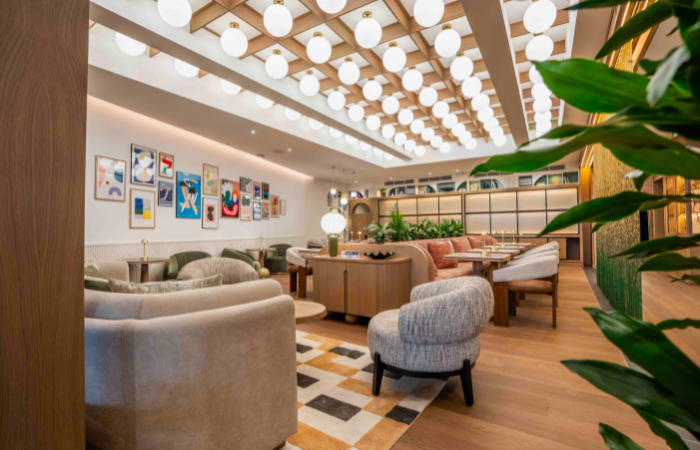
At the core of the design is what Bustan describes as the scenography of space, informed by her background in set design as well as architecture and interior design. Guests move through a sequence of spatial “scenes,” each defined by a distinct atmosphere and pace: an open, social lobby, a restaurant with its own rhythm, bold yet quieter transitional corridors, and calm, restorative guest rooms.
The project is less focused on individual design moments rather than on how spaces perform over time: across hours, uses, and user groups.
“Each space has its own identity, but they are all part of the same story,” Bustan adds.
Design and performance
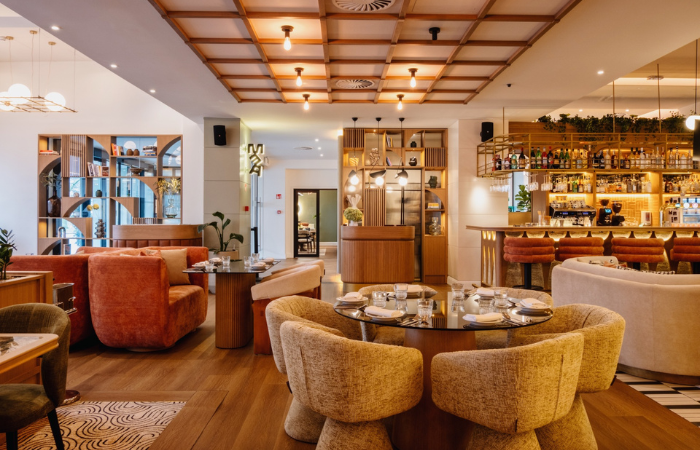
Beyond its visual identity, the project is structured around how space is used. Layouts are defined by movement, visibility, and duration of stay, aligning spatial design with operational efficiency. The ground floor operates as a continuous social landscape, where lobby, lounge, bar, and restaurant are interconnected both visually and functionally.
A central operational core supports service across zones, while a diverse layout allows the space to shift seamlessly throughout the day: from morning coffee and informal work to upscale dining and evening gatherings.
A contemporary reading of Antwerp
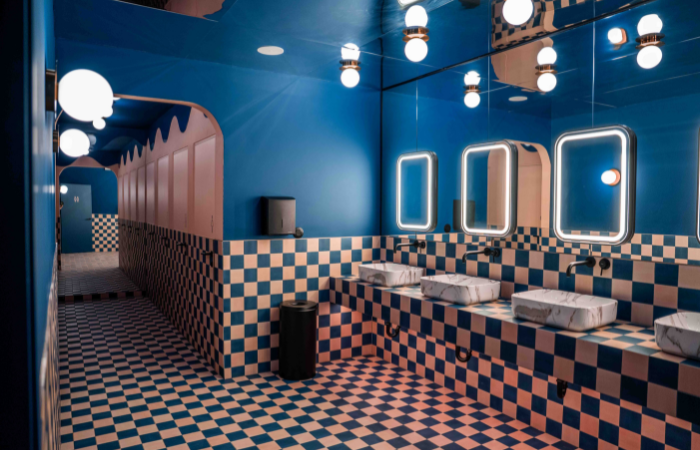
The design references the architectural language of Antwerp’s Zurenborg district, known for its Art Nouveau and Belle Époque heritage, without direct replication. These influences are translated into a contemporary vocabulary through custom joinery, layered lighting, and carefully calibrated spatial transitions.
A palette of terracotta, blush, sage green, and soft neutrals introduces warmth, balancing the city’s more bold and structured urban fabric. Works by Belgian artists further anchor the project within its local context.