






What Happens When a 125-Year-Old Tile Manufacturer Challenges Its Own Industry?
For more than 125 years, Johnson Tiles has been part of the story of British ceramics. Today, however, the conversation is increasingly focused on the future: how manufacturers can reduce embodied carbon, embrace circularity and respond to growing demand for more sustainable materials.
We spoke with Jason Bridges, Procurement Director at Johnson Tiles, about the company’s approach to innovation, its partnership with climate-tech start-up Dekiln, and what kiln-free tile technology could mean for the future of ceramic manufacturing in the UK and beyond.
1. Please could you introduce yourself, your role at Johnson Tiles, and how your work connects with the company’s sustainability, innovation and commercial strategy?
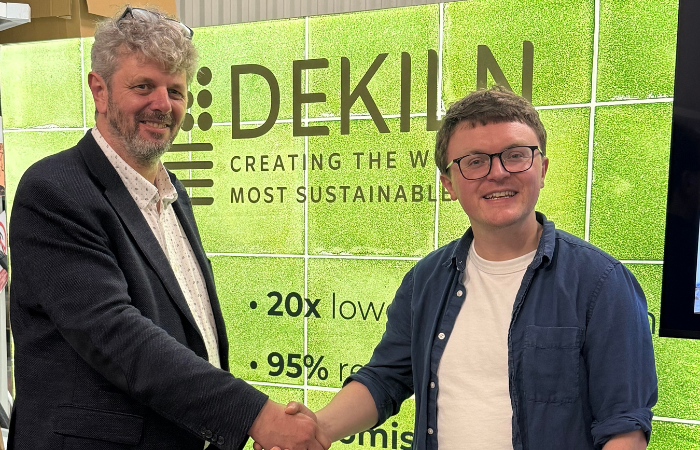
I’m Jason Bridges, Procurement Director at Johnson Tiles. My role focuses on sourcing materials, managing supplier relationships and helping ensure we deliver high-quality products that meet the evolving needs of our customers.
Procurement sits at the intersection of commercial performance, sustainability and innovation, so I work closely with teams across the business to identify opportunities that support all three.
A significant part of that in recent years has been managing the transition to an outsourced manufacturing model – a process that required real rigour in selecting the right partners. Not just on quality and commercial fit, but on how they operate and what their sustainability practices look like.
That process has also led us to the Dekiln partnership, because sometimes the most interesting thinking comes from outside an industry.
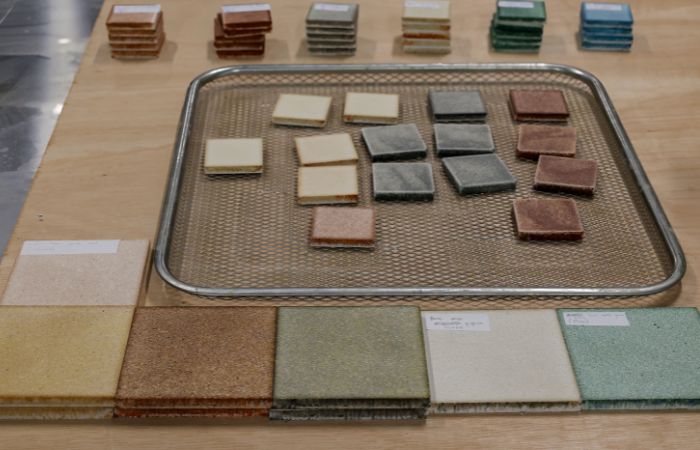
Aled Roberts and his team don’t have a ceramics background, which has allowed them to challenge some of the conventional thinking around the manufacturing process. The outcome is a genuinely novel ‘kiln-free’ solution using waste mineral powders, such as recycled gypsum plaster.
2. Johnson Tiles has been designing and supplying ceramic and porcelain tiles since 1901. How would you describe the company today and what continues to define Johnson Tiles after more than 125 years in the industry?
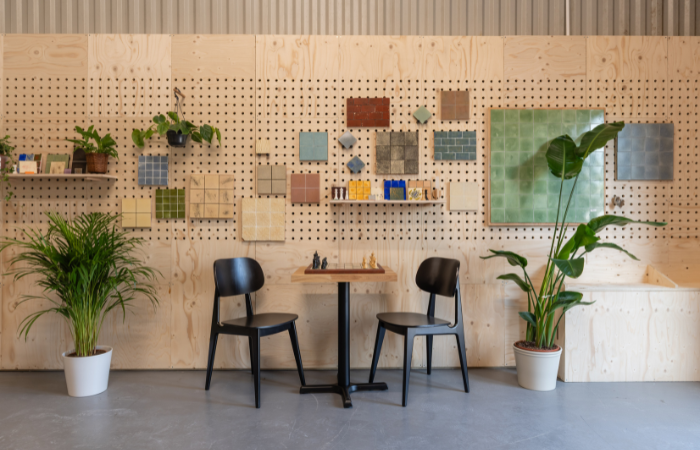
Johnson Tiles is a design-led supplier of ceramic and porcelain tiles, working across a wide range of sectors – hospitality, healthcare, education, leisure and commercial interiors. The business has evolved considerably over those 125 years, but the values underpinning it have stayed consistent.
We’re driven by quality, technical expertise and a genuine understanding of how tiles perform in real environments. Our heritage in Stoke-on-Trent continues to shape the way we work – combining deep ceramics knowledge with contemporary design thinking. That combination of experience and adaptability is what’s kept Johnson Tiles relevant across generations.
3. Johnson Tiles’ portfolio is used across homes, schools, universities, hotels, hospitals, commercial developments and leisure facilities. How are the needs of architects, designers and contractors changing when it comes to tile specification, particularly in relation to sustainability, performance and design choice?
Specification decisions have become increasingly complex. Architects, designers and contractors still expect strong aesthetics and reliable performance, but sustainability is now a much bigger part of the conversation than it was even a few years ago.
We’re seeing real demand for transparency around embodied carbon, recycled content, responsible sourcing and product lifecycle. Projects still need materials that meet strict performance requirements and budget constraints and design flexibility remains critical – specifiers want products that help them create distinctive spaces, not just tick a sustainability box.
The challenge for manufacturers is bringing all of that together. Delivering sustainability benefits without asking specifiers to compromise on quality, performance or design is increasingly where the market expects us to be.
4. Johnson Tiles has long been associated with British ceramics expertise, technical quality and design-led tile collections. How does this heritage shape the way the business approaches innovation, particularly when exploring new materials, manufacturing methods and lower-carbon solutions?
Our heritage gives us a deep understanding of materials, manufacturing processes and what customers actually need. That expertise lets us evaluate new ideas with both curiosity and practical realism – we know the performance standards tiles have to meet and what it takes to bring a new product to market successfully. It means we can explore new materials – including industrial waste – and lower-carbon alternatives without losing sight of quality, durability and commercial viability.
Innovation isn’t about abandoning what you know – it’s about applying it differently. The partnership with Dekiln is a good example of that: fresh thinking combined with established industry expertise.
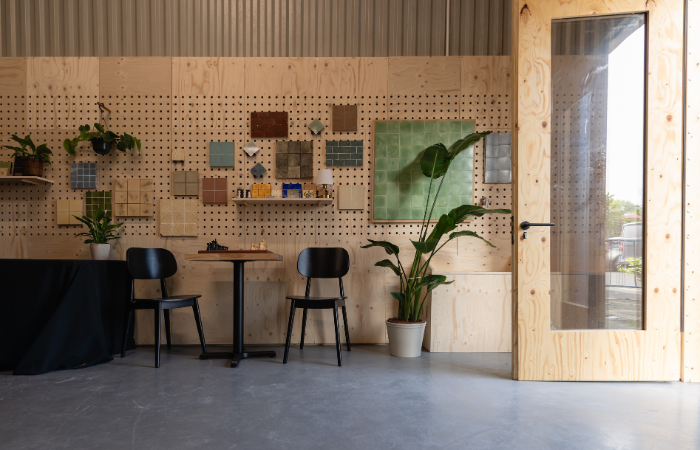
5. The partnership with Dekiln brings together an established UK tile manufacturer and a climate-tech start-up. What first attracted Johnson Tiles to Dekiln’s kiln-free tile technology, and why did this feel like the right collaboration for the business?
When you’re assessing manufacturing partners and looking closely at how tiles are produced – energy use, waste, supply chain impact – you start asking whether the process itself could be fundamentally different. That’s part of the context for how we came to Dekiln.
What attracted us was not just the technology but the thinking behind it. Dekiln was approaching a problem the industry has largely accepted as fixed from a completely different angle, while staying focused on what specifiers and contractors actually need. That felt like a natural fit with our own sustainability goals. We could see a clear role for our technical expertise, market knowledge and industry relationships in helping them get there.
6. Dekiln’s technology can reduce embodied carbon by 94% compared to conventional ceramic tiles by removing the need for energy-intensive kiln firing, while using more than 95% recycled content. From Johnson Tiles’ perspective, why is this such a significant development for the built environment?
Embodied carbon and the circular economy have moved from background considerations to a real factor in specification decisions and the pressure on the built environment to reduce its environmental impact isn’t going away.
Architects and designers are actively looking for materials that support lower-carbon construction without sacrificing design intent or functionality. Products that reduce resource consumption with higher recycled content are particularly relevant as the industry moves towards more circular approaches.
There’s still work to do before innovations like this are at full scale, but developments in this direction matter – the market needs more sustainable options that don’t ask specifiers to trade something off.
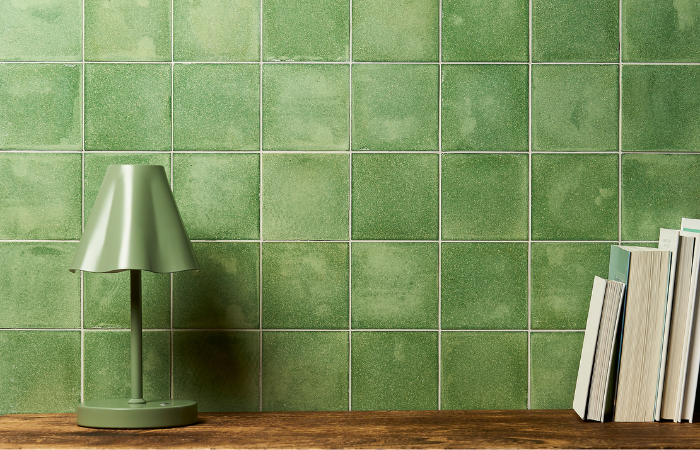
7. The new material aims to look, feel and perform like ceramic, while enabling architects, designers and contractors to reduce embodied carbon without changing how they specify or use tiles. Why is ease of adoption so important when bringing sustainable innovation into commercial projects?
For any new product to succeed, it has to fit within the realities of how projects are actually delivered. Architects, designers and contractors are managing complex briefs with demanding performance, compliance and budget requirements. A sustainable solution that introduces extra complexity or uncertainty is a harder sell, however good the environmental credentials.
The most effective innovations tend to be the ones that slot into existing workflows while delivering clear benefits. If project teams can understand, specify and use a product with confidence – without having to relearn how they work – the potential for real-scale impact is much higher.
8. Dekiln’s technology has moved from laboratory research towards industrial-scale manufacturing, supported by significant industry validation including £3 million through the Royal Academy of Engineering’s Green Future Fellowship awarded to founder Dr Aled Roberts. What role is Johnson Tiles playing in helping to translate this innovation into a product that can be manufactured, specified and used at scale?
Johnson Tiles brings over a century of experience in the tile sector and our role in this partnership is to provide the practical industry knowledge that supports commercialisation. We know what specifiers, contractors and end users expect from tile products – and what standards they need to meet – to be adopted with confidence.
Through the partnership we’re sharing technical knowledge, manufacturing expertise and market understanding to help guide development as the technology moves towards larger-scale production.
We also have established relationships across the built environment, which helps ensure the product is being developed with real-world specification requirements in mind. Our role is to help bridge the gap between a genuinely promising innovation and market readiness.
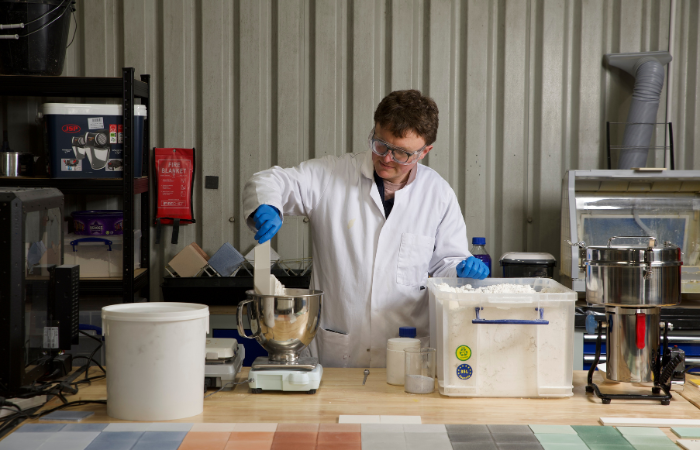
9. The companies are exploring the possibility of a pilot or demonstration manufacturing facility in Stoke-on-Trent. What could this mean for Johnson Tiles, for the Potteries’ ceramics heritage and for the wider regional economy?
The ceramics industry’s deep connection with Stoke-on-Trent has always been built on expertise, not just history. The challenge for conventional ceramics has been the energy intensity of the manufacturing process – kiln firing is heavily dependent on gas and when energy costs are high, the economics of producing traditional tiles in the UK become very difficult. That’s the context behind much of the industry’s shift to production elsewhere.
What makes the prospect of a pilot facility here genuinely interesting is that Dekiln’s technology removes that constraint entirely. A kiln-free process doesn’t carry the same energy burden, which changes the manufacturing economics in a way that conventional ceramics simply can’t.
On top of that, the plan would be to use local waste materials – collecting waste plaster from the potteries in the area and converting it into tiles. That’s a circular model that’s rooted in Stoke in a very practical sense.
For Johnson Tiles, it would mean reconnecting with our roots in a way that goes beyond heritage. More broadly, there’s real potential to create opportunities for skills and investment in the local economy – and to show that Stoke’s ceramics future isn’t just about preserving what was, but about what the region can still contribute.

10. Looking ahead, what are Johnson Tiles’ ambitions for this partnership with Dekiln, and how do you hope it will influence the future of sustainable tile manufacturing in the UK and beyond?
Our ambition is to help bring an innovation to market that makes a genuine contribution to the built environment.
Progress on sustainability in this sector needs collaboration – across manufacturers, innovators, specifiers and the wider supply chain – and this partnership is an example of that in practice.
We want to help create real choice for customers looking for lower-impact materials, without asking them to compromise on quality, performance or design. And beyond this specific partnership, we’d like to see it demonstrate that established manufacturers and emerging technology businesses can work together effectively – that those two things aren’t in tension.
Find Johnson Tiles on Supplier Finder
Supplier Finder is the UK’s only search platform for accredited suppliers of commercial interior furnishings.
At Supplier Finder, our mission is simple: to help you find the perfect commercial furnishing suppliers for your interior schemes and projects. We understand the importance of having confidence in the suppliers you specify and the products that bring your designs to life. That’s why each supplier featured on our platform is accredited through Commercial Interiors UK’s rigorous membership application process. This ensures that you engage with only the best in the industry!