






At Home with Hospitality: Maoliosa Murray on The Whiteley London
Design Insider had the opportunity to visit The Whiteley London, sitting in the exquisite bar space at Six Senses London, to speak with Maoliosa Murray, one of an elite group of designers selected for the Designer Collection within this landmark development.
The Whiteley offers a full spectrum of luxury living and hospitality, bringing together 139 apartments, including 14 branded residences, alongside the Six Senses London hotel. Against that backdrop, we were keen to speak with Maoliosa about four connected areas: her own business and career journey, what today’s prime and super-prime residential clients are looking for, her design for 302 North, and finally the wider rise of branded residences.
These themes feel especially relevant for Design Insider’s readers because they speak to the changing expectations around luxury living, and to the ways residential, branded, and hospitality environments now influence one another, even where they remain distinct offers within the same development.
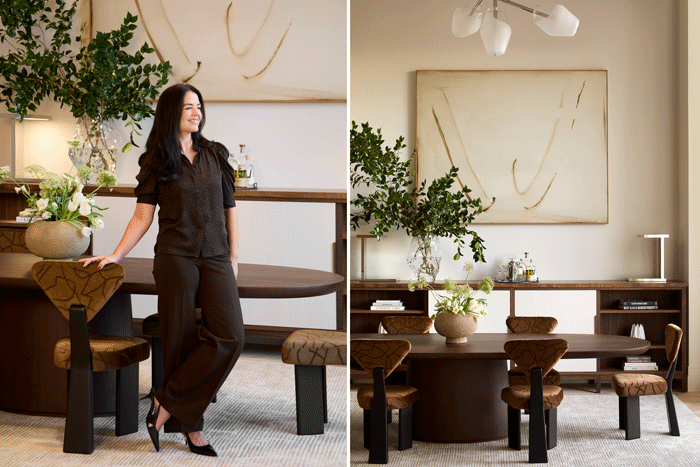
At Home with Hospitality: Maoliosa Murray on The Whiteley London, prime residential design, and the changing expectations of luxury living
From fashion to prime and super-prime residential design
For Maoliosa Murray, whose Dublin-based studio works globally across the prime and super-prime residential sector, the conversation around luxury living reflects much of what she has seen throughout her career. Her experience spans fashion, luxury PR, property development, construction project management, retail, and interior design, giving her a perspective that is both commercial and creative.
Maoliosa’s route into interiors was far from linear. Raised around design, with a mother who ran a ceramics gallery just off Kensington Church Street, she originally wanted to become an architect. Recessionary conditions led her instead into fashion, where she studied menswear and was drawn to structure and tailoring.
Her career later moved through luxury PR and lifestyle brands before taking her into property, where she helped establish and grow the London arm of an Irish developer’s business. That experience gave her a practical understanding of how design decisions sit within wider market realities.
“It is important to understand how markets move,” she reflects. “I have seen both difficult periods and very buoyant ones, so there is value in recognising that markets do recover.”
That outlook still informs her practice today. Rather than pursuing volume, the studio focuses on a small number of substantial projects at a time, working at prime and super-prime level, typically with property values of five million plus, across Dublin, London, the South of France, and beyond.
What today’s prime residential clients expect from home
Across Maoliosa’s work, wellness runs through almost every brief. In the prime and super-prime residential sector, it has become central to how clients define value in the home.
That is especially visible in Ireland, where many clients remain drawn to historic architecture and period houses. Alongside craftsmanship and conservation comes a strong emphasis on energy efficiency, air quality, cooling, and technologies that support contemporary living.
“Energy efficiency is now a major priority,” she says. “When you are working with a historic building, the challenge is how to achieve that and how to introduce modern technology without compromising the character of the property.”
Expectations now include spaces for movement, recovery, and health, whether that means a gym, a sauna, a steam room, or a separate wellness building elsewhere on the grounds.
“Wellness has become a central consideration,” she says. “Clients want the comfort of underfloor heating in winter, but they also want homes that remain cool, balanced, and comfortable through the summer.”
These requirements are not just about luxury for its own sake. Clients are more health-conscious, more time-poor, and more focused on longevity than ever before. They want homes that support how they live day to day, but also how they want to feel.
Security is part of that too. At this level, the home is expected to offer reassurance as well as beauty, whether through location, operational ease, or the way the wider property is designed and managed. In that sense, the luxury home is no longer judged purely by its finishes or scale, but by how well it supports comfort, wellbeing, privacy, and peace of mind.
Designing 302 North: light, materiality, and liveability
From there, our conversation moved into Maoliosa’s design for 302 North, one of the residences within The Whiteley London. Her involvement began with an introduction to the project team, after which she was invited to develop a design scheme for one of the apartments. The process moved quickly, but the brief gave her room to shape a concept within fixed architectural parameters.
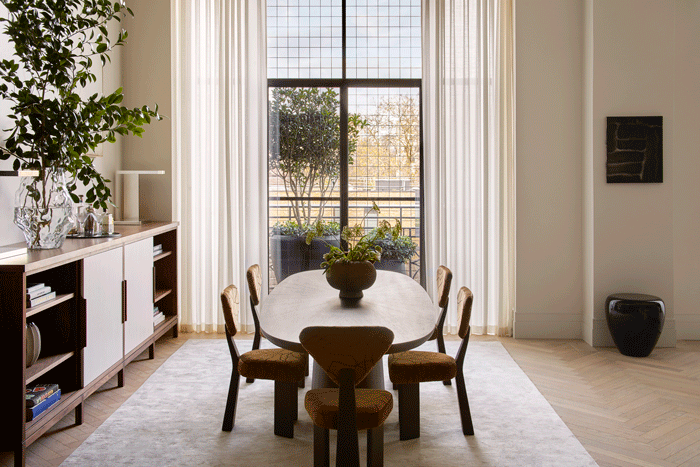
The kitchens, bathrooms, and wardrobes already installed across the residences were to remain. Those elements created a clear framework, but the atmosphere and identity of the apartment were hers to define.
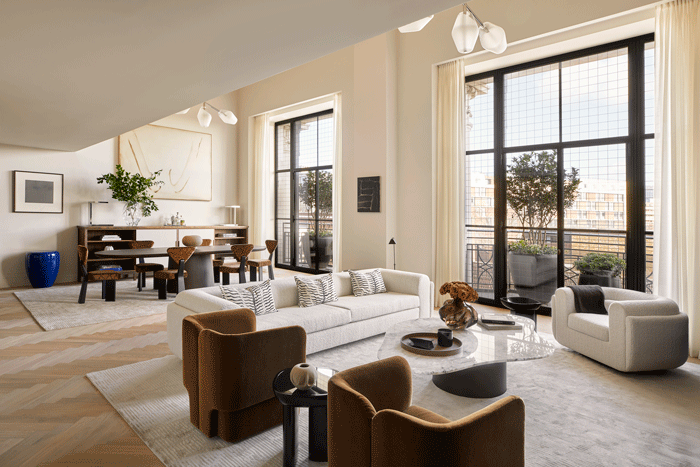
For Maoliosa, the architecture itself was the natural starting point. This was 302 North, a duplex set behind the original listed façade of The Whiteley, with tall leaded windows opening onto Juliet balconies and 6.1 metre ceilings that flood the space with natural light.
“It has a real sense of grandeur on arrival,” she says. “There is something about it that immediately evokes the feel of a New York penthouse.”
That sense of drama is reinforced by the mezzanine level, which is devoted to the principal suite. Complete with dressing space and its own entrance, it gives the apartment an unusual sense of privacy and autonomy.
“I was especially drawn to that arrangement,” she says. “It is easy to imagine the rhythm of living there, whether you are getting ready for work or going out in the evening, and being able to leave directly from that level.”
The layout also helped her imagine the likely resident. In her view, this was not a conventional family apartment. It felt better suited to a couple, or to someone who travels often and wants a London base that feels spacious, polished, and resolved. The guest bedroom, with its own dressing room and bathroom, reinforced that sense of layered, self-contained living.
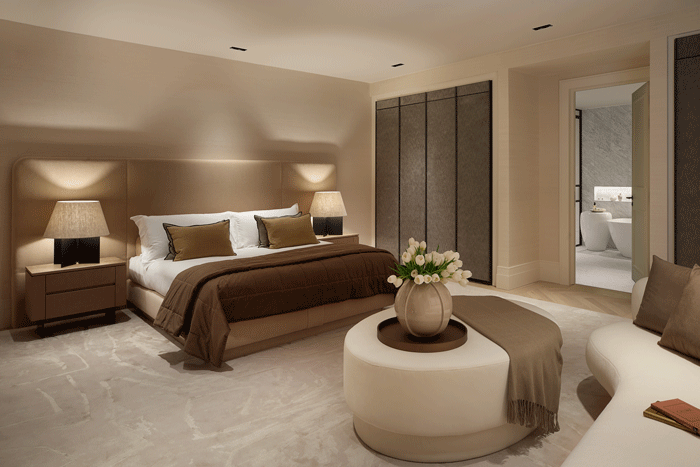
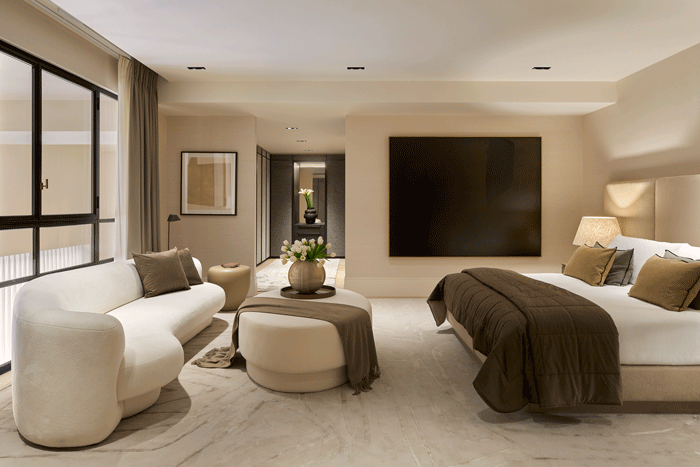
That profile informed the design concept. Maoliosa chose to keep the scheme neutral, but not minimal. She wanted the apartment to feel calm, elegant, and materially rich, with an emphasis on craftsmanship, comfort, and tactile depth.
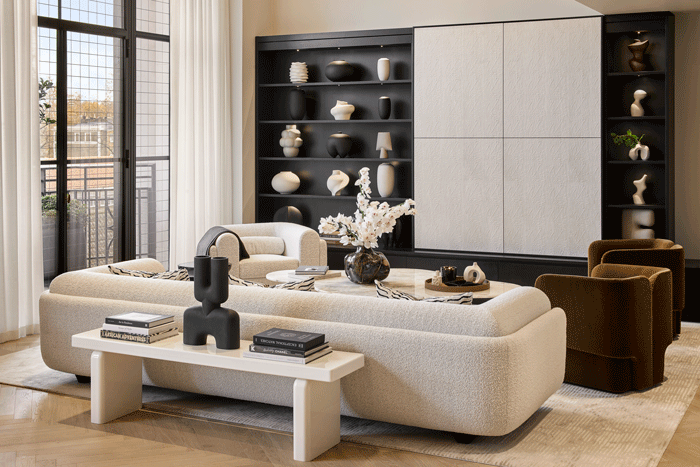
What emerged was a layered scheme built around texture, noble materials, and tonal subtlety. Wool and silk rugs, alpaca, silk wallcoverings, timber, stone, and bespoke joinery all contribute to an interior that feels enveloping rather than sparse.
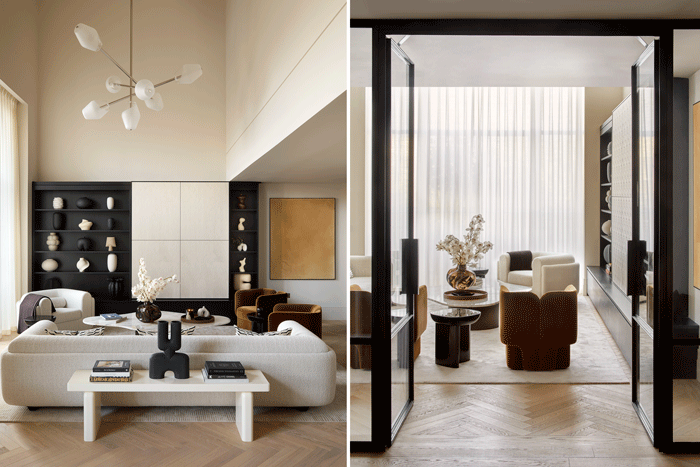
Black is used with confidence throughout the scheme, particularly within the joinery, to give the apartment structure and definition. One of the clearest examples is a custom shelving unit in black bird’s eye maple, created with Irish craftsman Killian Johnston, which conceals the television behind a hidden panel.
Art was another key part of the scheme. The scale of the apartment allowed Maoliosa to work with large pieces by artists including Richard Zinnon and Leonardo Anker Vandal, using the height of the living and dining space to bring presence into the interior.
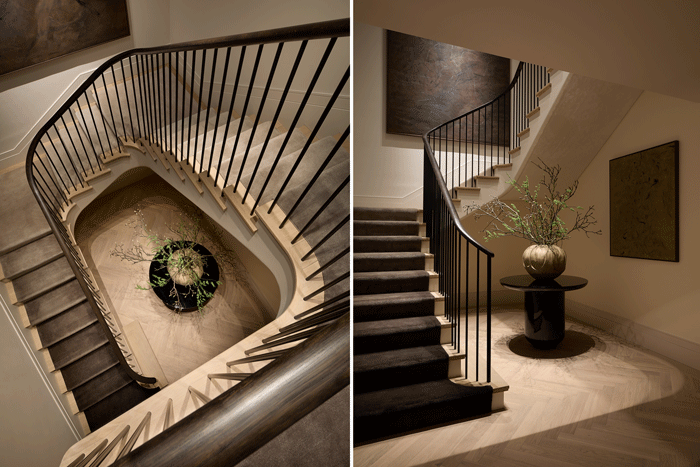
The staircase was treated as a design moment in its own right. Maoliosa introduced a hand-knotted wool and silk runner which continues onto the landing in an ombre transition into a deep chocolate-toned carpet, helping connect the duplex vertically.
The principal bedroom allowed the material story to become more intimate. Although the footprint is wide, Maoliosa wanted the space to feel restful and cocooning, so she introduced tactile finishes including silk wallpaper, an alpaca headboard, and an alpaca-upholstered sofa. She also designed custom bedside tables in bird’s eye maple, chosen for their warm golden toffee tone.
The guest bedroom offered another opportunity to deepen the scheme. There, Maoliosa introduced bead panelling and a stronger sense of colour to anchor the volume and create intimacy within the generous ceiling height.
For all its polish, the scheme was never intended to feel closed. Maoliosa was designing for a resident she did not know, so the apartment had to feel complete while still leaving room for personalisation. The neutral palette was part of that strategy, allowing the future owner to bring in art, accessories, or individual pieces.
“I think it’s very calming,” she says. “You can have a neutral interior that feels cold. This does not feel cold at all. It is very enveloping because of the layers of texture and the colours. We have black joinery in there, so it is not minimal by any means. But it also allows somebody to bring in their own art and add a pop of colour.”
Touching on branded residences
Although 302 North does not sit within The Whiteley’s branded residential collection, our conversation also touched on the wider appeal of branded residences and why they have become such a strong part of the prime market.
For Maoliosa, developments like this answer a set of needs already well established in luxury residential life. Buyers want reassurance that their homes are secure, maintained, and professionally managed, particularly if they divide their time across multiple properties or spend long periods travelling. They also value access to amenities that would be costly or difficult to recreate in a standalone house.
“Branded residences have proved both their appeal and their value,” she says. “For people who travel extensively, the idea of a home with the support of full hotel concierge service, where everything is secure, maintained, and taken care of, is enormously attractive.”
“Convenience is a huge part of the appeal,” she adds. “It is about having everything you need close at hand.”
For some buyers, that means wellness facilities. For others, it is concierge support, security, and simplicity. For downsizers, it can also mean adapting to a different phase of life without compromising quality.
“There is real value in buying into an experience shaped by an established and trusted brand,” Maoliosa says.
Part of what makes branded residences especially current is that they respond to a wider shift in how affluent clients want to live. Buyers are increasingly looking for homes that feel easy, well-supported, and aligned with their lifestyles. They are often travelling frequently, working internationally, or balancing multiple properties. In that context, the appeal of a residence that combines home, hospitality, and operational support is clear.
A design typology worth watching
What made this conversation so interesting is the breadth of what The Whiteley London brings together within one development. Residential apartments, branded residences, and hotel living each answer different needs, but they also reflect a shared shift in the expectations shaping luxury design today.
Through Maoliosa Murray’s perspective, that shift comes into focus clearly: clients want homes that work harder, feel better, and support the realities of how they live. Whether in private residential design or in the growing appeal of branded living, those priorities are only becoming more important.
Image credit: Julian Abrams