







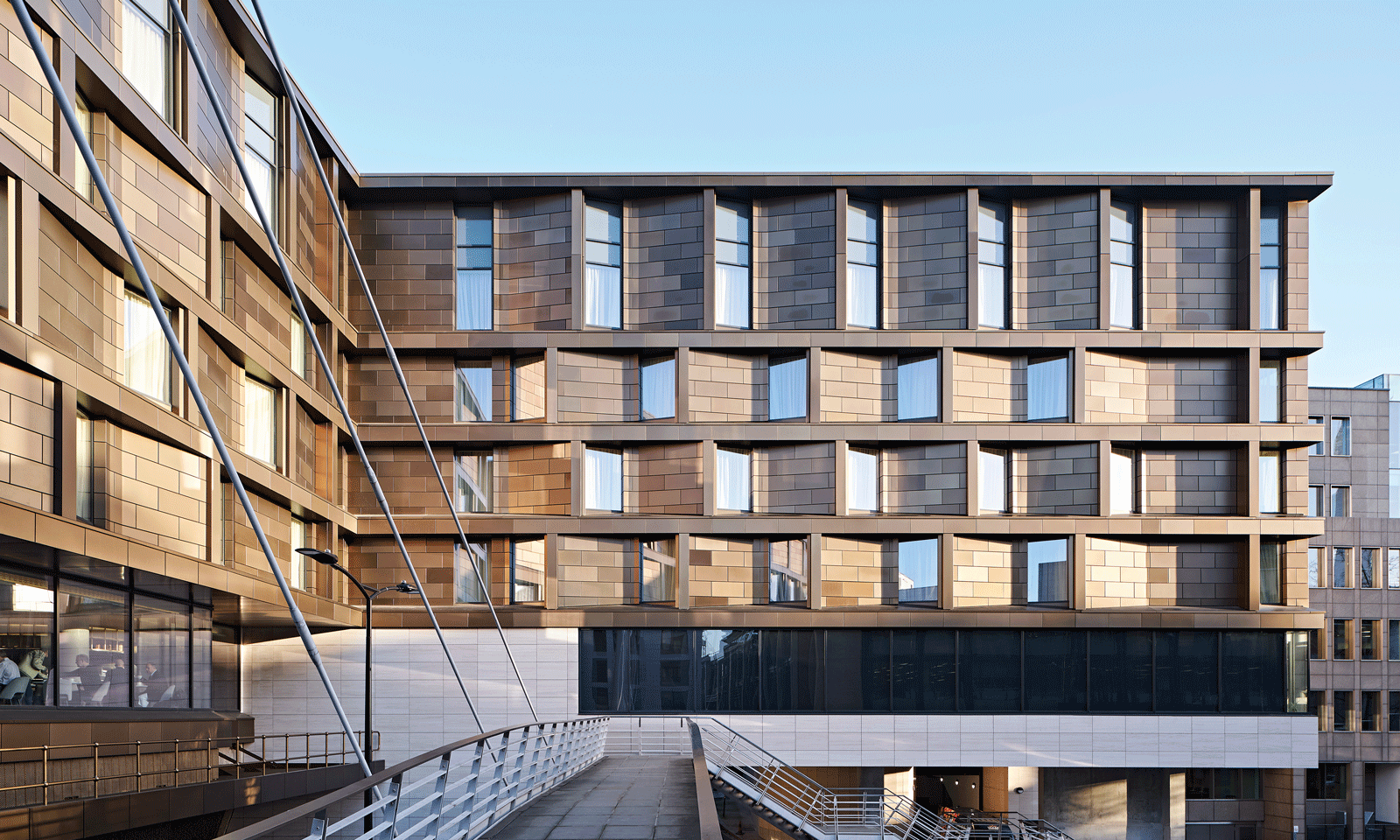
Column: Hotels as Civic Buildings – Why the UK Needs to Catch-Up
Monthly Column By Ed Murray
For all the talk of “experience-led” hospitality, many UK hotels still operate as closed worlds.
You arrive, pass through a controlled threshold, and are deposited into a sequence of internalised spaces – lobby, bar, restaurant, lift, guestroom. Everything is designed for the guest, and only the guest. The city, more often than not, is kept at arm’s length. And that’s a model that I think, feels increasingly out of step.
Across much of Continental Europe, hotels have long been understood differently – not as isolated assets, but as part of the civic fabric. Places that are used as much by locals as they are by guests. Buildings that contribute to the life of the city rather than a retreat from it.
In cities like Rome, Barcelona or Paris, it is entirely normal for a hotel bar to be the neighbourhood bar, for a hotel terrace to be a meeting place, for a lobby to function as a living room for the city. The boundary between guest and local is deliberately blurred – and the building is stronger for it.
This is not just a cultural nuance. It is a commercial one.
A hotel that engages with its surroundings has multiple revenue streams, broader appeal, and a presence that extends far beyond its keys. Its F&B works harder. Its public spaces are activated throughout the day. It becomes part of people’s routines, not just a place they pass through.
In contrast, the UK model often defaults to separation. Controlled access. Clear zoning. Public areas that are technically open, but rarely feel it. The result is space that sits underutilised for large parts of the day, and a missed opportunity to build real connection with place.
There are, of course, reasons for this. Security concerns. Operational simplicity. Planning constraints. And, in some cases, the legacy of converting buildings that were never designed to be permeable in the first place.
But these are not insurmountable challenges. They are design problems.
The best projects we are now seeing begin to address this head-on. Ground floors opened up to the street. F&B positioned as an anchor rather than an amenity. Entrances that invite rather than direct. Spaces that can flex between guest and public use without compromising either.
Importantly, this does not mean sacrificing privacy. The guestroom remains a place of retreat – calm, clearly defined and most importantly, secure. But everything around it has the potential to be more generous, more porous, and more connected to its context.
Because ultimately, the most successful hotels are not those that turn their back on the city, but those that become part of it.
The UK is starting to move in this direction. But it needs to move faster.
Not just because it makes for better buildings – but because it makes for better business.
Written by Ed Murray, Partner at Studio Moren