







Kiln-free ceramics signal a new era in low-carbon surface design
As the built environment continues to focus on reducing embodied carbon, attention is increasingly turning towards materials that have traditionally been difficult to decarbonise. Ceramics sit firmly within that conversation. Long valued for their durability, versatility and aesthetic appeal, traditional ceramic tiles rely on energy-intensive firing processes that contribute significantly to their environmental impact.

A new collaboration between Johnson Tiles and materials technology company Dekiln is challenging that model and opening up discussion about what the future of surface materials could look like. Developed by Manchester-based start-up Dekiln, the patented technology creates ceramic-like composite materials using plant-derived binders and waste mineral powders, including recycled gypsum plaster.
The result is a material that looks and feels similar to traditional ceramics but does not require firing or glazing at high temperatures. According to the company, the process delivers a carbon footprint up to 94 per cent lower than conventional ceramic tiles while incorporating more than 95 per cent recycled content.
While innovation in low-carbon concrete and steel has attracted significant attention in recent years, developments in surface materials have often remained under the radar. Yet for architects and designers working to reduce the embodied carbon of projects, every material choice matters. The emergence of alternatives that retain the performance and visual qualities expected from ceramic surfaces while dramatically reducing manufacturing emissions raises important questions about how specification might evolve in the years ahead.
The challenge for many sustainable material innovations is not invention but scale. Taking a promising concept from laboratory development to commercial reality requires manufacturing expertise, industry knowledge and routes to market. It is this next stage that has brought Dekiln and Johnson Tiles together.
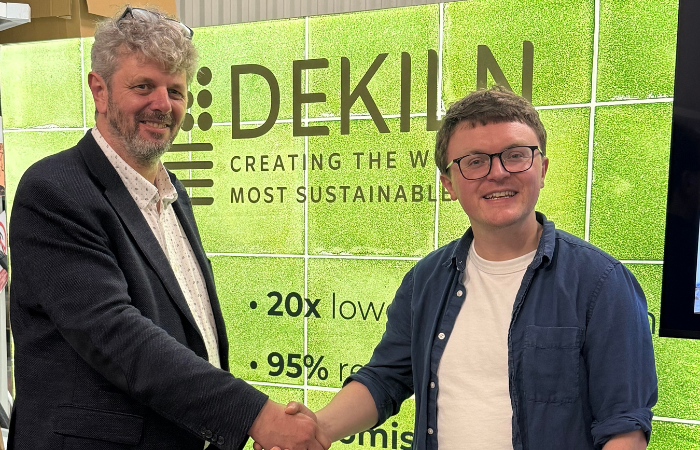
“This marks an important milestone for Dekiln as we transition from the laboratory to industrial scale manufacturing,” says Dr. Aled Roberts, Dekiln’s founder and CEO. “Johnson Tiles’ technical expertise, market reach and sustainability focus makes them an ideal partner to support our ambition to scale-up and commercialise our technology.” he adds.
The partnership reflects a wider trend emerging across the construction sector, where established manufacturers are increasingly collaborating with start-ups and climate-tech innovators to accelerate the development of new materials. As sustainability requirements become more demanding, these relationships are playing an important role in bridging the gap between research and real-world application.
For Johnson Tiles, the opportunity lies not only in supporting a potentially transformative technology but also in exploring how the ceramics sector can continue to evolve in response to changing environmental expectations.
Jason Bridges, Procurement Director at Johnson Tiles said:
“Johnson Tiles are really excited to be forming this partnership with Dekiln and look forward to adding our technical expertise and market knowledge to ensure this unique concept reaches its potential in the marketplace.”
“Aled’s fresh thinking on solving the recycling of waste alongside removing the sintering process to create a product with all the performance and aesthetic qualities of traditional tiles without anywhere near the embodied carbon is a real game-changer and a concept that aligns perfectly with Johnson Tiles’ sustainable thinking.”
The technology has already gained industry recognition. Dr. Roberts was awarded a Royal Academy of Engineering Green Future Fellowship, securing £3 million in funding to support the commercialisation of the concept. Alongside plans for industrial scale-up, the partners are also exploring opportunities to establish a pilot manufacturing facility in Stoke-on-Trent, connecting emerging materials innovation with the historic heartland of British ceramics.
Whether kiln-free ceramic alternatives become a mainstream specification choice remains to be seen. What is clear is that the conversation around materials is changing. As designers and specifiers continue to seek practical ways to lower embodied carbon without compromising performance or aesthetics, innovations that rethink the manufacturing process itself may prove just as significant as the materials they replace.
Find Johnson Tiles on Supplier Finder
Supplier Finder is the UK’s only search platform for accredited suppliers of commercial interior furnishings.
At Supplier Finder, our mission is simple: to help you find the perfect commercial furnishing suppliers for your interior schemes and projects. We understand the importance of having confidence in the suppliers you specify and the products that bring your designs to life. That’s why each supplier featured on our platform is accredited through Commercial Interiors UK’s rigorous membership application process. This ensures that you engage with only the best in the industry!