


Milan Material Finds
With Salone del Mobile.Milano once again anchoring Milan Design Week, the 2026 edition reaffirmed the city’s position as one of design’s leading global testing grounds. Across the fairgrounds and the ever-expanding constellation of Fuorisalone installations, exhibitions and temporary installations, Milan continues to operate like a city-scale laboratory for ideas.
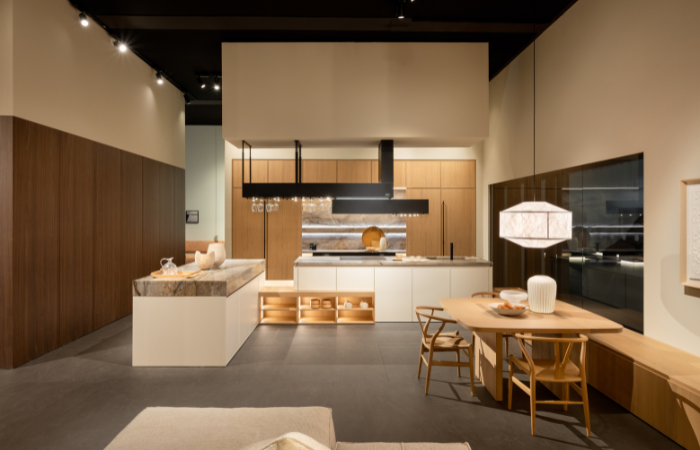
Photo credit: Saverio Lombardi Vallauri
This year, organisers of the Salone, arguably the most commercial and object-laden of all the ventures, chose the play on words A Matter of Salone as its core thematic driver. In a seemingly conceptual yet also incredibly literal move, the team hoped thoughts about the meaning of matter might get visitors thinking: “Matter, in fact, is matter, but also what matters, what generates meaning.”
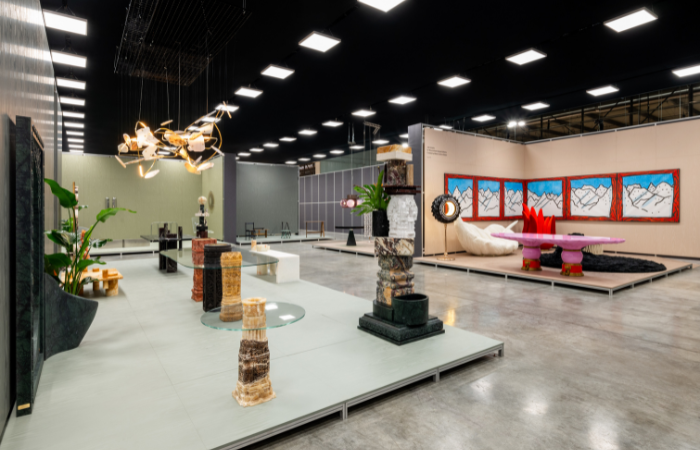
As ever, while headline installations and major brand launches inevitably draw attention, the most revealing narratives often emerge elsewhere, more often than not, in experimental venues where material research, spatial design and emerging practice intersect. Among these, Alcova has firmly established itself as one of Milan’s most compelling platforms for contemporary material culture.
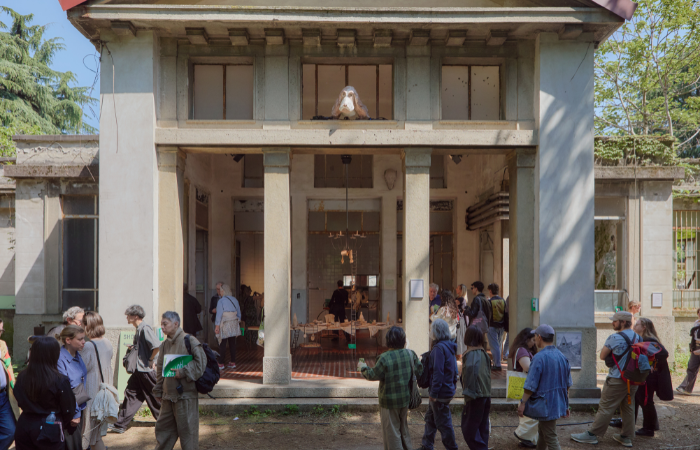
Photo credit: Luigi Fiano e Ardesia Coco
Now in its eleventh edition, Alcova Milano once again demonstrated why it has become a reliable barometer for material experimentation during Milan Design Week. The event unfolded across two radically different sites: the newly opened Villa Pestarini and the vast Baggio Military Hospital complex. Together, they framed an edition defined by dialogue between preservation and reinvention, historical architecture and speculative design thinking.
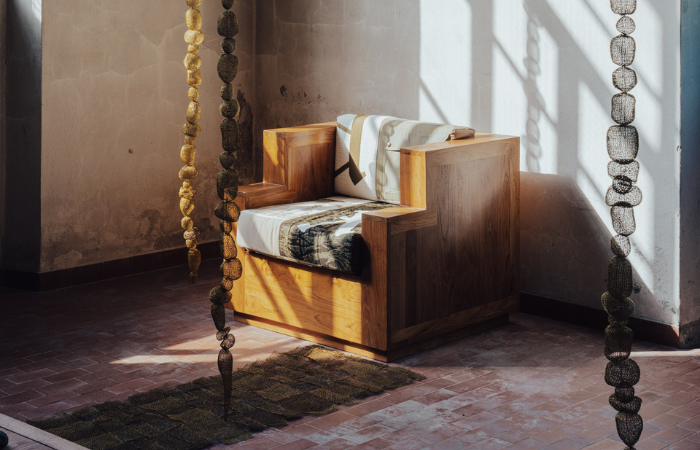
Photo credit: Bisa Studio
Amid the overtly traditional Italian architecture ran a theme of minimalism, with numerous forms sitting in contrast to the formerly lavish backdrop with an air of asceticism. Self-proclaimed creative laboratory and maison d’édition Bisa Studio chose a simple, step-edged form with sharp right angles to create their timber-clad, cushioned chair. As with all their pieces, the Indonesian brand conceived the object, “as an embodied story, where material memory, formal investigation, and artisanal expertise converge.”
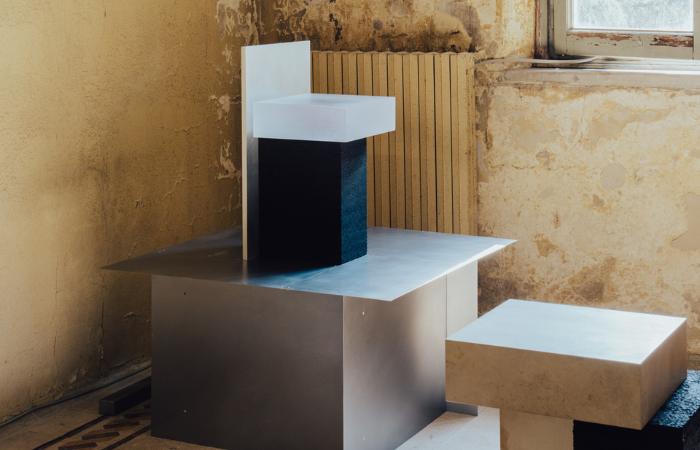
Photo credit: So Koizumi As
Designer So Koizumi opted for cuboid blocks to bring together materials including metal, stone and resin, along with asphalt – a material that has traditionally been used as merely an adhesive in their native Japan – to create a minimal furniture range consisting of side tables, stools and lighting.
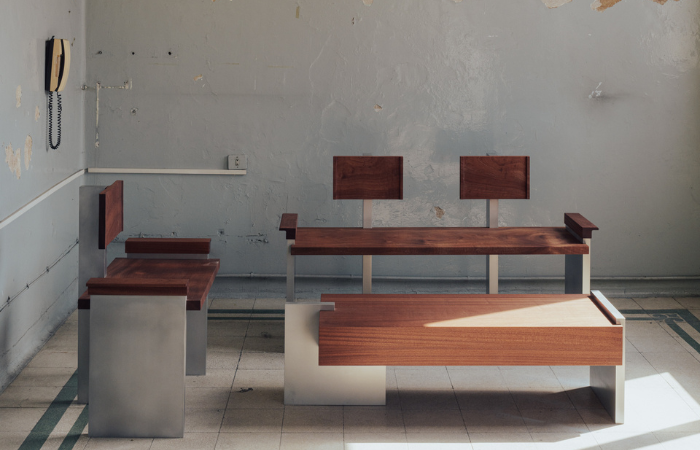
Photo credit: Lorenzo Mckechnie Studio Schema
While London-based Lorenzo McKechnie drew together aluminium and hardwood in the creation of Schema. The selection of blocky forms make up a “spatial scheme rather than individual objects,” and the tension between cold metal and warm wood is deliberate, with users encouraged to think about how to place them in relation to one another, as well as how the materials might wear over time.
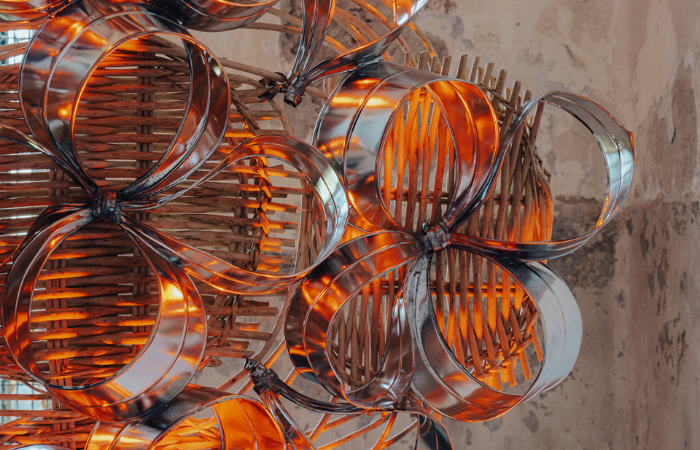
Photo credit: Legado Artesano Castilla LaMancha Materia Expandia
These minimal, rectangular pieces may exude industrial precision, but in contrast, another trend spotted at Alcova was one for the handcrafted using natural materials. One standout craft was that of basket weaving, as seen with Tomás Alía from Estudio Caramba’s sculptural piece, Expanded Matter. Much like McKechnie’s collection, there is a deliberate collision of materiality, with tinplate and wicker combining in a curved form that brings a contemporary dialogue to an artisan process.
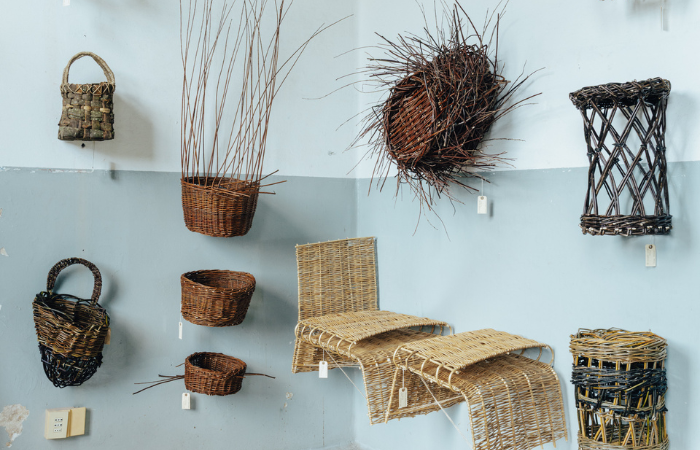
Photo credit: University Of The Arts Bremen Farm To Form To Fair
Students at the University of the Arts Bremen gave basket weaving their undivided attention following a series of workshops from experienced basket weaving designers and craftspeople. The project became an exploration of material provenance and craft, with the students engaging with production from field to finished product.
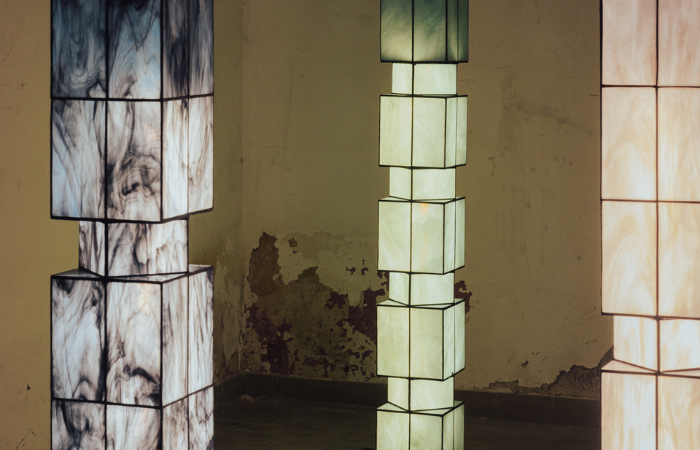
Photo credit: Berto Facetas
The Tiffany Collection by Alberto Sánchez Facetas also reinvents a traditional but somewhat forgotten process known as the Tiffany Technique. Pieces of glass are carefully soldered using tin and copper with this variation of stained glass, and while utilitarian in form, the internally lit forms have the quality of marble.
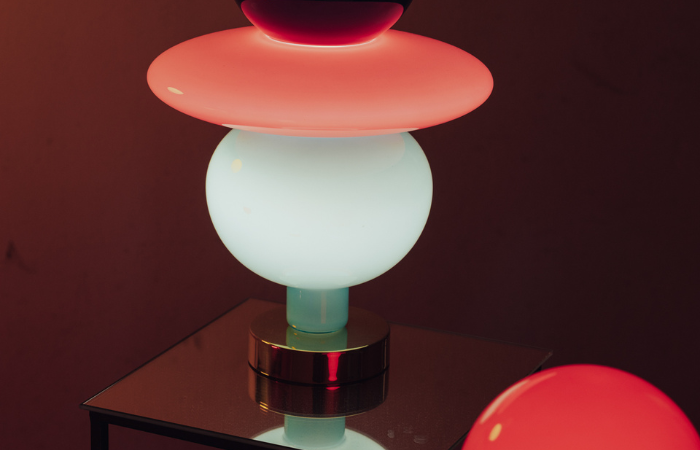
Photo credit: Michał Korchowiec, Objects With Love LightSculptures
In terms of colour, many designers clearly had rich scarlett-amber shades on their minds. This was particularly present (and worked particularly well) with vitreous materials, that added a depth of colour and subtle reflective qualities. Polish designer Michał Korchowiec cites the medical red heat lamps he remembers from his childhood as the initial inspiration for the lamp series, Objects Made With Love.
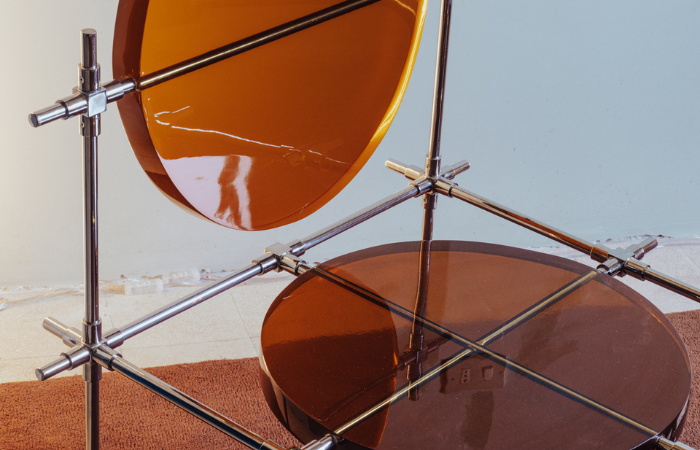
Photo credit: MA-MA, The Waiting Room
USA design collective MA-MA conjures a similar vintage feel, not least with their Chair 01 – an element in the Waiting Room collection – which is composed of a chromed steel frame and chunky, translucent amber resin discs. One subtle detail of the design is the adaptability of the collection, which encourages users to interchange elements.
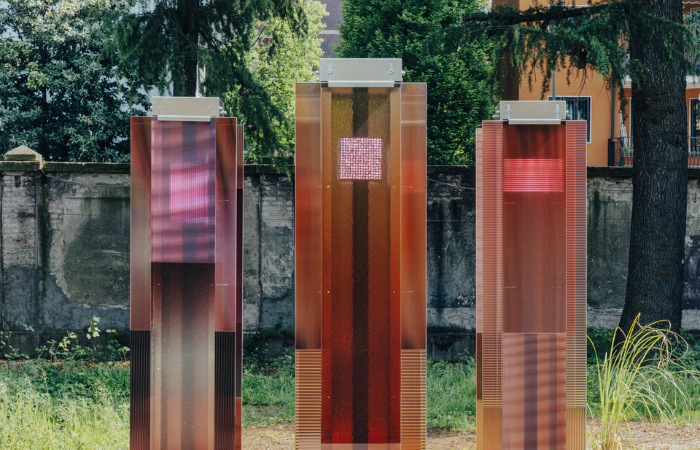
Photo credit: Rive Roshan, Garden Of Hope
Transparency, and with it, the blending of red, earthy shades, is central to Rive Roshan’s Garden of Hope exterior installation. The coloured glass monoliths are designed to refract light and act rather like a kaleidoscope, with light patterns that shift across the red end of the spectrum, which are matched by a twinkly soundscape inspired by the designers’ Dutch and Australian-Iranian heritage and timely songs that long for freedom.
In a week defined by scale, Alcova once again proved that some of Milan’s most significant material discoveries are found not in the spotlight, but slightly off the main stage.