




Salford’s Buile Hill Mansion begins new hospitality chapter, with beautiful and refined interiors by SpaceInvader
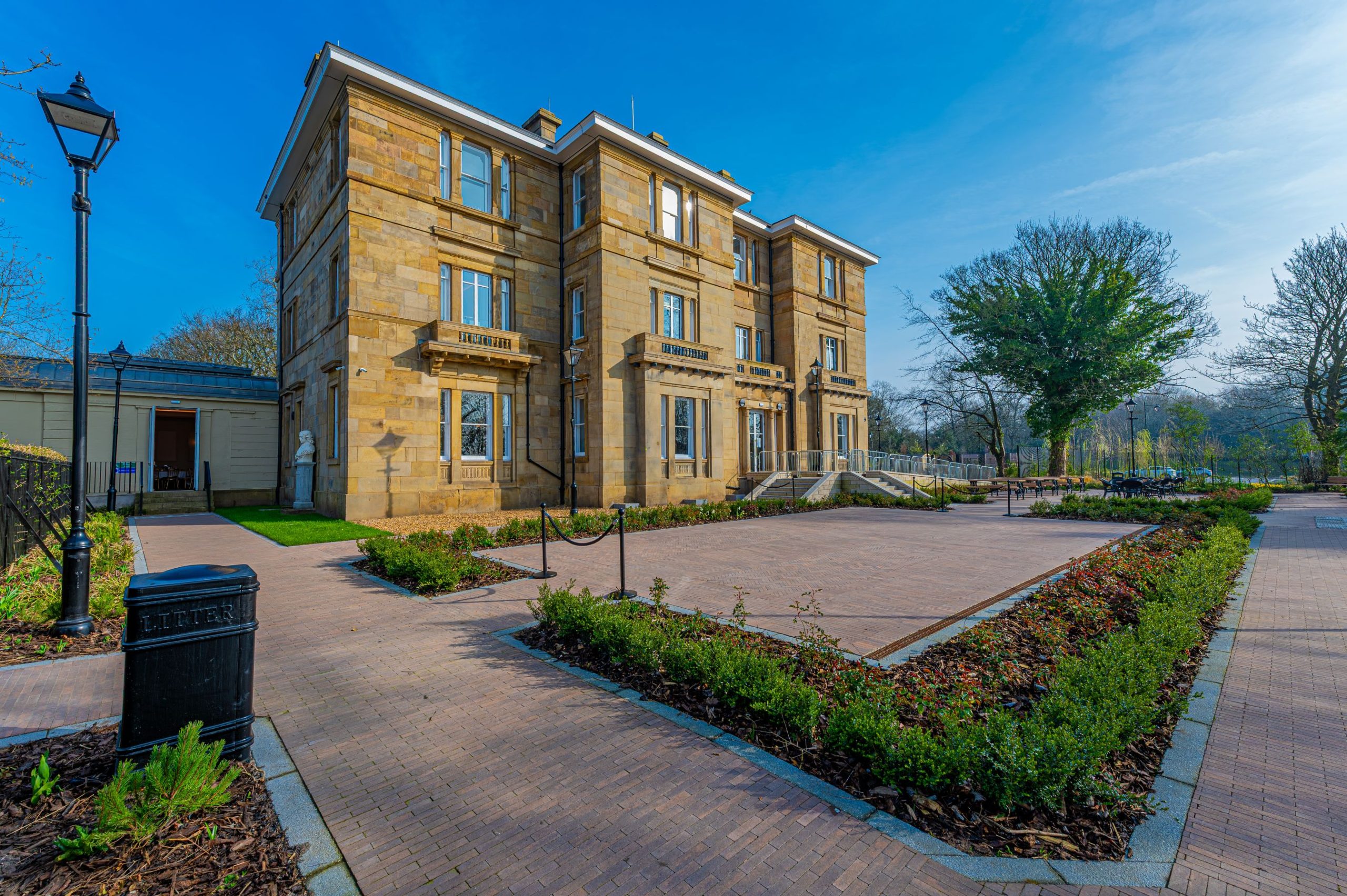
Buile Hill Mansion, set in the grounds of Salford’s Buile Hill Park, had been derelict for 25 years before Salford City Council led an £11m transformation to bring the Grade II-listed building back into use as a café, bar and series of events spaces, aimed specifically at the weddings market, as well as making it the site of its official register office.
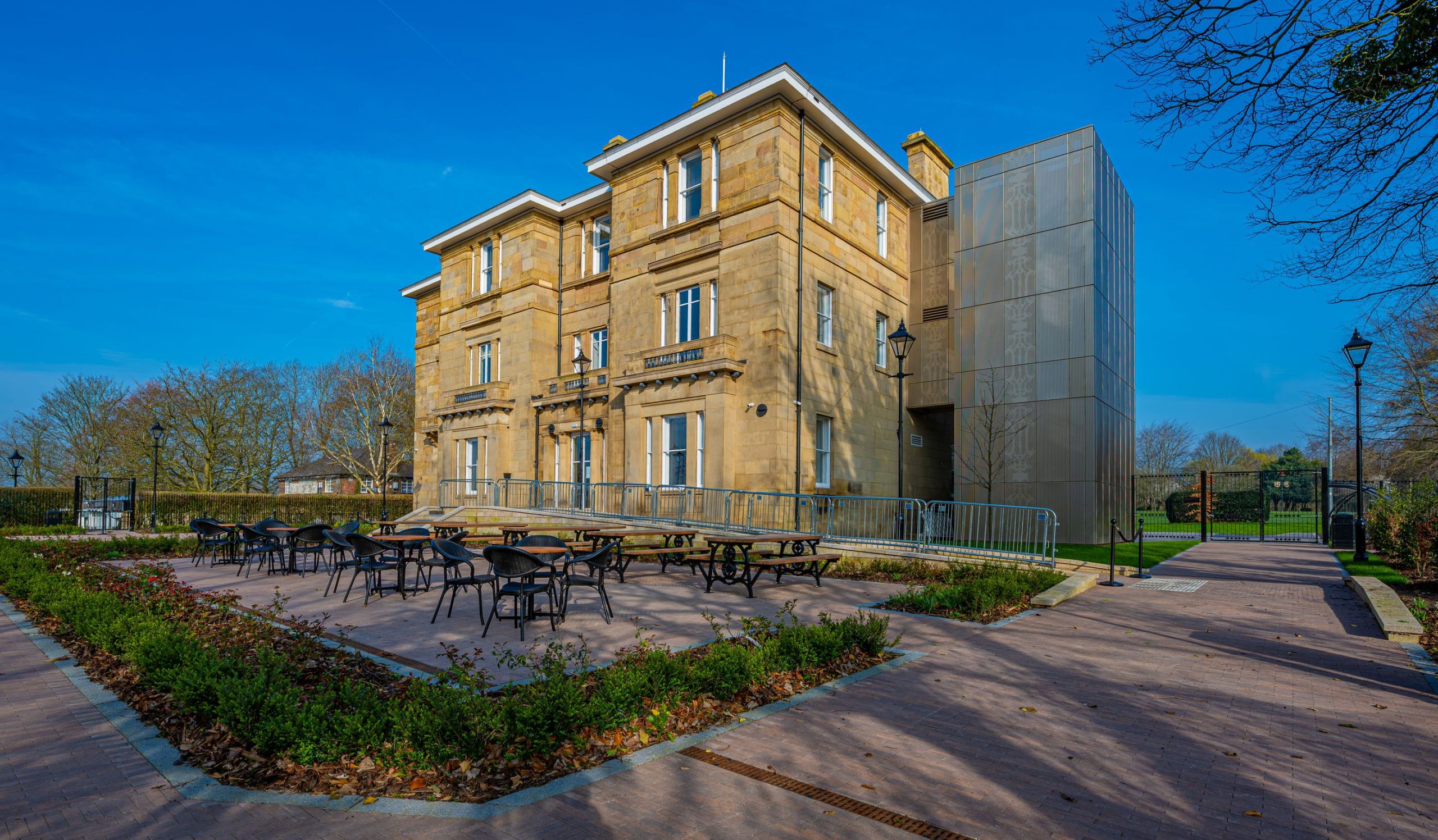
External terrace seating and view of new external stair
Buttress Architects were appointed to oversee the building’s architectural restoration, bringing it in line with contemporary building regulations, whilst Manchester-based design consultancy and hospitality experts SpaceInvader were commissioned to reimagine the interiors, developing a design concept for a flowing series of flexible function and public-facing spaces, with new wayfinding and signage forming part of their overall approach. The renovated Buile Hill Mansion now offers a beautiful, refined and characterful interior to serve as a local venue for both community use and private hire.
SpaceInvader was formed in Manchester in 2009 and is now a B Corp certified company, as well as one of the UK’s premier design agencies, with over 60 creative awards and nominations for its work across the hospitality, stadia, residential, commercial and community sectors.
Established in 1988, Buttress is a 100% employee-owned architecture and design studio based in Manchester and Leeds. Its award-winning work encompasses heritage and conservation, residential, arts and culture, faith, commercial, workplace, hotels and leisure, community and education sectors.
John Williams, Founder/Director of SpaceInvader, commented;
“Giving what had become a tired local asset such a major transformation has been a real joy for the SpaceInvader and wider project teams. Buile Hill Mansion is now a place for community and celebration; a venue people will use and visit for generations to come, tying the past, present and future together in the communal memory.”
Building History
The 976 sq m, three-storey building, completed in 1827, was built as the family home of local businessman Sir Thomas Potter, a textile merchant who went on to become Manchester’s first elected mayor. The mansion was designed by distinguished architect Sir Charles Barry, who later built Manchester Art Gallery, rebuilt the Houses of Parliament and re-modelled Trafalgar Square, as well as many notable country houses and churches across the country.
The Georgian property eventually passed out of family use and became a mining museum, before being shut down and passing into the ownership of Salford City Council.
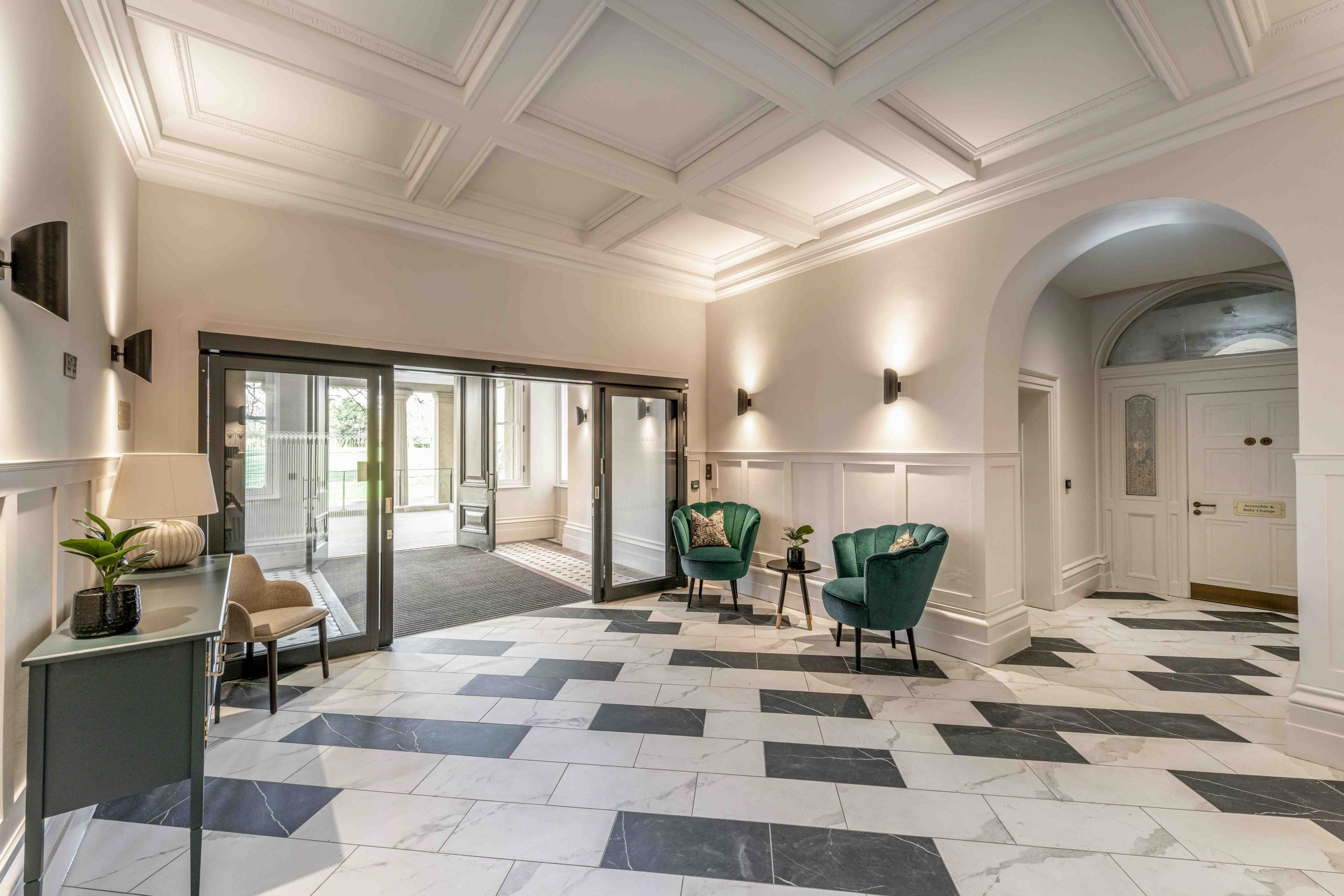
Reception Area
New Functionality and Accessibility
The building now accommodates Salford City Council’s registry services and offices, as well as community spaces including a café and community group room, along with a hireable bar, wedding rooms and function space. SpaceInvader worked closely with the Council to devise new names for each room.
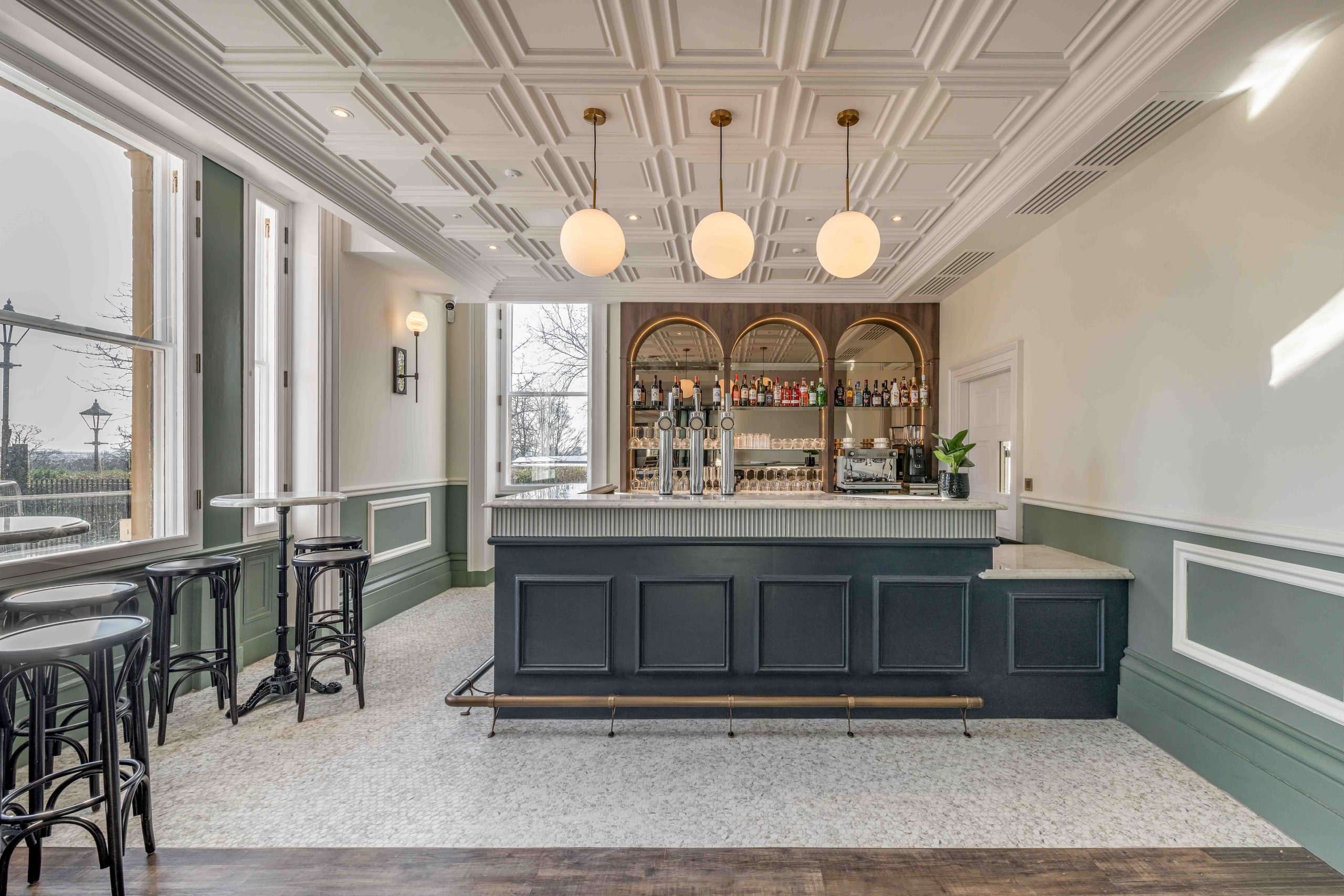
The bar was designed for day-to-night use
To modernise the building, as part of Buttress Architects’ remit, disabled access ramps were installed, along with a lift and an external enclosed staircase, providing a secondary fire escape exit to comply with building regulations and make Buile Hill Mansion accessible for all residents and communities in Salford, as well as being an essential addition to bring the Mansion back into viable use. The previous Buile Hill depot outbuildings, with the exception of the derelict greenhouse, were also demolished and a new car park was created, together with new landscaping.
Interior Layout
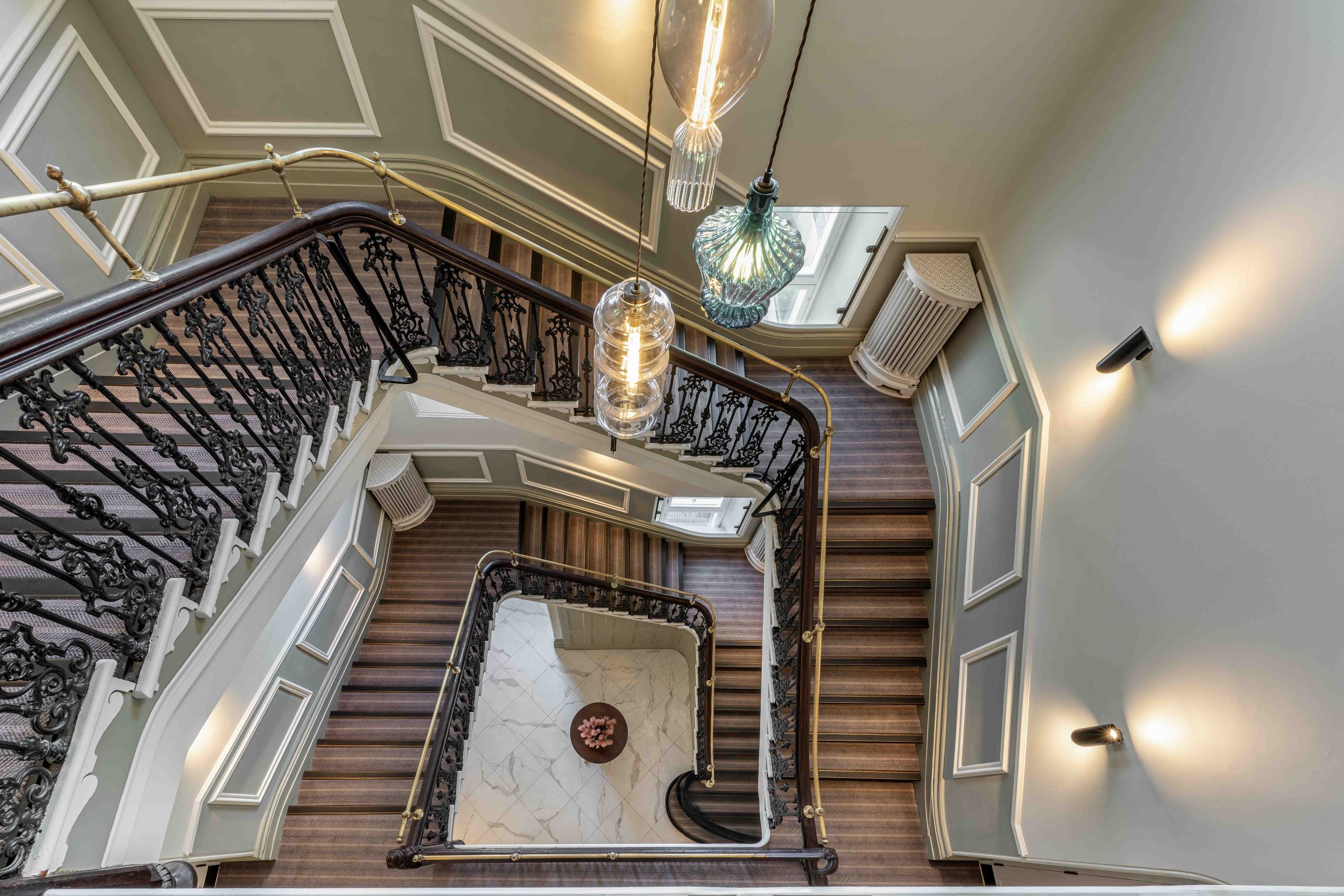
View from top of stair back to reception
The main entrance to the building is north-facing and followed by a reception space. On arrival, visitors are directed either to Salford City Council’s re-located Register Office (for births, marriages and deaths) on the building’s second floor, accessed either via the main, central staircase or by lift, or to the function rooms or towards the south-facing café and terrace area.
The new, public-facing Secret Garden Café for destination visitors and users of the park is located on the ground floor, together with washrooms and access to a landscaped external area. A bar area also adjoins the café space via bi-folding doors, serving as part of the function rooms offer.
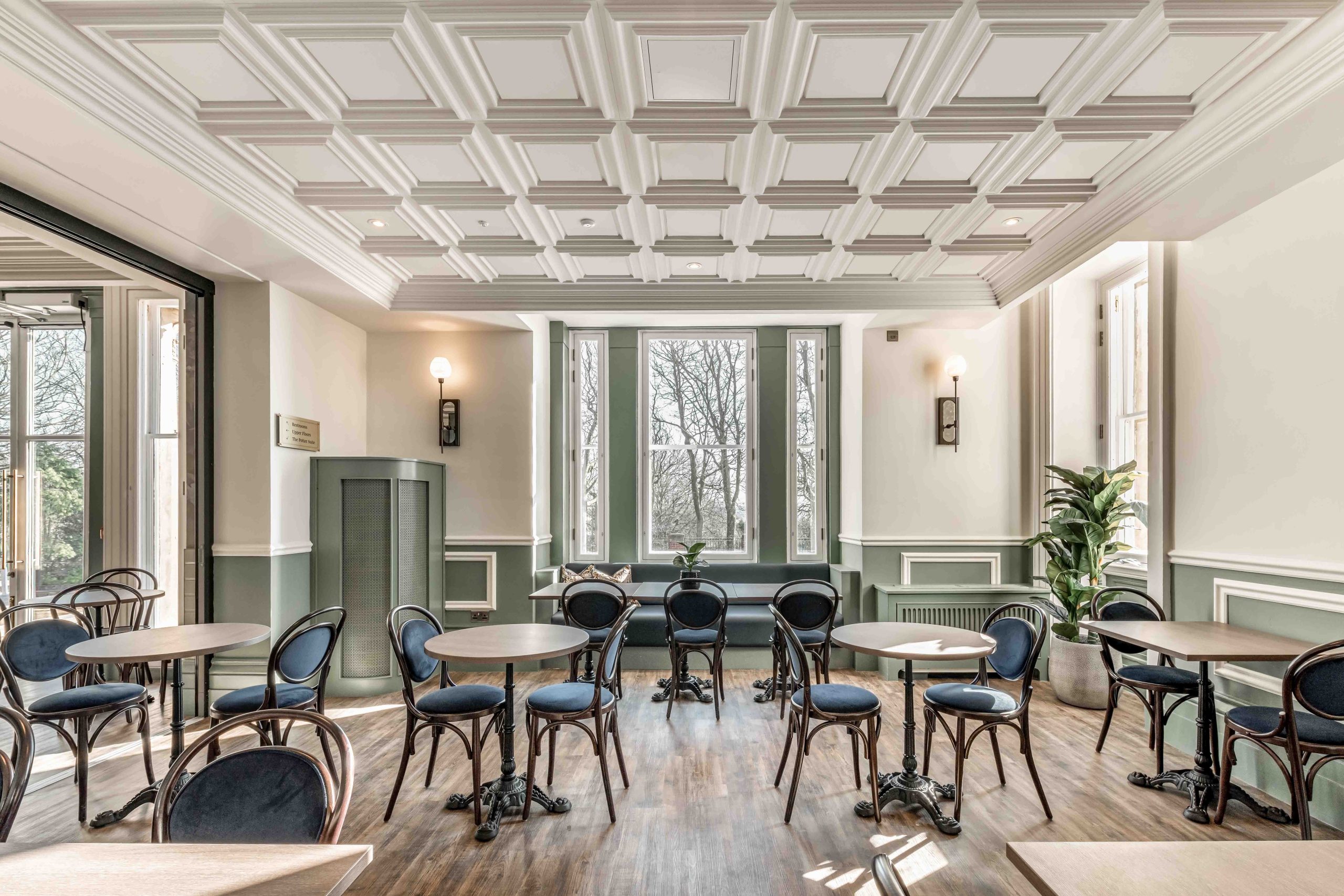
Bar seating with dado rail and panelling linking the bar and cafe spaces
On the first floor are the main events / wedding ceremony spaces, collectively-entitled The Kingslea Suite and comprised of a circulation area which then leads into the ceremony room, with space in each for up to 80 people. There is also a bridal statutory or pre-ceremony room – The Olive Room – with a variety of loose furniture and a vanity table, where the wedding party can prepare before entering the main ceremony room. The Olive Room can, alternatively, be used to host small legal ceremonies.
Additionally on the first floor – though outside of SpaceInvader’s scope – are a staff kitchen and the ‘Ellen Mallinson Community Room’, a community group space. On the second floor are council offices, designed by Buttress Architects, whose design treatment links to the public-facing interiors concept created by SpaceInvader on the ground and first floors.
Hospitality Design Concept
“When we first visited the site” Imogen Woodage, Associate Director at SpaceInvader explained, “the property was in a very dilapidated state. Amongst various items from the past still lying around were a lot of old keys. This discovery went on to form a first strand of inspiration for the interiors scheme, with keys becoming an icon for the signage language, for example.
Frances Hodgson Burnett, the author of the classic children’s novel ‘The Secret Garden’, was also rumoured to have written the book during one of her many visits to the park – and this became a further part of the design concept: unlocking the secret garden, with the book name also inspiring the name of the café.”
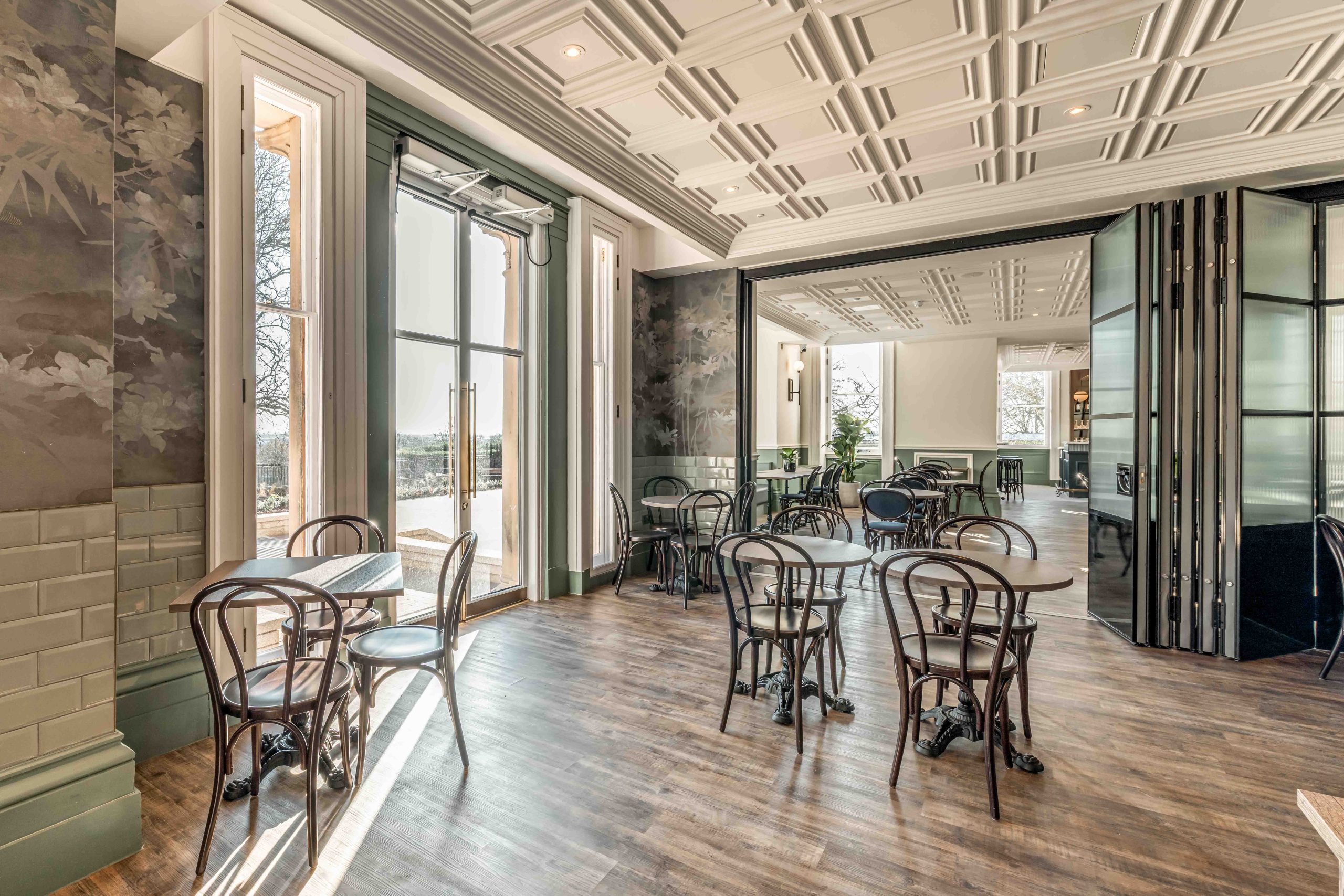
Cafe seating area with bi-fold door to seal off bar when an event is in progress
The third strand of the design concept came from the building itself and its historical origins, with a Georgian colour palette created for the scheme that was made up of soft pastels in mauve and green, along with black and white tiles or else mosaic, heritage-inspired flooring.
As part of the landscaping works relating to the project, a Sensory Garden, first created in 1963 as a garden for the blind, was re-planted to the left side of the mansion, near the front entrance. As part of the scheme design, an outdoor connection is maximised throughout, making the most of links to nature and views out through the property’s beautiful sash windows.
Interior Design Walk-through
Reception Area
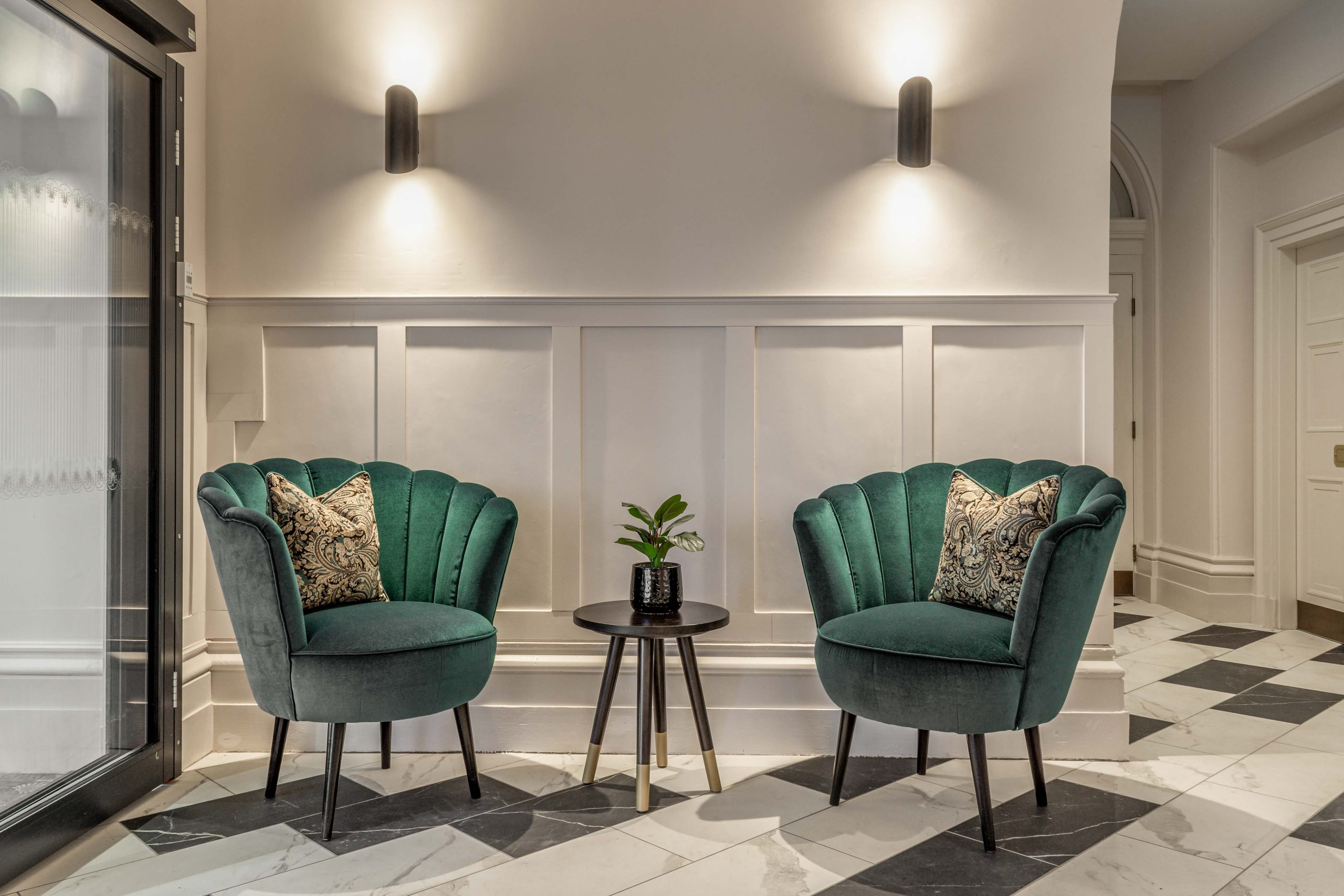
Tongue-and-groove panelling and armchairs in rich green
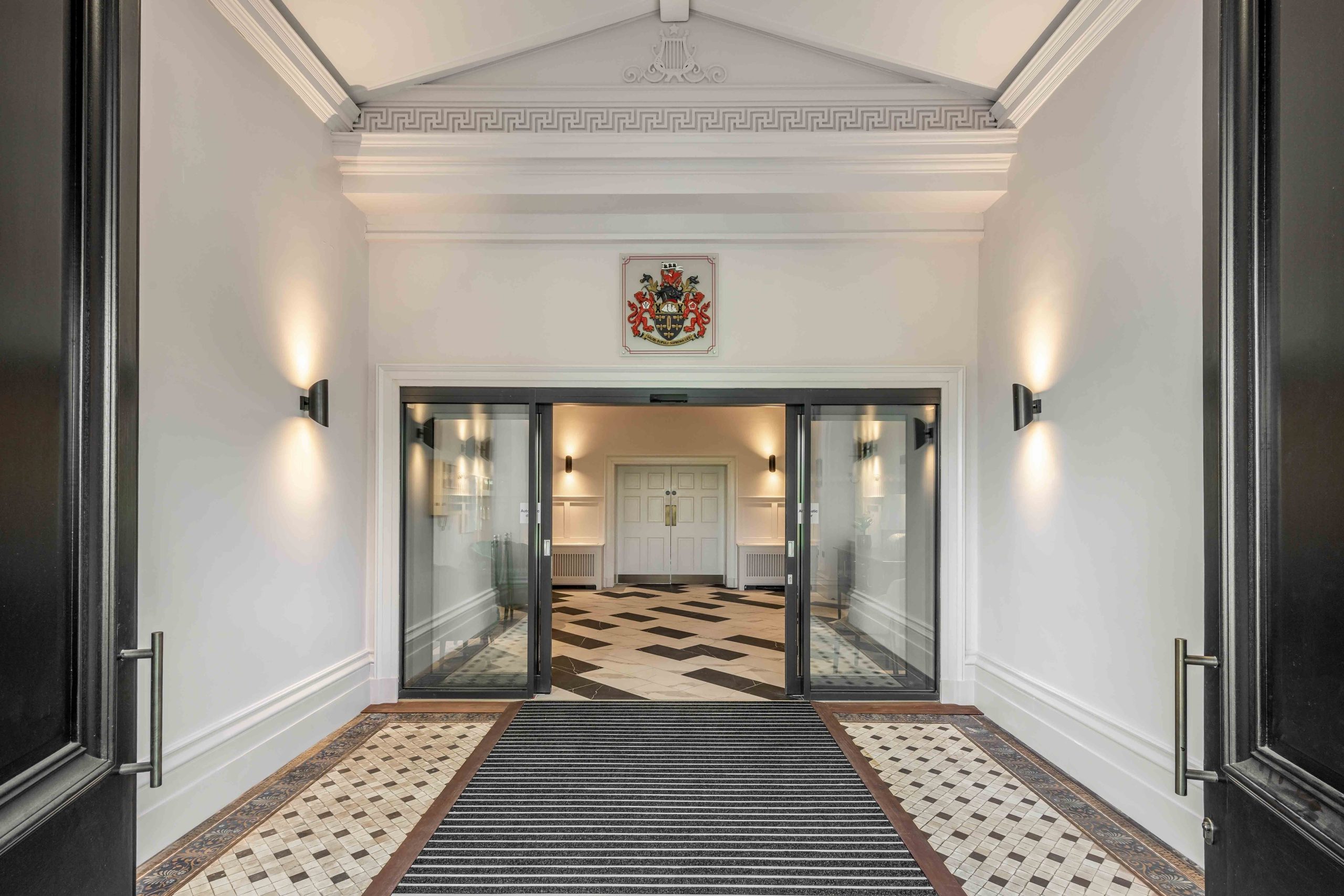
During the renovation works, existing floor tiles in the entrance area were revealed, which SpaceInvader pushed to restore and reveal further. These line the edges of the new entrance flooring, with the main area tiled in a monochrome marble-effect, using tiles by Solus Ceramics. SpaceInvader Branding & Graphics Associate Jenny Crossland also took inspiration from the pattern of the newly-revealed tiles for both the design of window manifestations on the scheme and of the key icon used on the wayfinding directories.
A heritage-style plaster ceiling was created for the space by Whitechapel, whilst bespoke joinery for the space includes a sideboard and decorative radiator covers. The overall design treatment is quite neutral, with tongue-and-groove wall panelling and armchairs, supplied by Telegraph Furniture, in a rich green. Table lights on the side table in the space are by Chelsom.
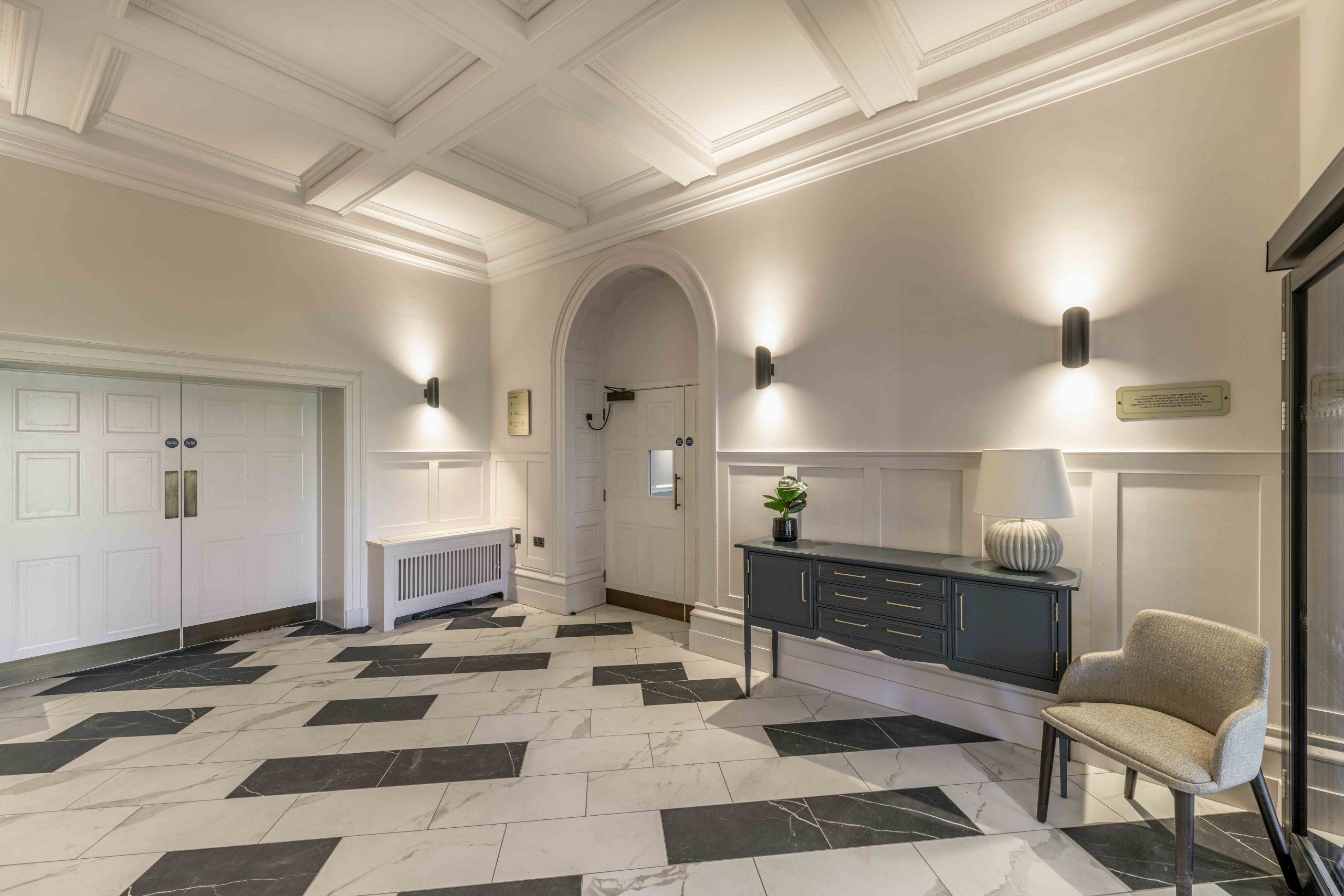
Monochrome, marble-effect flooring by Solus Ceramics
The mansion’s historic staircase is a central feature of the space and the existing balustrade and handrail have been retained and restored, with a new stair runner carpet in a chevron pattern by Calderdale. Wall panelling to the side of the stair is in green and wall lights by Northern Lights line the galleried staircase. The stair once featured a famous pendulum, which has since gone missing, so a new chandelier was proposed by SpaceInvader in a range of colours to compliment the scheme and replicate the drama of the original. This has been formed by a series of six pendants at different lengths, all sourced from Northern Lights.
The Bar + The Secret Garden Café
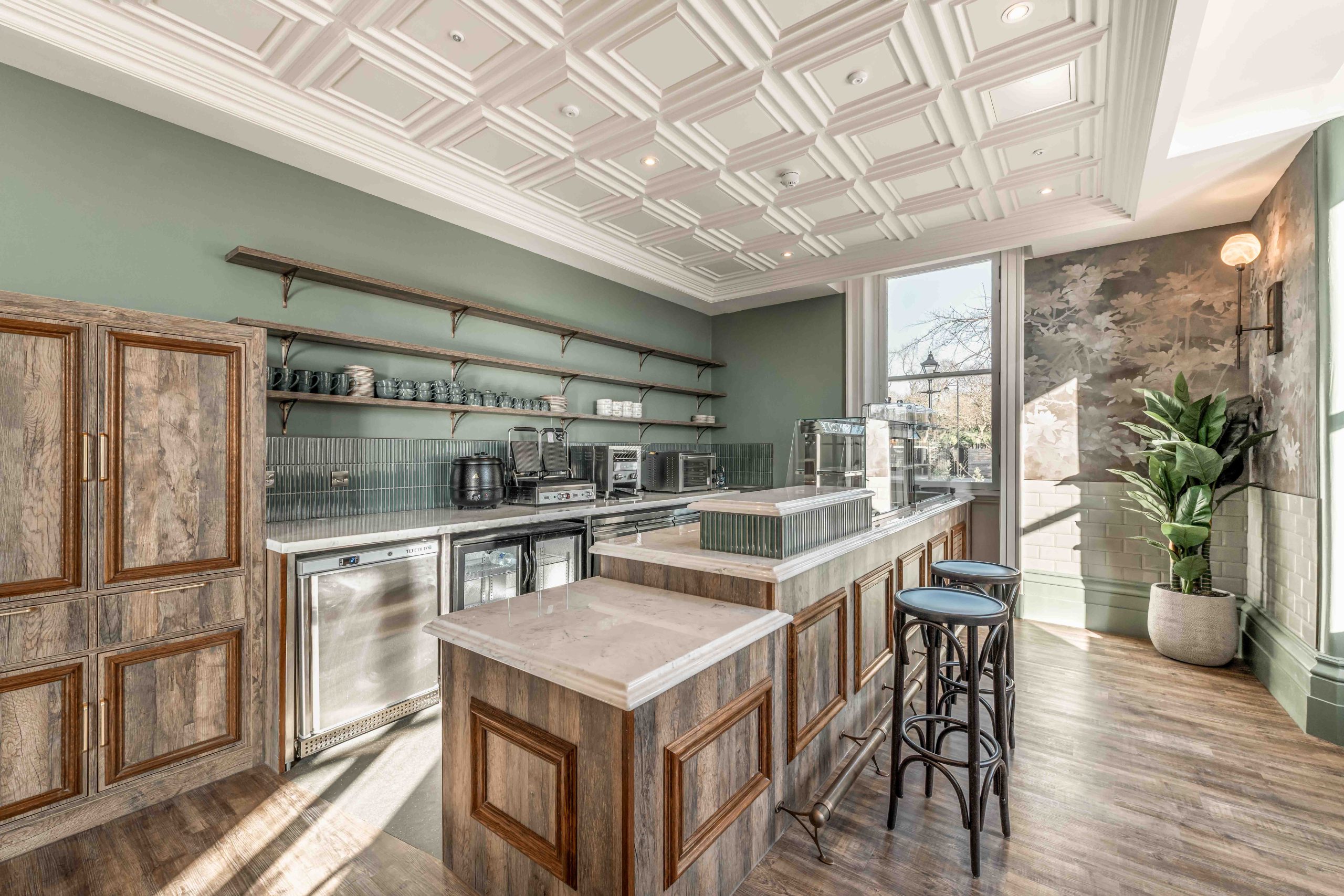
The Secret Garden Cafe
The bar and café areas on the ground floor were designed for day-to-night use, with the bar area design a little richer and moodier, including a walnut laminate back bar wall with antique mirroring to the bar arches, enhanced with LED lighting. Three pendant globe lights above the bar are from Tyson Lighting, whilst the marble-effect table-tops are by Versital and feature a resin-like material, also used for the bar counter for consistency.
There is a tiling mosaic floor in a marble effect around the bottom of the bar, whilst the bar-front features vertical thin tiles and lower-level panelling. Both heritage-inspired panelling and a dado rail feature in both the bar and café areas to connect these spaces, along with heritage-style wall lights by Northern Lights. The furniture for both areas was designed to have weathered ‘character’ in dark wood, with bespoke fixed joinery seating located within the alcoves.
There is provision for forty-five covers across the bar and café areas. The Secret Garden Cafe, which is public-facing, has a more casual design feel. Its colourway is muted green to reflect nature and the colours of the surrounding park. The café countertop is the same as the bar top but the front this time is timber instead, with a more daytime feel. Bi-fold doors with a black metal surround and a reeded film texture manifestation can be used to separate the café and bar spaces when an event is in progress.
The café design also features a mural-type floral wallpaper and Karndean timber-effect flooring. The space has a coffered ceiling with beading – created using a specialist product from Orac – which allows them to be easily accessible for M&E and general maintenance.
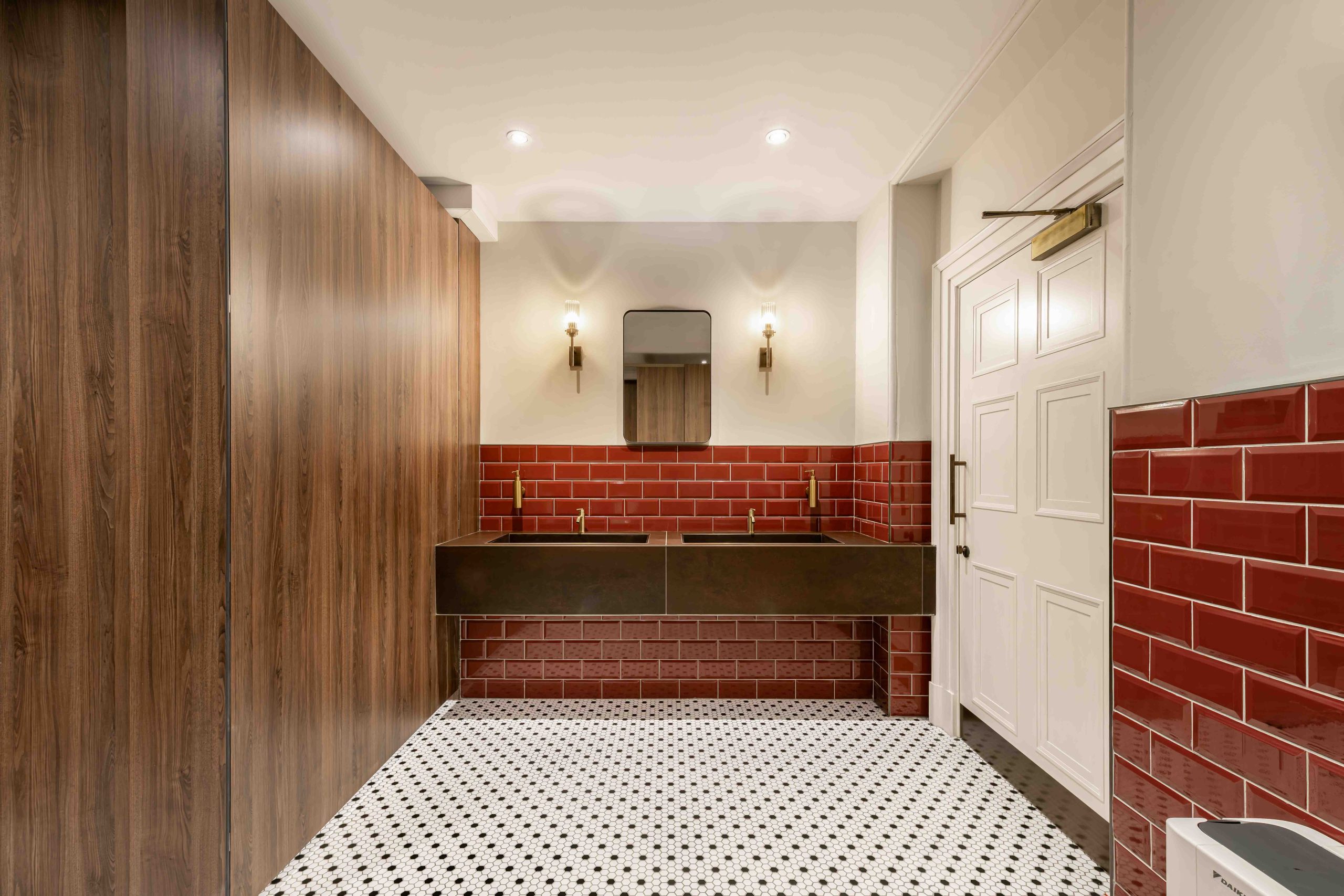
The striking public washrooms on the ground floor feature two different colour palettes: burgundy for females and green for males. Both have black and white mosaic tiling flooring and Corten-steel-effect sink tiling. A brass finish has been used for all sanitaryware and door hinges, creating an unusually high-spec environment for public toilets.
The Potter Suite
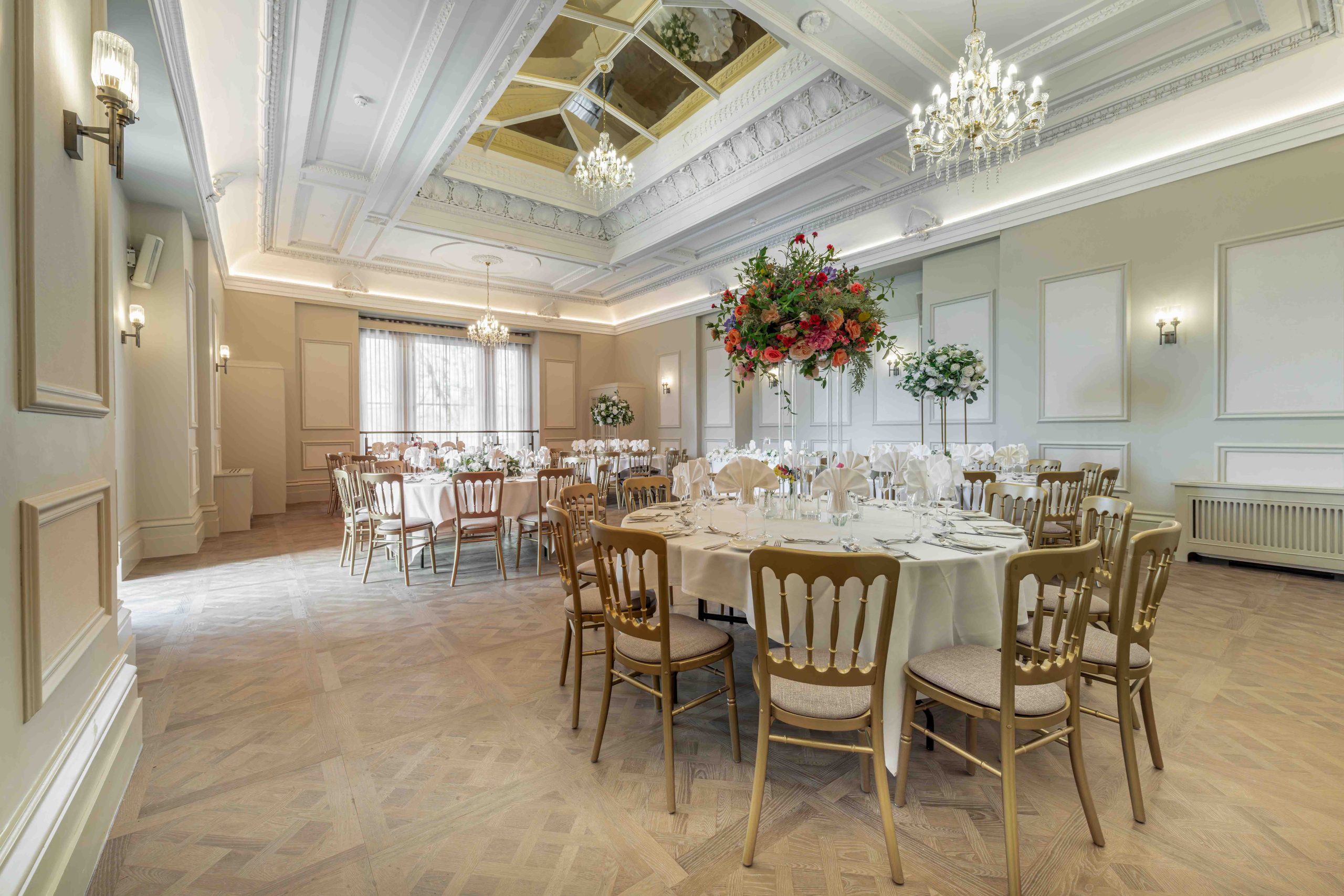
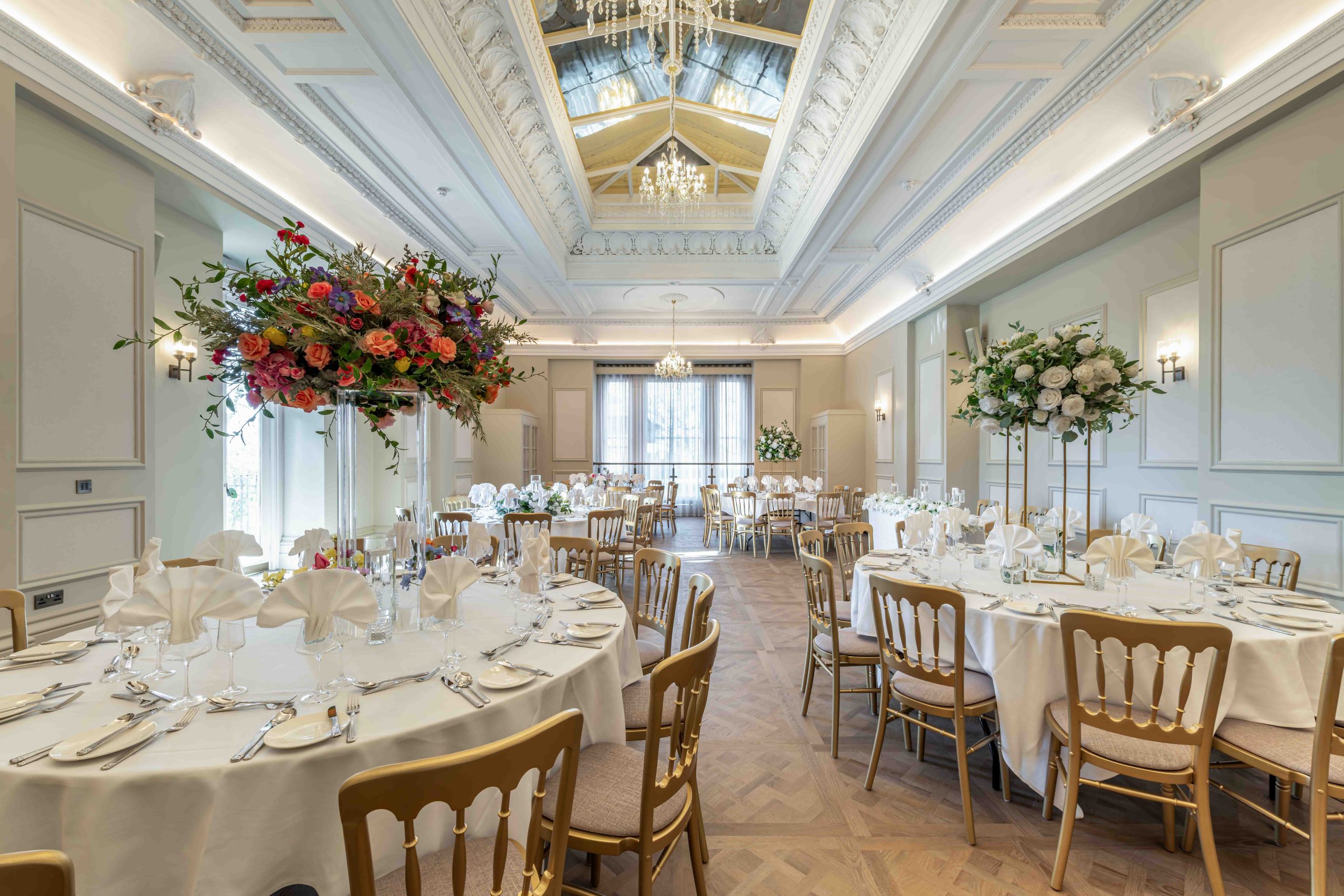
Because of the condition of the building, only the ground floor function room – now named The Potter Suite – was able to have its original ceiling cornicing restored, whilst the other rooms now feature a more contemporary version of the cornicing.
Where decorative coving and skirtings were to be reinstated or repaired, this was carried out by a company called Whitechapel, with SpaceInvader and Buttress Architects making the call on what to restore and where it was better to decorate, subject to planning approval. The two architectural and design teams worked closely throughout on the plans for the scheme’s ceilings, walls, floors and doors, all of which needed to be cleared in advance.
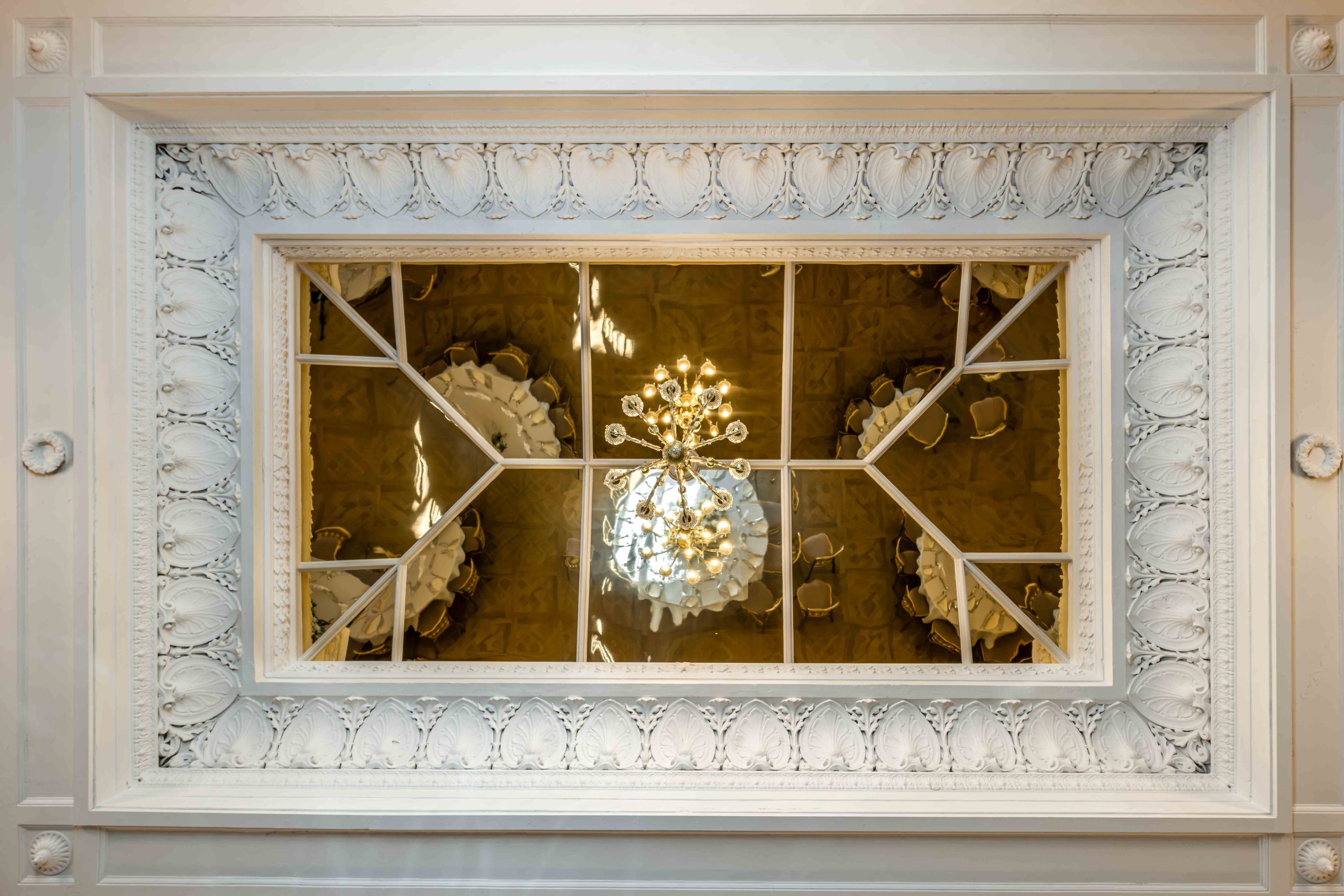
SpaceInvader designed a mirror-effect glazed cladding for the room’s central lantern ceiling feature, with frosted mirroring and three chandelier lights suspended from the same spot the room’s ceiling roses would have housed the original chandelier fittings. The textured mirror with bronze effect inside is Homapal by Formica and the room’s three bespoke chandeliers are by Northern Lights.
In terms of decoration, The Potter Suite features a fairly neutral palette, so that individual weddings and flower arrangements are the star attractions, with basket-weave timber-effect LVT flooring from PlusFloor and wall mouldings featuring textured wallpaper by Tektura. Wall lights throughout are by Northern Lights with sheer curtains in a Panaz fabric and all furniture by Telegraph Furniture.
First Floor
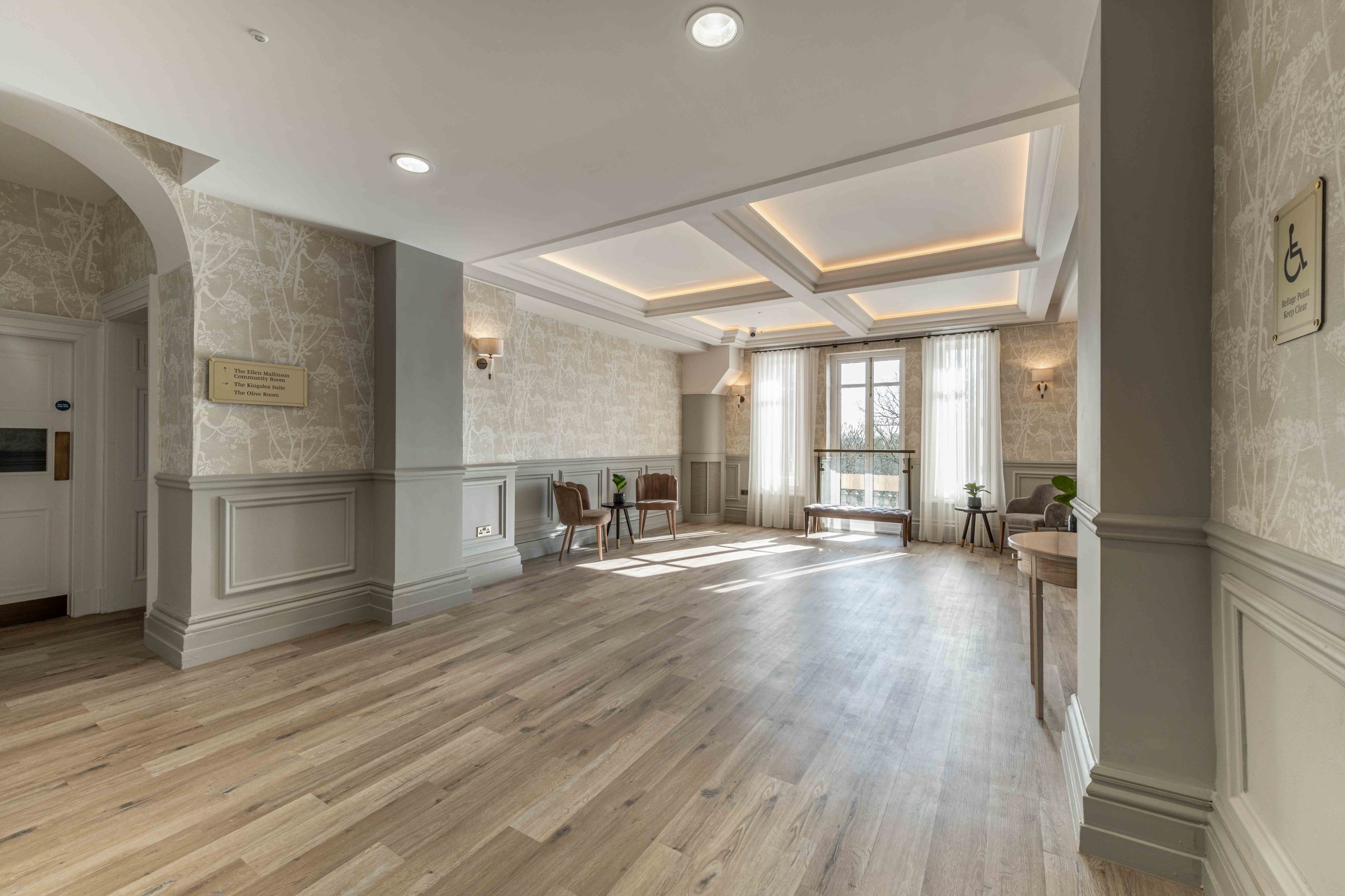
The first-floor design treatment is more contemporary, with fewer existing retained features. Karndean flooring is used throughout and a bespoke sideboard was designed to sit against wall panelling, with a subtle floral wallpaper above. A new ceiling was introduced, which was a modern take on a coffered ceiling, with perimeter LED lighting integrated to enhance the shapes.
The Olive Room – the statutory ceremony room – features a feminine and relaxing colourway in sage green with wall mouldings, centralised wall lights and a wonderful, papered ceiling with a mural-effect, showing the shadow of the tree and really exemplifying the concept of bringing nature indoors. There is timber plank flooring around the edge of the room and a central Ege carpet. Loose furniture is in pinks, neutrals and mauves – feminine but also practical colours and fabrics.
The Kingslea Suite features colour a little more strongly – actually on the request of the registrars themselves! The result is a pastel blue room with wall mouldings and a wallpaper featuring a monochrome botanical pattern from Cole & Son cut into individual ‘artwork’ sections that sit inside the panelling mouldings. The ceiling has a coffered effect once more with inset perimeter lighting. The chairs in the space, by Telegraph Furniture, have an oak vintage feel. The focal point of the room is a renovated vintage fireplace, dressed with a floral display. Blinds are in a sheer Panaz fabric, still allowing impressive views beyond the room’s existing Juliet balcony.
External images courtesy of Salford City Council
Interior images by Franklin + Franklin