




A-nrd completes Arthouse Glasgow, a thoughtfully imperfect design hotel within a restored 19th century Scottish landmark
Award winning interior architecture and design studio A-nrd has completed Arthouse Glasgow, a 76 key lifestyle hotel set within a restored 19th century listed building on Bath Street in the heart of Glasgow.
Owned and developed by Oberland, the project marks the debut hotel for the British hospitality brand and sees the London based multidisciplinary studio transform the historic property into an immersive contemporary hotel, drawing on the many facets that make Glasgow such a distinctive city, from its industrial past and culture to its enduring links with the arts and its creative residents.
Inspired by the spontaneity and perfectly imperfect character often found in artists’ homes, the project celebrates original features, pairing them with bespoke contemporary and vintage furniture, local craftsmanship and work by Scottish artists, to create a series of layered spaces intended to feel instinctive and lived in, balancing the grandeur of the Victorian building with the intimacy of a private residence. A-nrd translated this approach across the hotel, allowing each area to develop its own character while maintaining a quiet consistency of materiality, colour and craftsmanship throughout.
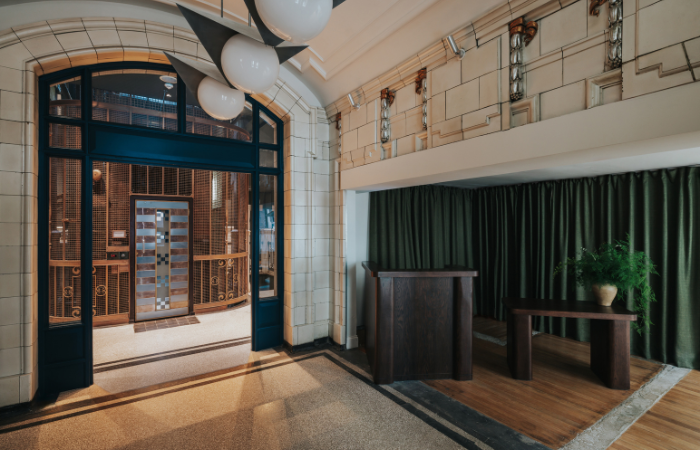
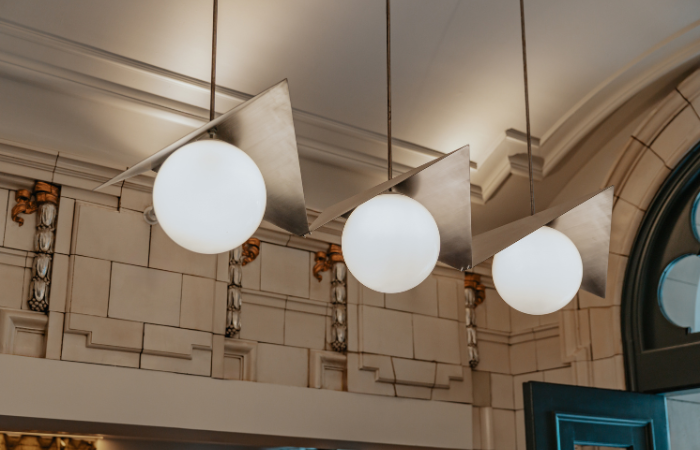
Arrival sets the tone for the hotel, where original architectural features take centre stage. Restored Victorian tiles and the building’s historic birdcage lift establish an immediate connection to the property’s past, while a sculptural timber reception desk introduces the first of many bespoke elements designed by A-nrd. Suspended above, a bespoke pendant designed by A-nrd and made in collaboration with LightsOn combines brushed metal planes with spherical opal glass shades, introducing a distinctly contemporary gesture against the restored architecture. A pairing of vintage armchairs and contemporary steel tables by Polish brand NG Design continues the dialogue between old and new, while an intimate booth with loose timber tables creates a welcoming corner.
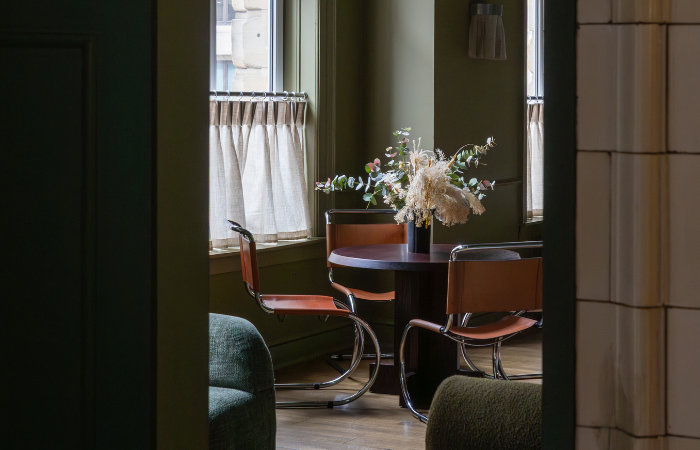
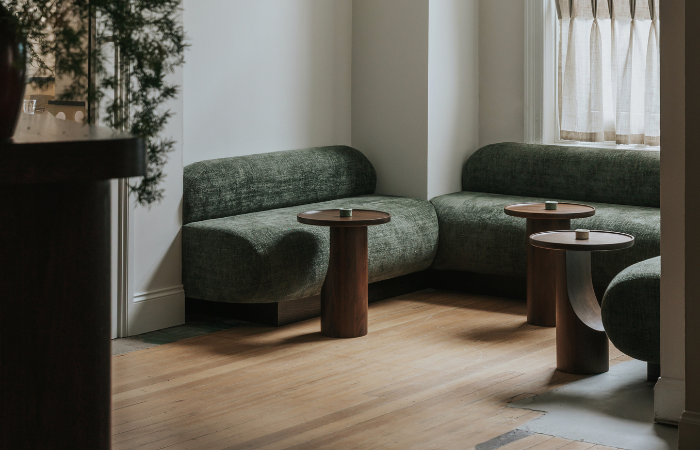
Beyond, the lobby opens naturally into the lounge, establishing the calm, residential atmosphere that defines the hotel throughout. Colour drenched in a deep olive green that extends across the walls, ceilings and joinery, the lounge unfolds as a series of distinct seating settings arranged beneath the building’s original arched windows. Cafe curtains soften the connection to Bath Street beyond, while raw edged linen wall sconces designed by A-nrd in collaboration with LightsON cast a warm, diffused glow.
At its centre sits an arrangement of bespoke, low backed modular sofas designed by A-nrd, upholstered in a muted sage green textured velvet by Kirkby Design, set upon a green checkered rug and paired with a metal coffee table by NG Design. Together, the pieces establish the layered material palette that defines the lounge. A round bespoke walnut café table designed by the studio, with a sculptural pedestal base, is paired with vintage chrome framed chairs by Mies van de Rohe upholstered in a tan leather.
A more secluded corner is anchored by a bespoke booth upholstered in a green textured weave by Casamance. A low hanging linen pendant from Lights&Lamps and original artwork complete the composition. Elsewhere, further bespoke lounge chairs, reupholstered vintage seating, flatweave rugs, walnut side tables and floor lamps continue the residential language, allowing every corner of the lounge to feel individual whilst remaining part of a cohesive whole.
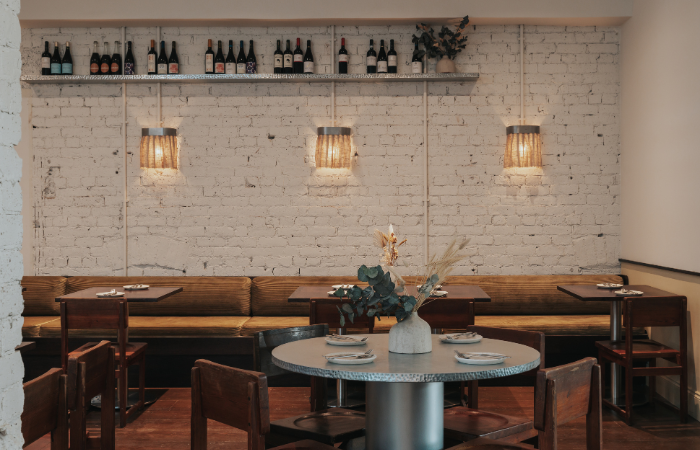
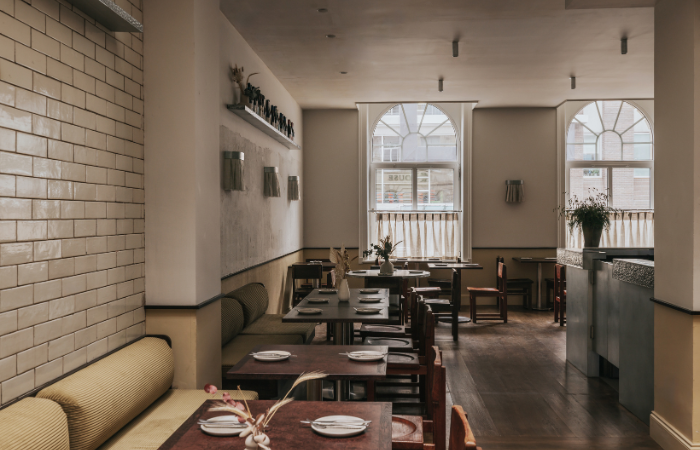
The restaurant at Arthouse Glasgow, home to acclaimed Glasgow Italian restaurant Celentano’s by Dean and Anna Parker, has been designed to feel immediately welcoming, creating a relaxed dining environment that sits comfortably alongside the wider hotel. A stripped back bistro aesthetic defines the space, where reclaimed timber flooring, duo tone walls in soft butter yellow and warm white, walnut architrave detailing, exposed brickwork and glazed tiling allow elements of the building’s original fabric to remain visible throughout.
A bespoke zinc topped bar designed by A-NRD forms the focal point of the restaurant. Finished with a hand hammered edge, crafted by local metalworkers and refined through close collaboration with the workshop, the generous counter is lined with six timber bar stools from Frama, while a bespoke back bar framed by vintage wall lights creates a refined yet distinctive backdrop.
Throughout the restaurant, decoration is deliberately kept to a minimum, allowing the carefully composed material palette to take precedence. Bespoke hand hammered metal shelving echoes the detailing of the bar, while works by Scottish artists continue the narrative established throughout the hotel.
Across the dining room, square burr oak bistro tables designed by the studio are paired with vintage timber dining chairs, whilst bespoke dark oak framed booth seating upholstered in olive green corded velvet by JAB makes use of the corners of the room. Soft linen wall sconces designed by A-nrd reappear throughout the restaurant, casting a warm, diffused light across the textured surfaces as the space transitions from daytime dining to evening service. Beyond, a private dining room enclosed by soft privacy curtains offers a more secluded setting, whilst the open kitchen pass introduces a quiet sense of theatre and energy to the space.
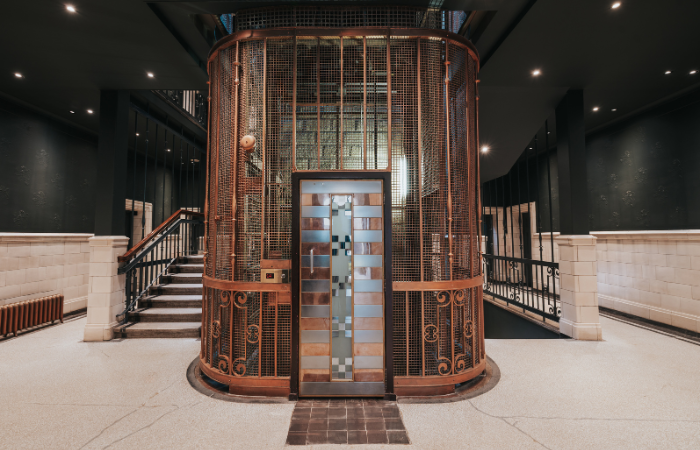
The building’s grand corridors are punctuated with carefully placed vintage seating, creating informal places to pause, while the restored birdcage lift carries guests to the upper levels where A-nrd’s carefully considered material palette continues. Colour drenched in a deep green that extends across the walls, doors and balustrades, the circulation spaces are framed by the building’s original Victorian white tiled corridors and a terrazzo floor. Warm oxidised copper tones of the restored lift introduce a rich counterpoint to the cooler palette, while overhead, the glazed atrium floods the space with natural light, casting dramatic, ever-changing shadows and celebrating the building’s restored Victorian fabric.
To the rear of the bed, the bespoke joinery transforms into an integrated workstation and coffee station, complete with a Serax table lamp, while a deconstructed wardrobe replaces the traditional hotel arrangement with a simple composition of a stained timber hanging rail, handcrafted green glazed ceramic knobs by West House Pottery and a matching luggage bench. Original artwork by Scottish artist David Iain Brown provides a further connection to the city’s creative community. Together, the bespoke interventions, restored architectural features and carefully selected vintage furnishings establish a consistent design language that carries seamlessly from the ground floor into the guestrooms.
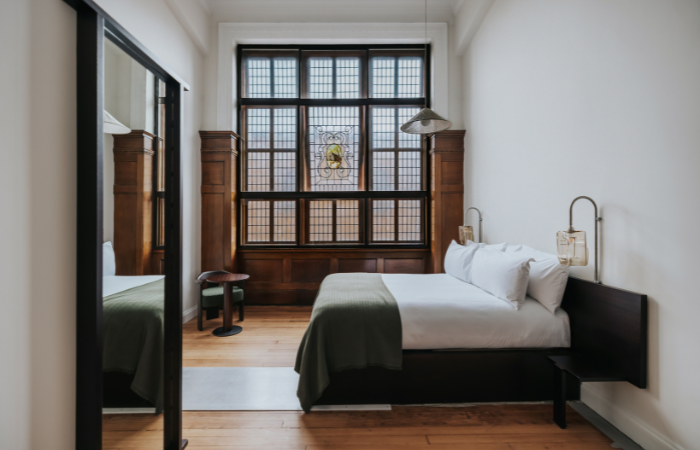
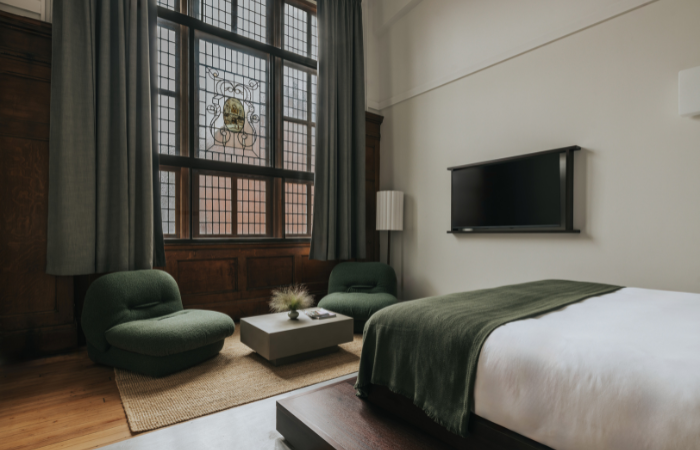
The Classic and Studio room types present a more condensed interpretation of the same design language. Original proportions are retained, while a softer palette of natural materials creates a calm, understated atmosphere. Echoing the proportions and detailing established elsewhere throughout the hotel, a bespoke dark timber bed reinterprets the studio’s original platform design in a lighter, more compact form. Integrated cantilevered bedside shelves maintain the continuity of the design while creating a calmer, less imposing presence within the room.
Drapery in a warm putty tone softens the original sash windows, complementing the neutral walls, original timber detailing, and a mix of restored wooden flooring and sisal carpet. Beside the bed, bespoke sculptural wall sconces made in collaboration with local Glaswegian glass artist Vicky Higgins feature an articulated arm and abstract glass shade in a soft blush tone, introducing a contemporary layer to the room, while a linen pendant by Lights&Lamps suspended above, casts a warm, diffused light across the space. Though smaller in scale, the room carries the same carefully considered balance of bespoke furniture, contemporary craft and restored architectural character that defines the guestrooms throughout Arthouse Glasgow.
The hotel’s suite extends A-nrd’s design language through a richer interpretation of the material palette. Carefully restored original timber wall panelling celebrates the building’s Victorian character, while a bespoke platform bed in stained blue timber forms the focal point of the room. Bespoke sofas upholstered in Casamance fabric are arranged around the existing fireplace, creating a generous seating area alongside vintage chairs and a bespoke table. While materially richer than the guestrooms, the suite retains the same considered balance of heritage, craftsmanship and contemporary design, offering the most complete expression of A-nrd’s vision for Arthouse Glasgow.
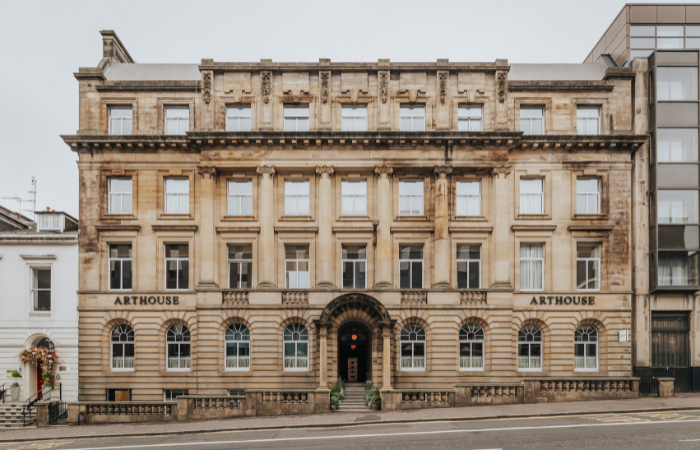
Marking A-nrd’s second hotel project in the UK, Arthouse represents a significant evolution of the studio’s hospitality portfolio. Working in close collaboration with Oberland, the project brings together heritage restoration, bespoke furniture, lighting and joinery, alongside carefully curated vintage pieces and collaborations with local makers and artists, to create a hotel that feels intrinsically connected to Glasgow.
On the project Alessio Nardi, Founder of A-nrd comments:
“Arthouse Glasgow has been an opportunity to further develop our approach to hospitality within a building that already possessed an incredible sense of character. From the outset, we wanted Arthouse to feel like a place that had always belonged to the city.
Every decision was made with the existing architecture in mind, from restoring original features and designing bespoke furniture to collaborating with Scottish artists, makers and craftspeople. We wanted every intervention to be guided by a desire to create a hotel that feels grounded in its surroundings.
The result is a hotel that invites guests to experience Glasgow through spaces that feel layered, authentic and lived in.”