


Culture Shouldn’t Be Explained. It Should Be Felt.
Workplace Matters is an editorial series exploring thought-provoking and knowledge-based perspectives on the workplace. Through expert insight and experience-led commentary, this monthly series sparks meaningful conversations and helps shape the evolving discourse around workplace design.
Workplace Matters continues with another contribution from Rob Venice, Founder and Creative Director of Motive, this time reflecting on what makes for a good workplace culture and the role design plays in it.
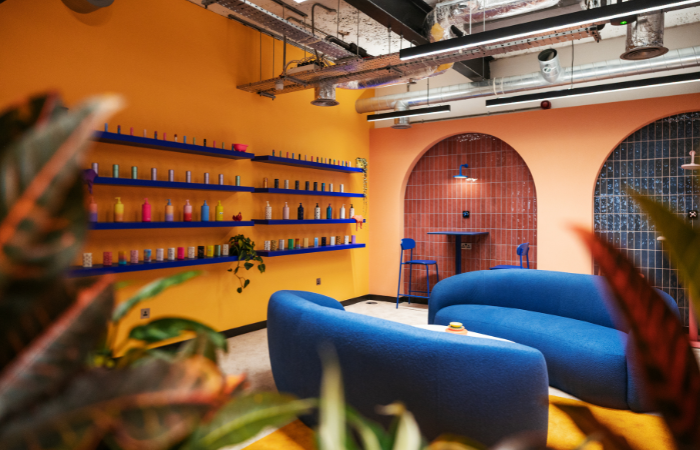
Wild London Office
At Motive, the typical brief we get from a company that’s making a push for a healthier culture, rebranding, or trying to scale up is that they need their mission and values plastered everywhere.
Don’t get me wrong, those are key to driving a business forward, but what people miss is that this Orwellian approach of decreeing how people must act, displayed everywhere they turn, typically leads to eye-rolls, yawns and apathy.
I’ll always aim to conjure the emotions that are key to a company’s needs through more cerebral techniques. You end up creating a unique relationship between individuals and their surroundings, while reinforcing the all-important areas of focus. People choosing to row in unison out of belief rather than simply paying lip service to the employee handbook. The alternative is more subtle and far more powerful: design that conjures emotion.
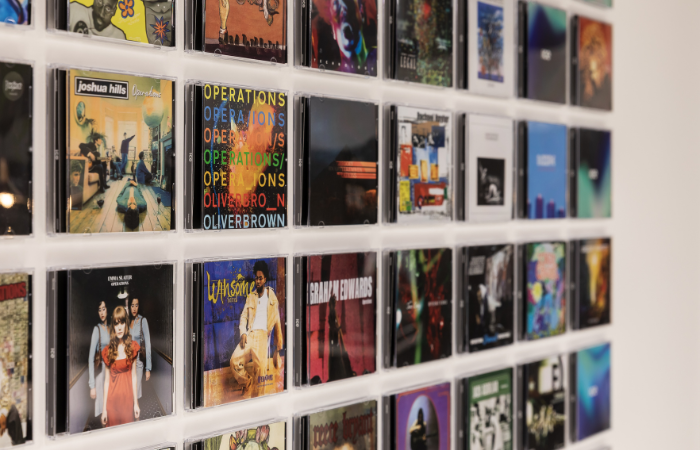
Bespoke CD installation for ICE Services
What does your space feel like on first impression? What story unfolds as someone moves through it? What lingers after they leave?
These questions shift the focus from decoration to experience. Suddenly, culture becomes something you sense. It lives in the rhythm of collaborative spaces, the theatre of arrival, the quiet corners that invite pause. It appears in art that doesn’t just decorate, but also provokes. In rituals that aren’t mandated, but naturally adopted.
Done well, this creates a quiet alignment. People don’t comply with culture, they believe in it. They row in the same direction not because they’ve read the handbook, but because the environment reinforces a shared understanding of purpose.
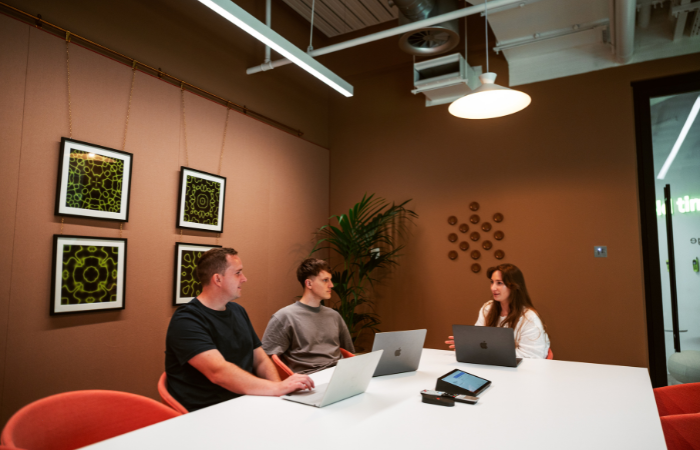
PolyAI London HQ
For a lot of companies, culture is their Achilles’ heel, and efforts to boost morale or wellbeing typically miss the mark. I’m not saying a well-designed office is the remedy, but it goes a long way to showing a company’s intent, shaping behaviour and encouraging the right people into the office in the first place.
This matters now more than ever. Offices are no longer default destinations, they are choices. To draw people in, spaces need to offer something beyond function. They must energise, signal intent, and make individuals feel part of something meaningful.
A trick I like to use to get to the core of a company’s identity is to step outside industry vernacular and find the underlying current of their being, often through pop culture references rather than the details of their USP. That becomes a key reflection point throughout the project.
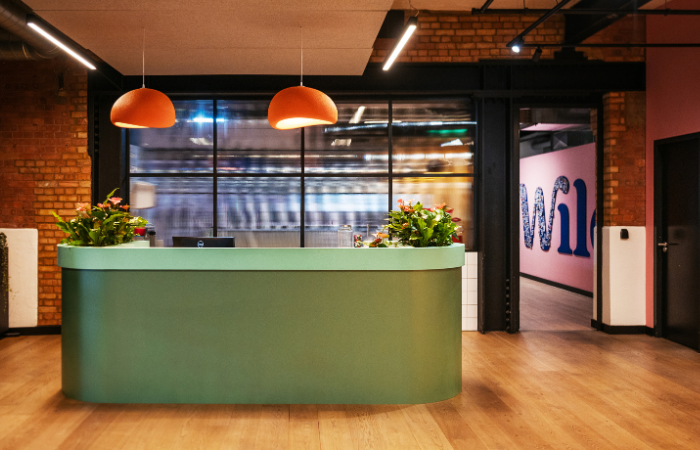
Wild London Office
Asking a founder ‘what would Paddington Bear do?’ rather than ‘is this something you feel comfortable with?’ can be surprisingly effective.
At its best, workplace design taps into something deeper than brand guidelines. It draws from the myths, rituals and underlying currents that define a company’s identity. Not what it does, but why it exists.
Because culture, in the end, isn’t built through instruction. It’s cultivated through experience. A continuous dialogue between people and place, where emotion feeds behaviour and behaviour reinforces belief.
So the next time you think about expressing culture, skip the wall decals. Design something people can feel in their bones.
Read Rob’s other contribution on the flexible working spaces here.
Written by Rob Venice, founder and creative director of Motive.