


Does Your Workplace Tell the Truth? Design Insider in Conversation with Jon Humphreys of Sheila Bird Studio
For Jon Humphreys, the workplace is one of the clearest expressions of who an organisation really is. Culture, brand and identity become tangible through the spaces people occupy, the behaviours they encourage and the experiences they create.
Jon is Creative Director and Co-Owner of Sheila Bird Studio, a Manchester-based interior and place branding studio. Trained as an architect, he spent almost two decades working across brand, identity and storytelling before joining Atul Bansal at Sheila Bird in 2019. Today, that experience informs a studio approach that brings strategy, storytelling and interior design together from the outset, creating places that feel specific to the organisations and communities they serve.
In our conversation, Jon explores the relationship between culture, brand and identity, and how workplace design can make organisational values visible through behaviour. He considers the growing importance of belonging, arguing that workplaces now need to earn the commute by supporting connection, learning and shared experience. He also discusses the need to design workplaces that can evolve, using strong ideas, flexibility and experimentation to create spaces that remain relevant as organisations change.
Drawing on projects including Flight Story, TMT, LADbible, Hurst and Campfield, Jon also looks ahead to the influence of retrofit, AI and more connected, mixed-use workplaces.
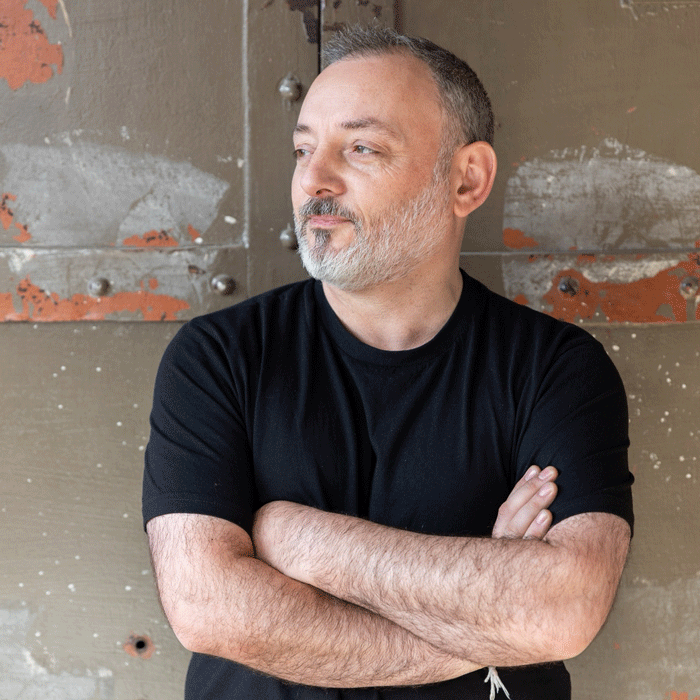
Jon Humphreys, Creative Director & Co-owner, Sheila Bird Studio
Please introduce yourself, your role at Sheila Bird Studio, and the studio’s approach to workplace design.
I’m Jon Humphreys, creative director and co-owner at Sheila Bird Studio. I trained as an architect, then spent the best part of two decades in brand, identity and storytelling for places, co-founding a multidisciplinary design studio called The Neighbourhood before joining Atul Bansal here in 2019.
At Sheila Bird we design places with life and soul. In practice that means brand strategy and interior design in the same conversation from day one, not a graphics team arriving at the end to wallpaper the values onto a finished box. We’ve co-developed places ourselves too, in hospitality and workspace, so we’ve sat on both sides of the table, which influences our understanding how spaces need to deliver commercially. We approach every project with a fresh mind not a house style, the work should look like it belongs to the client, not to us.
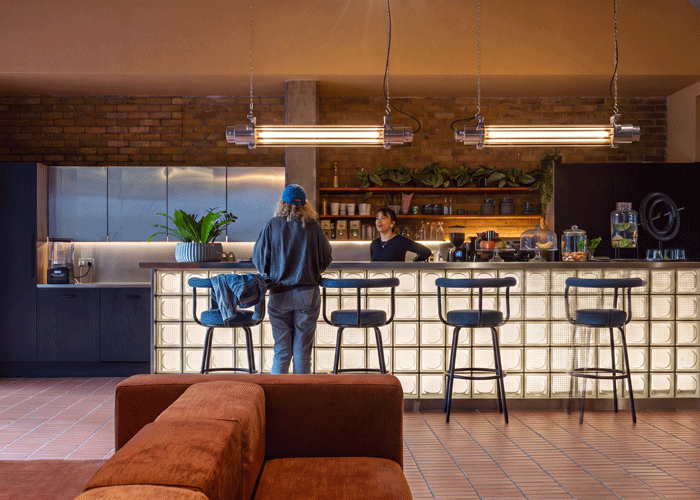
Flight Story, Coffee Bar
What do culture, brand and identity each mean to you? Where are the distinctions, and where do they overlap?
I’d put it like this. Identity is what you look like. Brand is what people say about you once you’ve left the room. Culture is what people actually do when the boss is on holiday. Design can genuinely deliver the first and influence the second and support the third.
Where all three overlap is behaviour, and that’s the interesting part. If your brand claims radical transparency and your leadership team sits behind a frosted glass door, your space has just called you a liar, and everybody feels it. Space is the most honest brand medium there is, because nobody can scroll past it. People spend eight hours a day standing inside a company’s positioning statement. Most organisations have never once thought of it that way, and that’s usually the most useful conversation we have.
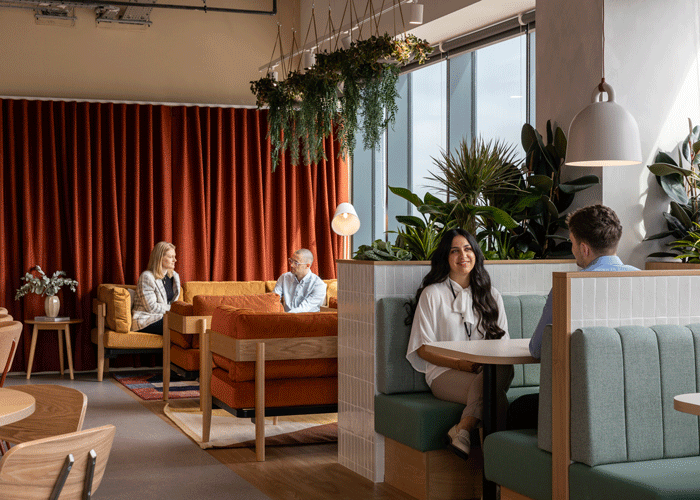
Hurst, Breakout Space
What are organisations ultimately trying to achieve through their workplaces, and how does design influence people, performance and the bottom line?
Publicly they say collaboration and innovation. Privately they’re asking something far more human: a reason for people choose to come here. Attendance is voluntary in spirit even where it’s mandated in policy, so a workplace now has to earn the commute. And the mechanism isn’t more amenity and mod cons, it’s belonging. Strong cultures happen when people feel part of something bigger, feel valued, and get to learn from the people around them. A screen can’t deliver that.
Get it right and the effects compound. Better talent, good people staying longer, ideas colliding more often and the building starts telling your story twenty-four hours a day to everyone who walks through the door. A great recent project that illustrates this is Hurst. An ambitious accountancy firm, a 11,000 sqft blank canvas outside of the city centre. Nobody in that sector can outbid London on salary and they’re all chasing the same talent shortlist, yet their partners now tell us candidates are leaving city-centre firms and naming the office as a big influence. That’s accountants. Counting things is their job. If they think it adds up, it adds up.
Get it wrong and you’ve bought a very expensive shed for laptops.
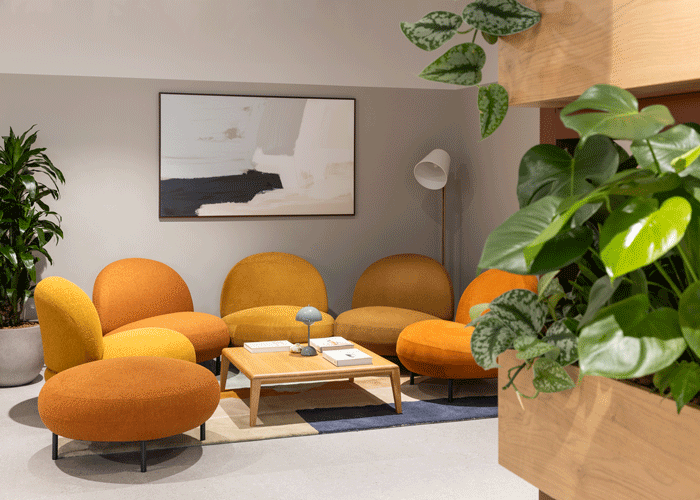
Hurst, Reception
How do you translate those ambitions into physical design — space, materiality, furniture, graphics, behaviour, experience?
It starts with an organising thought, not a Pinterest board. At Flight Story the hook was sitting in the name, flight- so we leaned into it completely and let it drive zones, materials, movement and details. From there, every part of the scheme becomes evidence for the idea.
Materials should carry values honestly, and honest doesn’t have to mean expensive. Campfield is two Victorian market halls full of young tech and creative businesses, and that lot aren’t asking for high finish, they want openness, flexibility, somewhere they can bend to suit themselves. So it made sense to not be precious with it and let the building do the talking. Modular studios that change shape as a company grows, garden offices spilling into a planted green street. Polish it up and you’ve made somewhere people feel like guests rather than somewhere they can be themselves.
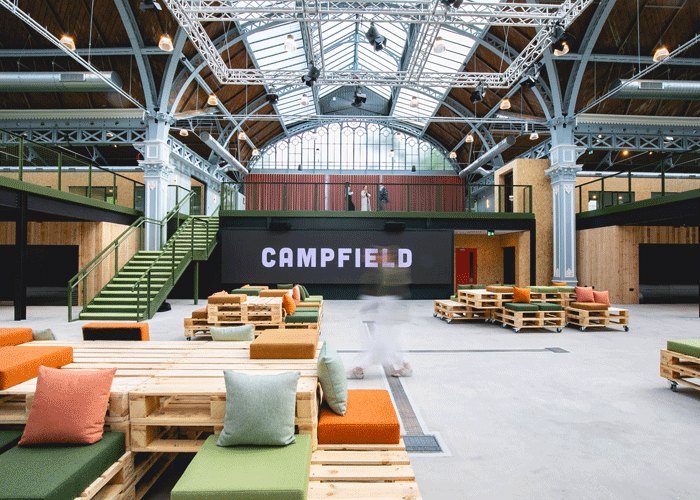
Campfield
Graphics and colour palettes have to earn their place too. Brand-appropriate doesn’t mean brand-coloured or trend driven. Values need to be felt rather than communicated on a wall mural. Experience is choreography- the things you notice in the first ten seconds, and the things that make you stop and linger halfway through.
My test is simple. Swap the client’s logo for their competitor’s. If the space still works, we haven’t delivered- we’ve only decorated.
Where are the greatest opportunities and risks in a bolder, more experimental approach? How important is surprise?
The opportunity is distinctiveness, which is the one thing nobody can order off a supplier’s website. The risk isn’t boldness, it’s borrowed boldness. You know, generic values plastered across a wall mural, a neon that says “good vibes only”. My heart sinks when a brief contains the word “Instagrammable”, because it almost always signals image over content.
Surprise has to come out of who the client genuinely is. Flight Story has a twenty-five-foot rocket with its own smoke machine, which is completely absurd and completely inevitable at the same time, because it’s an honest expression of Steven Bartlett’s ambition to break new ground. It would look ridiculous anywhere else. At TMT there’s a shelving wall carrying forty custom 3D-printed Lego figures, one for every member of staff. Two projects with wildly different aesthetics, identical logic.
And none of it works if the fundamentals are broken, daylight, acoustics, comfort, somewhere decent to eat and hang out. You can’t beanbag your way out of a bad culture.
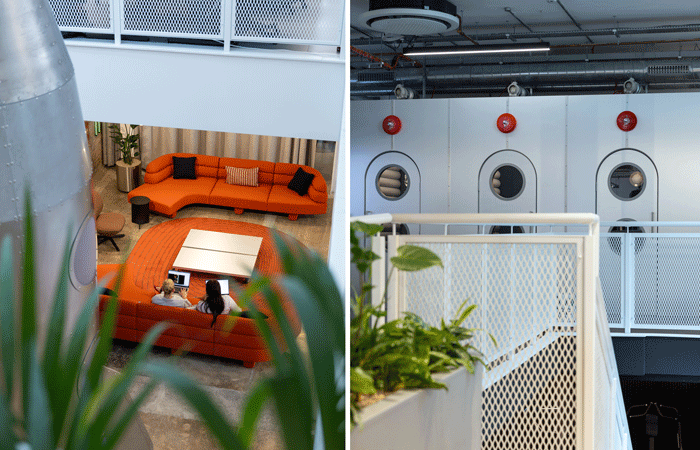
Flight Story. Left – Breakout Space. Right – Meeting Pods
What does success look like, and can you share examples?
Success is behavioural, not photographic. At LADbible we’d predicted that desks would stop owning people and that meetings would open up. Being told it had happened within hours of the move-in, not months, is the thing that sticks with me. At the HQ of contractor ‘TMT Group’ we went further by designing a Construction Lab, a place to host workshops, prototype techniques and experiment with materials. So the workplace has become an argument for their leadership in the industry rather than just somewhere to sit. And at Flight Story, guests arrive, understand instantly where they are, and leave with something to say about it- which, for a storytelling business, is job done. Three completely different answers to the same question. What they share is that people talk about them unprompted.
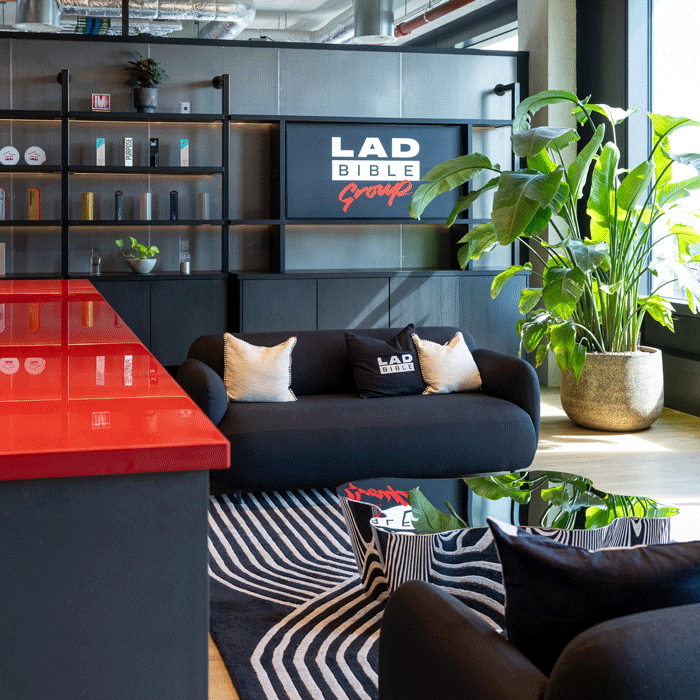
LADbible, Reception Lounge
Organisations keep evolving while a finished workplace stands still. How do you design for that?
I always come back to the quote by artist Brian Eno about “thinking more like a gardener than an architect, design beginnings rather than endings”. Which in effect means that the life happens after we’ve gone, people move in and we don’t get to control it. But we can create the right context for it to flourish.
Practically that means loose fit. Spaces that don’t punish change, an organising idea robust enough to survive being reinterpreted. Layer the permanent, the semi-permanent and the deliberately disposable, and be honest about which is which. Flight Story is deliberately modular for that reason; the company shifted direction and size three times between concept and construction.
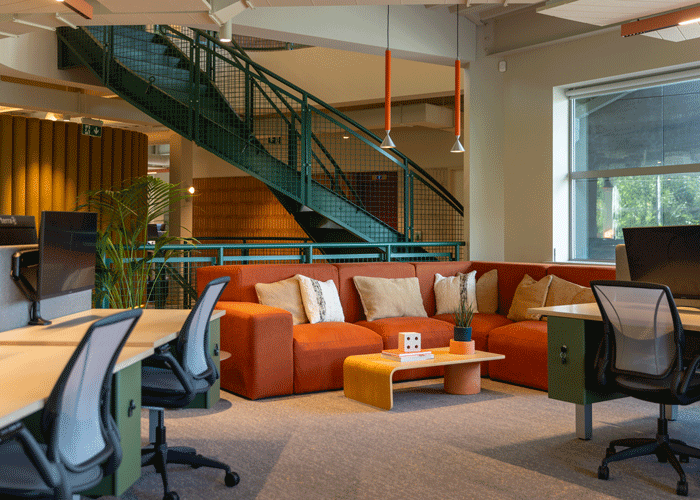
TMT, Workspace
Robust is the word I’d underline, because ideas can get worn away long before anyone moves in. We once designed a three-storey reception for a corporate office block, having argued that a reception is usually a barrier when it ought to be an invitation. What got built is an impressive but more conventional foyer, a thing you pass through rather than a place you spend time in. The opposite of the concept. It went by degrees, a run of sensible decisions, none of them the hill to die on. Concept and delivery are two different projects, with different people and different pressures between them. The drawings get handed over. Sometimes the idea doesn’t survive.
Which is different from what happens once people are in. When we revisit a project and someone’s repainted a wall, we take it as a good sign. That isn’t the idea being worn away, it’s the place coming alive. Giving people permission to feel they own it was the point all along.
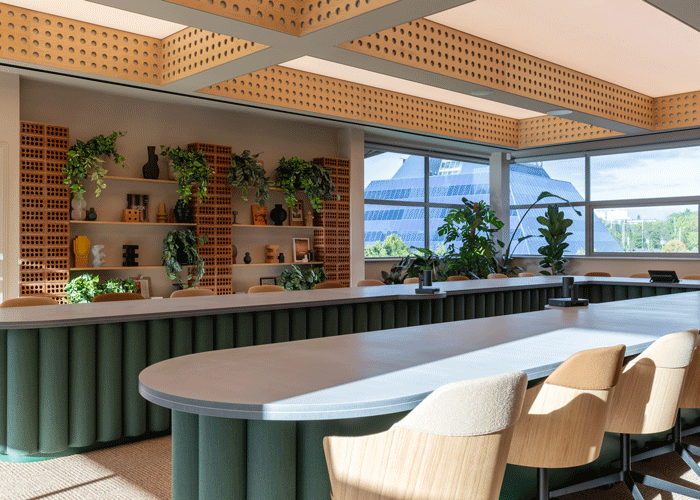
TMT, Boardroom
Looking ahead, what will shape workplace culture, brand and identity — and how organisations invest in physical space?
Carbon use will only strengthen the retrofit argument. Reuse stops being a virtue and becomes the default, which is good news, because characterful old buildings hold soul far better than new boxes ever will, and there’s still plenty of them standing empty in our cities.
AI will strip out the transactional work, which leaves the office a much clearer job: the human stuff. Judgement, mentoring, trust, and all that accidental learning juniors used to absorb by osmosis and simply cannot get over a call. That’s the hybrid cost nobody puts on a spreadsheet, a generation that never learns the craft, or the human side of being in an organisation. Businesses clustering with education spaces an area that genuinely excites me. Bridging the experience gap between student and working life is something that real space can help with.
More integrated ground floor uses. Workspaces have spent years disconnected from the street and the uses at ground level. At Campfield the building fills up on a Saturday with people who don’t work there at all, a Victorian market hall doing the thing it was built for. So investment shifts from square footage to intensity- fewer, better, busier places where the working day is one shift among several. Buildings should stop clocking off at six.
Photography by Josh Kemp Smith